Northeastern Cuisine: Typical Dishes You Need to Try
THE Northeastern Cuisine is an invitation to immerse yourself in flavors that tell stories, unite generations and celebrate the cultural richness of one of the most vibrant regions in Brazil.
Advertisements
More than just dishes, it is an expression of resistance, creativity and adaptation, shaped by centuries of indigenous, African and European influences.
Therefore, exploring the typical dishes of the Northeast is like opening a book of taste memories, where each recipe reveals a unique chapter.
But what makes this cuisine so special?
Let's dive into this universe of aromas, textures and traditions, discovering why you need to try these gastronomic treasures.
The Essence of Northeastern Cuisine: History and Identity
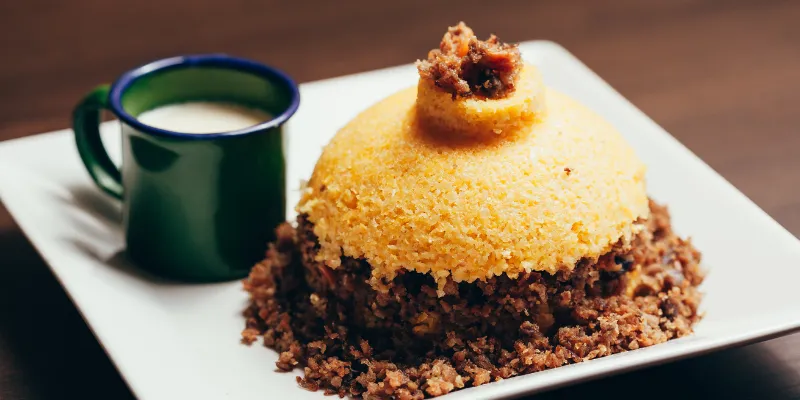
First of all, it is necessary to understand that the Northeastern Cuisine It's not just food; it's a reflection of the soul of a people.
The region, marked by climatic challenges and historical, transformed scarcity into creative abundance.
Simple ingredients, such as cassava, corn and dried meat, were elevated to protagonists in dishes that conquered palates.
Furthermore, African influence brought palm oil and coconut milk, while indigenous people contributed preparation techniques, such as cooking in leaves.
In short, this fusion created a cuisine that is, at the same time, rustic and sophisticated, capable of surprising even the most demanding.
On the other hand, the cuisine of the Northeast is also a reflection of its geographical diversity.
In this sense, from the coast to the hinterland, each sub-region has developed dishes that interact with the environment.
On the coast, seafood shines in moquecas and stews; in the hinterland, sun-dried meat and coalho cheese reign supreme.
Thus, the Northeastern Cuisine reinvents itself in every corner, maintaining its welcoming essence.
It is no wonder that, according to a survey by the Datafolha Institute (2023), 681% of Brazilians consider northeastern food to be one of the most representative of the country.
Imagine the Northeastern Cuisine like a patchwork quilt, where each piece of fabric is a story, a tradition, a struggle.
Each dish brings back memories of grandparents who taught recipes, of fairs that supplied communities and of parties that celebrated life.
++ The Fascinating Past of Ouro Preto, MG: An Outdoor History Lesson
Therefore, when you try a Northeastern dish, you are not just eating; you are participating in a cultural ritual that spans generations.
And let’s face it, who wouldn’t want to connect with such a rich heritage?
Table:
|
Cultural Influence |
Contribution to Northeastern Cuisine |
|---|---|
|
Indigenous |
Use of cassava, corn and techniques such as cooking in leaves. |
|
African |
Introduction of palm oil, coconut milk and strong spices. |
|
European |
Preserving techniques (dried meat) and desserts with sugar. |
Typical Dishes You Can't Miss
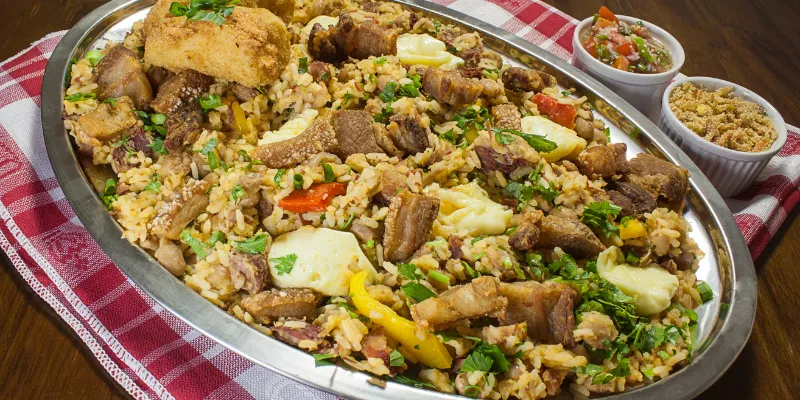
Now that we understand the context, let's look at the dishes that make up the Northeastern Cuisine a heritage.
First, we highlight the two-piece baião, an Angolan black beans, the perfect combination of rice, black beans and dried meat.
This dish is an ode to the simplicity of the backlands, but with a complexity of flavors that surprises.
The creamy texture of the beans, the crunchiness of the rice and the smoky touch of the dried meat create a symphony of taste.
Plus, the toasted curd cheese on top adds an irresistible contrast.
It is a dish that, despite being rustic, carries the sophistication of someone who knows how to transform the basic into the extraordinary.
Another dish that deserves your attention is the tapioca stuffed with coconut and condensed milk, a delicacy that goes beyond the trivial.
Unlike regular tapioca, this version is a sweet treat that combines the crunchiness of cassava dough with the softness of fresh coconut and the sweetness of condensed milk.
However, the secret is in the texture: the tapioca should be soft on the inside, but with slightly toasted edges.
In cities like Recife, it is common to find tapioca shops that elevate this dish to an artisanal level, with creative fillings that respect tradition.
Interestingly, these dishes also reflect the sustainability of Northeastern Cuisine.
Local ingredients and preservation techniques, such as dried meat, show how the Northeast knew how to make the most of its resources.
So, when you taste a baião de dois or a tapioca, you are experiencing not only flavors, but also a lesson in resilience.
So why not treat yourself to this gastronomic journey?
|
Dish |
Main Ingredients |
Featured Region |
|---|---|---|
|
Two-Breasted Bay |
Rice, black beans, dried meat, curd cheese |
Northeastern Backlands |
|
Tapioca with Coconut |
Cassava gum, fresh coconut, condensed milk |
Northeast Coast |
Original Examples of Northeastern Dishes
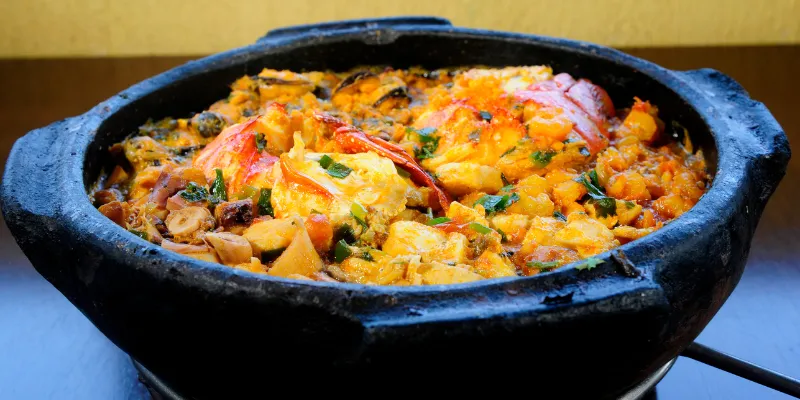
To illustrate the versatility of Northeastern Cuisine, we created two original dishes that respect the region's roots, but bring a contemporary touch.
In this sense, the first is the Cashew Moqueca with Shrimp.
Inspired by traditional moquecas, this recipe replaces part of the coconut milk with cashew cream, which provides a velvety texture and a sweet flavor.
The shrimp, cooked with colorful peppers and palm oil, achieves a perfect balance between fresh and spicy.
In short, it is a reinterpretation that celebrates the northeastern coast with a typical ingredient from the backlands.
The second dish is the Corn Couscous with Charque and Roasted Pumpkin.
Unlike traditional couscous, this version incorporates cubes of roasted pumpkin, which add a caramelized touch.
The charque, previously desalted and sautéed with red onion, contrasts with the softness of the couscous.
Finished with fresh coriander, the dish is a celebration of northeastern abundance.
Both dishes show how the Northeastern Cuisine can be innovative without losing its essence.
In this way, these examples reinforce that Northeastern cuisine is a field open to creativity.
While many associate the region with heavy dishes, these creations show that it is possible to be light, modern and faithful to traditions.
Thus, the Northeastern Cuisine continues to evolve, inviting new generations to reinterpret its recipes with respect and boldness.
|
Original Dish |
Main Ingredients |
Inspiration |
|---|---|---|
|
Cashew Moqueca with Shrimp |
Shrimp, cashew cream, palm oil, peppers |
Traditional moqueca |
|
Couscous with Charque and Pumpkin |
Corn couscous, jerky, pumpkin, coriander |
Northeastern couscous |
Why is Northeastern Cuisine Unique?
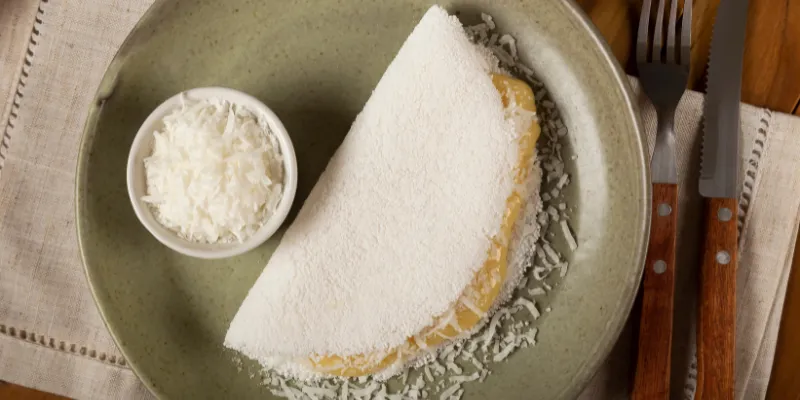
Image: Canva
The uniqueness of Northeastern Cuisine lies in your ability to transform limitations into opportunities.
Unlike other cuisines, which often depend on imported ingredients, the Northeast values what the land has to offer.
Cassava, for example, is the base of dishes such as tapioca and beiju, while corn is the basis for couscous and canjica.
In this way, this connection with the terroir makes each dish a celebration of local identity.
Furthermore, the Northeastern Cuisine is deeply communal.
At June festivals or family gatherings, food is the center of interactions.
Dishes like pamonha or bolo de rolo are not just food; they are excuses to bring people together.
This social dimension reinforces the welcoming character of the region, where the table is always plentiful, even in the most challenging circumstances.
It is no coincidence that northeastern cuisine is so loved: it is synonymous with affection.
Finally, the Northeastern Cuisine is a living heritage.
While some cuisines remain stuck in the past, that of the Northeast is renewed without losing its roots.
Contemporary chefs, like those from Pernambuco who participate in gastronomic festivals, are taking these flavors to the world.
So why not embark on this journey and find out why Northeastern Cuisine is it so irresistible?
Frequently Asked Questions About Northeastern Cuisine
|
Question |
Response |
|---|---|
|
What are the most used ingredients in northeastern cuisine? |
Cassava, corn, dried meat, palm oil, coconut milk and curd cheese are common. |
|
Is northeastern cuisine very spicy? |
Not necessarily. Pepper is used, but the flavor is more balanced. |
|
What is the difference between tapioca and beiju? |
Tapioca is made with moist, stuffed gum; beiju is dry and crunchy. |
|
Is it possible to adapt northeastern dishes to vegetarian diets? |
Yes, dishes like tapioca and couscous can be made with vegetable fillings. |
|
Where can I find northeastern ingredients outside the Northeast? |
Specialty markets and online stores offer products such as tapioca starch. |
Conclusion: An Invitation to the Northeastern Table
In short, the Northeastern Cuisine It is more than a collection of recipes; it is a testament to the creativity, resilience and affection of a people.
So, whether in traditional dishes or contemporary creations, every bite is an opportunity to connect with a rich and vibrant culture.
So, the next time you think about Brazilian cuisine, reserve a special space for the Northeast.
After all, why just hear about these flavors when you can taste them?