Objects Found in Excavations That Shouldn't Have Existed Back Then
In 2025, with advances in excavation technologies such as 3D scanners and carbon dating, objects found in excavations continue to challenge established historical chronologies.
Advertisements
Furthermore, these anachronistic artifacts generate debate among archaeologists and theorists, questioning linear narratives of human progress.
Keep reading!
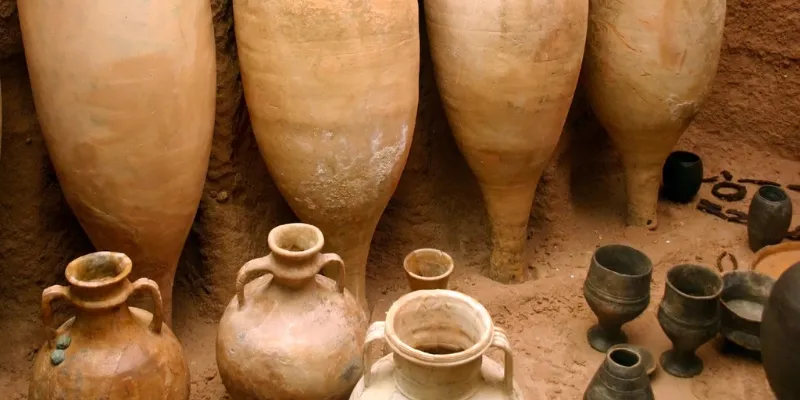
Summary of Topics Covered
- What are objects found in anachronistic excavations?
- Why do these objects challenge our understanding of history?
- What are some famous examples of objects found in excavations?
- How to Interpret Scientific Evidence from Objects Found in Excavations?
- What impact do these objects have on modern archaeology?
- Frequently Asked Questions About Objects Found in Excavations
What are objects found in anachronistic excavations?
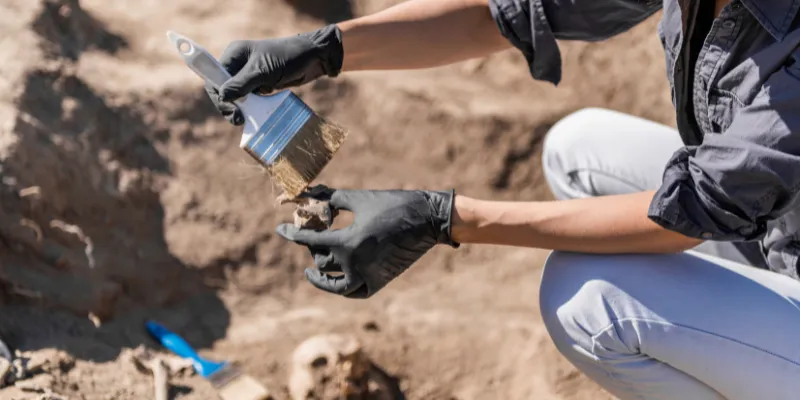
Objects found in anachronistic excavations, known as OOPArts (Out-of-Place Artifacts), are items discovered in archaeological contexts that appear incompatible with the technology or knowledge of the time period attributed to them.
Furthermore, they emerge in geological layers or sites dating back thousands of years, exhibiting advanced features such as complex mechanisms or refined materials.
Therefore, these artifacts do not fit into conventional timelines, forcing revisions to evolutionary theories of civilization.
However, not every strange object is anachronistic; many result from contamination or inaccurate dating, but genuine ones defy paradigms.
Thus, archaeologists use methods such as thermoluminescence to validate contexts, differentiating frauds from genuine enigmas.
However, the term OOPArt, coined in the 1970s, became popular with books such as "Forbidden Archaeology," expanding discussions beyond academic circles.
Furthermore, by 2025, with AI-powered digital excavations analyzing patterns, objects found in excavations will gain new visibility.
Therefore, they represent not only curiosities, but also gateways to questioning how linear human progress is.
See also: How Human Behavior Changes in Virtual Environments and Metaverses
A relevant statistic reveals that more than 100 anachronistic artifacts have been documented in global archaeological reports since the 19th century, highlighting their persistence.
Why do these objects challenge our understanding of history?
These objects are challenging because they suggest advanced knowledge in supposedly primitive times, such as batteries in ancient ruins or gears in millennia-old shipwrecks.
Furthermore, they question the idea of unidirectional progress, suggesting that lost civilizations possessed forgotten technologies.
Therefore, instead of fitting them into existing narratives, archaeologists argue for reassessments of migrations and cultural exchanges.
++ International Travel with Children at the End of the Year: Perfect Destinations for the Family
However, the challenge goes beyond chronology; it involves academic biases that dismiss anomalies in order to preserve established theories.
Thus, objects found in excavations force debates about suppressed evidence, such as in cases where artifacts are relegated to museums without in-depth study.
However, advances in molecular dating by 2025 will allow for more rigorous comparisons, reducing speculation.
Furthermore, imagine these objects as echoes of a radio in a prehistoric cave – an analogy that illustrates how they transmit messages from “silent” eras, disrupting our historical symphony.
Therefore, they encourage interdisciplinary approaches, combining archaeology with quantum physics to explain anomalies.
What are some famous examples of objects found in excavations?
Famous examples include the Antikythera Mechanism, discovered in 1901 in a Greek shipwreck dating from 100 BC, with gears that simulate planetary movements, a technology only seen in the 18th century.
++ How to Create Strategic Micro-Breaks That Truly Recharge Energy
Furthermore, this artifact argues for advanced Hellenistic astronomical knowledge, possibly influenced by Babylon. Therefore, it redefines the sophistication of Ancient Greece.
However, another example is the Baghdad Battery, found in 1936 in Parthian ruins dating back to 250 BC, consisting of jars with copper cylinders that generate electricity, suggesting uses in electroplating.
Thus, it challenges views of electricity as a modern invention. However, tests in 2025 confirm its functionality, but debate its original intentions.
Furthermore, the London Hammer, found in 1936 in Cretaceous rocks in Texas, with a fossilized handle and a head of pure iron, appears to date back 100 million years, challenging evolutionary timelines.
Therefore, he exemplifies how objects found in excavations can suggest geological intrusions.
How to Interpret Scientific Evidence from Objects Found in Excavations?
Interpreting evidence requires contextual analysis, such as stratigraphy, to avoid post-deposition contamination.
Furthermore, techniques such as mass spectrometry validate ages, differentiating genuine artifacts from hoaxes.
Therefore, archaeologists prioritize replicability, testing functionalities in laboratories.
However, interpretations vary: skeptics see dating errors, while alternative proponents propose lost advanced civilizations.
Thus, in 2025, computer simulations recreate scenarios, strengthening scientific arguments.
However, confirmation bias affects both sides, demanding rigorous peer review.
Furthermore, consider an original example: imagine a metal alloy ring found in an Egyptian tomb from 3000 BC, with traces of processed titanium only possible today, suggesting forgotten intercontinental trade.
Therefore, intelligent interpretations integrate multidisciplinary data.
Another original example: an optical lens in Minoan ruins, polished with laser-like precision, which could indicate prehistoric observatories, challenging Renaissance optics.
| Artifact | Place and Date of Discovery | Main Anomaly | Scientific Interpretation |
|---|---|---|---|
| Antikythera Mechanism | Greece, 1901 (100 BC) | Complex gears | Advanced Hellenistic astronomy |
| Baghdad Battery | Iraq, 1936 (250 BC) | Electricity generation | Possible electroplating |
| London Hammer | Texas, 1936 (Cretaceous) | Pure fossilized iron | Recent geological intrusion |
What impact do these objects have on modern archaeology?
Impacts include revitalizing fields, with funding for excavations at anomalous sites, boosting scientific tourism.
Furthermore, they promote international collaborations, such as EU-Asia projects in 2025 analyzing Asian artifacts. Therefore, they raise the profile of archaeology, attracting young researchers.
However, challenges arise with pseudoscience, where objects found in excavations fuel conspiracy theories, eroding academic credibility.
Thus, institutions like UNESCO emphasize education for discerning facts.
However, positive impacts include innovations such as drones in the search for anomalies.
Moreover, these objects inspire science fiction, but in reality, they rewrite textbooks.
Therefore, in an era of archaeological AI, they accelerate discoveries.
What if these artifacts were clues to lost technologies that could solve current crises? This rhetorical question engages reflections on human heritage.
Frequently Asked Questions About Objects Found in Excavations
Many enthusiasts question the veracity and implications of objects found in anachronistic excavations. Furthermore, answers based on scientific evidence dispel myths.
Therefore, we have compiled common questions.
However, these doubts reflect growing curiosity in 2025.
Therefore, consulting academic sources is helpful. However, the table offers initial insights.
Furthermore, focus on context for accurate answers. Therefore, use this as a guide.
| Frequently Asked Questions | Response |
|---|---|
| What makes an object anachronistic? | Technological incompatibility with the current era, such as mechanisms from pre-industrial times. |
| Are all these objects real? | Many, yes, but some are hoaxes; scientific dating validates this. |
| How do archaeologists explain anomalies? | Through contamination, geological errors, or underestimated knowledge. |
| Are there any recent discoveries in 2025? | Yes, like cuneiform fragments in the Czech Republic, defying migrations. |
| Do these objects prove time travel? | No; science favors natural, not supernatural, explanations. |
Objects found in anachronistic excavations not only intrigue, but also drive advancements. Furthermore, their analysis enriches historical understanding.
So explore more in this recent article.
However, interpretative challenges persist. Thus, a balance between skepticism and openness is essential. Nevertheless, the cultural impacts are profound.
Furthermore, integrating AI into excavations speeds up validations.
Therefore, the future promises more solved mysteries. Check out one. 2025 analysis.
In short, these artifacts redefine narratives. Furthermore, they encourage innovative research. Therefore, value the mystery in history. See examples in this [link/reference]. compilation.