The Scientific Race to Create Longer-Lasting Batteries
create more durable batteries It has become the greatest obsession of contemporary engineering, dragging global laboratories into a fierce race for energy density and long-term stability.
Advertisements
There's something almost ironic about the speed at which the energy transition is overtaking our material chemical limitations: we demand electric fleets on the streets and electronics running all day, but we still run into problems with electrodes that wear out with each recharge.
In this article, you will understand how materials physics and advanced electrochemistry are attempting to redesign anodes and electrolytes to deliver true autonomy and lasting safety.
Summary
- Why has the scientific race to create more durable batteries intensified?
- What promising technologies are leading the transformation of energy storage?
- How does solid-state chemistry promise to solve electrode degradation?
- What data proves the real advances in new battery architectures?
- What are the main industrial bottlenecks for large-scale production?
- Conclusion
- Frequently Asked Questions (FAQ)
Why has the scientific race to create more durable batteries intensified?
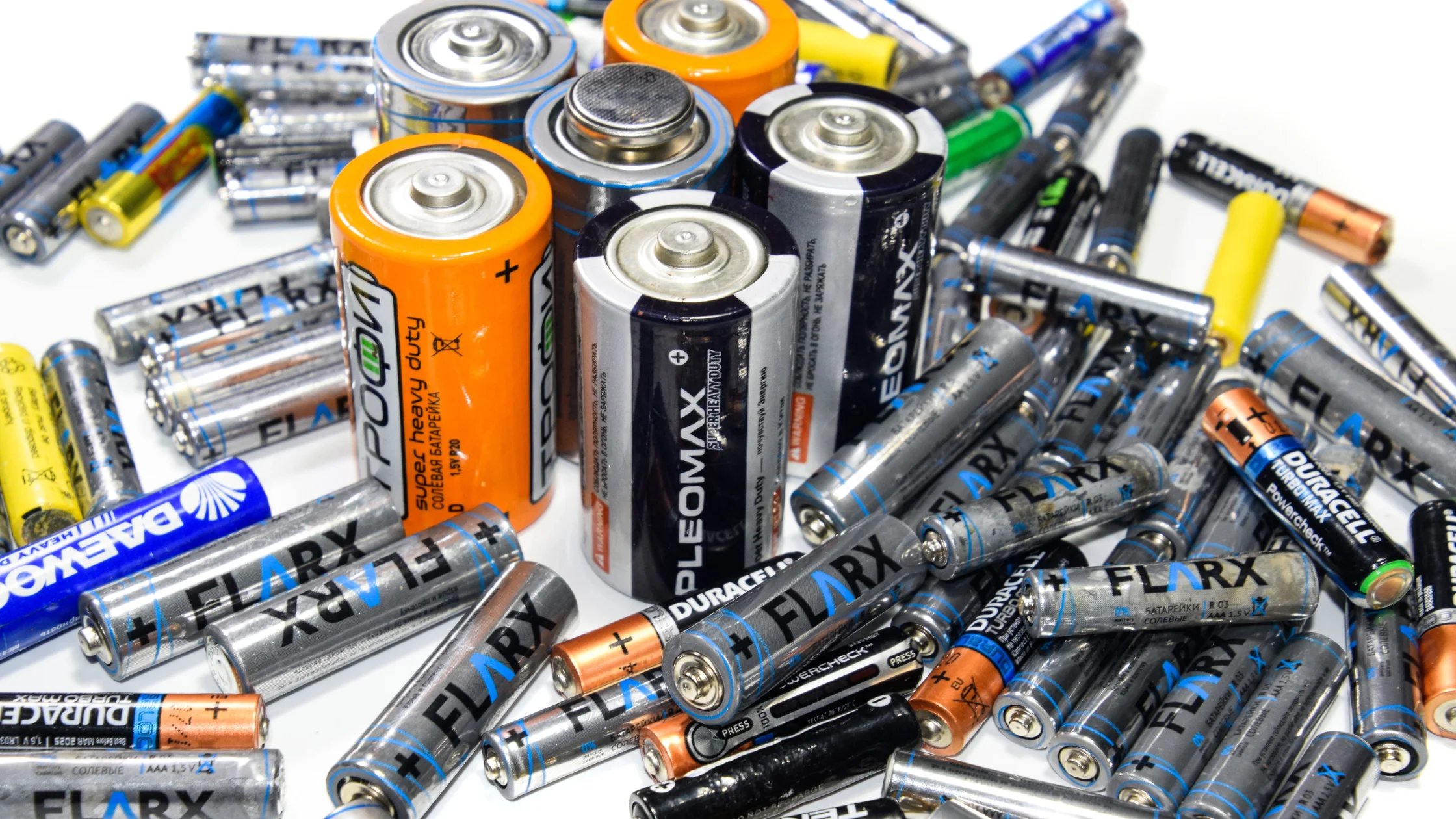
The historical reliance on traditional lithium ions has revealed a high price to pay: premature structural degradation resulting from the constant ionic movement between the poles of cells.
This vulnerability directly impacts the electric mobility model and renewable energy storage, where the premature replacement of modules generates unsustainable financial and operational costs.
The critical point lies in the formation of dendrites — small metallic needles that pierce the internal separator and cause serious short circuits during continuous operation.
Replacing volatile organic solvents with solid matrices has become a matter of commercial survival for large manufacturers and heavy technology startups.
Reports from National Renewable Energy Laboratory Studies show that stabilizing the physicochemical interface between the electrode and the electrolyte is the only way to stop fatal parasitic reactions.
This requires mapping how thermal expansion and mechanical stress affect load retention over years of uninterrupted use under severe conditions.
Ultimately, the viability of entire clean energy ecosystems depends on this residual retention of capacity in fast-charging regimes.
What promising technologies are leading the transformation of energy storage?
Introducing silicon nanoparticles into the anodes emerged as the boldest shortcut to create more durable batteries, theoretically multiplying the volume of trapped lithium.
The problem has always been silicon's tendency to swell like a sponge during loading; however, hybrid compounds with graphite have finally managed to contain this destructive deformation.
In cathodic layers, the elimination of cobalt in favor of nickel- and manganese-rich compositions reduces geopolitical extraction bottlenecks and lowers the cost of the production process.
Atomic layer deposition (ALD) coating techniques now protect crystalline structures against corrosive attack from acids generated during electrolysis.
Meanwhile, sodium-ion cells are ceasing to be an academic curiosity and are assuming strategic roles in the static storage of regional power grids.
Computational models simulate intermolecular interactions in hours, cutting out years of empirical trial and error in the discovery of new stabilizing additives.
All of this converges to ensure that next-generation cells retain well over 80% of their operational capacity after intensive cycles.
How does solid-state chemistry promise to solve electrode degradation?
The premise of the solid state is elegantly simple: eliminate the liquid electrolyte and replace it with a rigid, highly conductive ceramic or polymeric barrier.
In practice, this eliminates the danger of thermal runaway and leaks, allowing the use of pure metallic lithium anodes without the specter of spontaneous combustion.
With no volatile components reacting at the electrode interface, the gradual loss of active ions decreases to almost insignificant levels during the first few years.
Ceramic structures such as garnet and synthetic sulfides achieve ionic conductivity similar to that of fluids, physically containing internal mechanical expansions.
However, the troublesome challenge of strength at rigid solid-solid junctions persists, something that heat treatments and nanometric interlayers have been gradually mitigating.
This mechanical robustness allows the new architectures to operate with ample margin in extreme temperature variations that would completely paralyze conventional cells.
The shift to solid matrices is definitely redefining the durability standard that the industry considered acceptable until recently.
++ Auroras on Mars reveal clues about the planet's atmosphere.
What data proves the real advances in new battery architectures?
Laboratory metrics confirm that replacing traditional materials is not a theoretical promise, but a tangible shift in the operational limits of cells.
The following table compares the performance of different architectures against the demanding durability and safety parameters required by the market.
| Battery Technology | Energy Density (Wh/kg) | Average Useful Life (Cycles) | Risk of Thermal Runaway | Main Advantages |
| Conventional Lithium-Ion (LFP/NMC) | 180 – 250 | 1,500 – 3,000 | Moderate to High | Competitive cost and consolidated manufacturing infrastructure |
| Silicon-Graphite Anode | 300 – 380 | 2,500 – 4,000 | Moderate | High energy density with good retention. |
| Solid State Ceramic | 400 – 500+ | 5,000 – 10,000+ | Extremely Low | Extreme stability and unprecedented longevity. |
| Advanced Sodium-Ion | 140 – 170 | 4,000 – 6,000 | Very low | Abundant raw materials and reduced cost per kWh. |
The numbers show how refining components multiplies the available lifecycles for commercial fleets and residential systems.
++ Why are the oceans changing color in some regions?
What are the main industrial bottlenecks for large-scale production?

Moving from micrograms synthesized in laboratories to the scale of gigafactories is where most electrochemical revolutions tend to slow down drastically.
Ceramic electrolytes require cleanrooms with near-absolute humidity control, increasing the initial capital cost for setting up new production lines.
The synthesis of silicon nanostructures in commercial volumes remains an expensive process, hindering the immediate replacement of traditional synthetic graphite.
Analyses published by Massachusetts Institute of Technology They point out that standardizing assembly methods without breaking the fragile ceramic discs is the biggest challenge today.
Any microscopic oscillation in the thickness of the ceramic film generates current concentration points, leading to microshort circuits and unforeseen catastrophic failures.
Furthermore, validating the actual durability of these cells requires reliable, accelerated methods, since no one can wait a decade to launch a product.
Only when process engineering overcomes these operational obstacles will we see these technologies dominating the shelves of mass-market consumer goods.
How does artificial intelligence accelerate the discovery of new chemical compounds?
Generative models and virtual sorting algorithms scan complex crystallographic maps in seconds, projecting promising structures for create more durable batteries.
Quantum mechanics simulations anticipate how new salts and electrolytes will behave under high voltage before any beaker is even touched on the workbench.
Computer vision systems integrated into assembly lines identify invisible microcracks and imperfections, reducing the rate of discarded cells produced.
The combination of robotic arms and predictive platforms allows for thousands of automated daily syntheses, testing load curves in record time.
Open and collaborative databases connect research centers around the globe, preventing the unnecessary duplication of efforts on unviable chemical routes.
Battery managers powered by machine learning dynamically adjust recharge rates, preventing thermal stress from prematurely degrading the cell.
This combination of computational power and pure chemistry has drastically reduced the time between theoretical hypothesis and functional cell.
What is the environmental impact of the expansion of long-life batteries?
Doubling or tripling the lifespan of cells immediately relieves pressure on lithium, cobalt, and nickel mining regions around the world.
Batteries that operate for two decades postpone the disposal of tons of complex waste by years, easing bottlenecks in the post-consumer recycling chain.
Manufacturing fewer replacement parts for electric vehicles directly reduces the carbon footprint accumulated during intensive manufacturing processes.
In network-connected storage systems, the longevity of the modules makes the replacement of gas-fired peak-load thermal power plants financially viable.
Recovering precious metals at the end of a fuel cell's lifespan becomes a more profitable process when the physical structure is disposed of without serious contamination.
The transition to modular architectures allows for the replacement of only the specifically damaged cells, preserving the rest of the system for much longer.
It's about understanding that true energy sustainability doesn't just come from clean energy sources, but from the length of time we can retain that captured energy.
How do new charging methods preserve cell health?
Predictive thermal managers regulate the flow of amperes based on internal sensors, preventing heat from degrading the cathode's crystalline structure.
The use of interleaved current pulses allows ions to settle in the anode matrix without creating destructive voltage overlevels.
Monitoring subtle variations in impedance during loading helps identify local stress points before any irreversible damage occurs to the separator.
Pre-conditioning the battery pack temperature minutes before connecting to ultra-fast charging stations eliminates thermal shock, which reduces usable capacity.
Intelligent balancing systems ensure that all cells operate under identical conditions, preventing weak units from overloading the assembly.
Avoiding extremes of deep charging and constant overloading remains the golden rule for ensuring that any chemical reaches its maximum service life.
The combination of refined materials and intelligent electronic control is what guarantees the long-term efficiency of these systems.
The race to reinvent energy storage has gone from being just a quest for greater autonomy to becoming the foundation of the entire ongoing technological transition.
The combination of solid-state chemistry, silicon anodes, and control algorithms is surpassing historical limits that seemed insurmountable a decade ago.
Although the challenge of industrial scale still holds back the pace of adoption in the mass market, the results obtained in the laboratory show a path of no return.
The era in which we accepted the accelerated degradation of our devices as inevitable is finally coming to an end.
++ How Science Is Transforming Waste into Fuel
Frequently Asked Questions (FAQ)
What makes solid-state batteries more durable than conventional ones?
Solid-state batteries use a rigid ceramic or polymer electrolyte instead of flammable liquids. This physical barrier prevents dendrite growth at the anode and drastically reduces parasitic chemical reactions, allowing them to withstand thousands of charge cycles without significant capacity loss.
Why does using silicon in the anode help create more durable batteries?
Silicon can store up to ten times more lithium ions than traditional graphite.
When integrated into nanostructured matrices that absorb its natural mechanical expansion during loading, it allows the creation of cells with greater capacity and excellent structural stability over time.
When will next-generation batteries be commercially available on a large scale?
Although hybrid solutions with silicon already equip some select devices and vehicles, mass-produced solid-state batteries for the broad market should become industrially consolidated over this decade, as new manufacturing lines reduce their operating costs.