Megalithic structures that still challenge modern engineers.
To the megalithic constructions They evoke a strange sense of modesty in modern engineering.
Advertisements
Seeing blocks weighing tens of tons fitted together with millimeter precision, erected without combustion engines or structural calculation software, shatters our naive illusion of linear progress.
To decipher these monuments, we need to go beyond mere aesthetic contemplation.
This involves examining the mechanics of rocks, the reading of the sky, and the logistics of transportation developed by societies that thought about matter in a completely different way than we do.
Next, I explore the technical hypotheses, the myths surrounding the transportation of these stones, and the reason why these works continue to defy contemporary construction standards.
Summary
- What makes megalithic constructions a technical challenge?
- Which monuments intrigue contemporary engineering?
- How did ancient peoples transport blocks weighing hundreds of tons?
- What machining and fitting techniques were applied to hardstone?
- Comparative table of the main megalithic sites in the world.
- What is the influence of megalithic engineering on current structures?
- Conclusion
- Frequently Asked Questions (FAQ)
What makes megalithic constructions a technical challenge?
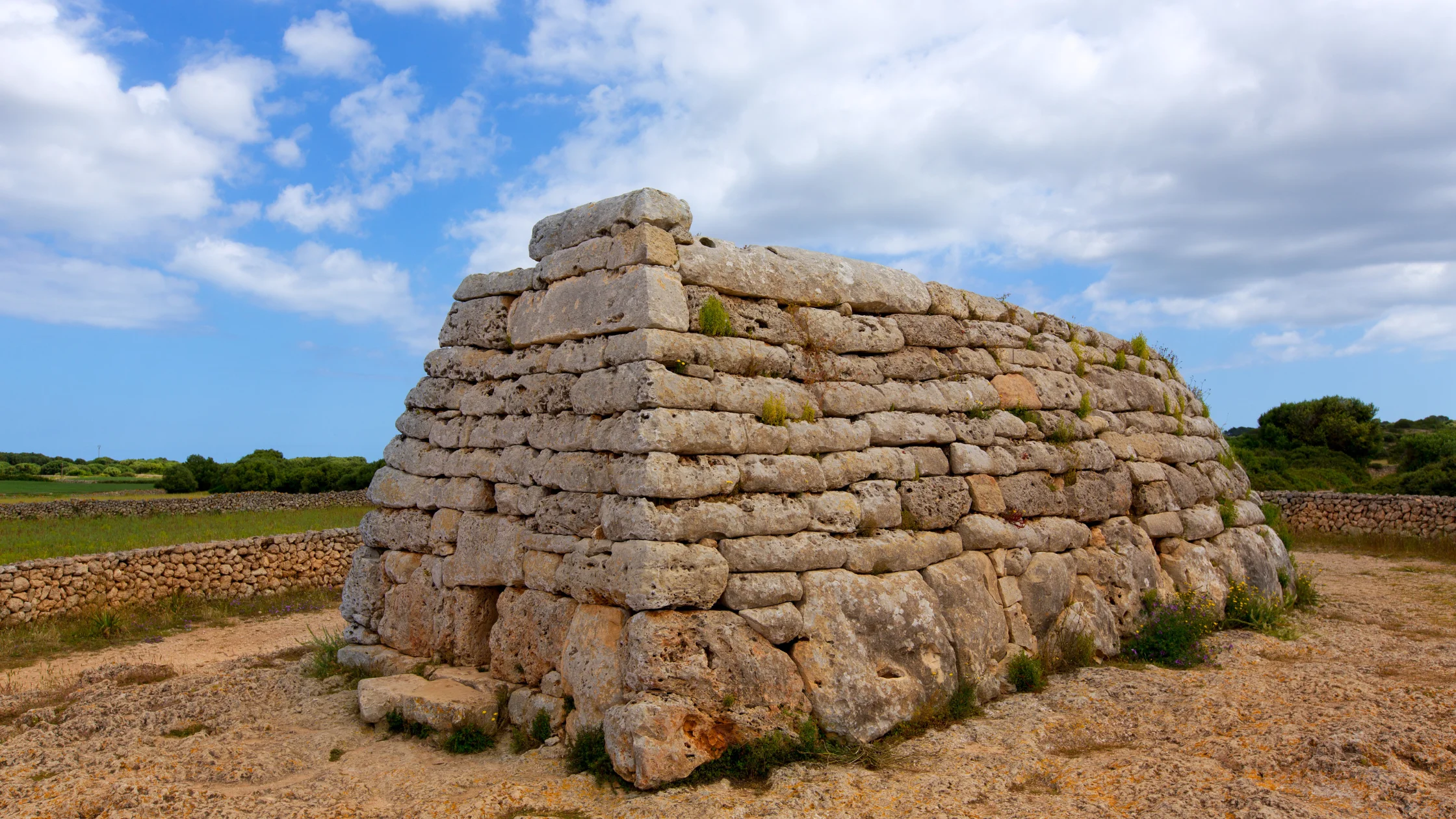
What is shocking in the study of megalithic constructions It's not just brute force, but the physical mastery of inflexible materials. Civilizations without access to tempered steel managed to shape granite, basalt, and andesite with almost factory-like precision.
There is something deeply intriguing about the fact that these structures remain standing after millennia of harsh weather and seismic activity, while modern viaducts and buildings require structural repairs just a few decades after completion.
Civil engineers are trying to decipher the stress distribution in these mortarless walls. So-called dry masonry is not merely a lack of cement: it's an architectural choice that demands surgical precision on the face of each rock.
Which monuments intrigue contemporary engineering?
In Lebanon's Beqaa Valley, the Baalbek complex houses the famous Trilithon — three limestone monoliths weighing over eight hundred tons each. Lifting or moving something of that magnitude today would require large industrial cranes.
In South America, the Sacsayhuamán fortress displays a cyclopean mosaic of andesite. The surfaces were carved with such tight joints that a knife blade cannot find a gap to penetrate.
Stonehenge in England goes beyond cargo handling by integrating acoustics and astronomy on the same plane. Meanwhile, Göbekli Tepe in Turkey turned archaeology on its head by proving that monumental architecture predates even established agriculture.
How did ancient peoples transport blocks weighing hundreds of tons?
Experimental archaeology often suggests the use of wooden rollers, clay-lubricated tracks, and articulated lever systems. It's a functional explanation, but one that often underestimates the scale of the collective effort required.
Dragging enormous stones across uneven terrain required primitive traffic engineering, with the prior preparation of compacted roads and river channels capable of withstanding devastating friction.
Lifting these blocks up steep ramps without breaking the material or crushing the workforce remains the major logistical challenge that theoretical physics attempts to simulate on a computer.
Mechanical strength parameters and heavy load behavior in civil engineering works can be explored in greater detail on the portal of... American Society of Civil Engineers, an international benchmark in the sector.
What machining and fitting techniques were applied to hardstone?
Without diamond cutting tools, the builders resorted to the continuous impact of dolerite hammers combined with abrasion from quartz sand and water — a work of almost obsessive patience that wore down the rock through friction.
The big move of megalithic constructions It lies in the dynamic behavior of its foundations. The mortarless joints act as natural shock absorbers, allowing the blocks to oscillate during earthquakes without cracking the structure.
This is empirical wisdom about the absorption of kinetic energy that contemporary earthquake engineering took centuries to formalize into mathematical equations.
++ How Did the First Numbering Systems in History Emerge?
What makes these monuments a technical challenge?
The study of these structures reveals impressive structural solutions, as civilizations without access to tempered steel moved and shaped monoliths with extreme mechanical precision.
The main difficulty lies in explaining how ancient populations achieved such high levels of structural stability, withstanding millennia of harsh weather and seismic activity.
Contemporary civil engineers analyze the load distribution in these masonry structures, attempting to replicate the physics of dry joints that eliminated the need for chemical binders.
This age-old mastery demonstrates an advanced empirical knowledge of the plasticity of materials under concentrated loads of great magnitude in open environments.
++ The Mandela Effect: Why so many people remember non-existent facts.
Comparative table of the main megalithic sites in the world.
Gathering data from these monuments helps to gauge the volume of material and the historical context in which each civilization defied gravity.
| Megalithic Site | Location | Estimated Maximum Weight | Approximate Dating | Materials Used |
| Baalbek (Trilithon) | Lebanon | 800 tons | 1st century BC. | Limestone |
| Sacsayhuamán | Peru | 128 tons | 15th century AD. | Andesite and Limestone |
| Stonehenge | United Kingdom | 25 tons | 3000 – 2000 BC. | Sandstone and Blue Stones |
| Göbekli Tepe | Türkiye | 50 tons | 9600 BC. | Limestone |
| Moai Statues (Rano Raraku) | Easter Island (Chile) | 86 tons | 1100 – 1680 AD. | Volcanic Tuff |
Technical behind-the-scenes stories that continue to surprise science.
Beyond the exhaustive discussion about how to move massive volumes of rock, the leveling of the terrain reveals a geometric precision that often goes unnoticed by the layperson.
The spatial orientation of these foundations in relation to the cardinal points and astronomical events requires precise angular measurements, proving that these builders mastered advanced concepts of topography well before the invention of the theodolite.
This combination of astronomical calculation, ground reading, and physical execution explains why the structure remains level and structurally stable after millennia of continuous exposure to the elements.
++ Optical illusions: why your brain misinterprets images.
What is the influence of megalithic engineering on current structures?

Modern designers have turned to these ruins in search of alternatives to the planned obsolescence of civil construction. The gravitational stability of ancient stones offers valuable lessons on extreme durability.
The principle of articulated dry joints, for example, inspires the development of interlocking precast blocks for areas of high seismic activity, reducing the reliance on flexible metal connectors.
In an era pressured by the ecological footprint of reinforced concrete, looking at monuments that have survived through the ages without deteriorating is almost a mandatory exercise in architectural survival.
To explore the preservation and historical value of this world heritage site, visit the official channel of... UNESCO World Heritage Centre.
Conclusion
To the megalithic constructions They have ceased to be mere tourist attractions and have become open manuals of applied physics, logistics, and materials resilience.
The real lesson these monuments leave us with is not mystery for mystery's sake, but the realization that technical sophistication does not always require integrated circuits or digital technology.
Looking at these colossal stones, modern engineering not only discovers how the past built—it also discovers how the future can erect truly lasting structures.
Frequently Asked Questions (FAQ)
How were megalithic structures erected without cranes?
The builders combined ramps of packed earth, wooden levers, and organized human traction, using the very physics of gravity to their advantage.
What is the oldest megalithic structure ever discovered?
Göbekli Tepe, in Türkiye, erected around 9600 BC, is the oldest monumental stone structure recorded by archaeology.
Why don't the stones of Sacsayhuamán use mortar?
The custom-made notch allowed the rocks to sit perfectly, ensuring flexibility to absorb seismic shocks without collapsing.