Some people are able to recognize faces decades later.
Advertisements
It's fascinating — and even a little unsettling — how Some people are able to recognize faces decades later. of total social distancing.
They glance at a face completely altered by inevitable human aging and, without hesitation, recognize the exact identity of that person.
This unusual cognitive ability goes far beyond a sharp memory; it challenges the limits of what we know about visual perception and long-term memory storage.
While most of us struggle to remember the name of an acquaintance from last week, these individuals operate as living archives of visual identities throughout their lives.
Summary
- The Science Behind Enduring Facial Recognition
- Who are the Super-Recognizers and How Do They Operate?
- How does the brain process visual identities for so long?
- What biological factors differentiate these people from others?
- Comparison of Visual Processing Capacity
- What is the practical impact of this skill on modern society?
- Frequently Asked Questions (FAQ)
The Science Behind Enduring Facial Recognition

Human visual processing is often misinterpreted as merely a photographic camera, but the actual dynamics are far more organic and selective.
Contemporary neuroscientific research reveals that Some people are able to recognize faces decades later. due to near-surgical efficiency in the so-called fusiform area of the face.
This specific brain region functions as a high-precision mapper, permanently cataloging geometric proportions, anatomical distances, and facial shadows in the cortex.
While most of the population discards features considered irrelevant to daily survival, these individuals retain microscopic details with disconcerting ease.
Studies based on functional magnetic resonance imaging demonstrate much denser and more interconnected structural connections in the occipital and temporal lobes of these individuals.
This privileged neural architecture allows for the immediate retrieval of visual memories that, for any other standard brain, would have already turned to cognitive dust.
++ Interesting things the body does during sleep.
Who are the Super-Recognizers and How Do They Operate?
Modern psychology has had to coin the technical term "super-recognizers" to describe individuals endowed with this extraordinary and unusual visual mnemonic ability.
They represent a tiny fraction — about 1% to 2% of the global population — yet stand out distinctly in rigorous laboratory perception tests.
Experts from Harvard University They exhaustively investigate how these subjects manage to isolate essential facial features even under severe physical changes, scars, or makeup.
“"Super-recognizers operate at a holistic processing level that ignores superficial distractions such as wrinkles, glasses, beards, or gray hair."”
In practice, Some people are able to recognize faces decades later. because they instinctively focus on the arrangement of the eyes and the root of the nasal septum.
This unconscious mapping strategy ensures astonishing accuracy in identifying former childhood friends or strangers seen at a glance on the subway.
The skill operates in a completely automatic way, requiring no conscious effort, mental drafts, or deliberate concentration to occur in everyday life.
How does the brain process visual identities for so long?
Long-term retention requires that information efficiently transition from short-term memory to the stable cerebral cortex.
The brain stores these identities through robust synaptic patterns that resist the natural wear and tear of years and common cellular aging.
Notably, Some people are able to recognize faces decades later. because they prevent synaptic forgetfulness, which affects ordinary citizens in a widespread manner.
This deep fixation occurs holistically, treating the face as a single, indivisible sculpture, rather than focusing on isolated parts.
When an individual encounters someone from the past, the brain instantly cross-references this data with the long-term memory bank.
This biometric biological verification process takes milliseconds to confirm identity with absolute certainty and without the famous embarrassing hesitations.
What biological factors differentiate these people from others?
Genetics plays the role of master builder in determining how efficiently we process complex visual stimuli on a daily basis.
Studies with identical twins prove that the ability to memorize facial features has a strong hereditary and structural biological component, almost like an internal fingerprint.
Thus, Some people are able to recognize faces decades later. due to the favorable genetic makeup they inherited from their direct ancestors.
Furthermore, the volume of gray matter in specific cortical areas shows significant variations among the individuals analyzed in the laboratory.
Those with higher cell density in these zones process variations in lighting and angles with an almost unbelievable superiority.
This morphological characteristic protects visual memory against distortions caused by the passage of time and fluctuations in biological age.
++ Why time flies by so fast: interesting facts that really explain it.
Comparison of Visual Processing Capacity
The table below summarizes accumulated scientific data on the glaring disparities in physiognomic recognition between different profiles of individuals in society.
| Population Profile | Accuracy in Recognition | Visual Retention Time | Neurobiological Basis |
| General Population | Average (50% to 60%) | Short to Medium Term | Standard synaptic connections |
| Super-Recognizers | Very high (95% to 99%) | Long Term (Decades) | High density in the fusiform area |
| Prosopagnostics | Very low (Below 20%) | Almost Zero | Dysfunction in the fusiform gyrus |
It is clearly evident that Some people are able to recognize faces decades later. operating at statistical levels completely outside the normal and predictable curve.
What is the practical impact of this skill on modern society?
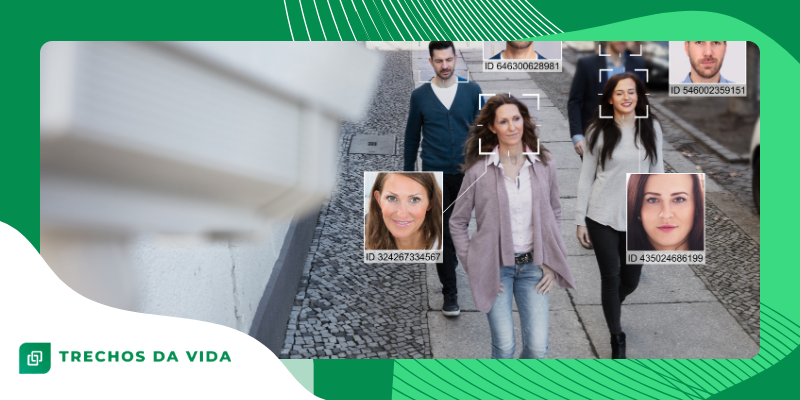
The usefulness of this cognitive skill extends far beyond mere social curiosities or emotional family reunions on street corners in big cities.
International security agencies and police departments utilize the talent of these individuals to identify suspects in chaotic crowds and demonstrations.
We know that Some people are able to recognize faces decades later. examining old and blurry images from very low-resolution surveillance cameras.
Artificial intelligence systems attempt to replicate this biological model, but they still fall short of human intuition in complex scenarios of partial facial occlusion.
The trained human eye surpasses algorithms when factors such as extreme emotional expressions alter the basic physiognomy of the target being investigated.
Understanding how this phenomenon occurs expands our perception of the limits of the mind. If you suspect you have this trait, it's worth seeking validated neuropsychological tests.
Deepen your knowledge about the mysteries of memory by visiting the science outreach portal. Nature Neuroscience, a global reference in the field.
+ Interesting Things That Make the Body Feel Afraid
Frequently Asked Questions (FAQ)
What determines the ability to recognize old faces?
This capacity is determined primarily by the genetic and anatomical efficiency of the fusiform area of the face in the brain, allowing for holistic processing and long-term storage of each individual's unique geometric traits.
Is it possible to train the brain to become a super-recognizer?
It is not possible to reach the level of a super-recognizer through training alone, as this condition stems from a specific genetic and structural predisposition of the central nervous system, although memorization techniques can mitigate everyday forgetfulness.
Is there any relationship between this skill and general intelligence?
Studies show that facial super-recognition is an isolated and modular cognitive skill, showing no direct correlation with high intelligence quotients (IQ) or other verbal and numerical memorization abilities.
What is the opposite of facial super-recognition?
The opposite is prosopagnosia, a neurological condition characterized by a chronic inability to recognize faces, where the patient cannot identify close relatives or, in severe cases, their own reflection in a mirror.