
Animals that are immortal: meet 3 species! You didn't expect this one!
Advertisements
Did you know about the existence of animals that are immortal in nature? Come find out what they are and learn more about these species!
Regardless of our origins – and this involves belief, level of education or even social class – we all grow up with a single common destiny: death.
Throughout our lives – some sooner, others later – we are introduced to the concept of death. And it is at this moment that most of us discover that sooner or later, our time in life will come to an end and we will pass on to a better one.
And this is the fate that all living beings – both humans and animals – share, right? In fact, it doesn’t quite work that way.
Although death is the final destiny for 99.9% of species, there are some that defy this natural order.
We're talking about animals that are immortal! I bet you're not familiar with these animals, are you?
But believe me, they do exist! And as if all this eccentricity weren't enough, they are even intriguing renowned scientists because of their immortality.
And it was by taking advantage of this very peculiar subject that we came up with the idea for today’s content!
Throughout this material, you will learn more about how this immortality works, which animals are immortal and what scientists already know about these species!
Animals and the long-awaited immortality
Let he who has never dreamed of being immortal, of being able to live forever and have the opportunity to do everything he has ever dreamed of, cast the first stone.
And while humans are always looking for ways to prolong life – and perhaps find the formula for the much-dreamed-of immortality – there are already some animals that can achieve this feat without much effort.
And we're about to meet them! Next, you'll discover 3 animals that are immortal and you had no idea!
3 animals that are immortal for you to know
A turtle? A type of fish? Or maybe a crustacean? If you could guess which animals have managed to discover the formula for immortality, which would you guess?
It’s time to find out what these animals are – and see if your guess is right or not!
Planarians, one of the species that can be considered immortal
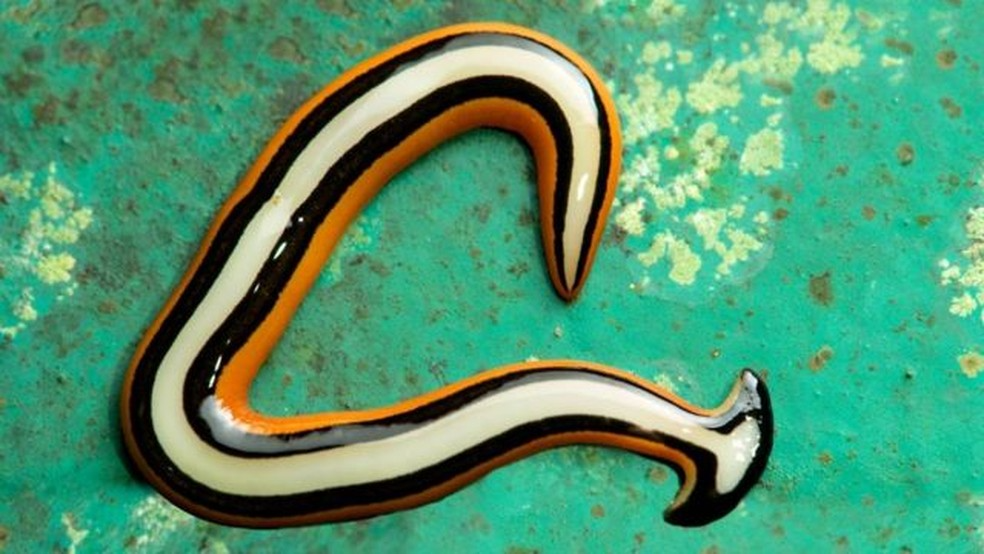
Starting our list with this species that has intrigued scholars since the end of the 19th century.
Planarians are a type of flatworm. Found all over the world, this species is on our list precisely because of its curious ability to regenerate, always dividing itself in two.
This occurs due to the species' unlimited ability to regenerate stem cells.
In nature, there are two types of planarians. While some reproduce sexually, others do so asexually. This results in their division into two.
And it is precisely this type of reproduction that has been observed by scientists. Apparently, this type of reproduction makes them capable of “rejuvenating” their own DNA.
Scientists at the University of Nottingham studied both types and discovered that those that practice asexual reproduction are able to “rejuvenate” their DNA.
In addition, planarians have higher amounts of a special enzyme that protects their cells from aging.
In other words: an immortal species!
Hydras are another animal that is immortal.

An invertebrate species, with a tubular body and tentacles around its mouth.
Reading it like this, it almost sounds like a creature straight out of a science fiction movie, right? But we're talking about hydras, creatures that live in fresh water right here on Earth.
It uses these tentacles to sting its prey, which are worms, small crustaceans and other invertebrates.
Just like the planarians from the previous topic, this species is among our list of animals that are immortal because of their remarkable ability to regenerate themselves and parts of their bodies.
And this immortality is achieved by the stem cells that the species possesses. In this case, they can renew themselves indefinitely.
Furthermore, scientists also observed that some hydras studied by them did not show any signs of aging throughout the studies.
Turritopsis dohrnii, the jellyfish, is also on the list of animals that are immortal.
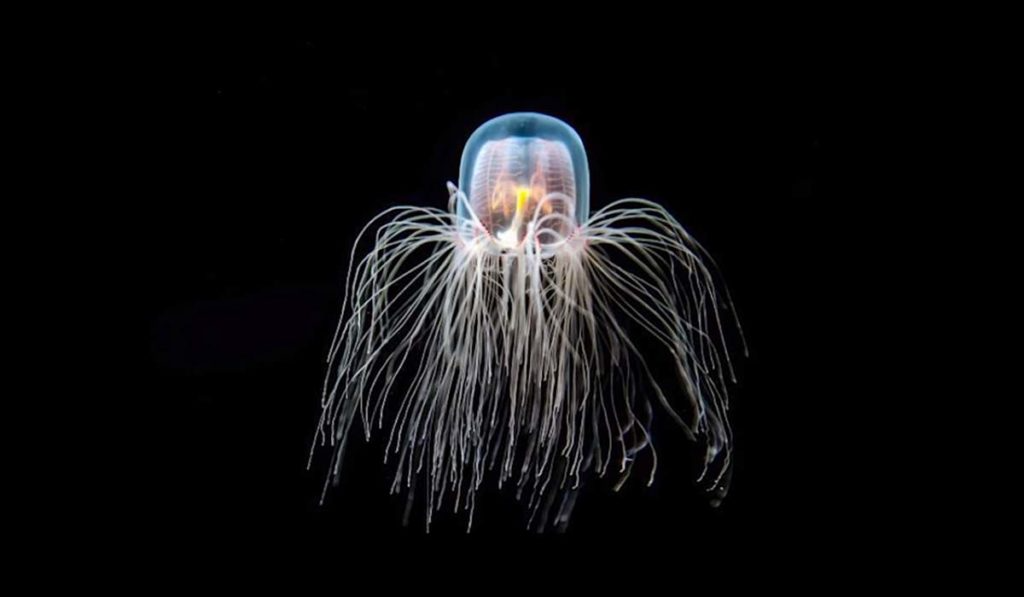
From the list of animals that are immortal, this is perhaps the species that is best known to the general public.
The deadly jellyfish – which is known by the scientific name Turritopsis dohrnii – is a species known to live in marine waters.
Although it was discovered in the Mediterranean Sea around 1880, over time the species has expanded throughout the world's seas and is now found in other locations.
Despite its respectful name, this species of jellyfish is very small and its diet is based on foods such as fish eggs, plankton and even small molluscs.
The unique aspect of this species is its behavior. Studies have shown that jellyfish are capable of restarting their life cycle.
It works more or less like this: when going through a situation involving stress, the species regresses to an earlier phase of development.
And when this happens, at the same time that it rejuvenates, it is as if the species clones itself.
Fascinating, right?
What do scientists think about these animals that are immortal?
Remember that we mentioned here in the text how immortality is one of the greatest dreams of human beings? That is the pure truth!
And of course the greatest scientists and researchers in the world wouldn't let the discovery of animals that are immortal go unnoticed, right?
In addition to being a topic that already arouses natural curiosity, scientists have begun studies on the organisms of these animals to better understand how they work and, at the same time, discover whether humans can also benefit from these factors and, who knows, find ways to delay our aging.
Could this become a reality? Only the future will tell!
Conclusion
What did you think of these immortal animals? Have you ever heard of any of them?
As we have already mentioned throughout the text, knowing about the existence of animals that have this 'ability' can be a very important step towards treating aging.
And, who knows, find new ways to treat diseases that affect people who are already at a more advanced age.
Now we just have to wait for the next steps of these studies and hope they yield good results!
Did you like this special content? Then I think you should take the opportunity to read it too Do cats feel cold? Learn how to protect your cat in winter
Content with information from BBC
