How cooking can become therapeutic
Advertisements
The act of cooking can become therapeutic when we realize that the kitchen is more than a space to prepare food.
In short, it is a refuge for the mind, a laboratory of emotions and a stage for creativity.
In a fast-paced world where stress and anxiety often dominate, cooking offers a meaningful break, a moment to reconnect body and soul.
But how do you transform something so everyday into a restored practice?
Continue reading and learn more about it:
The act of cooking can become therapeutic
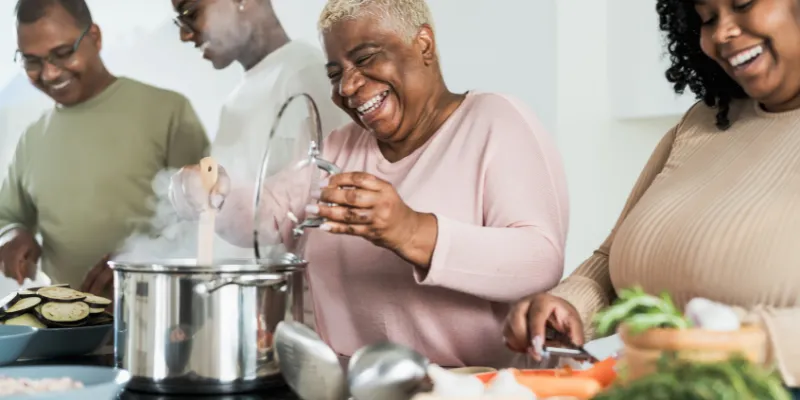
Cooking, by its nature, requires presence.
When chopping vegetables, seasoning meat, or adjusting the heat, you are asked to slow down and focus on the now.
This sensory practice—the sound of sizzling oil, the aroma of fresh herbs, the texture of dough being kneaded—creates a state of mindfulness, similar to meditation.
Studies, such as the one published in Journal of Positive Psychology (2016), indicate that creative and manual activities, such as cooking, can reduce anxiety symptoms by up to 30% in individuals who practice them regularly.
Thus, the act of cooking can become therapeutic by anchoring the mind in the present, moving away from future worries or ruminations about the past.
Furthermore, cooking is an exercise in autonomy.
Choosing ingredients, planning a recipe and repeating it successfully reinforces the feeling of control, something especially important in times of uncertainty.
Unlike other forms of therapy, such as writing or painting, cooking has a tangible result: a meal that can be enjoyed and shared.
++ Colors that convey peace: how to use them in decoration
This immediate reward feeds not only the body, but also self-esteem, transforming the kitchen into a space of empowerment.
So why not turn your next meal into an act of self-care?
The Kitchen as a Space for Self-Knowledge

The act of cooking can become therapeutic as it reveals layers of who we are.
Every choice in the kitchen, from the type of dish to the way it is prepared, reflects values, memories and even aspirations.
For example, when you recreate a recipe for a cake your grandmother used to make, you are not just mixing flour and eggs; you are rekindling emotional ties, processing memories and honoring traditions.
++ What is “sleep hygiene” and how to set up a bedroom that promotes it
This connection to the past can be deeply healing, especially for those seeking reconciliation with their roots.
Example 1: The Reconciliation Soup
Imagine Ana, a young woman who, after moving to another city, felt disconnected from her family.
He decided to prepare a cassava soup that his mother made on cold nights.
While chopping ingredients, she recorded conversations in the kitchen at home, which led her to call her mother and share the experience.
The act of cooking not only alleviated her loneliness, but also strengthened family bonds, showing how the kitchen can be a bridge to human relationships.
Additionally, cooking allows you to explore your creativity without fear of judgment.
Unlike a professional environment, where mistakes can have serious consequences, the kitchen is a safe space to experiment.
Swap out a spice, tweak a recipe, or invent something new, resilience and mental flexibility.
This creative freedom is therapeutic because it stimulates the brain to seek solutions, quickly eliminating the weight of self-criticism.
Thus, the act of cooking can become therapeutic by offering an emotional playground, where failure is just an invitation to try again.
Cooking can become therapeutic: Table:
| Benefits of Cooking for Self-Knowledge | Description |
|---|---|
| Reconnecting with Memories | Prepare traditional recipes that are emotionally rekindled, promoting emotional well-being. |
| Stimulating Creativity | Experimenting with new flavors and techniques develops imagination and confidence. |
| Emotional Resilience | Dealing with mistakes in the kitchen teaches you to accept failure as part of the learning process. |
Cooking as Active Meditation

If traditional meditation seems challenging, the act of cooking can become therapeutic by functioning as an active therapy.
Every step of the process, from washing the ingredients to serving the dish, requires full attention, which helps to quiet the mind.
++ Soothing sounds: how to bring them into your home
Think of the rhythmic movement of chopping onions or the care taken when stirring a sauce to avoid burning it.
These seemingly simple actions create a flow of concentration that blocks intrusive thoughts, promoting a state of calm.
Analogy: The Kitchen as a River
Cooking is like sailing on a calm river.
Each task—chopping, sautéing, seasoning—is a current that guides you forward, requiring you to move with the flow, without resistance.
Just as the river never stops questioning its path, Cook asks you to surrender to the process, finding peace in the continuity of movement.
On the other hand, cooking also teaches patience.
Homemade bread, for example, requires time to rise, just as emotional healing requires waiting.
This practical learning of patience can be transferred to other aspects of life, helping to deal with frustrations.
Plus, cooking offers a sensory outlet for stress: the act of kneading dough can be as cathartic as a workout.
Thus, the act of cooking can become therapeutic by transforming simple routines into care rituals.
| Cooking Techniques for Active Meditation | Expected Benefit |
|---|---|
| Chop Ingredients Carefully | Improves concentration and reduces anxiety. |
| Hand kneading (e.g. bread, dough) | Provides deep physical and emotional relief. |
| Observe the Process (e.g. boiling, baking) | Promote patience and presence in the moment. |
Social Connection and the Power of Sharing

The act of cooking can become therapeutic as you bond with other people.
Preparing a meal for friends or family is an act of generosity that strengthens relationships.
When you cook for someone, you are offering more than food: you are sharing care, time, and intention.
This process nourishes both the person preparing it and the person preparing it, creating a cycle of affection and connection.
Example 2: The Reconnection Dinner
Consider John, who faced a period of isolation after a breakup.
He decided to organize a dinner for close friends, preparing a Sicilian lemon risotto.
During the preparation, João found pleasure in planning the menu and, on the night of the dinner, the conversations flowed, rekindling his sense of belonging.
Cooking for others helped him overcome loneliness, showing him how cooking can be a tool for social connection.
Additionally, cooking in groups such as cooking workshops or family gatherings promotes collaboration and communication.
These moments break down barriers, allowing people to share stories and emotions.
A relevant statistic from American Psychological Association (2020) points out that 68% of people who regularly cook with others report greater satisfaction in their interpersonal relationships.
Thus, the act of cooking can become therapeutic by transforming the kitchen into a space for dialogue and unity.
| Social Benefits of Cooking | Impact on Relationships |
|---|---|
| Share Meals | Strengthens emotional bonds and promotes mutual well-being. |
| Group Cooking | Encouragement of collaboration and interpersonal communication. |
| Offer Food | Generates feelings of gratitude and reciprocity. |
Overcoming Obstacles to Make Cooking Therapeutic

Image: Canva
Not everyone sees the kitchen as a welcoming space.
For some, cooking may seem like a daunting task, associated with pressure or a lack of skill.
However, the act of cooking can become therapeutic even for beginners, as long as the obstacles are participatory with personality.
Starting with simple recipes, like an omelet or a salad, reduces intimidation and allows for quick gains in confidence.
Additionally, it is important to redefine success in the kitchen.
A dish doesn’t have to be perfect to be therapeutic; the value is in the process, not the result.
Mistakes, like a cake that didn't rise, can be opportunities for learning and even laughter.
Finally, setting aside a specific time to cook, without distractions, helps to transform the activity into a personal ritual, free from external pressures.
What if the kitchen becomes your sanctuary?
Experimenting with cooking with intention, whether for yourself or others, can reveal therapeutic potential that goes beyond food.
The act of cooking can become therapeutic by providing a space to create, reflect and connect, transforming each meal into a moment of healing.
| Common Obstacles and Solutions | Strategy to Overcome |
|---|---|
| Lack of Skill | Start with simple recipes and practice regularly. |
| Pressure for Perfection | Value the creative process, not the end result. |
| Lack of Time | Set aside specific times to cook calmly. |
Frequently Asked Questions about Cooking as Therapy
| Question | Response |
|---|---|
| Do I need to be good in the kitchen for cooking to be therapeutic? | No, the focus is on the process, not perfection. Even simple recipes can bring emotional benefits. |
| How to find time to cook with a busy schedule? | Plan simple meals and set aside 15-30 minutes a day to cook mindfully. |
| Is cooking alone as therapeutic as cooking for others? | Yes, cooking alone promotes self-knowledge, while cooking for others strengthens social bonds. |
| What types of recipes are most therapeutic? | Recipes that involve hands-on steps, such as baking bread or chopping vegetables, are especially relaxing. |
| How to deal with the frustration of mistakes in the kitchen? | See mistakes as part of learning and celebrate small achievements in the process. |
Cooking can become therapeutic: Conclusion
The act of cooking can become therapeutic by offering a unique combination of mindfulness, creativity and connection.
Whether it's reconnecting with memories, practicing patience, or sharing moments with others, the kitchen is an accessible space for anyone seeking emotional balance.
Unlike other therapies, cooking does not require large investments or advanced skills, just the desire to experiment.
So the next time you walk into the kitchen, ask yourself: what if this was more than just a meal to prepare?
With every cut, mix, or seasoning, you may be building not just a dish, but a path to well-being.
The act of cooking can become therapeutic when embraced as a ritual of care, creativity and connection – an invitation to nourish body, mind and soul.