
Houses in Ancient Rome: luxury, art and functionality
Advertisements
Houses in Ancient Rome were not just dwellings; they were expressions of power, ingenuity and culture.
While the elites displayed opulence in their domus, with intricate mosaics and indoor gardens, the working classes occupied insulae, multi-family buildings that prioritized functionality.
However, they all shared a common trait: the ability to integrate art, practicality and social status.
Why do houses in Ancient Rome continue to fascinate modern architects and historians?
The answer lies in the way they combined beauty and utility, adapting to the needs of a complex society.
This text explores how houses in Ancient Rome reflected luxury, art and functionality, with original examples, a relevant statistic and an analogy that illuminates their relevance.
Thus, we will delve into a past where architecture not only housed, but told stories.
Luxury in the Homes of the Elite: The Domus as a Status Symbol
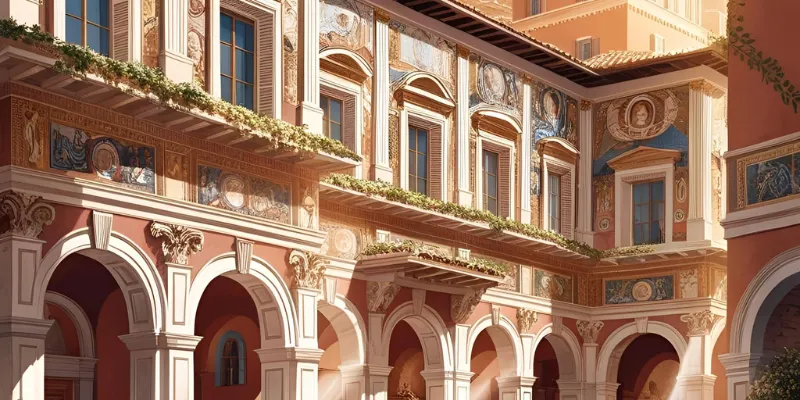
In Ancient Rome, the domus It was much more than a residence; it was a stage where the Roman elite played their social role.
++ The curious history of wallpaper
In this sense, these houses, exclusive to the wealthy classes, were designed to impress.
With central atriums open to the sky, rain-collecting pools (impluvium) and ornate reception rooms, the domus displayed wealth in every detail.
For example, the House of the Faun in Pompeii boasted a 40-square-meter mosaic depicting the Battle of Issus, a masterpiece that rivaled modern paintings in complexity.
Furthermore, luxury was not limited to aesthetics.
The functionality was present in the heating systems (hypocaustum), which circulated hot air under the floor, ensuring comfort even in harsh winters.
This level of sophistication was rare outside of Rome, which reinforces the idea that the domus was a microcosm of Roman supremacy.
Interestingly, the Romans used the layout of rooms to reinforce hierarchies.
In other words, visitors of lower status were received in less ornate areas.
In turn, as political allies they had access to private spaces, such as the triclinium (dining room).
Imagine a domus like a high-end smartphone today: both combine advanced technology, impeccable design and social status.
Just as we display our devices to signal success, the Romans used their homes to assert power.
However, what made these homes unique was their ability to balance ostentation with practicality, a lesson that still resonates in contemporary architectural design.
|
Features of Domus |
Description |
|---|---|
|
Atrium |
Central space with impluvium for rainwater collection, status symbol and functionality. |
|
Mosaics and Frescoes |
Detailed decorations with mythological or historical scenes, displaying wealth and culture. |
|
Hypocaustum |
Underfloor heating system, used in elite homes for thermal comfort. |
Art as the Soul of Houses in Ancient Rome

Image: Canva
Art in homes in ancient Rome transcended mere decoration; it was a visual narrative that connected residents to the divine, history, and society.
Frescoes on the walls of domus and villae They depicted everything from mythological scenes, such as Venus emerging from the sea, to idealized landscapes that brought nature indoors.
++ Cities in Brazil with funny names and their stories
For example, in the Villa dei Misteri in Pompeii, a series of frescoes show Dionysian rituals, suggesting that the house was also a space of spirituality.
Furthermore, the mosaics, made with thousands of tesserae (small colored stones), were true works of artistic engineering.
A hypothetical case would be the House of Lucius Valerius, a fictional Roman senator who commissioned a mosaic depicting his naval victories in the Adriatic Sea.
In short, this type of art not only beautified but reinforced the owner's identity, functioning as visual propaganda.
Statistically, excavations at Pompeii reveal that about 70% of the domus had at least one significant mosaic, highlighting the centrality of art in domestic life.
On the other hand, even the insulae, popular housing, displayed art forms, albeit more modest.
Small niches with statues of household gods or simple paintings on the walls reflected the human need for expression, even in limited spaces.
Thus, art in Roman homes was democratic in spirit, adapting to the resources of each class, but always present as a reflection of the cultural soul of Rome.
|
Types of Art in Roman Houses |
Examples and Functions |
|---|---|
|
Frescoes |
Mythological scenes or landscapes, used to beautify and inspire. |
|
Mosaics |
Geometric patterns or historical narratives, status symbols. |
|
Statues and Niches |
Representations of gods or ancestors, with a religious and decorative function. |
Functionality: The Engineering Behind Everyday Roman Life
The functionality of houses in Ancient Rome was a testament to Roman architectural genius.
To the domus and villae were designed to maximize natural light and ventilation, with strategically placed windows and atriums that allowed air circulation.
Furthermore, the impluvium It was not just decorative; it collected rainwater, stored in underground cisterns, ensuring water self-sufficiency.
++ Ancient Civilizations That Disappeared Without a Trace
An original example would be the House of Aemilia, a fictional residence in Ostia, where the owner installed a system of lead pipes to distribute collected water to different rooms, an advanced engineering feat for the time.
Meanwhile, the insulae demonstrated functionality at scale.
These buildings, which could house dozens of families, were built with Roman concrete, a revolutionary material that allowed for tall and durable structures.
However, the functionality came with challenges: many insulae lacked adequate sanitation, and fires were common due to population density.
Still, its existence proves that the Romans prioritized practical solutions to house a growing urban population.
Think of Roman houses as a well-designed puzzle: every piece, from the atrium to the heating system, fit together perfectly to create a harmonious whole.
This pragmatic approach, combined with aesthetics, sets homes in Ancient Rome apart from other ancient cultures, where functionality often sacrificed beauty.
Isn't it fascinating how the Romans transformed basic necessities into architectural masterpieces?
|
Functional Innovations |
Impact on Roman Houses |
|---|---|
|
Impluvium and Cisterns |
Water collection and storage, promoting self-sufficiency. |
|
Roman concrete |
It allowed for durable constructions, such as insulae multi-storey. |
|
Natural Ventilation |
Atriums and windows ensured air circulation, essential in the Mediterranean climate. |
The Duality Between Domus and Insulae: Reflections of Society
The architecture of houses in Ancient Rome reflected the social divisions of the time.
THE domus, with its wide spaces and luxurious finishes, was a privilege of the elite, while the insulae served the urban masses.
This duality was not just physical, but cultural.
For example, the domus It was a space of ostentation and politics, where patricians received clients (customers) in daily patronage rituals.
In contrast, the insulae They were community centers, with shops on the ground floor and shared apartments, where life pulsed at a frenetic pace.
Furthermore, the construction of the insulae reveals the Roman ability to innovate under pressure.
As Rome grew to around 1 million inhabitants in the 1st century AD, the demand for housing required creative solutions.
To the insulae of up to five floors, unusual for the time, were a direct response to this need.
However, the precariousness of some of these structures raises questions about inequality.
In other words, while the rich enjoyed comfort, the poor faced risks in poorly maintained buildings.
Interestingly, the coexistence of domus and insulae symbolizes the complexity of Rome: a city that celebrated luxury, but did not ignore the needs of its population.
In short, this duality invites us to reflect: how do our modern cities balance opulence and accessibility?
Ancient Rome, with its houses, offers us a mirror to evaluate our own urban choices.
|
Comparison: Domus vs. Insulae |
Domus |
Insulae |
|---|---|---|
|
Target Audience |
Elite |
Working classes |
|
Structure |
Single storey house with atrium |
Multi-storey buildings |
|
Functionality |
Luxury and comfort |
Compact and affordable housing |
Frequently Asked Questions about Houses in Ancient Rome
|
Question |
Response |
|---|---|
|
How were Roman houses heated? |
To the domus used the hypocaustum, a heating system that circulated warm air under the floor and through the walls, while the insulae depended on portable braziers, which were less efficient. |
|
To the insulae were safe? |
Lots of insulae were prone to fire and collapse due to hasty construction, but the best designed ones, such as those at Ostia, were robust and durable. |
|
Were there bathrooms in Roman houses? |
Yes, the domus had latrines connected to sewage systems, while the insulae often shared public bathrooms or used chamber pots. |
|
Women had their own spaces in the domus? |
Yes, the gynaeceum It was a space reserved for women, although its existence varied depending on the house and family. |
Conclusion: The Lasting Legacy of Houses in Ancient Rome
Houses in Ancient Rome were not just buildings; they were reflections of a civilization that valued the integration of luxury, art and functionality.
In short, from domus opulent to insulae practices, each type of housing told a story about status, creativity and adaptation.
Whether it's the mosaics that told myths, the heating systems that defied the cold or the ingenuity of Roman concrete, these residences continue to inspire architects and urban planners.
Today, as we design cities and homes, we can learn from the Romans: beauty need not sacrifice practicality, and innovation can serve the elite and the masses alike.
Thus, houses in Ancient Rome remain not just as relics, but as timeless lessons on how to live well in a complex world.
