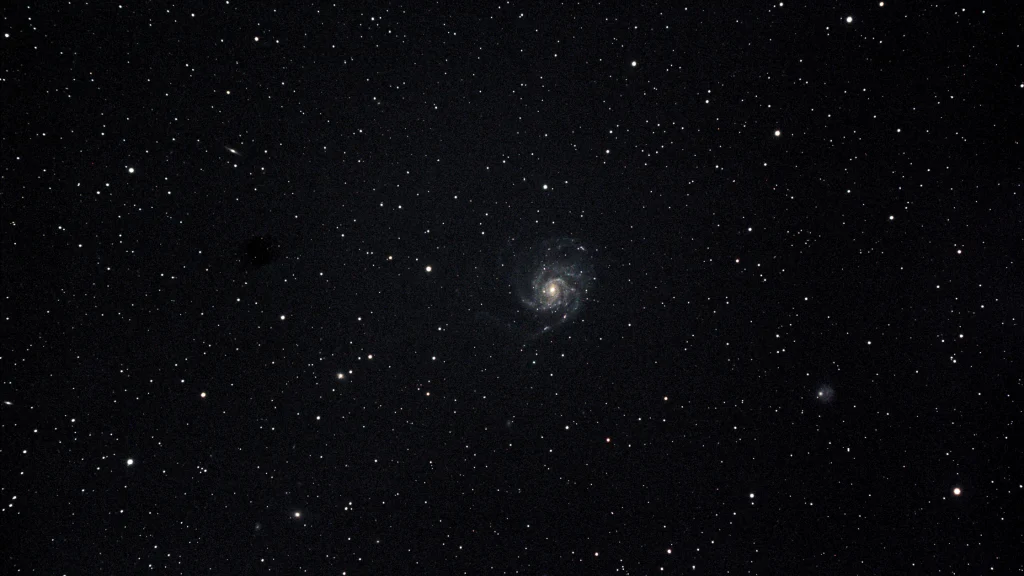
How science investigates signals coming from distant galaxies.
Advertisements
As the Science investigates signals coming from distant galaxies.The quick answer evokes monumental radio telescopes and silent satellites floating in the cosmic vacuum.
But the reality of scientific work is far more chaotic, almost an archaeological stubbornness: capturing weakened photons that have crossed the void for billions of years to try to reconstruct a history that, in many cases, has already ended.
These cosmic whispers manifest as radio waves, X-rays, or subtle disturbances of infrared light.
Deciphering this legacy requires much more than advanced reception technology; it demands extreme patience and supercomputers running cumbersome algorithms to extract useful data from the background noise, which is almost always just human interference.
In this article, we'll delve into the behind-the-scenes aspects of this silent tracking.
From the ingenuity of interferometry to the dilemmas of using artificial intelligence, you will understand what actually happens when we point our metal eyes and ears into the abyss of deep space.
Summary
- What are the main types of spatial signals captured?
- How do radio telescopes amplify messages from deep space?
- What is the role of artificial intelligence in modern astrophysics?
- What recent discoveries have changed our view of the cosmos?
- How does the scientific community differentiate between terrestrial noise and cosmic signals?
1. What are the main types of spatial signals captured?
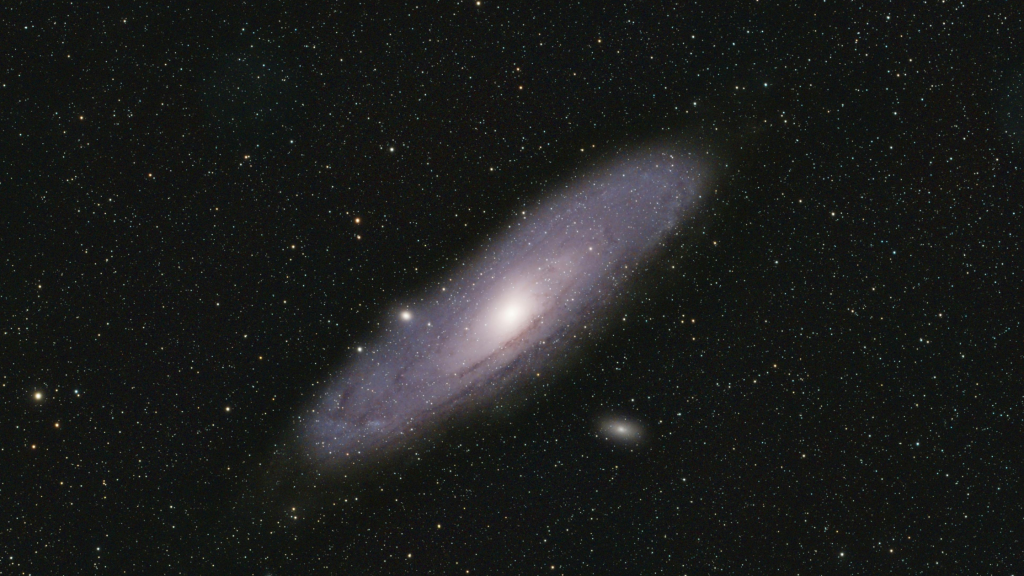
Space is not a silent desert, but rather a constant cacophony of electromagnetic emissions.
When the Science investigates signals coming from distant galaxies., She grapples with a chaotic soup of radiation, meticulously cataloging each frequency to try and deduce whether the emitter was a dying sun or something far more exotic.
Fast Radio Bursts (FRBs) are the most intriguing events in this catalog. They are millisecond pulses that release the equivalent of millions of suns at once—a fascinating mystery that still challenges our best physical models.
There are also synchrotron emissions, generated by electrons spiraling at absurd speeds within monstrous magnetic fields.
In addition to traditional electromagnetic waves, today we hear gravitational waves.
They are not composed of light, but rather of real tremors in the fabric of space-time caused by the violent merging of black holes.
It is a purely sensory way of observing the universe, a revolutionary counterpoint to a science that previously could only see what shone.
2. How do radio telescopes amplify messages from deep space?
The logic is simple, but the execution borders on the impossible: large parabolic antennas converge extremely weak waves onto a central detector.
To prevent the heat from the telescope's own circuits from drowning out the fragile signal coming from space, the receivers are cooled to temperatures close to absolute zero, ensuring maximum sensitivity.
The real evolutionary leap came with interferometry. Instead of trying to build a single, impractical antenna kilometers wide, we connected different radio telescopes scattered across the globe.
By synchronizing and cross-referencing the data received simultaneously, we create a virtual mirror the size of the Earth itself, a formidable lens focused on the deep past.
++ How science studies hidden oceans on icy moons.
3. What is the role of artificial intelligence in modern astrophysics?
The bottleneck in contemporary astronomy is no longer the lack of data, but the overwhelming excess of it.
Modern telescopes generate petabytes of information every night, a volume that overwhelms any conventional human analysis.
For this reason, the Science investigates signals coming from distant galaxies. delegating the initial screening to highly trained artificial neural networks.
These systems scour gigantic databases looking for subtle anomalies that would go unnoticed by tired human eyes.
Artificial intelligence can, for example, catalog thousands of potential supernovae in seconds or identify the fast signatures of distant pulsars amidst background noise.
However, there is a healthy skepticism in the corridors of the observatories.
Blindly trusting machine learning models can create false positives or, worse, ignore unprecedented physical phenomena simply because they don't fit the pre-trained patterns of search algorithms.
++ The New Generation of Materials That Could Replace Plastic
| Technology Used | Type of Signal Detected | Main Scientific Objective |
| Radio Interferometry | Long radio waves | Mapping the structure of galaxies in the early universe |
| Infrared Telescopes | thermal infrared light | Observing through dense clouds of cosmic dust |
| Gravitational Wave Detectors | Distortions in spacetime | Studying the collision of black holes and neutron stars |
| High-Resolution Spectrographs | Visible light spectrum | Identifying the chemical composition of ancient stars |
4. What recent discoveries have changed our view of the cosmos?
In-depth mapping carried out in recent years has brought uncomfortable surprises for cosmologists.
Massive and perfectly structured galaxies have been found in epochs when the universe should have been just an amorphous soup of hot gases.
The detection of complex chemical elements such as oxygen and silicon in early star systems suggests that the first stars lived and died at a much more frantic pace than we previously thought.
These chemical traces necessitate an urgent revision of traditional models of cosmic evolution.
Refined data obtained through research coordinated by Space Telescope Science Institute They bring new layers of complexity to the mysterious dark energy.
Far from being a constant and static force, the acceleration of cosmic expansion seems to conceal gravitational dynamics that human mathematics has only begun to scratch the surface of.
5. How does the scientific community differentiate between terrestrial noise and cosmic signals?
We inhabit a noisy planet filled with artificial emissions.
Wi-Fi, mobile internet networks, and thousands of satellite constellations generate a constant barrier of electromagnetic interference that drowns out weak celestial signals.
It's a technical tug-of-war that requires daily vigilance from the researchers.
To overcome this obstacle, when the Science investigates signals coming from distant galaxies., She seeks refuge in what are called radio silence zones.
These geographically isolated valleys and deserts are protected by strict regulations that limit or prohibit any local electronic transmission of human origin.
Signal processing filters use complex mathematical transformations to isolate known and artificial frequencies from the captured spectrum.
The standard for scientific confirmation is rigorous: a cosmic event is only validated when detected independently by multiple observatories around the world, ruling out isolated anomalies in the instruments.
++ Why are the oceans changing color in some regions?
What remains to be discovered?

Deciphering these cosmic whispers goes beyond a simple demonstration of technical advancement; it is a profound exercise in humility.
Looking at the most distant galaxies means doing archaeology in real time, dealing with a light that survived the very destruction of the stars that generated it.
The coming decades of exploration promise to radically refine these cosmic listening tools and, quite likely, invalidate some of our most comfortable physical theories.
To keep up with the development of these new deep space observation technologies, it is important to monitor the reports from National Science Foundation It offers a panoramic and institutional overview of the direction of cutting-edge science.
FAQ (Frequently Asked Questions)
What are Fast Radio Bursts (FRBs)?
These are intense and extremely brief pulses of radio waves coming from the deep universe. Their physical origins remain a subject of academic debate, involving theories about magnetars and highly energetic events around black holes.
Why do astronomers prefer telescopes in space?
Earth's atmosphere distorts light and completely blocks wavelengths vital to science, such as X-rays and much of the infrared. In space, instruments operate without this diffuse barrier.
How long does it take for a signal to reach Earth?
Depending on the distance from the originating galaxy, the light or radio signal can take millions to billions of years to travel through the cosmic vacuum, which means that we are always observing the past of these objects.
What is redshift?
It is the stretching of light waves towards the red end of the spectrum, caused by the expansion of the fabric of spacetime. The farther away a galaxy is from us, the faster it appears to be moving away, increasing the redshift of the signal received.