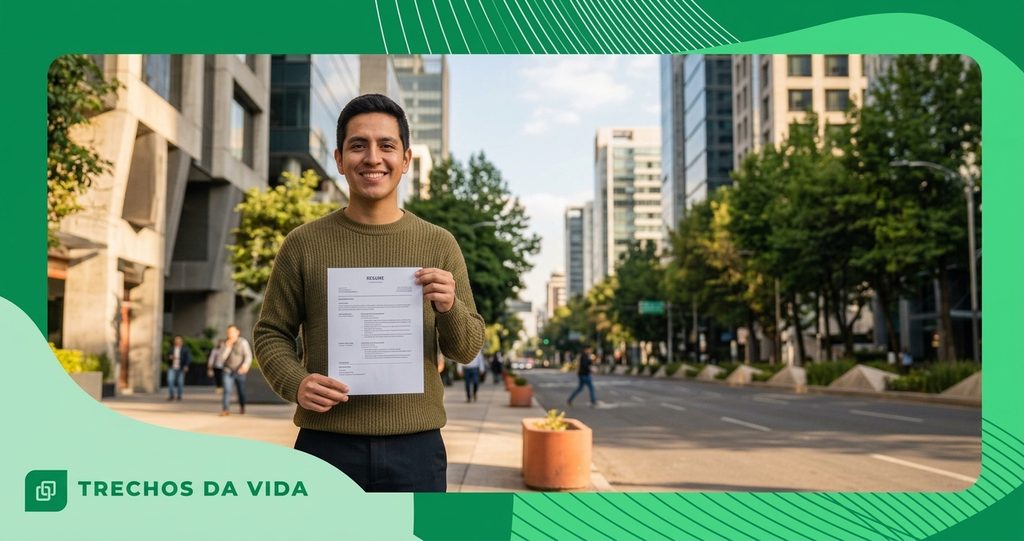
How to create a CV that attracts attention and stands out in an interview
Master the art of presenting your professional profile, from the ideal structure of your CV to the answers that will open doors for you in your next interview.
Advertisements
The Perfect Structure of your Curriculum Vitae
A well-structured CV is your first opportunity to make a good impression. This is the tool that tells the recruiter, in less than a minute, why you are the ideal candidate.
In Mexico, although there is no single rule, a clear and concise structure is fundamental. Each section should be easy to find and understand, guiding the reader through your professional career in a logical manner.
1. Contact Details: La Puerta de Entrance
This section must be impeccable and professional. Include your full name, an updated telephone number, a professional email address (avoid nicknames) and your LinkedIn profile.
The location (city and state) is sufficient; It is not necessary to provide your complete address for security and privacy.
2. Professional Profile: Your Executive Summary
This is a brief paragraph (3-5 lines) at the beginning of your CV that summarizes what you are, what you do and what you are looking for. That’s “elevator pitch” written.
I focus on your years of experience, your most relevant areas of specialization and the type of role or industry in which you want to continue growing.
3. Work Experience: Where you demonstrate your value
List your jobs in reverse chronological order (most recent first). For each post, include the company name, your title, closings and a list of 3 to 5 points highlighting your achievements.
Use action verbs and quantify your results whenever possible (e.g. “Increase sales in a 15% in 6 months”).
4. Academic Training: Tus Cimientos
Include your highest academic degree. Mention the institution, the degree obtained and the year of graduation. It is not necessary to include secondary education if you have university studies.
If you have certifications or courses relevant to this project, you can create a separate section for them.
5. Skills: Your Superpowers
Divide this section into technical skills (software, programming languages, specific tools) and soft skills (leadership, communication, teamwork).
Make sure the skills you list match those mentioned in the vacancy description.
Common Errors that Discard your CV Instantly
Avoiding these mistakes could be the difference between getting an interview or your resume finishing on paper. Recruiters review profiles and don't have time to decipher poorly presented information.
The attention to detail demonstrates professionalism. A careless CV suggests that you could be a careless employee.
Mistakes to Avoid:
- Missing spelling and grammar: This is the most common and least forgivable error. Use a spell checker and ask someone else to proofread it.
- Incorrect contact information: A simple error on your phone or email and the opportunity is forever lost.
- Being too generic: Sending your CV to all vacancies yourself is a bad strategy.
- Exceed the two pages: Unless you have an academic or executive career of more than 20 years, your CV must be concise. One page is ideal.
How to Adapt Your CV for Each Vacancy
Personalization is key. Carefully read the description of the task and highlight the key words, skills and responsibilities you are looking for.
Luego, modify your “Professional Profile” and the description of your “Work Experience” to reflect this language and demonstrate that you are the solution to your specific needs.
✓ Adaptation Tip: If the vacancy asks for “experience in project management with Agile methodologies”, make sure your CV specifically mentions your experience with “Agile”, “Scrum” or “Kanban”, instead of a generic “project management”.
How to create a CV without experience?
If you are a recent graduate or looking for your first job, focus on what you have. Your CV must highlight your potential and your desire to learn.
The key is to change the focus of your work experience to your skills, academic projects and extracurricular activities.
Preparation for the Job Interview
Getting the interview is just the middle of the road. Good preparation will give you the confidence necessary to demonstrate that you are the best candidate on paper, as well as in person.
Investigate the Company and the Property
Understand your mission, vision, values, products/services and recent news. Reread the description of the item and you are clear that this is what you are looking for.
This will allow you to ask smarter questions and align your answers with the company culture.
Master the Common Interview Questions
Although each interview is unique, there are questions that always appear. Prepare concise and example-based answers for each question.
Key Questions to Prepare:
- “Hablame de ti.” (Prepare your professional elevator pitch).
- “Why are you interested in this business/company?” (Connect your investigation with your objectives).
- “What are your greatest strengths and weaknesses?” (Be honest but strategic).
- “Describe a difficult situation you faced and how you resolved it.” (Use the STAR method: Situation, Task, Action, Result).
Prepare Your Own Questions
An interview is a two-way conversation. Having intelligent questions demonstrates your interest and helps you evaluate whether the company is a good place for you. Ask about the equipment, its goals or its growth opportunities.
Ready to Dar el Seguiente Paso?
Your resume is the key. Make sure you are polished, professional and ready to open doors. Upload your CV to the main employment platforms.
Publish my CV on an employment portalEmpieza to receive relevant employment offers.
Official website — results may vary
The information provided is for educational purposes. Always check the best practices and specific requirements of the industry or company to which it applies.