How the Japanese organize their homes to live better
Advertisements
Japanese people organize their homes to live better: for the Japanese, organizing the home goes beyond simply arranging objects.
It is a philosophy of life that reflects balance, intentionality and harmony with the environment.
Japanese culture, deeply rooted in concepts such as minimalism, functionality and respect for nature, has transformed home organization into an art that promotes physical and mental well-being.
But how exactly do the Japanese organize a home to live better?
This text explores this question in depth, bringing cultural perspectives, concrete practices and original examples, as well as an intelligent analysis of how these techniques can transform everyday life.
Minimalism as a Philosophy of Life
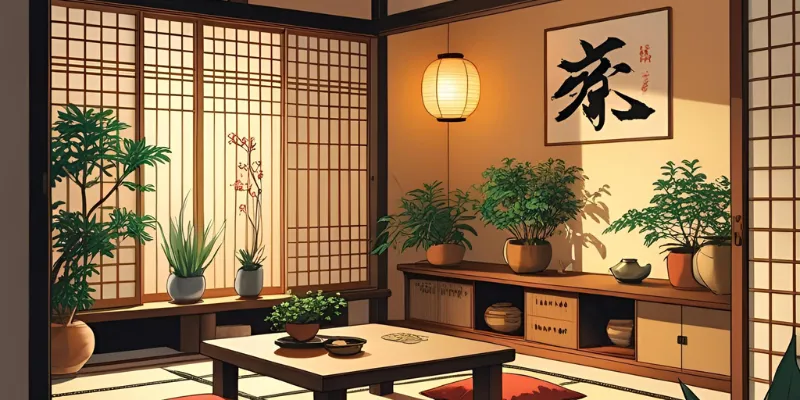
Japanese minimalism, often associated with the concept of bad (empty space), it's not just about having less stuff, but about valuing what really matters.
Unlike Western minimalism, which may seem like an aesthetic trend, in Japan it is a practical response to the limited space in small homes, especially in urban areas like Tokyo.
For example, in compact apartments, every inch is designed to be functional, with multifunctional furniture and built-in storage.
++ How the color of your walls can help control anxiety
Thus, organization begins with the conscious choice of objects that have purpose and meaning.
Furthermore, Japanese minimalism is linked to the concept of mono in the conscious, the appreciation of the transience of things.
This encourages Japanese people to keep only items that bring them joy or are essential, discarding the superfluous without attachment.
Imagine a tree that drops its leaves in autumn to conserve energy: in the same way, the Japanese “prune” excess in their homes to create an environment that breathes lightness.
This approach not only reduces clutter but also relieves mental stress, promoting a more focused life.
Interestingly, a survey by Kyoto University (2023) revealed that 78% of Japanese people who adopt minimalist practices at home report greater life satisfaction compared to those who accumulate objects.
This suggests that minimalist organization is not just a matter of space, but a powerful tool for improving quality of life.
By applying this philosophy, the home becomes an enlightened sanctuary, where every item has its place and purpose.
The Practice of Danshari: Intelligent Detachment
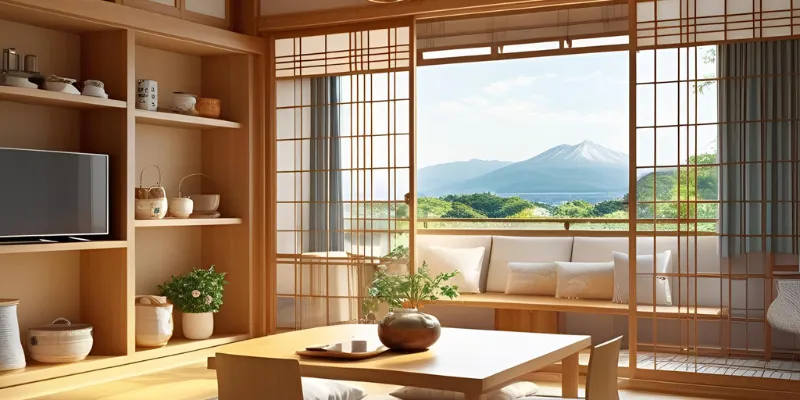
Danshari, a Japanese concept that combines “refusing,” “discarding,” and “separating,” is a practice that goes beyond detachment from material things.
It is an exercise in self-knowledge, in which the Japanese organize their home to live better by reevaluating their relationship with objects.
++ Why visual comfort is essential for mental rest
Instead of hoarding out of habit or fear of needing something in the future, Danshari encourages reflection: “Does this item still reflect who I am today?”
This rhetorical question guides conscious decisions, helping to free up physical and mental space.
For example, Ana, a Brazilian who lived in Osaka for two years, updated Danshari to organize her small rental home.
She started by separating clothes that she hadn't worn in over a year and donating them to a local charity.
Then, he reorganized his kitchen, keeping only essential and multifunctional items, such as an iron pan that was used for cooking and baking.
The result was a more functional home and a renewed feeling of freedom, as she no longer had to deal with the overload of objects.
Additionally, Danshari promotes sustainability.
By reducing consumption and prioritizing quality over quantity, the Japanese reduce waste and extend the useful life of objects.
This practice, therefore, not only organizes the home, but also aligns domestic life with environmental values.
The following table illustrates the principles of Danshari and its benefits:
| Danshari Principle | Description | Benefit |
|---|---|---|
| Refuse | Avoid purchasing cheap items | Reduces impulsive consumption |
| Discard | Eliminate objects that have no use or emotional value | Frees up physical and mental space |
| To separate | Keep only what is essential | Promote clarity and focus |
The Influence of Japanese Design on Organization
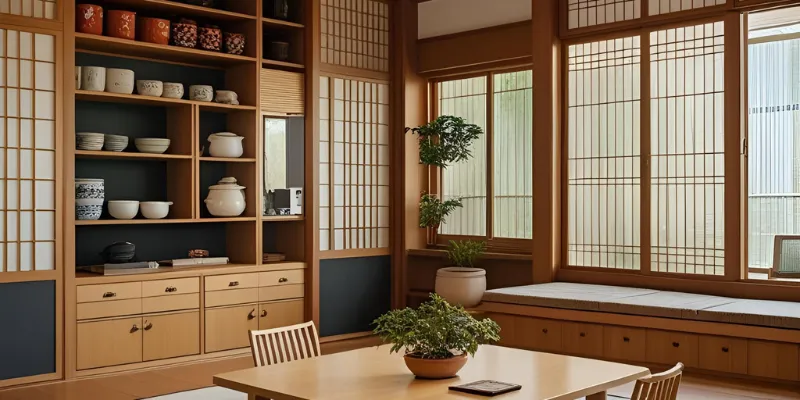
Image: Canva
Japanese design, with its emphasis on simplicity and functionality, is a fundamental pillar of how the Japanese organize a home for better living.
Traditional Japanese houses, with tatami mats and sliding doors ( shoji ), are designed to maximize the use of space and connection with nature.
Even in modern apartments, this philosophy persists, with solutions such as built-in beds ( futons), modular cabinets and lightweight partitions that allow you to reconfigure environments as needed.
A practical example is the use of kura (built-in cabinets) in Japanese homes.
Maria, a designer who moved to Fukuoka, was impressed by the kura of his apartment, which stored everything from clothes to everyday items in organized compartments.
++ What is “sleep hygiene” and how to set up a bedroom that promotes it
Inspired, she created a similar system in her home in Brazil, using modular boxes inside a closet to categorize items by function and season.
This approach not only saved space, but also made it easier to maintain order.
Furthermore, Japanese design values the aesthetics of imperfection, as in the concept of wabi-sabi.
This means that when organizing a home, the Japanese do not seek artificial perfection, but a balance that reflects the Japanese.
Wooden furniture with natural textures or handcrafted ceramics are preferred over mass-produced items, creating an environment that is functional but also welcoming.
Thus, organization goes beyond practicality, becoming an expression of identity.
Organization Routines: Daily Discipline
Japanese organization is not limited to major seasonal cleanings; it is supported by daily routines that keep the home in harmony.
A common habit is osoji, a deep cleaning carried out at the end of the year, but which also inspires practices over the shorter period of time.
For example, many Japanese people spend 10 minutes a day tidying up their homes, putting away items immediately after use.
This discipline prevents the accumulation of disorder and reinforces the idea that organization is an ongoing process.
Furthermore, the practice of katazuke (methodical arrangement) is central.
Unlike a requested tidying up, the katazuke involves categorizing items and assigning each a fixed place.
For example, in a Japanese house, keys always go back on a hook in the entrance, and shoes are lined up on a specific shelf.
This consistency reduces time spent searching for objects and creates a sense of control over the environment.
Ultimately, the Japanese decluttering routine is a metaphor for life: just as a river flows better when its bed is clean, the mind thrives in an organized space.
Daily discipline not only keeps the home functional, but also cultivates a sense of responsibility and mindfulness.
After all, who wouldn't want to live in a space where everything is in its place, reflecting an equally serene mind?
Frequently Asked Questions
| Question | Response |
|---|---|
| How to start organizing a Japanese-style home? | Start with Danshari: make use of each item, discarding what has no use or emotional value. Then categorize and assign fixed places to the objects. |
| Does Japanese minimalism work in large homes? | Yes, Japanese minimalism is adaptable. In large homes, focus on keeping only essential items for comfort and use modular storage solutions. |
| What materials are ideal for Japanese organization? | Natural materials such as wood, bamboo and ceramics are ideal, as they combine functionality and aesthetics, following the concept of wabi-sabi. |
| How to maintain organization in the long term? | Adopt daily routines of 10 to 15 minutes, such as katazuke, and perform seasonal reviews to avoid accumulation. |
| Is it expensive to adopt the Japanese style of organization? | Not necessarily. The focus is on reducing, reusing, and choosing quality items, which can actually save you money in the long run. |
Conclusion: Transforming Life Through Space
Organizing a home in the Japanese style is more than a household chore; it is a path to a better life.
By integrating minimalism, detachment, functional design and disciplined routines, the Japanese create environments that promote peace, clarity and sustainability.
It’s not just about arranging objects, but about aligning physical space with personal values and mental well-being.
So why not start today to transform your home into a reflection of a more intentional life?
By adopting these practices, you not only organize your home, but also reconfigure your relationship with space and with yourself.