Historical Curiosities of Brazil that Few People Know
Advertisements
Historical Curiosities of BrazilHave you ever stopped to think about how much Brazil's official history hides fascinating layers that shape our current identity?
The historical curiosities of Brazil that few people know reveal not only isolated facts, but deep connections between past and present.
Therefore, here we explore events and figures that challenge simplistic narratives, arguing that understanding these details enriches our vision of nationhood.
Furthermore, these insights demonstrate how Brazil has always navigated turbulent waters of diversity and conflict, directly influencing contemporary issues such as racial equality and international relations.
However, many Brazilians ignore these episodes because formal education prioritizes momentous dates, leaving aside nuances that humanize history.
Find out more below!
Historical Curiosities of Brazil
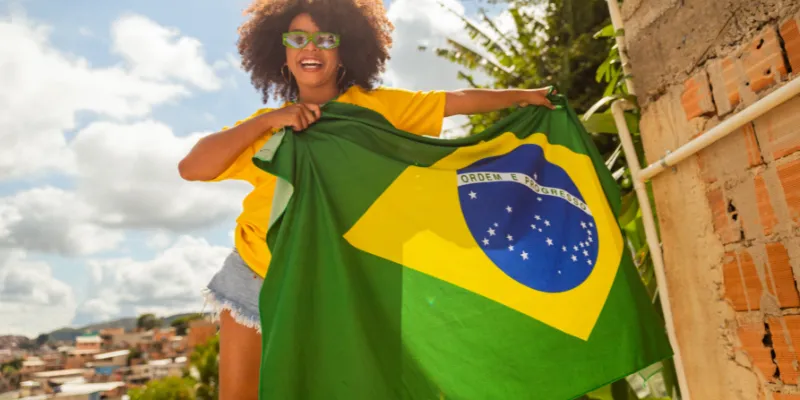
Imagine if schools highlighted marginal contributions more; this would foster a more inclusive national pride.
This text delves into selected topics, each with arguments that connect the ancient to the modern, avoiding repetition by varying perspectives: from forgotten leaders to unusual territorial disputes.
++ Why is August known as the “month of heartbreak”? Truth or superstition?
Consequently, as you read on, you will discover how these facts are not mere anecdotes, but compelling lessons in resilience.
Additionally, we include elements such as original examples to illustrate impacts, a shocking statistic to quantify scales, and an analogy to facilitate understanding.
Do we really know the diversity of our heritage?
This rhetorical question invites us to reflect as we move forward.
++ Baby Boomers Generation: beliefs, values and consumption habits
The Forgotten Black President: Nilo Peçanha and Race in Brazilian Politics
Nilo Peçanha assumed the presidency of Brazil in 1909 after the death of Afonso Pena, becoming the country's first black leader, a fact that historians often downplay to preserve elitist narratives.
He governed with a focus on educational and labor reforms, arguing that the nation needed to invest in its diverse population to progress economically.
++ Interesting facts about the largest rivers in the world
Therefore, Peçanha challenged prejudices by promoting policies that benefited the lower classes, including immigrants and descendants of slaves, which contrasted with the institutional racism of the time.
Furthermore, during his term, Peçanha faced opposition from oligarchies who saw his African ancestry as a threat, but he countered this with astute diplomacy, strengthening international alliances.
However, newspapers of the time whitewashed his image in photos, illustrating how Brazilian society denied its heritage to maintain hierarchies.
Thus, we argue that recognizing Peçanha today combats historical whitewashing, promoting a more representative democracy in a country where black people represent more than half of the population.
For example, imagine a young Peçanha, a descendant of slaves, navigating the Rio de Janeiro bureaucracy with sharp intelligence, transforming rejections into political opportunities—a unique example that highlights how personal determination alters national trajectories.
Consequently, his legacy argues against selective forgetting, fueling current debates about racial quotas.
Furthermore, this leads us to question why figures like him receive less attention than white presidents, reinforcing the need for historiographical revisions.
The Lobster Wars: An Almost Forgotten Maritime Conflict with France
In 1961, Brazil entered into an armed dispute with France over lobster fishing in the Northeast Atlantic, known as the Lobster War, where Brazilian ships confronted French vessels that violated territorial waters.
President Jânio Quadros vehemently defended sovereignty, arguing that allowing foreign invasions would undermine the country's economic independence.
Therefore, Brazilian naval forces captured French ships, escalating tensions that nearly led to a larger confrontation, but diplomacy resolved the impasse.
However, few people know that this episode revealed vulnerabilities in the Brazilian Navy, driving investments in maritime defense that benefit the country to this day.
Furthermore, France claimed that lobsters "swam" freely, while Brazil insisted that they crawled on the seabed and belonged to the territory.
Thus, we argue that this curiosity illustrates how natural resources generate global conflicts, echoing current disputes in the Blue Amazon.
By analogy, think of the Lobster War as an underwater chess match, where every diplomatic move, like the dispatch of Brazilian destroyers, anticipated French moves, emphasizing strategy over brute force.
Consequently, the 1963 treaty, which allowed regulated fishing, proved that smart negotiations prevent wars.
Furthermore, this reminds us how Brazil, despite being emerging, asserted autonomy, influencing modern foreign policies.
The Brazilian Expeditionary Force in World War II
Brazil sent 25,834 soldiers to fight in Italy during World War II, forming the Brazilian Expeditionary Force (FEB), a contingent that few associate with the global conflict.
Getúlio Vargas decided to enter the war after German attacks on Brazilian ships, arguing that neutrality would be costly in terms of international prestige.
Therefore, the pracinhas, as they were called, fought in battles like Monte Castello, suffering casualties but achieving victories that helped the Allies.
Furthermore, the FEB integrated soldiers of diverse ethnic origins, promoting national unity amid internal divisions, which contrasted with racism in the Allied armies.
However, upon returning, many veterans faced unemployment, revealing social hypocrisies.
Thus, we argue that this participation shaped Brazilian identity as an anti-fascist nation, influencing post-war alliances such as the UN.
For example, imagine a FEB soldier, a voluntarily enlisted farmer from Minas Gerais, adapting Brazilian guerrilla tactics to the snowy Italian terrain—an original example that humanizes anonymous heroism.
Consequently, their bravery argues for the valorization of South American contributions to world history.
Furthermore, statistics show that the FEB captured more than 20,000 German prisoners, an impressive feat that quantifies its impact.
Lost Indigenous Languages: A Disappearing Cultural Heritage
Before European arrival, more than 1,000 indigenous languages echoed throughout Brazilian territory, but colonization and assimilationist policies reduced that number to around 180 today.
Indigenous leaders resisted, arguing that languages preserve ancestral knowledge about the environment and medicine. Therefore, tribes like the Yanomami maintain dialects that describe flora with unparalleled precision, contrasting with the dominant Portuguese.
However, the Brazilian government, in times past, prohibited indigenous education, accelerating linguistic extinctions that erase oral histories.
Furthermore, modern initiatives, such as bilingual programs, revive some, but the rate of loss alarms experts.
Thus, we argue that protecting these languages strengthens cultural biodiversity, which is essential for innovation in sustainability.
Consequently, digital documentation projects argue against forgetting, connecting the indigenous past to the ecological future.
For example, in Amazonian villages, elders pass on myths that guide agricultural practices, avoiding deforestation—an example that illustrates practical value.
Furthermore, this invites us to prioritize multicultural education.
Monetary Curiosities: Brazilian Banknotes and Their Secrets
Since the Empire, Brazilian banknotes have featured unusual figures such as Greek gods and native animals, with hand-signatures from authorities for authenticity.
Emperors like Pedro II approved designs, arguing that coins symbolized national stability. Therefore, printing errors led to corrective stamps, making some notes rare and valuable to collectors.
However, during the Republic, hyperinflation in the 1980s forced rapid issuance, resulting in banknotes with innovative security features for the time.
Furthermore, few people know that reality incorporated holograms early on, influencing global standards.
Thus, we argue that studying banknotes reveals economic evolutions, from colony to emerging power.
Consequently, modern collectors use these curiosities to educate about financial history.
For example, a hand-stamped imperial banknote reflects craftsmanship lost in the digital age.
Furthermore, this connects past instabilities to current stabilities.
| Chronology of Historical Curiosities of Brazil | |
|---|---|
| Year | Event |
| 1500 | First mass in Brazil, celebrated by Frei Henrique de Coimbra, marking the beginning of Catholic influence. |
| 1822 | Independence proclaimed, but with secret negotiations that avoided all-out civil wars. |
| 1909 | Nilo Peçanha assumes presidency, highlighting racial diversity in leadership. |
| 1944 | FEB arrives in Italy, contributing to the Allied victory with adapted tactics. |
| 1961 | Beginning of the Lobster War, resolved diplomatically in 1963. |
| 1988 | Last abolition of slavery in the Americas, delayed by economic pressures. |
Frequently Asked Questions: Historical Curiosities of Brazil
| Question | Response |
|---|---|
| Why is Nilo Peçanha rarely mentioned in history books? | Traditional historians focused on white elites, but recent movements are reclaiming their importance in promoting racial inclusion. |
| Was the Lobster War really a war? | Yes, it involved naval mobilizations, but it ended without direct battles, thanks to negotiations at the UN. |
| How many Brazilian soldiers died in WWII? | About 1,000 soldiers perished, but their legacy inspires modern armed forces. |
| How do indigenous languages impact Brazil today? | They preserve ecological knowledge, influencing environmental policies and sustainable tourism. |
| Are old banknotes still worth anything? | Yes, as collectible items, with values ranging from hundreds to thousands of reais depending on their rarity. |
In conclusion, these historical curiosities about Brazil that few people know about not only entertain, but also argue for the need for a more inclusive history.
Therefore, by reflecting on them, we strengthen our collective understanding.
Furthermore, we invite you to explore further, as the past continues to shape the future in surprising ways.