Andromeda's star shows signs of a rare cosmic shift.
A strange pattern in the brightness of Andromeda Star This has triggered alarm bells at observatories around the world.
Advertisements
This is not just another routine oscillation, but a behavior that challenges what astrophysics accepted as the rule for stellar maturity in deep space.
The most recent readings captured by instruments in orbit suggest an intense physical restructuring.
This type of instability in a distant supergiant often precedes colossal transformations, offering a rare window to observe extreme physics in real time.
The summary covers: the galactic location, the observation timeline, the physical evidence collected, the global astrophysical impacts, the research leaders, and the predicted final destination.
Where is the Andromeda Star and its neighboring galaxy located?
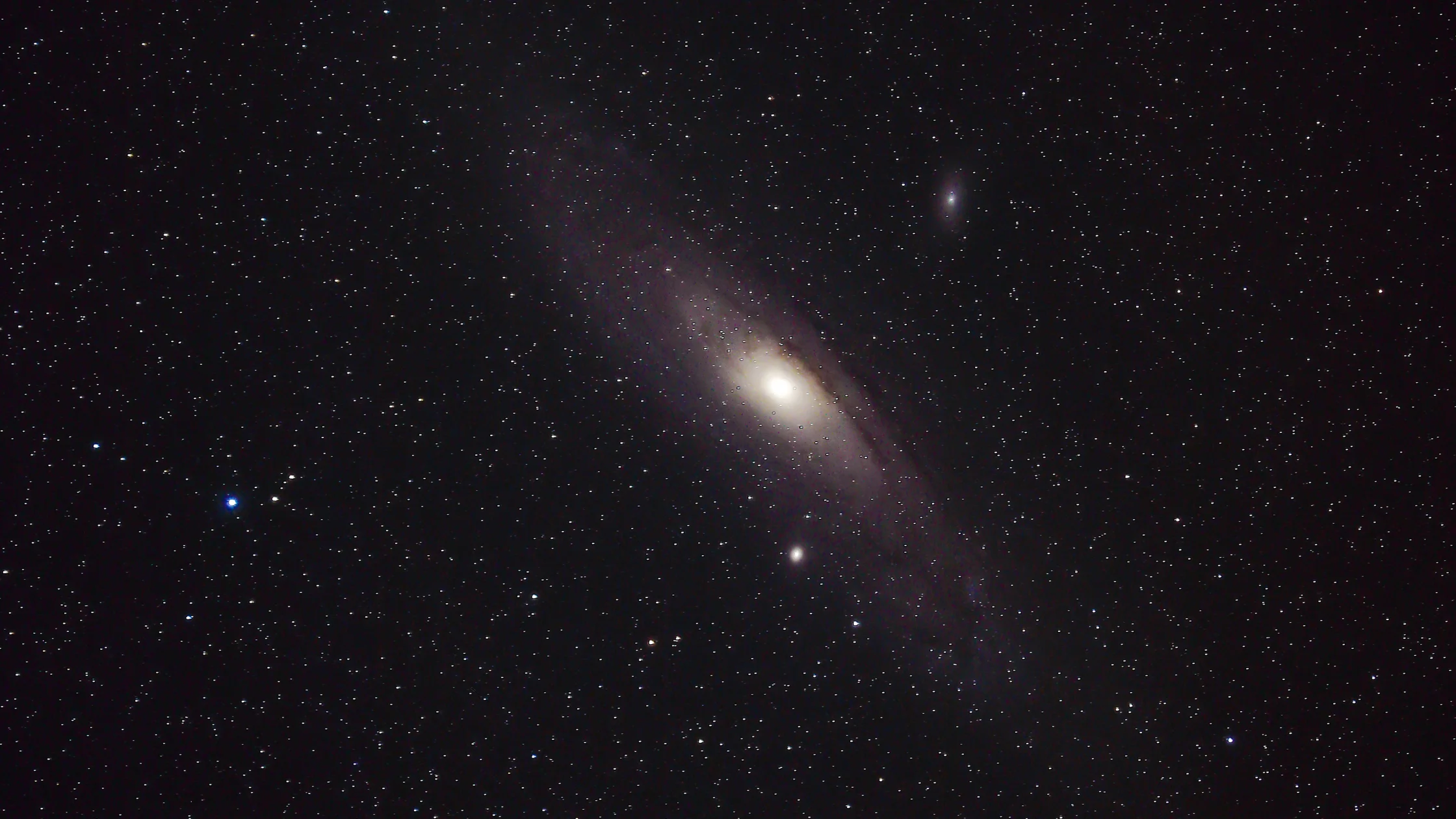
Located approximately 2.5 million light-years from Earth, the Andromeda galaxy is home to billions of stars in its spiral disk.
However, it is in its peripheral regions and denser clusters that peculiar phenomena tend to manifest themselves, far from the interference of the dense galactic core.
Mapping individual objects at that distance requires pushing the limits of conventional optical instruments.
The outer halo, often overlooked in shallow scans, has become a major focus for astronomers seeking to decipher how local gravitational perturbations affect the lives of mature stars.
What are the main scientific findings collected recently?
Spectrometry analyses indicate instabilities in electromagnetic emission and moments of massive coronal mass loss. These ejections occur on an unusual scale, suggesting that the star's internal pressure is undergoing drastic readjustments.
The abrupt reduction in luminous flux followed by irregular recoveries indicates that expanding gaseous envelopes may be temporarily blocking light from the core.
To follow official bulletins on stellar physics and observational missions, access the portal of NASA Science.
Models that consider the presence of a hidden binary partner continue to be tested.
Mass transfer between nearby bodies would explain some of the energy surges, although the possibility of an imminent internal collapse cannot yet be ruled out.
When did astronomers detect this rare cosmic change?
The first subtle anomalies emerged in long-exposure photographic records accumulated over the last decade.
Initially, they appeared to be just normal variations in brightness, but the accumulation of data revealed an oscillation pattern completely outside the expected curve for the Andromeda Star.
The star's behavior began to deviate sharply from standard simulations.
Records of more intense light fluctuations coincided with specific observation windows, leading teams to intensify continuous monitoring to rule out noise or sensor calibration failures.
++ Why are the oceans changing color in some regions?
How do the transformations in the Andromeda Star affect modern astrophysics?
When a star of this magnitude deviates from the script, the entire theoretical model about the final phase of supergiants needs to be revised.
There is something deeply unsettling about realizing how our equations still struggle to predict certain frictions of matter under extreme gravity.
Studying this dynamic in Andromeda Star It provides valuable data for calibrating predictive algorithms. These systems analyze large volumes of celestial data in search of pre-supernova patterns in other regions of the Local Group.
The following table compiles structural data about the host galaxy and the environment in which these phenomena are observed.
| Astrophysical Parameter | Observed / Estimated Value | Unit of Measurement |
| Average distance to Earth | 2.54 million | Light-years |
| Total Galactic Mass | 1.2 x 10^12 | Solar Masses |
| Disc Diameter | 220.000 | Light-years |
| Star Formation Rate | ~0.4 to 0.7 | Solar Masses / Year |
The sheer size of this system ensures that its internal forces generate extremely complex scenarios, where matter is subjected to thermal and gravitational regimes that are difficult to reproduce in a laboratory.
++ Auroras on Mars reveal clues about the planet's atmosphere.
Who is leading the research on the evolution of stars in M31?
International consortia that manage large ground-based and space-based observatories are leading the data collection. Integration between teams from different countries prevents temporal gaps in observation from compromising the recording of the fastest events.
The intersection of optical data with infrared and X-ray readings has been crucial. It is in this overlap of wavelengths that the true structure of the stellar envelope begins to reveal itself without the masking caused by interstellar dust.
What will be the ultimate fate of this impressive cosmic dynamic?
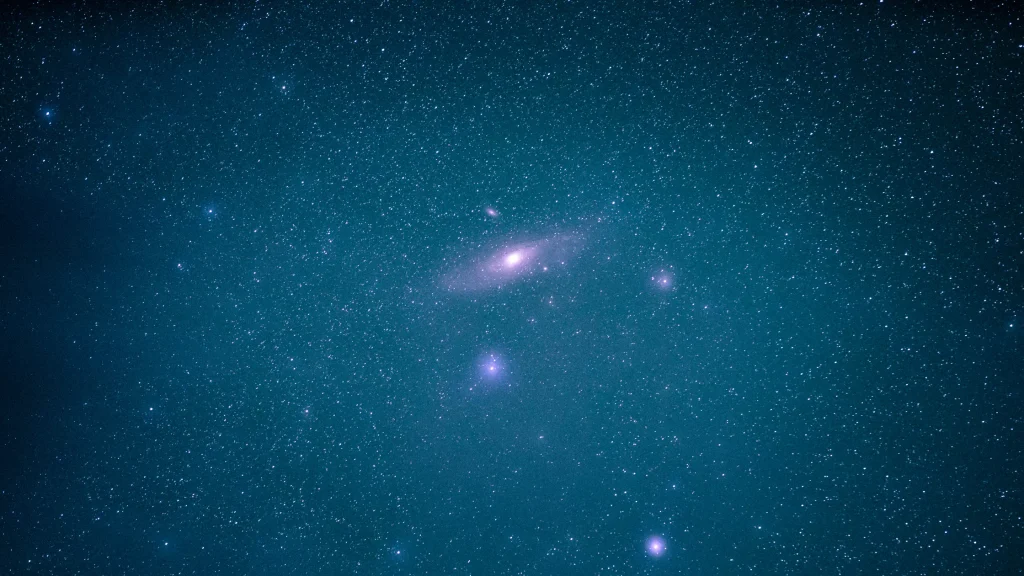
The evolution of the celestial body is linked to the fate of its host galaxy and the tidal forces acting within the Local Group. The current transformations are the first chapters of a long process that will redefine the distribution of mass in that region.
THE Andromeda Star It will eventually eject its remaining outer layers or collapse more violently, seeding the interstellar medium with heavy elements essential for the formation of future generations of planetary systems.
What analytical methods are used to decode these signals?
Image processing requires deconvolution algorithms capable of compensating for atmospheric turbulence and detector reading noise. Without this meticulous cleaning, weak signals would evaporate into the cosmic background.
The relative photometry technique compares the variation in the star's brightness with fixed points around it, isolating real fluctuations from small thermal fluctuations within the telescope itself during long sampling nights.
Where does the scientific community publish its findings on the phenomenon?
The most in-depth discussions take place in the pages of journals focused on high-energy astrophysics, where photometry and spectroscopy data undergo the rigorous scrutiny of peer review.
The abnormal behavior observed in Andromeda Star It has become a constant topic at world congresses.
The central debate revolves around the mechanisms responsible for triggering such rapid changes in the internal structure of a giant star.
What future technologies will shape continuous galactic monitoring?
The new generation of large telescopes promises to raise angular resolution to unprecedented levels.
With enormous primary mirrors and fast-response adaptive optics, it will be possible to analyze the atmospheres of stars in M31 as if they were in our galactic neighborhood.
Automated systems powered by deep learning models will scan the sky continuously, identifying variations in brightness almost in real time and pointing high-precision instruments before the most critical moments of the event pass.
How do amateur researchers contribute to these astrophysical discoveries?
Global networks of community astronomy play an essential role in continuous monitoring. While large telescopes compete for fixed observing time, dedicated amateurs cover the sky tirelessly.
Decentralized analysis of open data allows enthusiasts to detect anomalies in archived images. This collective effort complements the work of research institutes and ensures that nothing goes unnoticed.
What are the biggest challenges in analyzing distant galactic data?
Aligning the telescope towards M31 means looking through a dense curtain of stars from the Milky Way itself. Separating local noise from that belonging to the neighboring galaxy is one of the most laborious steps in the process.
Cosmic dust scattered along this path absorbs and disperses light, altering the perceived color of stars. Correcting this effect requires refined mathematical models of the distribution of dust grains in the interstellar medium.
How do these discoveries impact our understanding of the cosmos?
Witnessing the metamorphosis of a distant object is a stark reminder that the universe is not static.
The human timescale often creates the illusion of an unchanging sky, but stellar physics advances at its own pace, punctuated by abrupt events.
Understanding these transformations helps us to situate the Solar System itself within a much larger timeline.
Each mass loss or explosion event reorganizes the cosmic environment and lays the groundwork for the chemical evolution of galaxies.
++ How Science Is Transforming Waste into Fuel
Conclusion
The instability observed in the star reminds us that stellar physics still holds fascinating margins of uncertainty. Following this process is not just about cataloging distant light, but about witnessing the mechanisms that redefine matter in the universe.
As new instruments come online, data on M31 and its structures tend to become even more detailed, clarifying the boundaries between stability and collapse.
To keep up with the development of new space missions and updated astrophysical studies, visit the official website of... ESA.
Frequently Asked Questions (FAQ)
What exactly does a rare cosmic shift mean in distant star systems located directly outside our own reference spiral galaxy?
This refers to abrupt changes in brightness, mass, or structure in distant stars that deviate from the standard evolutionary cycle predicted by current theoretical models.
How are astronomers able to observe with such precision the details of celestial bodies located millions of light-years away from Earth?
The process combines highly sensitive orbiting telescopes, adaptive optics in ground-based observatories, and algorithms that filter out interference from dust and foreground light.
Could these recent discoveries pose a direct threat to the stability of the solar system or to life on Earth?
There is no risk whatsoever. The distance of millions of light-years completely isolates Earth from any physical effects resulting from these transformations.
What are the future prospects for the study of M31?
The priority for the coming years will be to map the internal dynamics of M31 using multi-wavelength scans, combining optical, infrared, and X-ray data.
The integration of more sensitive sensors will allow for unprecedented precision in monitoring the brightness variations of individual stars, reducing the margin of error in the interpretation of these phenomena.
These advances should consolidate new theories about the final phase of supergiants, offering a more robust empirical basis for astrophysics in the coming decades.
The search for answers in the galactic neighborhood remains one of the most promising paths to understanding the history of the observable universe itself.