
The impact of Pix installment payments on credit cards in commerce.
Advertisements
Impact of Pix Installments on credit cards It's already being felt in store cash registers, consumer bills, and acquiring companies' balance sheets.
In 2026, what began as a one-off experiment by a few banks will have become a constant presence: customers can pay for purchases in installments via Pix, the merchant receives the full amount instantly, and credit card companies will lose a piece of the market they previously dominated almost exclusively.
The traditional Pix system eliminated the pain of waiting for transfers.
The installment plan now directly challenges the territory of revolving credit and interest-free installment plans.
This isn't the end of credit cards—far from it—but rather competition that's forcing everyone to adapt.
Continue reading the text!
Summary
- What does it actually mean? Impact of Pix installments on credit cards?
- How does Pix Parcelado operate in the day-to-day operations of retail businesses?
- What are the advantages? Impact of Pix installments on credit cards What does it bring to the retailer?
- Why the Impact of Pix installments on credit cards Why not just bury the cards for good?
- Two concrete stories of Impact of Pix installments on credit cards
- Questions that everyone still has about Impact of Pix installments on credit cards
What does it actually mean? Impact of Pix installments on credit cards?
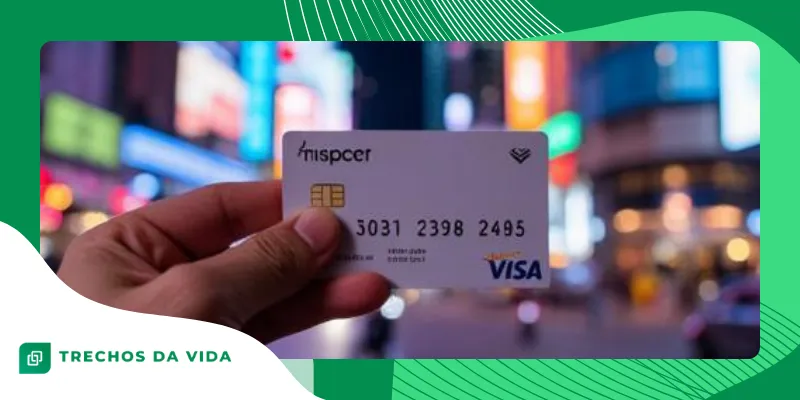
THE Impact of Pix installments on credit cards It goes far beyond just another option at checkout.
It alters the entire financial chain of the sale: the consumer gains access to instant credit without needing a physical card or pre-approved limit; the merchant receives the money as if it were cash; and the institution granting the credit assumes the risk and profitability of the operation.
There's something unsettling about this. For decades, interest-free installment plans were sustained by high fees charged to retailers, who passed the cost on to the final price.
Now, Pix Parcelado allows merchants to receive payments in full and immediately, often at a lower cost.
This puts pressure on both the flags and acquirers to rethink their structures.
Deep down, the impact of Pix Parcelado on cards credit This reveals an uncomfortable truth: much of the traditional card model was riddled with inefficiencies that instant technology simply eliminates.
How does Pix Parcelado operate in the day-to-day operations of retail businesses?
At the checkout or online checkout, the customer selects Pix and chooses the number of installments.
The bank approves a specific line of credit for that transaction — using account data, Pix history, and internal score.
If approved, the total amount is deposited into the merchant's account within seconds. The buyer pays the monthly installments directly to the bank.
Unlike credit cards, where the merchant waits for the payment cycle or pays dearly for early payment, here the risk lies with the financial institution.
The merchant emerges from the equation with a strengthened cash flow.
For those who have never had a credit card or are on a tight credit limit, it's like having a loan tailored specifically for that purchase.
No annual fees, no lengthy bureaucracy.
Read also: A guide to saving money in everyday life with apps that cut expenses.
The system makes decisions in real time, often with less friction than a traditional credit analysis.
What are the advantages? Impact of Pix installments on credit cards What does it bring to the retailer?
Cash flow becomes more predictable and healthy.
Receiving the full amount upfront allows you to pay suppliers at a discount, reduce stagnant inventory, or simply breathe easier without having to rely on high-interest receivables financing.
The rates are usually much more favorable.
While the MDR for credit cards can reach 3-5% or more in installments, the cost of Pix Parcelado varies, but is often much lower — in some cases even 10 or 14 times lower, depending on the volume and negotiation.
This opens up real room for maneuver.
In this sense, the retailer can pass on part of the savings as a discount to the customer or simply improve their profit margin without changing the list price.
Small and medium-sized retailers, who have always suffered the most from the cost of credit, are the ones feeling the relief the most.
++ Sensory wellness practices that help regulate emotions.
Why the Impact of Pix installments on credit cards Why not just bury the cards for good?
Credit cards still offer a package of benefits that Pix Parcelado doesn't replicate with the same strength: points program, miles, cashback, travel insurance, fraud protection, and the famous interest-free installments during promotions.
Many people choose plastic precisely because of these extras.
A survey by CNDL/SPC Brasil from March 2026 showed that 801% of consumers use Pix daily, but Pix Parcelado is already used by 381% of them.
Therefore, the card remains strong where habit and rewards matter most.
THE Impact of Pix installments on credit cards It functions as a healthy competitor.
It compels banks and card networks to improve conditions, reduce fees, or innovate in rewards.
The market is large enough for both to coexist — each serving different profiles.
Imagine Pix Parcelado as the gateway for those who have never attended the "academy of credit." It opens access.
The card represents the long-time member who already knows all the equipment and even offers free gifts. One doesn't eliminate the other; they divide the clientele in a smarter way.
Two concrete stories of Impact of Pix installments on credit cards
A medium-sized furniture store in Belo Horizonte adopted Pix Parcelado at the end of 2025.
Previously, 60% of the larger sales were paid in installments by credit card, with the merchant paying dearly to receive the money upfront.
After the change, the average ticket price increased by almost 30%.
Customers without credit cards or with low credit limits were able to buy sofas and tables that previously remained just a dream.
In this sense, the cash flow improved so much that the store paid off an old loan six months ahead of schedule.
The owner currently offers discounts for cash payments via Pix and maintains attractive installment options through Pix Parcelado.
Everyone wins: the customer, the retailer, and the bank that grants the loan at a lower rate.
In e-commerce, an electronics store in São Paulo saw shopping cart abandonment drop by approximately 20% after including the option.
A customer wanted an R$ 4,800 notebook, but the credit card limit didn't cover it.
With Pix installments in 10 payments, the purchase was completed.
The store received the R$ 4,800 immediately.
In this way, the customer paid installments that fit within their budget. A sale that would likely have failed to materialize became a reality without any extra cost to the retailer.
These cases show that the Impact of Pix installments on credit cards This is not slide theory.
It shows up at the checkout, on the balance sheet, and in the customer's satisfied face.
Questions that everyone still has about Impact of Pix installments on credit cards
| Question | Direct answer |
|---|---|
| Will Pix Parcelado (installment payment system) eliminate credit cards? | No. He adds to it. Those who value miles and benefits continue using the card. Those who don't have a credit limit or a card gain a new entry point. |
| Does the merchant pay a high fee for Pix installment payments? | Generally much lower than with a credit card. Many report significant savings, especially on installment purchases. |
| Does the consumer need to have an account at a specific bank? | No. Any institution that offers the feature will do. Approval happens within the bank's own app. |
| Are the interest rates excessive? | It depends on the institution. The Central Bank requires transparency, but it's essential to compare the APR before confirming. It might be cheaper than the revolving credit card balance. |
| Does it work well for small shop owners and micro-entrepreneurs? | Yes. Payment platforms already integrate without high fixed costs. This is one of the reasons for the rapid growth among smaller retailers. |
Brazilian retail is rearranging itself.
Small and medium-sized retailers are migrating part of their sales to Pix Parcelado (installment payments via Pix) because the money arrives quickly and the cost decreases.
In this sense, large networks maintain both channels and use data to offer the best option according to the customer's profile.
THE Impact of Pix installments on credit cards This forces retailers to rethink pricing and strategy. Those who offer discounts for cash payments via Pix gain volume.
Those who offer attractive payment plans build loyalty among those seeking rewards.
In the end, the big winner tends to be the consumer: more options, more transparency, and less dependence on a single financial product.
To keep a close eye on the numbers:
- Pix in Numbers – Central Bank of Brazil
- CNDL/SPC Brasil survey on Pix usage – March 2026
- Ebanx study on Pix in e-commerce 2026
THE Impact of Pix installments on credit cards It's not a revolution that tears everything down at once. It's an evolution that levels the playing field.
In short, retailers breathe easier, customers without traditional access to credit gain a voice, and the market becomes more competitive.
In 2026, anyone who ignores this change will simply be leaving a blindfold on the table.
