
The rarest astronomical phenomena on the planet
Advertisements
Among the many types of impressive astronomical phenomena, there are some that are very rare! Come and discover some of them!
Who was missing our content about astronomy and all the phenomena that occur in space?
Throughout the time that Trechos da Vida has been on the air, we have frequently addressed astronomical subjects involving space.
After all, if there is one thing that moves human beings, it is the curiosity to discover new things and acquire new knowledge.
And beyond the sea – which is an area of our planet that is little explored – another way to acquire this knowledge is by heading into space!
And proof of all this interest is that our content on these topics is always successful and attracts readers!
So, if you are one of our readers who have an extra interest in this topic, know that today is your lucky day!
Not only will we return to the topic in today's content, but we will also talk about some of the rarest astronomical phenomena on the planet!
Here, you will explore with us the origin of each of these phenomena and understand a little more about them.
So get your space helmet ready and come board this rocket to outer space with us!
The rarest astronomical phenomena on the planet
Admit it: at some point in your life you found yourself looking at the stars in the sky and thinking about how gigantic the universe is.
This is, without a doubt, a very common thought!
And in the midst of all this immensity – which still needs to be explored by science so that we can understand part of everything that happens there – there are a series of astronomical phenomena of the most diverse types!
In addition to attracting attention due to their magnitude, these astronomical phenomena also attract our attention for another reason: the rarity with which these phenomena occur in space.
Below, we have listed 4 astronomical phenomena of the most diverse types so that you can learn about and have a small sample of how our universe is capable of performing unique and, at the same time, impressive feats!
Supermoon, one of the astronomical phenomena involving our natural satellite
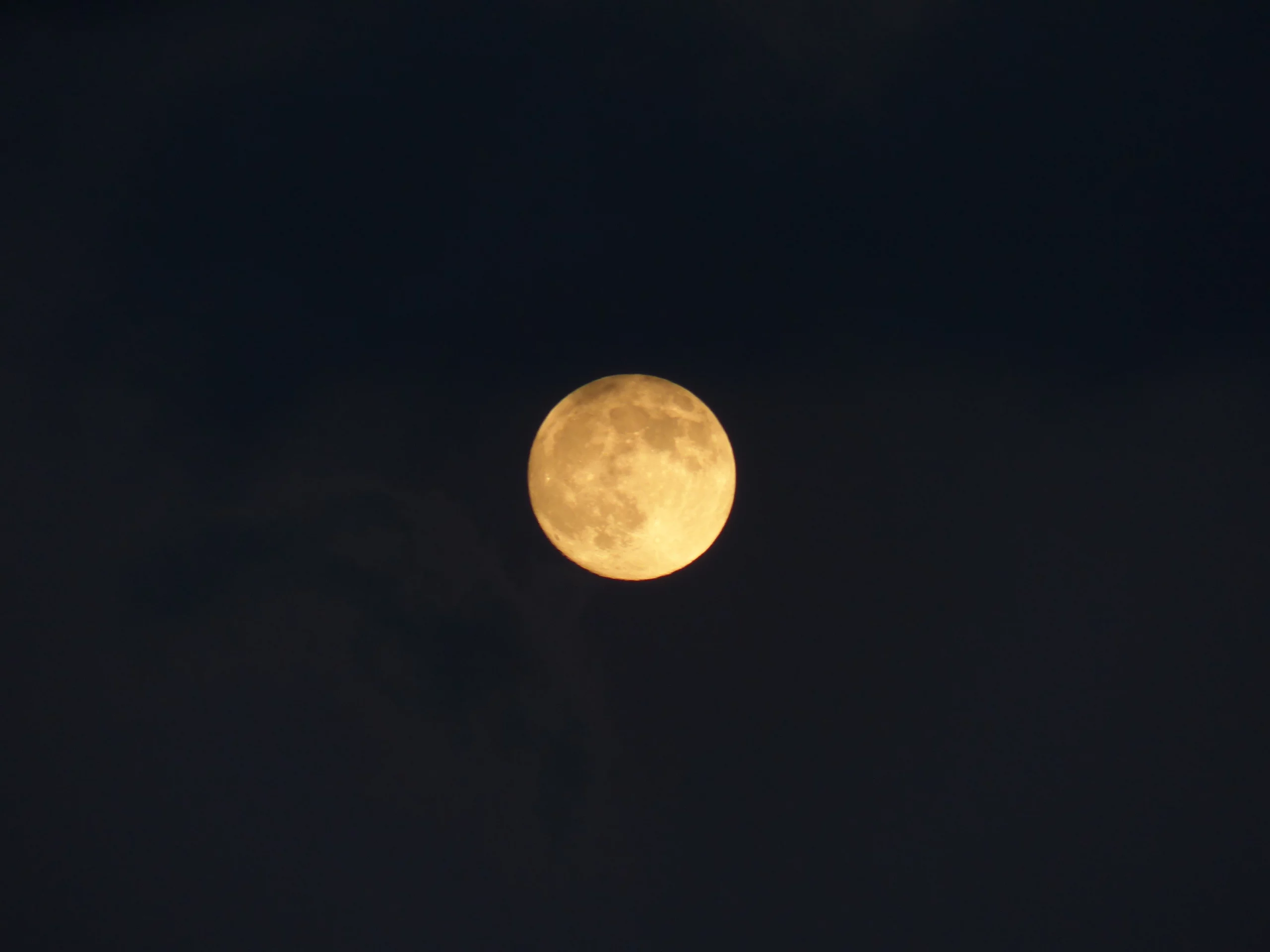
A well-known phenomenon in astronomy, the Supermoon – or Super Full Moon – occurs when the Moon is close to its perigee.
This is the name given to the closest point at which the Moon can be to the Earth. This ends up giving the impression that the Moon is larger than usual.
And what is already a spectacle in itself when the visibility of the sky is good, improves even more when this phenomenon coincides with the full Moon – the phase of the Moon in which it is largest – making the Moon appear to be much larger than normal.
One of the positive aspects of this phenomenon is that it can be seen here on Earth, guaranteeing a show for observers on duty.
Earthgrazer Meteor
I know, I know… you must be thinking that the passage of a meteor is something we are already familiar with, making it not really one of the rarest astronomical phenomena on the planet.
But believe me: this type of meteor deserves its place on our list today!
Basically, meteors are divided into two categories: those that are completely incinerated in contact with the air before reaching Earth and those that manage to reach here, which are called meteorites.
But this specific type doesn't work like that. It doesn't even burn up when it enters the atmosphere and it doesn't even reach the ground.
It enters our orbit at an angle that just 'touches' our atmosphere and leaves shortly afterwards, at an impressive speed.
Super meteor showers
Still on the subject of meteors, we have this astronomical phenomenon that draws attention precisely because it is a heightened version of this event.
After all, a meteor shower is already quite interesting. But what about a super meteor shower?
This phenomenon usually occurs when the Earth is passing through the orbit of a comet or asteroid that has left debris behind.
To give you an idea, for comparison, a common meteor shower consists of 10 to 30 shooting stars passing by per hour.
This is, without a doubt, one of those unmissable events. These super meteor showers can reach an impressive 100,000 meteors per hour!
Airglow

And to close our list of astronomical phenomena, we have Airglow – or Atmospheric Luminescence.
You must already be familiar with the aurora borealis – one of the best-known astronomical phenomena here on Earth – right?
In case you haven’t, let’s give a quick recap so you can better understand Airglow’s rarity.
The aurora borealis is one of the most beautiful natural phenomena and occurs at the Earth's North Pole. It is the result of the impact of solar winds with the planet's magnetic field, creating a breathtaking visual spectacle.
Airglow is very similar and can make the atmosphere shine anywhere in the world.
Unlike the aurora borealis, this phenomenon has no direct link with the Earth's magnetic field, and occurs because of a factor called chemiluminescence.
It is generated from the moment in which air molecules – which are at an altitude of 90 to 100 km – begin to interact with each other.
During the day, oxygen atoms constantly accumulate the energy received from the Sun and, during the night, they release the extra energy through collisions between molecules.
And since these atoms can't get rid of this extra energy overnight, the process tends to take hours. And it's precisely this energy being released that is known as Airglow.
Although less intense than the Northern Lights spectacle, this phenomenon does not require the spectator to be at the North Pole.
But to see this phenomenon you need to be under a very dark sky, just you and the stars.
Did you like this content? Then I think you should take the opportunity to read it too Mirror Universe Theory: The Truth About Theory Now Discovered
