Why do some trees live for thousands of years?
Advertisements
The discovery that Some trees live for thousands of years. It often disrupts our own sense of time.
Accustomed to measuring human existence in fleeting decades, confronting a living being that witnessed the rise and fall of entire empires provokes a rare kind of biological vertigo.
The longevity of these plants is neither mere evolutionary chance nor a miracle. In fact, it is an extremely refined survival engineering, where aging ceases to be an inevitable death sentence and becomes a manageable adaptation process.
In this article, we slow down the pace to examine the science—and the biological poetry—that allows these giants to overcome plagues, ice ages, and climate change without losing their vitality.
Summary
- What are the biological mechanisms of plant longevity?
- What are the oldest trees in the world and where are they located?
- How do meristems and the trunk ensure continuous regeneration?
- What is the difference between individual and clonal longevity?
- Table: Comparison of ancient trees around the world
- Frequently Asked Questions (FAQ)
What are the biological mechanisms of plant longevity?
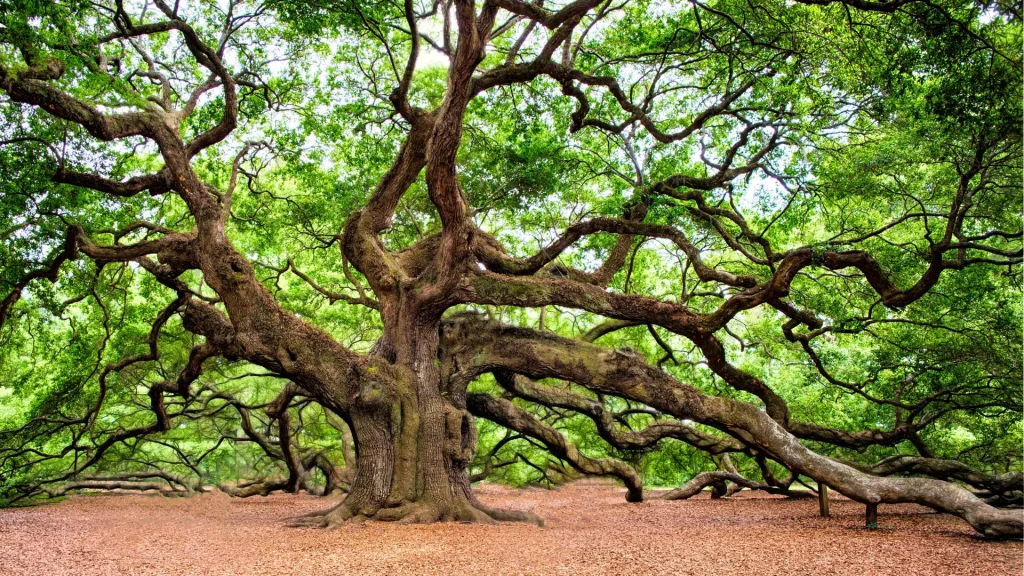
There is something profoundly fascinating about the way the plant kingdom deals with time.
Unlike animals, which are confined to centralized vital organs that wear out in a biological countdown, plants function as modular and decentralized architectures.
This flexible structure allows dead parts to be discarded without compromising the whole, keeping stem cells active for centuries without accumulating those genetic mutations that are so fatal to us.
In addition to that, the trunk of an ancient tree functions as a veritable chemical laboratory.
The continuous production of tannins, resins, and phenolic compounds creates a toxic armor against fungi and wood-boring insects.
Another masterful trick is compartmentalization: when a part of the trunk becomes diseased, the tree itself isolates it from the rest of the organism, containing the decay exactly at the point of origin.
Surprisingly, scarcity helps. Slow, restrained growth in poor soils is precisely what provides the necessary mechanical density to withstand storms throughout the ages.
It is this alliance between defensive chemistry, control of cell division, and physical resilience that explains why Some trees live for thousands of years. with no obvious sign of decrepitude.
What are the oldest trees in the world and where are they located?
THE Pinus longaeva, The bristlecone pine, popularly known as the bristlecone pine, is the undisputed sovereign of this temporal marathon, nestled in the icy mountains of California.
Named Methuselah, the most famous individual specimen of the species is over 4,800 years old, living in a setting of extreme altitude, thin air, and dry soil.
In the temperate forests of Chile, the larch (Fitzroya cupressoides) occupies second place with specimens that exceed 3,600 years of rigorously documented growth rings.
In Iran, the monumental Abarqu Cypress has stood imposingly in the middle of the desert for over four millennia, serving as a historical and cultural landmark for the region.
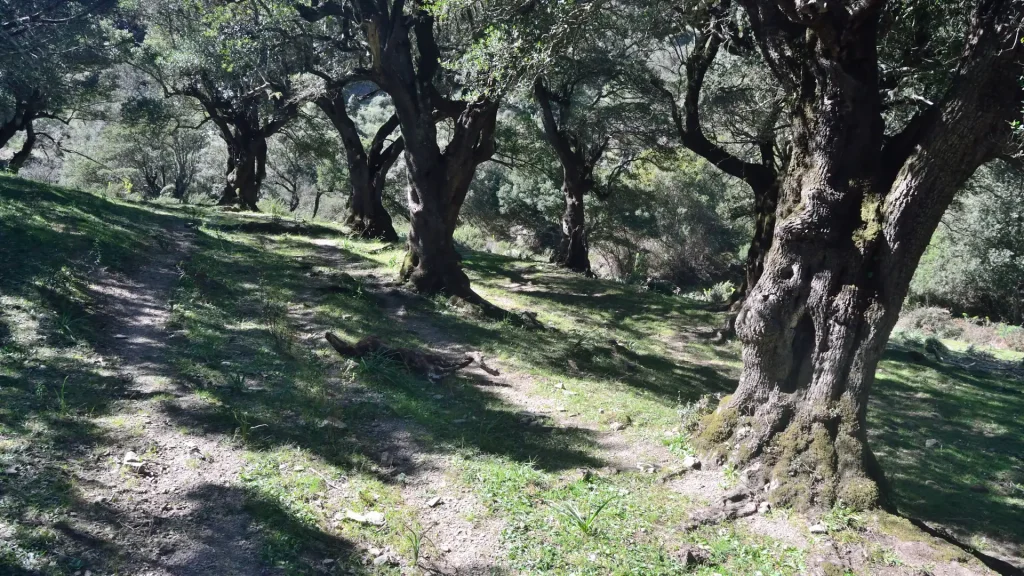
Europe also holds its own relics: the Vouves olive tree in Greece has been producing olives for over 3,000 years, immune to the ravages of time and the wars around it.
The pattern here is evident and almost ironic.
The longest-lived organisms on the planet rarely inhabit abundant tropical paradises, but rather inhospitable terrains that demand evolutionary patience.
++ Animals that can survive without eating for months.
How do meristems and the trunk ensure continuous regeneration?
The key to understanding the eternal youth of the plant kingdom lies in the meristems, growth tissues that act as non-stop factories of new stem cells.
Each year, the vascular cambium renews the xylem and phloem vessels, creating new transport routes and ensuring that the circulation of water and nutrients never stagnates.
Over the decades, the internal wood dies and transforms into heartwood — a rigid, mineralized core that serves as the backbone for the structure without requiring energy.
This perpetual dynamic of self-renewal reveals exactly how Some trees live for thousands of years.Inside, the past sustains the present; outside, life renews itself without ceasing.
Even when the center of the trunk is consumed by time and becomes completely hollow, the living outer bark continues its photosynthetic work without significant structural damage.
If a branch falls or is struck by lightning, the rest of the organism redirects the flow of resources and continues on its way, oblivious to the loss of that limb.
What is the difference between individual and clonal longevity?
It is important to clear up a common confusion between the survival of a single stem cell and genetic perpetuation through clonal colonies.
In individual longevity, the same trunk and the same root that germinated centuries ago continue to stand upright, growing year after year from the original seed.
In clonal colonies, the strategy changes: the underground root system remains the same, but sends new shoots to the surface as the old trunks die.
The prime example of this tactic is Pando, in Utah, a forest of Populus tremuloides which has shared the same root for about 80,000 years.
In Sweden, the impressive Old Tjikko boasts roots that are almost 10,000 years old, although its visible trunk is relatively young and is replaced every few generations.
Both methods are brilliant solutions to the same equation.
The goal is to ensure that the genetic code continues to exist on the planet, regardless of surrounding crises.
++ Interesting facts about animals that seem unbelievable, but are true.
Table: Comparison of ancient trees around the world
| Name / Species | Estimated Age | Location | Type of Longevity |
| Pinus longaeva (Methuselah) | +4,850 years | California, USA | Individual (Non-Clonal) |
| Fitzroya cupressoides (Alerce) | +3,600 years | Lake District, Chile | Individual (Non-Clonal) |
| Abarqu Cypress | +4,000 years | Yazd, Iran | Individual (Non-Clonal) |
| Oliveira de Vouves | +3,000 years | Crete, Greece | Individual (Non-Clonal) |
| Old Tjikko (Picea abies) | +9,550 years | Dalarna, Sweden | Clonal (Root System) |
| Pando (Populus tremuloides) | +80,000 years | Utah, USA | Clonal Colony |
Preserving these biological monuments requires more than contemplative admiration.
It calls for strict policies against predatory ecotourism and soil degradation.
Dendrochronology uses the growth rings of these plants as living climate archives, revealing droughts and volcanic eruptions that occurred centuries before writing.
In deciphering why Some trees live for thousands of years., Medicine and biotechnology are opening avenues for new antioxidant compounds and cutting-edge cellular treatments.
Ensuring the integrity of these ancient artifacts of the earth is to keep intact the dialogue between the distant past of our planet and the future of science itself.
Plant resilience ultimately reminds us that true strength lies not in how quickly one grows, but in the ability to remain standing in the face of storms.
To understand the global efforts to map and protect these species, it is worth consulting the International Union for Conservation of Nature.
What climatic adaptations allowed this survival throughout the ages?
Surviving for millennia requires more than biological luck; it demands a phenotypic plasticity capable of responding to the most drastic fluctuations in Earth's climate.
Over thousands of years, these species have weathered ice ages, severe droughts, and forest fires, adjusting their own physiological rhythms.
During periods of extreme water stress, for example, the tree drastically reduces the opening of its stomata and decreases leaf production to conserve water in the trunk.
Furthermore, many of these ancient trees developed extraordinarily thick bark rich in fire-retardant compounds, functioning as natural thermal shields against fire.
Another advantage is its deep and branching root architecture, capable of seeking distant water tables or anchoring itself firmly in cracks in solid rock.
It's fascinating to note how Some trees live for thousands of years. Precisely because they have mastered the art of slowing down when the surrounding environment becomes hostile.
This ability to enter a near-dormant state during prolonged crises allowed these organisms to overcome planetary transformations that extinguished countless other life forms.
++ Interesting facts about clouds and little-known atmospheric phenomena.
Frequently Asked Questions (FAQ)
How is the age of a thousand-year-old tree measured without cutting it down?
Scientists use a tool called an increment borer, which extracts a cylindrical sample about the thickness of a pencil to the center of the trunk.
This allows for counting growth rings and analyzing wood density without causing significant impacts on the plant's health.
Does cold weather help trees live longer?
Cold temperatures drastically slow down the plant's metabolism, causing it to grow at a sluggish pace. This process generates extremely compact growth rings, resulting in dense, hard wood that is almost impenetrable to fungi and pests.
Can ancient trees die of old age?
They rarely die of "old age" in the biological sense, as their stem cells continue to renew themselves. The demise of an old tree is almost always caused by structural collapses, lightning strikes, wildfires, prolonged droughts, or contamination by exotic pests.
What prevents the accumulation of mutations in these plants?
Unlike animals, plant meristem cells possess exceptionally efficient DNA verification and repair systems during cell division, which minimizes the transmission of genetic errors over centuries.