
Sensory wellness practices that help regulate emotions.
Advertisements
Sensory wellness practices They are no longer a discreet novelty.
They emerge as a direct response to the nameless exhaustion that many people carry: that tightness in the chest that comes without warning, the racing mind while the body remains still, the irritation that seems to come out of nowhere after an ordinary day.
What's troubling is how we ignore the body for so long, treating emotion as something only the mind can resolve.
To the Sensory wellness practices They reverse that logic.
They begin with the concrete—what we touch, hear, smell—before thought gets out of control.
And the most curious thing is: they work quickly, often in minutes, without requiring total silence or perfect posture.
Continue reading the text!
What are they really? Sensory wellness practices?
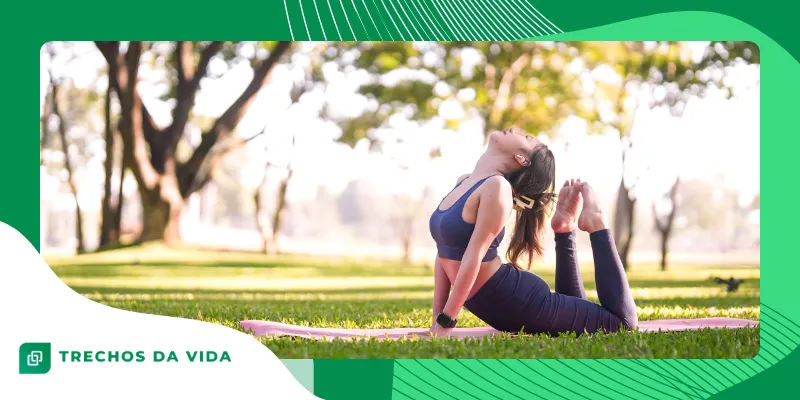
To the Sensory wellness practices They consist of deliberately using the five senses to create a brief anchoring in the present.
This is neither advanced meditation nor a complicated ritual.
It's about intentionally paying attention to what the body is already receiving — and, when necessary, adjusting that input to calm the nervous system.
Unlike approaches that ask you to "think positive," they work from the bottom up.
The body receives a calm and predictable stimulus, the brain interprets that there is no imminent danger, and the emotion loses strength.
Simple in theory, but powerful in practice because it bypasses mental rumination.
There's something unsettling about this: for decades we've taught that emotional control comes only from the mind.
In short, the Wellness practices Remember that the body was never separated.
It is the quickest way to get where rational conversation takes longer.
See also: The impact of gut health on energy and mood.
How Sensory wellness practices Do they help regulate emotions?
When the nervous system goes on alert, it prioritizes survival.
The heart races, breathing becomes short, attention narrows.
A well-chosen sensory stimulus — the weight of a blanket, the rhythmic sound of rain, the scent of lavender — activates the parasympathetic pathway, signaling that it is safe to let your guard down.
This regulation happens before the mind is able to name what it feels.
The result is a pause that prevents the escalation cycle: less catastrophizing, less explosion, more space to choose how to respond.
Have you ever felt your body react first and only later understood why?
To the Sensory wellness practices They exploit precisely this natural order.
They don't erase the difficult emotion, but they reduce its intensity enough so that we can navigate it without drowning.
Imagine the nervous system as a car going down a steep hill.
Instead of slamming on the brakes and risking skidding, the Wellness practices They gradually reduce their speed, maintaining control and avoiding panic.
++ Why do credit cards still dominate installment purchases in Brazil?
What advantages do they bring to daily life?
The main advantage lies in the speed.
While many techniques require time and silence, one Sensory wellness practice It fits in two or three minutes — in the elevator, before a meeting, or in the middle of an argument at home.
This makes them useful precisely when we need them most.
Another advantage is accessibility. They don't require expensive equipment.
In this sense, a texture that's already in the clothing, the taste of warm tea, the sound of the wind through the window all work perfectly. What matters is the intention to notice and adjust.
A review published in 2023 in Trends in Cognitive Sciences highlighted that emotional regulation via sensation is fast and relatively effortless, with the potential to increase positive emotions and reduce negative ones.
More recent studies on sensory rooms in mental health settings reinforce the pattern: many users report immediate relief and a sense of control.
The most valuable aspect, however, is the cumulative effect. Those who repeat the practice regularly notice that the emotional waves lose strength sooner.
They don't disappear — that would be unrealistic — but they cease to dominate the entire day.
++ How science is deciphering ancient languages with AI.
Real-life examples of Sensory wellness practices that make a difference
Laura, a 34-year-old designer who works from home in Campinas, used to experience bouts of irritability in the middle of the afternoon.
The screen's light tired her eyes, and her whole body felt tense. She began to put away, in the desk drawer, a smooth, cold stone she had brought back from her travels.
Thus, every 90 minutes he would stop, hold the stone with both hands, close his eyes, and mentally describe its texture — cold, heavy, with small irregularities.
It didn't change the project deadline, but it did change her internal state. After a month, the explosions subsided, and she was able to return to work with more clarity.
Pedro, a 22-year-old engineering student in São Paulo, was experiencing severe anxiety before exams. His mind raced, and he wasted valuable time.
Thus, he adopted a quick version of the 5-4-3-2-1: five things he saw on the table, four textures he touched (keyboard, pen, shirt sleeve, chair), three distant sounds, two smells (coffee and the air itself), one taste (a slow sip of water).
It took less than two minutes.
Enough to break the loop and bring his attention back to the present. His grades improved, but what he values most is having stopped arriving at the exam already exhausted.
These cases show that Sensory wellness practices They don't need to be beautiful or Instagrammable. They work when they are honest and repeatable.
Why the Wellness practices Are they gaining traction now?
We live surrounded by constant stimuli — notifications, artificial lights, urban noises. The nervous system remains in a state of chronic alert, as if the danger never ends.
In this sense, these practices act as a counterpoint: they give the body the chance to calm itself intentionally.
They also democratize care. Not everyone has easy access to weekly therapy or time for long-term practices.
One Sensory wellness practice It fits in your pocket, purse, or during a coffee break.
What is most striking is the sense of agency that emerges.
Instead of waiting for the emotion to pass on its own or relying exclusively on medication, the person gains concrete tools to intervene in the moment.
In short, this changes the relationship with one's own discomfort.
Frequently asked questions about Sensory wellness practices
| Question | Practical answer |
|---|---|
| To the Sensory wellness practices Do they replace therapy? | They don't replace them. They complement them well, offering quick tools to use between sessions. |
| Do I need to buy special things? | Almost never. Many work with what's already available: the texture of clothing, ambient sound, the smell of food. |
| Are they suitable for children? | Yes, and they are usually well received. You just need to adapt the timing and the language. |
| How much time per day makes a difference? | Two to five minutes several times a day generally yields better results than one long, sporadic session. |
| What if I don't feel anything the first time? | It's common. Like any skill, sensory regulation improves with repetition. |
What remains after practice?
To the Sensory wellness practices They don't promise a life without emotional turmoil.
They deliver something more honest: the ability to weather the waves without being dragged down for too long.
In short, the body has always known the way. These practices merely remind us that we can travel it with more mindfulness and less struggle.
For those who want to read more:
- Sensory emotion regulation – Trends in Cognitive Sciences (2023)
- Sensory Rooms within Mental Health Settings – Systematic Scoping Review (2025)
- Scoping review of somatosensory interaction design for mental health (2025)
Ultimately, what matters is not eliminating discomfort, but learning to navigate it with the body as an ally.
To the Sensory wellness practices They are a simple invitation to do so.
