A 2,200-year-old shoe was found with its laces still preserved.
The amazing discovery of a 2,200 shoe Research conducted over the years in Austria has surprised the international scientific community by revealing minute details about Iron Age clothing and engineering.
Advertisements
The exceptional archaeological find occurred in an old salt mine, where environmental conditions preserved the leather structure and fastening cords almost untouched by time.
Understanding this finding requires analyzing the chemical factors of the soil, the historical relevance of the footwear, and the modern restoration methods applied by researchers to protect this cultural treasure.
Summary
- Where and how was the 2,200-year-old shoe discovered?
- What is the condition of the shoes and laces?
- Why did salt preserve leather for over two millennia?
- How were shoes made in the Iron Age?
- What is the historical significance of this archaeological discovery?
- Comparative table of preserved textile and leather artifacts.
- FAQ about the old shoe from Dürrnberg
- Conclusion
Where and how was the 2,200-year-old shoe discovered?

Archaeologists from the German Mining Museum in Bochum have located the 2,200 shoe years during systematic excavations carried out in the historic village of Dürrnberg, near the Austrian region of Hallein.
The Dürrnberg mining area has a unique reputation. The rock salt deposited there was mined by Celtic communities long before Rome transformed the continent into provinces.
The leather artifact emerged from a branch submerged beneath thick layers of saline sediments, demonstrating that mining activity in the area maintained a constant flow of workers, including children and young laborers.
What is the condition of the shoes and laces?
Seeing the organic remains of a piece made of leather and plant fiber withstand twenty-two centuries generates an almost poetic strangeness. Organic matter usually disappears without a trace under the attack of oxygen and soil microbiology.
Structurally equivalent to a European size thirty-three, this item retains the original foot shape design, with aligned side seams and minimal signs of severe biological wear.
The detail that most fascinates the team on the field is the lacing. The laces, braided from natural linen or hemp fiber, remain snug in the eyelets with unbelievable flexibility for their age.
++ Interesting things that change as you get older.
Why did salt preserve leather for over two millennia?
This miraculous preservation is nothing more than a merciless chemical reaction. The sodium chloride present inside the Dürrnberg tunnels drained every drop of moisture from the walls and the material left behind by the miners.
Without free water, bacteria and fungi simply collapse before decomposition can begin. The underground environment becomes a kind of sterile, oxygen-free time capsule.
It's curious to observe how the brutal routine of ancient mining ended up creating the perfect conditions for everyday Celtic objects to survive the empires that came after. Studies published by Deutsches Bergbau-Museum Bochum
Studies confirm that the combination of rock salt and anoxic compression preserved dozens of Iron Age tools and leather artifacts.
How were shoes made in the Iron Age?
The analysis of 2,200 shoe Over the years, it has demonstrated a high degree of technical sophistication in the tanning and shaping of leather, using vegetable tannins to provide mechanical resistance and impermeability to everyday footwear.
The cut of the pieces reveals a well-resolved anatomical pattern, designed to withstand the stony and damp floors of the galleries without the shoe slipping off the foot with each step.
The presence of a well-structured lace dispels the idea that Celtic clothing was merely a functional patchwork. There was care in the finishing, a search for ergonomic fit, and a clear aesthetic standard.
++ Megalithic structures that still challenge modern engineers.
What is the historical significance of this archaeological discovery?
There is something unsettling and revealing about the size of 2,200 shoe years. The small mold places a young face amidst the dust and physical exertion of Iron Age mines.
While traditional archaeology often focuses on swords, coins, and large stone monuments, small leather finds bring us back to the actual daily lives of those who sustained the economy of the time.
The intact shoelace provides a practical record of Celtic textile weaving, without the need to resort to conjectures based on cave paintings or indirect accounts from Roman historians.
Comparative table of preserved textile and leather artifacts.
The table below compares the shoe found in Dürrnberg with other landmarks of world organic archaeology, highlighting the behavior of the fastening materials in different microclimates.
| Organic Artifact | Estimated Age | Location of the Discovery | Means of Preservation | Condition of the Lace/Fastening |
| Dürrnberg shoe | 2,200 years | Austria | Underground Rock Salt | Preserved and Intact |
| Sand Shoe-1 | 5,500 years | Armenia | Bat Excrement/Dried | Fragmented / Partial |
| Ötzi's sandal | 5,300 years | Alps (Italy/Austria) | Ice and Freezing | Preserved Leather Strips |
| Vindolanda Footwear | 1,900 years | United Kingdom | Waterlogged Anoxic Soil | Absent or Deteriorated |
| Skrydstrup Boots | 3,300 years | Denmark | Acid Peat | Partial Degradation |
How do archaeologists analyze the 2,200-year-old shoe without damaging it?
Removing a piece like this from its natural microclimate requires extreme care. Any sudden change in humidity can cause the leather to dry out, crack, or shrink in a matter of hours.
Researchers use three-dimensional computed tomography to investigate the inner layers and hidden seams without having to undo the original knot of the shoelace.
Mass spectrometry and carbon-14 dating analyses are performed on microscopic fractions, ensuring chronological accuracy without compromising the integrity of the object.
Who wore this type of footwear in ancient times?
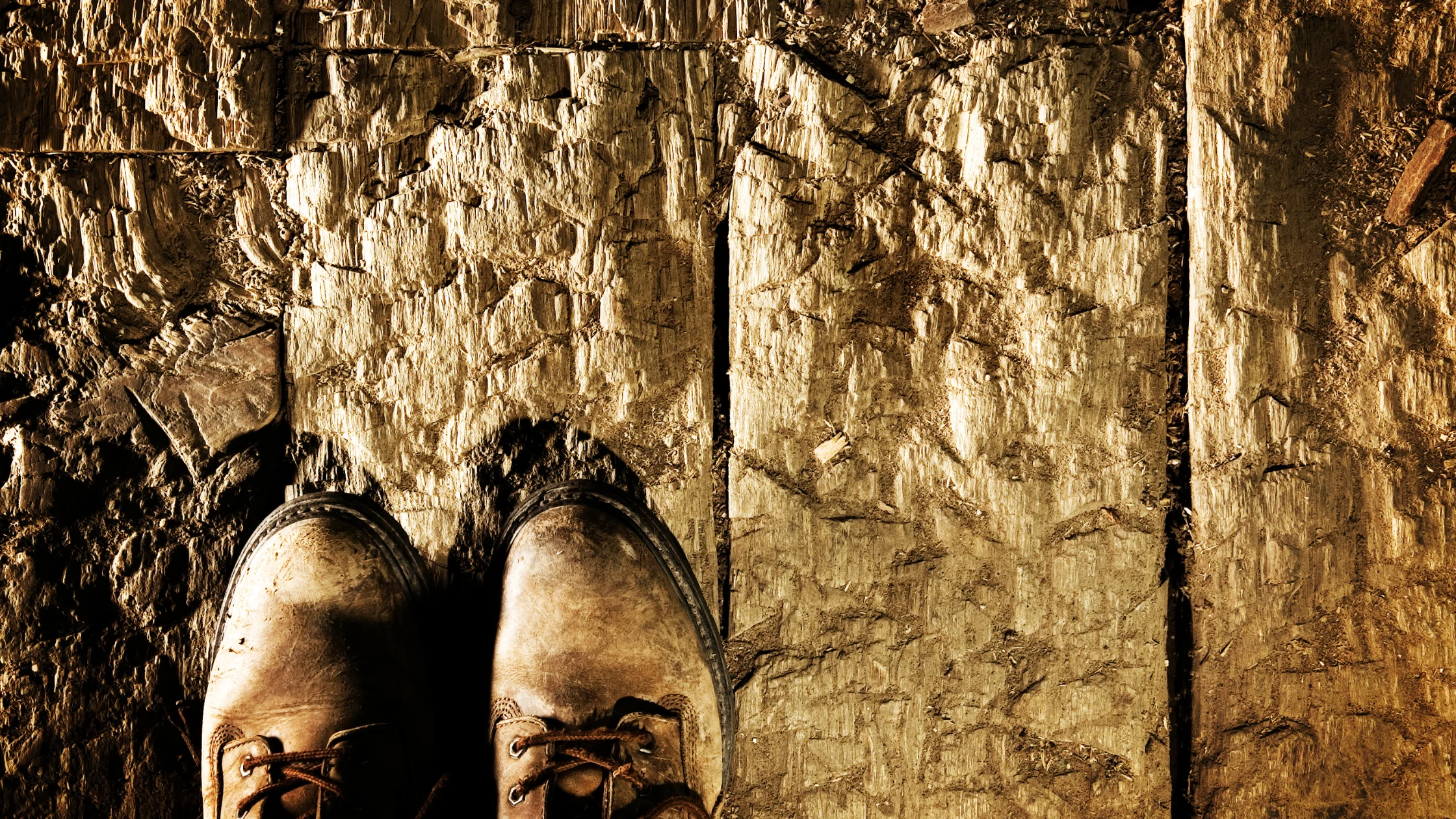
The size corresponding to number thirty-three confirms that the shoe belonged to a young worker. Salt mining in Central Europe was a collective and family endeavor.
Children and teenagers took on crucial tasks in transporting rocks and navigating the narrowest tunnels, where adults simply could not pass easily.
The fact that a child was wearing shoes made of handcrafted leather with laces shows that the community invested in protecting its workers, regardless of age.
++ Everyday Objects That Work Thanks to Accidental Discoveries
What materials were used to make the shoelace?
Botanical examinations of cord fibers 2,200 shoe Years of research point to the exploitation of local plants well known for Celtic crafts, such as flax or hemp.
The plant fibers underwent double manual twisting, a simple process that ensured excellent tensile strength and prevented wear from continuous friction.
The saline environment acted as a shield against molds and fungi that devour cellulose, allowing the plant fibers of the shoelace to reach the present day exactly as they were last tied.
What does this finding reveal about Celtic technology?
The making of 2,200 shoe Years of evidence prove that Celtic populations mastered the craft of shaping leather goods with excellent use of raw materials and minimal waste.
The aligned perforations for the laces demonstrate an advanced understanding of tension distribution across the instep, ensuring a secure fit for heavy strides on uneven terrain.
This technical expertise dismantles old historical prejudices that portrayed the peoples of Central Europe as rustic societies compared to the artisanal manufacturing methods of the Mediterranean world.
How does this discovery impact research on the Iron Age?
Analyzing everyday footwear helps to map the supply chains and trade routes that supplied the Dürrnberg mining complex with oils, tannins, and textiles.
The presence of meticulous detail in work clothes calls for a more refined interpretation of the social status and quality of life of the salt mine workers.
This discovery is encouraging new expeditions into disused underground galleries across Europe, where salt may be preserving other forgotten fragments of everyday life from millennia ago.
What is the future of the 2,200-year-old shoe found in Austria?
After undergoing a process of controlled drying and stabilization of its fibers, the 2,200 shoe In the coming years, it will become part of the permanent collection focused on European archaeology.
Three-dimensional digitization will create a tactile model for researchers worldwide to examine the seams without needing to expose the original leather to direct handling.
There is also the study of soil residue attached to the soles of the feet, which can reveal what plants the young man stepped on before entering that salt gallery for the last time.
The enduring presence of this simple shoe compels us to confront human history through the eyes of those who lived it on the factory floor, far from the grand narratives of textbooks.
To keep up with technical reports and new archaeological discoveries in salt mines, visit the portal of... Österreichische Akademie der Wissenschaften , a leading center for the study of European prehistory.
FAQ about the old shoe from Dürrnberg
Where exactly was the shoe found?
The footwear emerged from archaeological excavations conducted at the Dürrnberg rock salt mine complex, near the city of Hallein, Austria.
What material are shoelaces made of?
Fiber analysis revealed the use of hand-woven local plant materials, predominantly high-strength flax or hemp.
What was the size of the shoe that was found?
The leather mold corresponds to size thirty-three of the modern European standard, indicating its use by a child or young miner.
How come the leather didn't rot over 2,200 years?
The salt-saturated environment rapidly dehydrated the leather and prevented the proliferation of decomposing microorganisms.
Who made the discovery of the artifact?
The piece was recovered by researchers and archaeologists from the German Mining Museum in Bochum during excavations in ancient galleries.
Conclusion
Finding a Celtic shoe in such good condition inside a gallery in Austria reminds us that archaeology thrives on meticulous details.
A shoelace knot preserved for two millennia says far more about the real life of an Iron Age worker than tons of stone ruins. It is these vestiges of daily life that help us reconstruct history with more empathy and less abstraction.