10 IoT Devices That Simplify Your Daily Routine
Advertisements
In an increasingly connected world, IoT (Internet of Things) devices are emerging as indispensable allies for optimizing time and reducing daily stress.
These smart devices, which communicate via the internet to automate tasks, transform ordinary homes into efficient and personalized environments. Imagine waking up and finding everything ready for the day: lights on, ideal temperature, and fresh coffee.
However, their true value lies in how they integrate into daily routines, anticipating needs and promoting savings.
Therefore, we will explore how these 10 IoT devices that facilitate your daily routine can revolutionize your day-to-day life, with arguments based on real functionalities and measurable impacts.
Keep reading and learn more!
IoT Devices: Summary
- Intelligent Voice Assistant
- Smart Thermostat
- Smart Lock
- Smart Security Camera
- Smart Bulb
- Robot Vacuum Cleaner
- Smart Refrigerator
- Smart Coffee Maker
- Smartwatch for Health Monitoring
- Smart Irrigation System for Gardens
In addition, we will include a Frequently Asked Questions section in a table format to clarify common points, and we will conclude with relevant links for further information.
1. Intelligent Voice Assistant
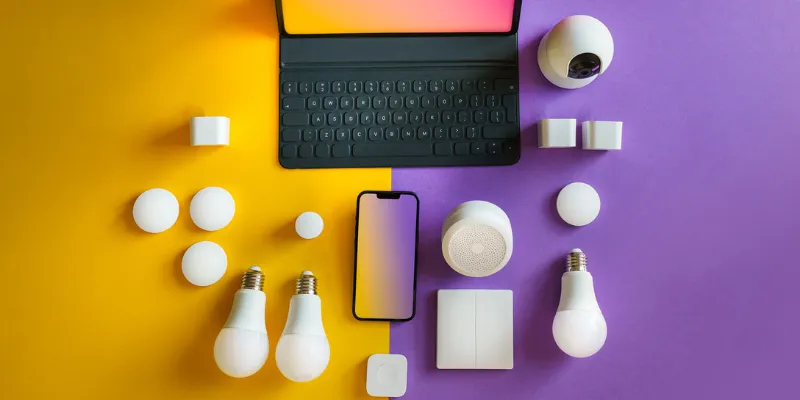
You voice assistants Smart devices, such as the Amazon Echo or Google Nest, act as the central brain of a connected home, coordinating other IoT devices to create a harmonious network.
Instead of relying on manual commands, these devices respond to verbal commands, adjusting schedules, playing music, or even controlling household appliances.
Therefore, they are not mere gadgets; they represent an evolution in human interaction with technology, where voice becomes the primary interface, reducing the time spent on repetitive tasks.
For example, in an original scenario, imagine a busy teacher who, upon waking up, says "good morning" to her assistant, who automatically reads the day's news, checks the traffic to school, and sets the alarm for online classes – all without her needing to touch her cell phone.
Furthermore, the artificial intelligence embedded in these devices learns behavioral patterns over time, optimizing personalized suggestions.
However, what makes them argumentatively superior is their ability to integrate with external services, such as digital calendars or delivery apps, creating an ecosystem that prevents forgetfulness.
++ Healthy Habits Monitoring Apps
Thus, in an original example, a freelancer working from home could set up routines where the assistant silences notifications during virtual meetings.
It also activates reminders for stretching breaks and even orders office supplies when it detects low stock levels via connected sensors.
In this way, the assistant not only makes things easier, but argues in favor of a more proactive life, where technology anticipates needs instead of reacting to them.
IoT Devices: Further Information
Finally, with privacy in mind, these devices incorporate advanced encryption to protect voice data, but encourage users to review settings periodically.
Therefore, instead of seeing them as invaders, think of them as discreet allies that increase daily efficiency.
++ The best devices for those who work from home.
Have you ever stopped to think why we still waste time with light switches when a simple word can solve everything?
This rhetorical question highlights how voice assistants redefine convenience, making daily life not only easier but also intelligently adaptable.
2. Smart Thermostat
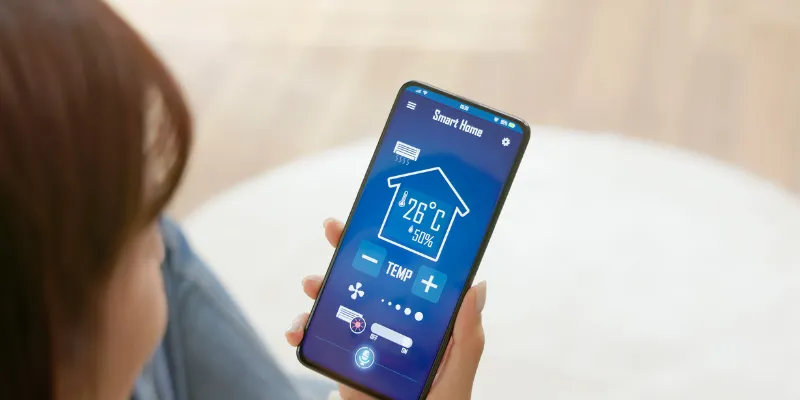
Smart thermostats, exemplified by the Nest Learning Thermostat, go beyond basic temperature control; they use machine learning algorithms to analyze habits and adjust the environment automatically.
Thus, by detecting patterns such as departure and return times, the device saves energy without sacrificing comfort, arguing in favor of practical sustainability in everyday life.
However, its relevance grows in variable climates, where temperature fluctuations can affect well-being, and here an analogy comes into play:
For example, think of the thermostat as an invisible conductor of a climate orchestra, harmonizing air conditioning, heating, and ventilation for a perfect concert of comfort.
Furthermore, connectivity with mobile apps allows for remote monitoring, which is crucial for families with unpredictable routines.
Therefore, in homes with children or elderly people, the thermostat can send alerts if the temperature goes outside the ideal parameters, preventing discomfort or health risks.
In this way, it is not just a regulator; it is a proactive guardian that integrates data from external sensors, such as humidity and air quality, to optimize the indoor environment.
Arguably, this reduces energy bills by up to 10-15%, according to studies, promoting a more economical and ecological routine.
On the other hand, the simple installation and compatibility with existing systems facilitate adoption, but require a stable Wi-Fi network for maximum performance.
Thus, when considering the long-term impact, these devices foster environmental awareness, where each automatic adjustment contributes to lower carbon emissions.
However, to illustrate, imagine a couple who travel frequently:
The thermostat detects absence via geolocation and enters eco mode, returning to normal minutes before return – a smart approach that transforms the home into a self-managing space.
3. Smart Lock
Smart locks, such as those from August or Schlage, eliminate the need for physical keys by offering access via app, biometrics, or temporary codes, redefining home security.
Therefore, they argue for the convenience of allowing you to grant remote entry to visitors, such as delivery people or family members, without compromising security.
However, what makes them creative is the integration with other IoT devices, such as cameras, for visual verification before unlocking – an extra layer that prevents unwanted access.
Furthermore, real-time notifications about attempted entry or doors left open provide peace of mind, especially during busy routines.
Thus, for professionals who leave early, the lock can automatically lock upon detecting departure, preventing future worries.
In this way, it not only makes things easier, but also educates the user about safety habits, with activity reports that help identify suspicious patterns.
Arguably, in a world with growing privacy concerns, these locks use state-of-the-art encryption to protect access data.
Finally, weather resistance and long battery life ensure reliability, but encourage manual backups for offline scenarios.
Therefore, by adopting them, the routine gains fluidity, where entries and exits become seamless.
However, consider how this impacts large families: personalized codes per member prevent lost keys, transforming the door into a smart and welcoming gateway.
4. Smart Security Camera
Smart security cameras, represented by Ring or Arlo, offer high-definition surveillance with AI-based motion detection, differentiating humans from animals for accurate alerts.
Thus, they make daily life easier by allowing remote monitoring via smartphone, offering peace of mind during extended absences.
However, its intelligence lies in cloud recording and integration with voice assistants, creating a holistic protection system.
In addition, features like night vision and two-way audio allow for real-time interactions, such as talking to delivery drivers without opening the door.
Therefore, for parents with children at home, the camera can zone specific areas, sending notifications only for relevant events.
In this way, it doesn't invade privacy; instead, it empowers the user with granular control over recordings and sharing.
Arguably, statistics reveal that homes with IoT security reduce intrusions by 30%, according to a 2024 Statista report, highlighting its preventative value.
On the other hand, compatibility with solar power in outdoor models minimizes maintenance, but requires careful initial setup to avoid false positives.
Thus, by integrating them, the daily routine gains a layer of serenity, where technology acts as a tireless guardian.
However, imagine an entrepreneur who travels: the camera detects delivered packages and sends clips, allowing for remote instructions – an approach that optimizes time without sacrificing security.
5. Smart Bulb
Smart light bulbs, such as Philips Hue, adjust intensity and color via app or voice, creating personalized environments for different times of day.
Therefore, they argue for energy efficiency by automatically dimming based on natural light, reducing unnecessary consumption.
However, what makes them relevant is the ability to schedule routines, such as gradually turning on the lights at dawn for a gentle awakening.
Furthermore, integration with motion sensors illuminates nighttime pathways, preventing accidents in homes with elderly residents.
Thus, for students, warm colors can foster focus during study, while cool tones are relaxing at night.
In this way, lamps are not just light sources; they are tools for environmental biohacking, influencing mood and productivity.
Argumentatively, they promote mental health by simulating solar cycles in indoor environments.
Finally, compatibility with central hubs facilitates expansion, but requires planning to avoid Wi-Fi interference.
Therefore, by adopting them, the routine becomes more intuitive, with smooth transitions between activities.
However, consider creative scenarios: at a family gathering, the lights pulse in festive colors synchronized with music – an innovation that elevates everyday experiences.
6. Robot Vacuum Cleaner
Robot vacuum cleaners, exemplified by the Roomba, autonomously navigate digital maps of the house, cleaning floors while you focus on other tasks.
Thus, they simplify the routine by scheduling recurring cleanings, arguing for consistency in hygiene without manual effort.
However, advanced sensors prevent falls and obstacles, adapting to complex layouts.
In addition, apps allow for remote control and cleaning reports, ideal for allergy sufferers who need immaculate environments.
Therefore, in families with pets, the robot collects pet hair daily, preventing accumulation.
Therefore, it does not replace; it complements cleaning habits, educating about problem areas through collected data.
From an argumentative standpoint, this frees up weekly hours for leisure or work.
On the other hand, maintaining filters and automatic emptying stations ensures longevity, but requires dedicated space.
Thus, by integrating it, the routine gains autonomy, where the house "takes care of itself".
However, imagine a busy executive: the robot cleans during home office hours, keeping the professional environment uninterrupted – a smart solution for multitasking.
7. IoT Devices: Smart Refrigerator
Smart refrigerators, like those in the Samsung Family Hub, monitor inventory via internal cameras and suggest recipes based on available ingredients.
Therefore, they argue for reducing waste by providing alerts about expiration dates, thus optimizing purchases.
However, touchscreen displays integrate calendars and lists, transforming the kitchen into a family hub.
In addition, connectivity with supermarket apps facilitates automatic ordering of out-of-stock items.
Thus, for amateur cooks, the refrigerator offers video tutorials, fostering culinary creativity.
Therefore, it's not just storage; it's a nutritional assistant that promotes healthy habits. Arguably, in times of inflation, this cuts unnecessary costs.
Finally, energy efficiency with adaptive modes preserves freshness, but requires regular software updates.
Therefore, by adopting it, the eating routine becomes proactive.
However, imagine a vegan family: the refrigerator tracks vegetables and suggests substitutes – a personalized approach that enriches daily meals.
8. IoT Devices: Smart Coffee Maker
Smart coffee makers, represented by Nespresso or Smarter Coffee, prepare personalized drinks via an app, adjusting strength and volume.
Thus, they make mornings easier by initiating remote cycles, arguing for punctuality in busy routines. However, integration with voice assistants allows commands like "make my usual coffee".
In addition, capsule monitoring alerts you when refills are needed, preventing morning surprises.
Therefore, for coffee enthusiasts, multiple profiles store familiar preferences.
In this way, the coffee maker elevates the daily ritual to a customized experience, influencing energy and focus. Arguably, this optimizes waking up, impacting productivity.
On the other hand, automated cleaning maintains hygiene, but requires filtered water for better taste. Thus, by incorporating it, the routine gains an accessible gourmet touch.
However, consider a night owl writer: the coffee maker schedules nighttime decaffeinated doses – an innovation that adapts to the individual's rhythm.
9. Smartwatch for Health Monitoring
Smartwatches like the Apple Watch or Fitbit track heart rate, sleep, and activity, offering insights for daily improvements.
Therefore, they argue for prevention by detecting irregularities and suggesting consultations.
However, integrated apps motivate exercise through gamification.
In addition, reminders to stay hydrated and take breaks combat sedentary lifestyles in office routines.
Thus, for amateur athletes, precise metrics refine training.
In this way, the smartwatch doesn't monitor; it empowers health decisions based on real data. Arguably, users report improvements in overall well-being.
Finally, long battery life and water resistance ensure continuous use, but data privacy is essential.
Therefore, by using it, the routine becomes holistic.
However, imagine an active senior citizen: the watch alerts them to falls and calls emergency services – a smart safeguard.
10. Smart Irrigation System for Gardens
Systems like Rachio or Orbit adjust irrigation based on weather and soil forecasts, conserving water.
Thus, they make gardening easier by automating cycles, arguing for sustainability. However, humidity sensors prevent overwatering.
Furthermore, apps allow for customized zones for various plant types. Therefore, for urban dwellers with balconies, it optimizes limited spaces.
In this way, the system educates about ecology, reducing water bills. Argumentatively, it contributes to local biodiversity.
On the other hand, DIY installation facilitates adoption, but integration with assistants increases control. Thus, by adopting it, the green routine becomes effortless.
However, imagine an amateur gardener: the system adapts to unexpected rainfall – an approach that nourishes without waste.
IoT Devices: Frequently Asked Questions
| Question | Response |
|---|---|
| What is IoT and why does it make daily life easier? | IoT refers to connected devices that automate tasks via the internet, reducing manual effort and optimizing time, as seen in these 10 IoT devices that make your daily routine easier. |
| Are they safe from hackers? | Yes, with encryption and regular updates, but use strong passwords and secure networks for maximum protection. |
| Do I need fast internet? | A stable Wi-Fi connection is recommended for full functionality, but many operate offline in basic modes. |
| What is the average cost? | It varies from R$200 to R$2000 per device, depending on the brand and features, with ROI in energy savings. |
| How to integrate multiple devices? | Use hubs like Amazon Echo or Google Home to create unified ecosystems and personalized routines. |
In conclusion, these 10 IoT devices that make your daily routine easier are not luxuries; they are investments in efficiency, health, and sustainability.
With intelligent approaches such as predictive automation and seamless integrations, they transform everyday life into something more fluid and productive.
Relevant Links