Optical illusions: why your brain misinterprets images.
One optical illusion This proves that our visual perception doesn't operate like a perfect camera, but rather like a hasty editor.
Advertisements
The brain needs to process massive volumes of light data every millisecond.
To avoid a collapse due to information overload, the mind adopts shortcuts based on memories and patterns.
There's something unsettling here: these flaws expose the disconnect between the physical world and the constructed world.
Scientists use these phenomena to map the visual cortex and understand how neurons interpret shapes.
Unraveling these mechanisms transforms the way we interact with design, art, and reality itself.
Article Summary
- How does the visual cortex process and decode external stimuli?
- What are the main types of visual phenomena that exist?
- Why did biological evolution favor these brain shortcuts?
- Comparative data on neurological processing
- Frequently Asked Questions (FAQ)
How does the visual cortex process and decode external stimuli?
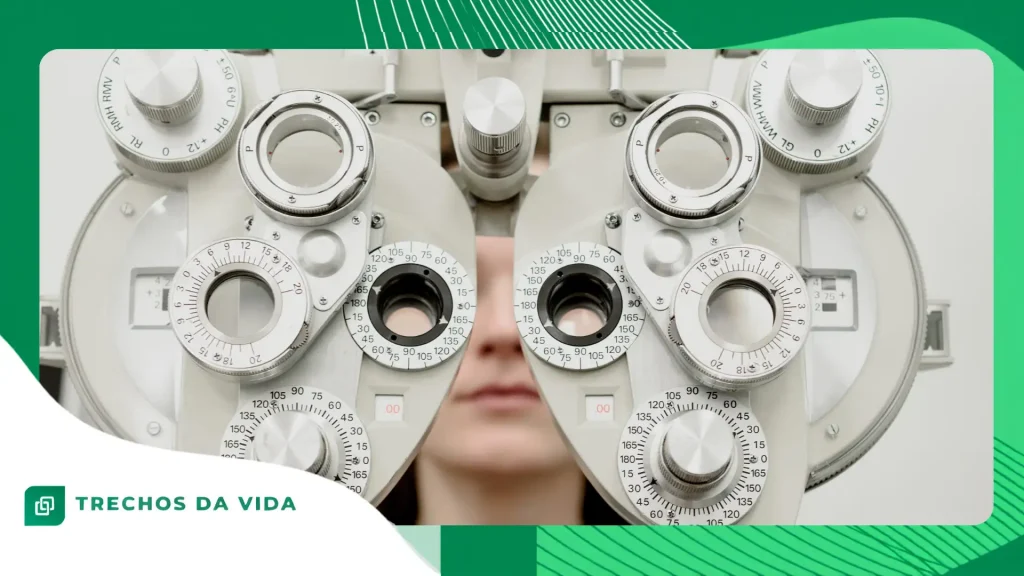
Light reflects off objects and enters through the eyes, reaching the photoreceptors in the retina immediately.
These cells convert light waves into electrical impulses that travel along the optic nerve to the occipital area.
The visual cortex takes on the task of reassembling the puzzle, interpreting lines and contrasts instantly.
When data arrives in a confusing manner, the cognitive system fills in the gaps with intuitive and rapid assumptions.
From this comes a optical illusion, where the image reconstructed by the mind challenges the actual physical object.
Our conscious perception is the result of this statistical calculation that prioritizes speed over accuracy.
Magnetic resonance imaging (MRI) scans demonstrate that areas of higher processing alter basic vision in less than fifty milliseconds.
This speed ensures quick reactions in everyday life, although it opens the door to fascinating and unexpected visual distortions.
What are the main types of visual phenomena that exist?
Experts divide these tricks into three categories: literal illusions, physiological illusions, and cognitive illusions.
Each group challenges a specific stage of the sensory journey, from light perception to logical judgment.
Literal illusions create objects that differ from their component parts, immediately confusing our spatial perception.
The observer continually oscillates between viewing the whole and analyzing the details involuntarily.
The physiological type results from overloading the visual pathways after exposure to intense brightness or continuous movement.
This is the case with afterimages that remain floating on the retina when we close our eyes after stimulation.
Cognitive variations, on the other hand, arise when the intellect applies three-dimensional knowledge to flat figures that defy geometry.
The impossible perspectives created by the artist MC Escher perfectly illustrate this conflict between logic and vision.
Why did biological evolution favor these brain shortcuts?
Our ancestors on the savannas couldn't hesitate to check if a shadow in the grass was a predator.
The brain evolved to make ultra-fast decisions from visual fragments, ensuring survival by anticipating danger.
Natural selection has shaped a system that prefers to err on the side of caution rather than fail due to slowness.
Seeing false threats where there were only bushes ensured that the human species escaped real attacks.
This adaptive mechanism allows us to identify human features in electrical outlets or clouds, a phenomenon known as visual pareidolia.
This search for faces facilitates our social interaction and nonverbal communication from childhood.
In the face of a optical illusion, We witness these ancient defense mechanisms operating on modern screens and papers.
The shortcuts that saved lives in the past continue to govern our conscious experience and daily decisions.
Top-down processing, which uses memory to decipher the present, saves a massive amount of metabolic energy.
Conserving glucose was a crucial evolutionary advantage throughout the biological development of hominids on Earth.
++ Interesting things the body does during sleep.
Comparative data on neurological processing
Neurobiology quantifies the discrepancy between data collected by the eyes and the capacity for conscious processing. The table demonstrates the vital need for these automatic filters to keep our minds healthy and functional.
++ Some people are able to recognize faces decades later.
| Visual System Metric | Estimated Value | Impact on Human Perception |
| Data capture in the retina | 10 million bits per second | Massive volume that needs to be reduced. |
| Conscious processing capacity | 40 to 50 bits per second | A bottleneck that requires shortcuts and mental filters. |
| Average visual reaction time | 150 milliseconds | Optimized speed for physical survival. |
| Equivalent image resolution | 576 megapixels | Detailed analysis focused only on the central point. |
How does environmental context alter our judgment of the size of things?
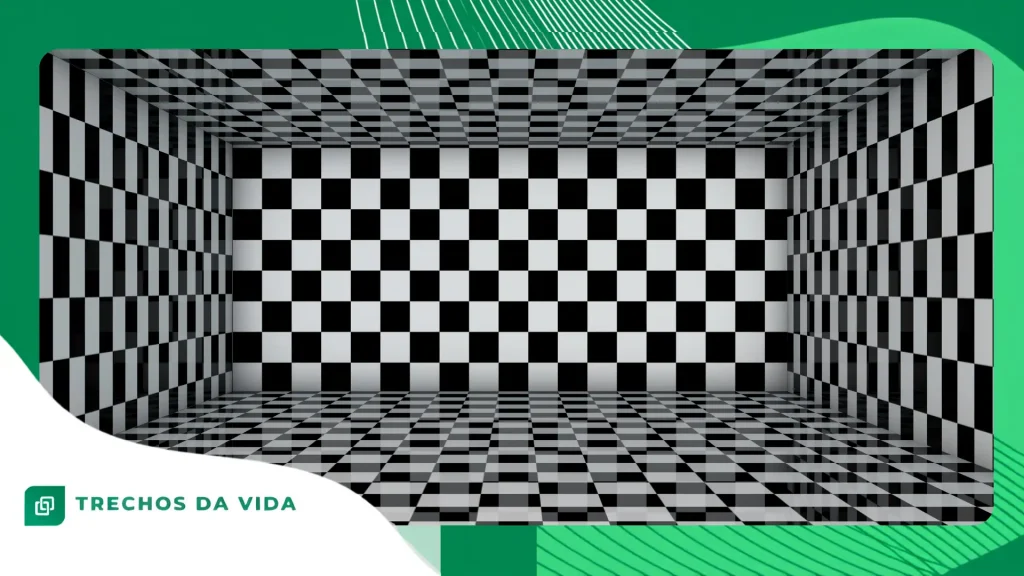
The brain doesn't assess the size of something in isolation, but compares its proportions to its immediate surroundings.
This mechanism maintains dimensional constancy, allowing us to know that a distant car hasn't actually shrunk.
The Ebbinghaus illusion demonstrates this: two identical circles appear different due to the size of their neighboring shapes.
If we surround the sphere with giant circles, it will appear smaller than if it were surrounded by tiny dots.
This is often misinterpreted in the illusion of the Moon on the horizon, which appears larger than at the top of the sky.
This classic misconception has puzzled astronomers since antiquity and involves terrestrial references such as buildings and mountains.
These clues are so powerful that architects deliberately use them to make small spaces seem larger.
Manipulating lines and colors transforms the physical experience of any environment without altering its actual walls.
How do colors and shadows deceive our minds?
The lighting changes throughout the day, but the brain adjusts the tones so we see the original colors.
This adaptive and complex process is known in science as chromatic constancy and occurs outside of consciousness.
The cortex discounts the effects of shadows to determine the true hue of a surface in space.
This subconscious calculation works in the three-dimensional world, but fails when faced with two-dimensional images projected onto digital screens.
Adelson's Chessboard Illusion shows two squares of the same shade of gray that appear completely different.
The brain brightens the shaded area by predicting that the artificial darkness has reduced the object's original brightness.
This powerful optical illusion The photo of the color-changing dress that went viral on the internet sparked global debate.
The controversy divided opinions because each person assumed a different background lighting for the fabric.
Those who assumed natural light saw white and gold; those who deduced artificial light immediately perceived blue and black.
The episode proved that visual reality is a malleable construct shaped by the observer's own preconceptions.
++ The Small Islands That Own Million-Dollar Internet Domains
Reflection
Illusions function as mirrors of the hidden architecture of the mind, showing that seeing does not mean registering the truth.
The brain acts as a simulator focused on practical utility and adaptive reaction speed.
These phenomena demonstrate the sophistication of an organ that evolved to protect us in complex scenarios.
Every mistake is the product of a brilliant mathematical calculation that takes place behind the scenes of the nervous tissue.
By understanding the limits of vision, we become more attentive observers of our own flaws and judgments.
To explore interactive experiments validated by scientists, we recommend the specialized portal of Scientific American, keeping that in mind.
Frequently Asked Questions (FAQ)
What causes an optical illusion in the brain?
It arises when the signals sent by the eyes are ambiguous, forcing the mind to use shortcuts.
The brain automatically fills in informational gaps based on past experiences, but not always accurately.
Do all people see illusions in the same way?
No, because age, culture, and eye strain alter the interpretation of images. Small variations in the structure of the retina's photoreceptors also modify the final result of each individual's perception.
Is it possible to train the mind to avoid being deceived?
Knowing the mechanics of the trick helps, but the processes in the cortex occur automatically. The brain prioritizes the speed of reading the scene, making the visual deception virtually impossible to undo voluntarily.
Can optical illusions indicate health problems?
Generally not, as they represent normal responses from a perfectly healthy and active visual system.
If you notice sudden and persistent distortions in your daily life, it is recommended that you seek guidance from a trusted ophthalmologist.