Auroras on Mars reveal clues about the planet's atmosphere.
To the Auroras on Mars They reveal a curious and, at the same time, unsettling spectacle in the Solar System.
Advertisements
Unlike the colorful curtains that dance above our Earth's poles, martial manifestations cover global areas of the planet and occur at wavelengths completely invisible to our eyes.
Observing these flashes invisible to the naked eye is, for astrophysics, almost like examining the scene of an ancient crime: each luminous emission records the continuous leakage of gases into the vacuum, helping to reconstruct the collapse of a world that once harbored rivers and seas and today is nothing more than a frozen desert.
Deciphering the mechanics of these lights requires looking directly at the findings of instruments such as NASA's MAVEN probe and the Emirates Mars Mission (Hope Probe).
Orbital sensors captured a complex interaction between the constant puff of solar wind and the fossilized magnetic pockets in the Martian crust.
We have structured this technical and interpretative overview into strategic sections to explain how this phenomenon sheds light on the past, present, and future missions to the Red Planet.
Summary
- What are martial auroras and how are they formed?
- What are the main types of atmospheric light discovered on Mars?
- How do scientists use these events to study the atmosphere of Mars?
- Which space missions are leading the mapping of auroras on the Red Planet?
- What is the crucial difference between the martial and terrestrial phenomena?
- How will atmospheric data from Mars impact future human exploration?
- Comparative Table: Types of Martian Luminous Phenomena
- Conclusion
- Frequently Asked Questions (FAQ)
What are martial auroras and how are they formed?
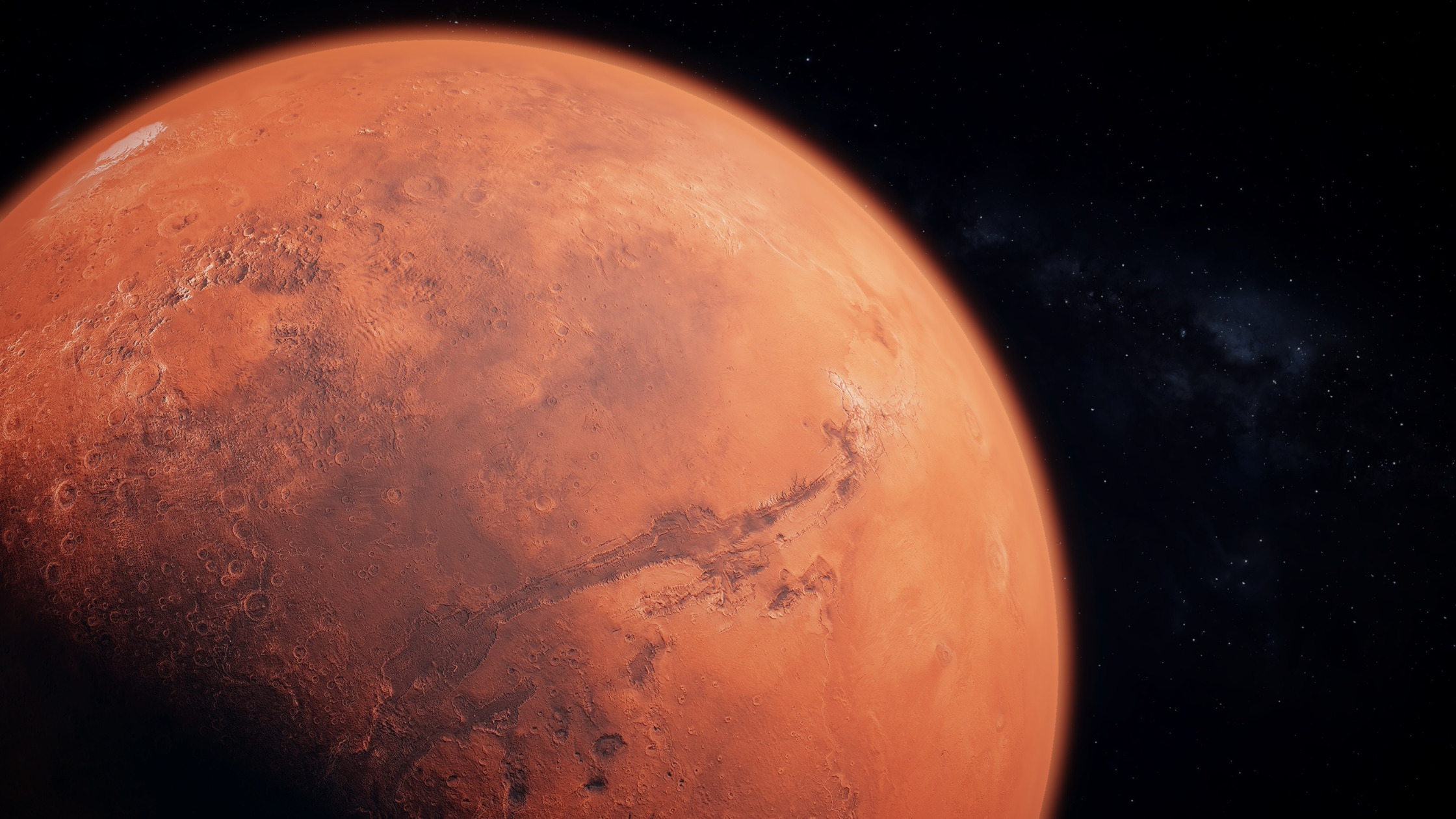
The origin of this glow comes from the direct collision between charged particles of the solar wind and oxygen and hydrogen molecules in the upper atmosphere.
When the Red Planet lost its internal magnetic dynamo about four billion years ago, its atmosphere was left unprotected against radiation.
To the Auroras on Mars They light up precisely where residual magnetism etched into the rocks of the southern hemisphere manages to channel the electrons and protons coming from the Sun.
When these solar particles collide with the rarefying gases high in the celestial sky, they transfer energy to the atoms, which return the excess in the form of ultraviolet photons.
If a coronal mass ejection occurs on the Sun, the impact gains immediate force and causes almost the entire planetary disk to glow in UV waves.
There is something tragic about this dynamic: the same brightness we study today is the direct engine of the erosion that tears and disperses Martian air into space.
Investigating this interaction exposes the extreme fragility of gaseous envelopes in worlds without an active global magnetic field.
When ultraviolet detectors register the arrival of the solar wind, they paint a picture of the anatomy of planetary decay itself.
This continuous monitoring allows for surgically precise identification of the position of crustal magnets and calculation of the exact rate of atmospheric erosion over time.
Which space missions are leading the mapping of auroras on the Red Planet?
The arrival of the MAVEN probe in orbit marked a turning point in the study of the upper atmosphere and the ultraviolet environment.
Their calibrated sensors demonstrated how the solar wind sweeps across the planet's gaseous envelope, connecting the mass loss to historical solar storms.
MAVEN proved that Mars did not lose its atmosphere due to a sudden event, but through relentless erosion operating over billions of years.
The Emirates Mars Mission, with the Hope lander, complemented this scenario by recording unprecedented panoramic views of the faint auroras on the night side.
. Hope's wide orbit makes it possible to photograph almost the entire planetary disk at once, capturing the dynamics of these lights on gigantic geographic scales.
This collaborative work between MAVEN and Hope filled critical gaps in time and space that previously puzzled astronomers.
The combined data from these spacecraft show that the upper atmosphere responds to fluctuations in space weather within minutes.
The detectors pick up subtle variations in brightness and help isolate the electrical circuits that connect the interplanetary medium to the rocks of the crust.
This integrated reading continues to generate valuable insights for plasma physics and contemporary space weather.
++ Beta Pictoris d: the new gas giant and what it reveals about the chaos of young systems.
What is the crucial difference between the martial and terrestrial phenomena?
The fundamental difference lies in the magnetic shield: Earth possesses a strong and structured dipolar field that channels solar particles almost exclusively towards the poles.
Our shield protects us and creates the well-known auroral ovals in the Arctic and Antarctic regions.
As Auroras on Mars They have no fixed geographical boundaries and emerge at different latitudes, reflecting the lack of an active central dynamo.
Another important point of contrast lies in the range of light in which each phenomenon manifests itself.
While on Earth the oxygen and nitrogen in the air create a spectacle of visible light in green, red, and violet, on the Red Planet the show takes place in the ultraviolet spectrum.
If an astronaut were on the ground looking at the night sky, he would not see bright curtains of light with the naked eye without the aid of special viewfinders.
Earth's magnetic field dissipates the energy of solar storms without allowing our atmosphere to escape into space. On Mars, without this global barrier, radiation directly hits the middle and upper layers of the atmosphere.
This continuous aggression heats the remaining gases, giving the final push for hydrogen and oxygen molecules to break free from the planet's gravity.
++ Revolutionary Discovery: An Earth-like Planet with Potential for Life
How will atmospheric data from Mars impact future human exploration?
Understanding the behavior of space weather and ultraviolet emissions is a basic requirement for planning the safety of future manned missions.
The same high-energy particles that cause the glow in the upper layers pose a serious radiation risk to humans on the surface.
Mapping the frequency of these solar storms helps engineers design habitats and suits with adequate protection.
The variation in air density during auroral events directly affects the calculations for the entry, descent, and landing of heavy spacecraft.
When the sun sends out a large burst of energy, the sea atmosphere expands, altering the drag and friction experienced by vehicles during aerobraking maneuvers.
Understanding these sudden oscillations prevents accidents when planning hypersonic trajectories.
Predicting peak auroral activity is also essential for designing the communication network of future colonies.
The intense ionization that occurs during these events often causes serious noise and interference in radio signals transmitted between the surface and satellites in orbit.
Constant monitoring of the martial sky will, in practice, function as the space weather service for the first settlements.
To deepen your knowledge of space weather and keep up with the publication of research on the interaction between solar wind and planetary magnetospheres, consult the official portal of [organization name]. European Space Agency (ESA), an international benchmark in space exploration.
Comparative Table: Types of Martian Luminous Phenomena
| Aurora Type | Main Location | Mechanism of Origin | Visibility / Wavelength |
| Discreet | Southern Hemisphere (crustal fields) | Particles channeled through local magnetic anomalies | Far ultraviolet (Invisible to the naked eye) |
| Diffuse | Global coverage (entire planet) | Massive solar storms and coronal mass ejections | Broad ultraviolet and high-energy radiation |
| Of Protons | Day side (high thermosphere) | Solar protons that capture electrons and become neutral atoms. | Continuous ultraviolet emission on the illuminated side. |
| Sinuous | Narrow chains in the night zone | Complex interaction between solar wind and crustal fields | Deep ultraviolet light recorded by orbital probes. |
What are the main types of atmospheric light discovered on Mars?
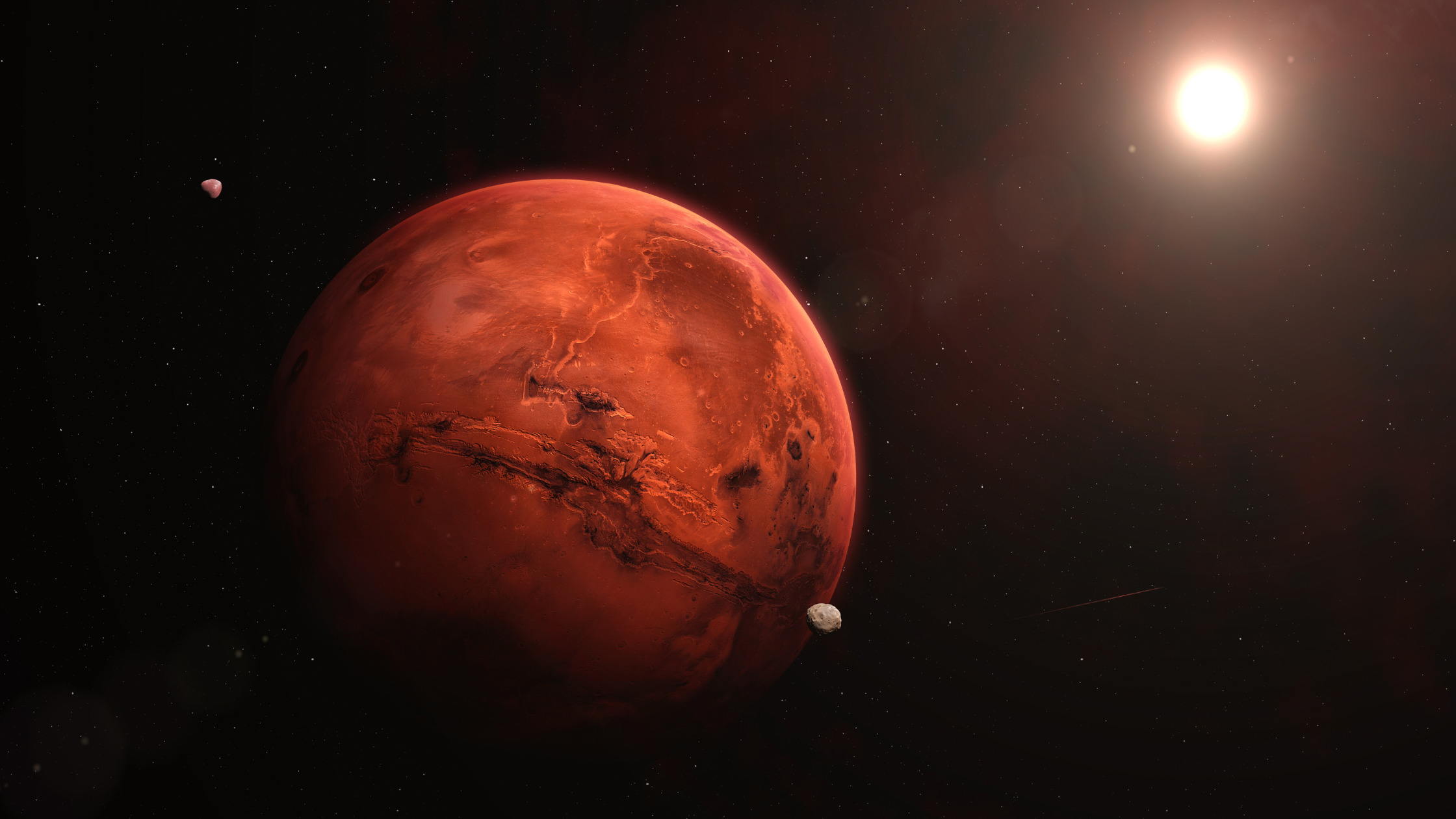
Planetary physics divides the planetary phenomenon into three well-defined categories: discrete auroras, diffuse auroras, and proton auroras.
Discrete waves occur at specific points in the southern hemisphere, where certain magnetic anomalies in the rock direct charged particles to the lower layers.
Diffuse emissions, on the other hand, cover the planet extensively during violent solar storms, tinting almost the entire night hemisphere with homogeneous radiation.
Proton auroras exhibit peculiar daylight behavior: protons from the Sun steal electrons from marine hydrogen as they approach the atmosphere.
Turning into neutral atoms, they bypass the magnetic barrier and plunge deep into the middle layer.
When they encounter denser gases, they collide and release ultraviolet light, marking the exact position of the hydrogen that is escaping from the planet.
The recent discovery of the so-called sinuous aurora by the Hope probe has disrupted the theoretical models we considered to be established.
It is a giant luminous serpent that cuts through thousands of kilometers in the night sky, revealing magnetic connections that science is still trying to fully decode.
This unexpected structure reminds us that the mechanics of plasmas in environments lacking a dipole shield hides surprises that are far from being mastered.
++ Why are the oceans changing color in some regions?
How do scientists use these events to study the atmosphere of Mars?
Measuring the intensity of this ultraviolet light is equivalent to calculating the historical rate of water evaporation on the planet.
All the hydrogen and oxygen traced at the top of the martial sky result from the breakdown of ancient water molecules by solar radiation in the lower layers.
The variations in altitude and brightness of these emissions reveal the thermal variation and density of the thermosphere at different martial seasons.
Scientists cross-reference these records with complex computer simulations to reconstruct the climate of distant geological eras.
This reading allows us to understand how the accelerated loss of carbon dioxide and water vapor destroyed the planet's ability to retain heat on its surface.
To explore in depth the official reports on gas leaks and follow the detailed mapping of the sea atmosphere, access the portal of NASA Mars Exploration Program, a global reference in interplanetary mission data.
Spectrography of these activated gases helps calculate how much kinetic energy the solar wind transfers to the atmosphere. This calculation reveals the speed of wind currents at the top of the sky and the circulation of global thermal masses.
With this data, researchers create three-dimensional models of the planet, comparing the loss of gases at the equator and poles throughout the Sun's activity cycles.
Conclusion
Observing the dynamics of Auroras on Mars It goes far beyond aesthetic curiosity about invisible flashes in the night sky of another planet.
These emissions act as markers of the erosion of a gaseous envelope that once allowed liquid water to exist on the surface.
Understanding how this air escapes helps to reconstruct the history of the Solar System and teaches valuable lessons about the limits of habitability on rocky planets.
With the advancement of instruments sent into space, the ability to interpret space weather is becoming increasingly practical.
The data collected by orbiters like MAVEN and Hope provides the foundation for the knowledge needed to protect future explorers and ensure safe landings.
Looking at the ultraviolet light from Mars is, ultimately, a way to understand the vulnerability of our own planet and the harshness of the interplanetary environment.
Frequently Asked Questions (FAQ)
Can astronauts see auroras on Mars with the naked eye?
No. Almost all marine emissions occur in the ultraviolet spectrum, which the human eye cannot detect.
An astronaut on the surface would need visors or sensors calibrated for UV wavelengths to be able to see the phenomenon in the sky.
Why doesn't Mars have polar auroras like Earth?
Mars lost its global magnetic field billions of years ago. Without defined magnetic poles in its core, solar wind particles interact directly with isolated crustal fields or openly reach the atmosphere during solar storms.
What causes the martial proton aurora?
It occurs on the sunlit side of the planet when protons from the solar wind capture electrons from the hydrogen molecules of the atmosphere.
Upon becoming neutral, these particles break through the magnetic barrier and collide with atmospheric gases, releasing ultraviolet light.
Which space probe discovered the faint auroras on Mars?
The European Space Agency's (ESA) Mars Express probe made the first recordings in 2004.
Years later, the United Arab Emirates' Hope probe captured high-resolution images and mapped the complex, winding structure of these emissions.
Does the appearance of auroras indicate that the martial atmosphere is recovering?
No. On the contrary: the occurrence of these emissions highlights the ongoing process of atmospheric destruction, showing how the solar wind tears away and expels atmospheric gases into outer space.