How an entire city was built on top of another ancient city.
Advertisements
Urban archaeology reveals that a The entire city was built on top of another ancient city. in various parts of the world, revealing extraordinary secrets right beneath our feet.
This phenomenon of historical overlap did not happen by chance. It is the practical result of a relentless search for strategic natural resources, valuable trade routes, and natural geographical defenses that simply do not change over the centuries.
Understanding these urban layers helps us decipher the very evolution of engineering and the constant cultural transformation of contemporary metropolises. It's like reading the pages of a book of stone accumulated over time.
Article Summary
- Why did ancient civilizations build on ruins?
- Rome: The world capital of urban stratigraphy.
- Mexico City and the rescue of Tenochtitlan.
- Comparative table of historical layers around the world.
- Modern preservation and excavation technologies.
- Must-see locations for underground archaeological tourism.
- Frequently Asked Questions (FAQ) about overlapping cities.
Why did ancient civilizations build on ruins?
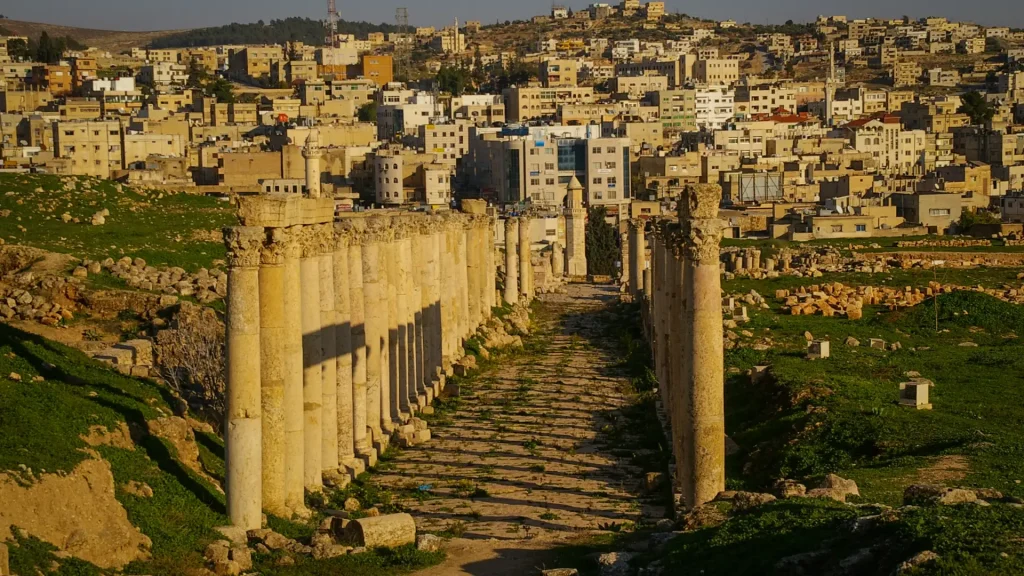
Ancient peoples often chose to rebuild their homes in the same location purely for reasons of economy: it was much more practical to take advantage of existing stone foundations and valuable building materials that were already there, ready for use.
Besides the obvious structural advantages, the proximity to sources of drinking water and navigable rivers made abandoning geographically privileged territories unthinkable, even after devastating fires, earthquakes, or plagues.
There is also a strong component of psychological domination in this practice.
Erecting new temples on top of conquered monuments was a physical demonstration of political power, visually marking the sovereignty of a new dynasty or religion that had arrived to erase the past.
Over time, the continuous accumulation of dust, household debris, and sediment brought by floods gradually raised the ground level of the cities, silently and inevitably swallowing up the old structures.
How did Rome become the world's greatest example of urban sprawl?
The mythical Italian capital represents the most perfect and documented example of how a The entire city was built on top of another ancient city. throughout millennia of continuous occupation.
Beneath the chaotic traffic of modern Rome, there are at least three distinct levels of preserved history, dating from the Roman Empire, through the obscure transition of the Middle Ages, to the present day.
The visitor who descends the stairs of the Basilica of San Clemente, for example, takes a true vertical journey through time: it begins in a medieval church from the 12th century, passes through an early Christian basilica from the 4th century and ends in a pagan temple dedicated to the god Mithra, from the 2nd century.
These deep excavations reveal entire paved streets and Roman drainage systems that continue to function perfectly beneath the foundations of modern residential buildings.
The infrastructure from the Roman imperial past, in a way, continues to quietly sustain the functioning of one of the most visited and inhabited capitals in Western Europe.
What secrets lie hidden beneath modern Mexico City?
In the Americas, Mexico City holds a dramatic history of forced cultural overlap, having been built directly upon the ruins of the glorious Aztec capital, Tenochtitlan.
After the conquest, the Spanish colonizers decided to build their new cathedral and plazas using stones from demolished Aztec temples, such as the imposing and sacred Templo Mayor, whose stone heart remained buried for centuries.
Today, engineers and archaeologists are working with delicate precision to recover extraordinary pre-Hispanic remains that lie directly beneath the asphalt of the metropolis's bustling historic center.
Recent investigations show that the ancient Aztec canals and drainage of the ancient lake still take their toll, directly influencing the stability of modern soil and challenging current civil engineering.
++ Optical illusions: why your brain misinterprets images.
How do modern engineers manage construction projects on archaeological ruins?
Visualizing the scale of these incredible historical overlaps helps us understand the complexity of living in the past.
We've gathered some real facts about major metropolitan areas that hold archaeological treasures beneath their asphalt streets.
To gain a closer understanding of the preservation of these underground world heritage sites, it is worthwhile to follow the monitoring and technical reports of... UNESCO World Heritage Centre, which details the conservation efforts of these global historical relics.
Comparative Table: Historical Layers Around the World
| Modern City | Ancient City Buried | Century of Origin | Average Depth of the Ruins | Main Underground Attraction |
| Rome (Italy) | Imperial Rome | 8th century BC. | 5 to 12 meters | Basilica of Saint Clement |
| Mexico City | Tenochtitlan (Aztec) | 14th century AD. | 3 to 8 meters | Ruins of the Templo Mayor |
| Istanbul (Türkiye) | Constantinople | 4th century AD. | 4 to 10 meters | Basilica Cistern |
| Jerusalem (Israel) | Biblical Jerusalem | 10th century BC. | 6 to 15 meters | Western Wall Tunnels |
How does engineering preserve the past during urban development?
Working on expanding transportation and sanitation networks in these regions requires meticulous planning, capable of combining heavy construction technology with strict archaeological salvage protocols.
During the expansion of the metro lines in Rome, for example, the progress of the excavators is constantly interrupted so that teams of archaeologists can manually catalog coins, mosaics, and frescoes before the concrete arrives.
The use of non-invasive technologies has revolutionized contemporary urban archaeology, allowing specialists to see what lies beneath the ground without having to dig destructive holes in public roads.
Ground-penetrating radar (GPR) sensors help identify structural voids, rock walls, and historical drainage channels long before drilling machines begin work.
This delicate balance ensures that the urban development of large metropolises occurs without erasing the physical memory of those who walked along these same coordinates thousands of years ago.
++ The Small Islands That Own Million-Dollar Internet Domains
What are the most innovative technologies used in urban archaeology?
The use of LiDAR technology has become a true revolution in mapping the subsoil, emitting laser pulses capable of ignoring the interference of modern constructions and revealing buried structures.
Three-dimensional modeling creates highly accurate virtual reconstructions of vanished temples and palaces, allowing researchers to explore architectural details without touching a single stone.
Thanks to these modern methods, it becomes much easier to understand and demonstrate how a The entire city was built on top of another ancient city. without having to paralyze traffic or displace entire forty-somethings from a metropolis.
These innovations accelerate the pace of archaeological discoveries and drastically reduce the operational costs of vital public works in densely populated capital cities.
Where can we visit these impressive historical underground layers?
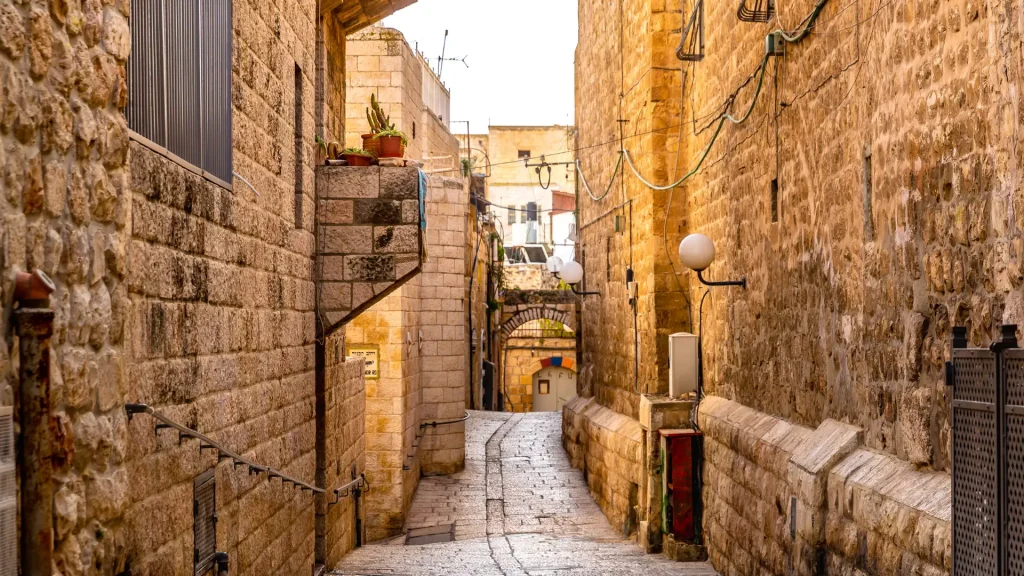
Underground archaeological tourism has gone from being an academic niche to a sought-after experience for travelers seeking genuine connections with the past.
In Istanbul, the monumental Basilica Cistern allows visitors to walk on suspended walkways amidst a forest of Byzantine marble columns that appear to float above the dark water.
In London, entire sections of the original Roman wall have been integrated into the architecture of modern commercial buildings, creating an almost surreal visual contrast in the heart of the financial district.
These spaces remind us of the fragility of our own material achievements in the face of time, showing that today's metropolises are merely the most recent layer in a continuous cycle.
++ Interesting Things That Make the Body Feel Afraid
Reflections on the ground we walk on
Exploring the hidden past beneath street level shows us that the ground we walk on every day is far from being just dirt and concrete; it is an extremely dense three-dimensional historical archive.
Knowing that a The entire city was built on top of another ancient city. It forces us to look with more humility at our own technological and architectural achievements.
Preserving these layers of collective memory while planning the future of our metropolises is the only way to ensure that the history of humanity remains legible for future generations.
To keep up with reports of recent archaeological excavations and discoveries around the world, the scientific portal of National Geographic Society It offers detailed articles and on-the-ground coverage by renowned experts.
Frequently Asked Questions About Overlapping Cities
How does one city end up being buried by another over time?
This happens because of the natural accumulation of debris, dust, and sediment from floods, as well as the historical practice of leveling the rubble from wars or fires to construct new buildings on top.
What is the biggest challenge in excavating an underground city?
The biggest problem is the structural engineering. Extremely precise soil shoring is necessary to prevent structural damage to modern buildings above ground during excavation.
Is it safe to live on top of ancient ruins?
Yes. Provided that soil studies and the foundations of modern buildings respect the load-bearing capacity of the land and do not compromise the empty spaces of underground galleries or temples.
Where is the largest underground city in the world currently located?
Derinkuyu, in the Cappadocia region of Turkey, is one of the largest known underground complexes, with multiple levels carved into the rock that housed thousands of people during times of war.
How does technology map these ruins without breaking up the asphalt?
Researchers use thermal scanners, magnetometers, and ground-penetrating radar to create detailed three-dimensional maps of the subsoil without having to remove a single paving stone.
What is UNESCO's role in preserving these sites?
The institution establishes strict preservation guidelines and allocates funds to rescue and protect these urban heritage sites, preventing rampant real estate growth from destroying this subterranean history.