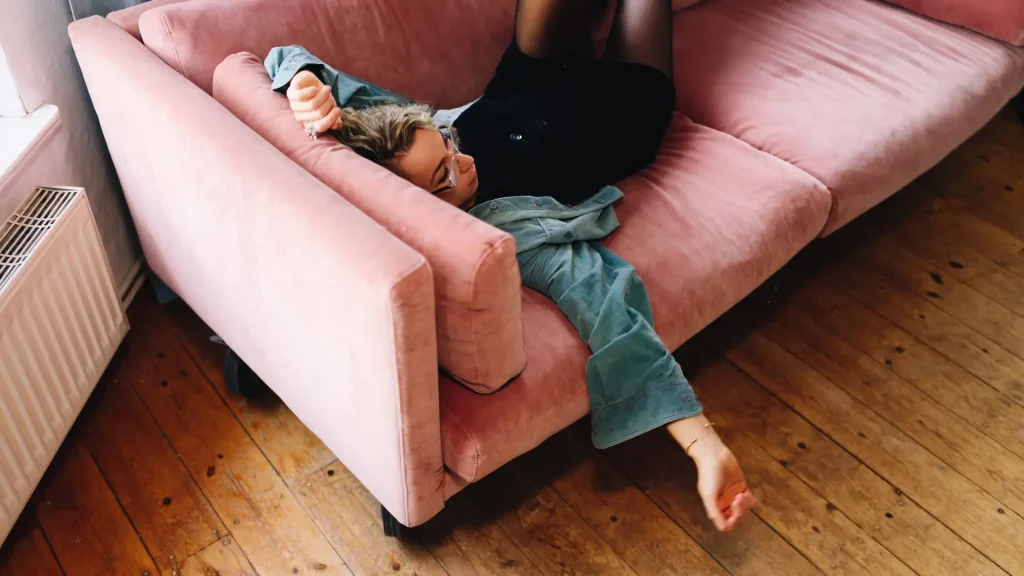
How wall color can help control anxiety.
Advertisements
The color of the walls can help control anxiety: the relationship between the environment in which we live and our mental well-being is deeper than we imagine.
The choice of wall color, often seen as a purely aesthetic decision, can directly influence our emotional state, including anxiety.
But how exactly can the chorus of walls help in controlling anxiety?
This article explores how specific tones, based on psychological and neuroscientific studies, can create environments that promote calm, balance, and well-being.
Let's delve into how nuclei affect our minds, with practical examples, an enlightening analogy, relevant statistics, and answers to the most common questions.
The psychology of color and its emotional impact.

The nuclei have the power to evoke emotional and physiological responses.
This occurs because the human brain processes visual stimuli in a way that associates nuclei with emotions, memories, and states of mind.
For example, blue is often associated with tranquility, while red can increase heart rate, evoking alertness or behavior.
Therefore, the choice of wall color can help control anxiety by creating an environment that directly engages the nervous system, promoting relaxation or energy as needed.
Research in environmental psychology shows that soft colors, such as pastel shades of blue and green, have a calming effect.
A study conducted by the University of Sussex in the UK revealed that 581% of participants exposed to environments with light blue walls reported reduced stress levels compared to white or red environments.
This is because cool tones decrease the release of cortisol, the stress hormone, while warm tones can intensify the feeling of urgency, potentially harmful for those dealing with anxiety.
In addition, the visual texture of the colors is also important.
Walls with matte finishes in neutral or cool tones tend to absorb light softly, creating a welcoming feeling.
++ What is "sleep hygiene" and how to set up a bedroom that promotes it?
On the other hand, reinforced or enhanced nuclei can reflect indirect light, generating intense visual stimuli that, for some people, amplify anxiety.
Therefore, when planning the painting of a room, it is essential to consider not only the color, but also its interaction with the lighting and the functionality of the space.
How to choose colors for different environments

Choosing the right color for each room requires understanding the function of the space and the desired emotional state.
For example, a bedroom should prioritize relaxation, while an office can benefit from lighting that stimulates focus without being overwhelming.
++ What is visual pollution and how does it affect your well-being?
In this sense, the color of the walls can help control anxiety by creating environments that meet the specific needs of those who use them, promoting emotional balance.
Example 1: Rest room
Imagine a room painted in a soft shade of lavender.
This color, which combines the relaxing feel of blue with the details of purple, is ideal for creating a tranquil retreat.
Maria, a professional who suffered from nighttime anxiety, decided to paint her room in this shade after reading about the calming effects of light purple.
After a few weeks, she noticed that she was able to relax more easily before bed, quickly reducing episodes of insomnia.
Lavender, with its association with serenity, helped transform the room into a space for disconnecting from daily stress.
For living rooms or social areas, shades of moss green or olive are excellent choices.
These cores are reminiscent of nature, evoking feelings of stability and renewal.
Unlike red, which can enhance social spaces, green creates a welcoming environment, ideal for relaxed conversations.
Furthermore, combining these colors with natural elements, such as plants or wooden furniture, amplifies the calming effect, reinforcing the connection with the external environment.
| Convenient | Recommended Color | Psychological Effect | Application Tip |
|---|---|---|---|
| Room | Lavender or Light Blue | Promote relaxation and peaceful sleep | Use with soft lighting and neutral fabrics. |
| Living room | Moss Green | It evokes calm and connection with nature. | Combine with natural elements. |
| Desk | Light Gray | Stimulates focus without visual overload. | Avoid excessive finishing touches. |
The science behind calming colors

Neuroscience explains that cutting down walls can help control anxiety.
When the eyes perceive a color, visual signals are sent to the hypothalamus, a region of the brain that regulates emotions and stress responses.
++ Houses in Ancient Rome: luxury, art, and functionality.
Colors like blue and green activate the parasympathetic nervous system, which is responsible for inducing states of calm.
Conversely, saturated nuclei, such as intense orange or red, stimulate the sympathetic nervous system, associated with the "fight or flight" response.
One less discussed aspect is the influence of color saturation and brightness.
Saturated tones, such as a vibrant yellow, can be overly stimulating, while desaturated tones, such as beige or light gray, offer emotional neutrality.
For people with anxiety, this neutrality can be a problem, as it reduces sensory overload.
Therefore, when painting a room, consider not only the color itself, but also its intensity and how it interacts with the natural or artificial lighting of the space.
Analogy: Colors as a soundtrack
Think of the colors of the walls as the soundtrack of a movie.
Just as soft music can excite the nerves in a tranquil scene, soft tones on the walls create an emotional backdrop that soothes the mind.
An upbeat soundtrack, like vibrant tons of music, can intensify the tension, even if intentionally.
Choosing the right color is like selecting the perfect music for every moment of your life.
Colors to avoid anxiety-inducing environments
Not all support systems are allies in the fight against anxiety.
Tones like dark red or neon orange, while energizing, can be counterproductive for those seeking calm.
These nuclei increase heart rate and can generate a feeling of urgency, which is particularly detrimental in spaces meant for rest or reflection.
Therefore, the color of the walls can help control anxiety, but it can also worsen it if the choice is circumstantial.
Example 2: Unbalanced home office
João, a university student, painted his home office bright red, believing the color would motivate him to study.
However, he began to feel more anxious during long study sessions, and had difficulty concentrating.
After consulting an expert in environmental psychology, he changed the red color to a light gray with blue accents.
The change resulted in greater focus and a feeling of lightness, decreasing her anxiety in 30%, according to her personal account.
Furthermore, very dark colors, such as black or dark brown, can create a feeling of confinement, especially in small spaces.
For people prone to anxiety, this can amplify feelings of oppression.
Instead, opt for light or medium shades that reflect light, creating a feeling of spaciousness and freedom.
The conscious choice of color palette is, therefore, a powerful tool for shaping the emotional environment.
| Color to Avoid | Negative Effect | Suggested Alternative | Why replace it? |
|---|---|---|---|
| Dark Red | Increased heart rate | Light Blue | It reduces stress and promotes calm. |
| Neon Orange | Sensory overload | Soft Green | It evokes balance and serenity. |
| Black | Feeling of confinement | Light Beige | It expands the space and reflects light. |
How to combine colors with other elements in the environment.

Image: Canvas
The effectiveness of colors in reducing anxiety depends not only on the chosen shade, but also on how it integrates into the environment.
Elements such as lighting, furniture, and decor play complementary roles.
For example, a light blue wall combined with warm lighting and wooden furniture creates a welcoming space, while the same color with cool white lights can seem sterile.
Therefore, the color of the walls can help control anxiety when it is harmonized with the surrounding environment.
The texture of the materials also influences it.
Walls painted with matte finishes or subtle textures, such as light stucco, absorb light in a soft way, creating refreshing reflections that can be bothersome.
On the other hand, shallow or mirrored surfaces can intensify visual stimuli, which is not ideal for anxious people.
Furthermore, incorporating natural elements, such as plants or organic fibers, reinforces the calming effect of the cores, creating an environment that "breathes" tranquility.
Have you ever stopped to think about how your surrounding environment shapes your thoughts?
A well-designed space, with strategically chosen focal points, can be a silent ally in your journey against anxiety.
Try observing how you feel in different rooms of your house. Perhaps that will be the answer to a lighter day within the walls that surround you.
The color of the walls can help control anxiety: Frequently Asked Questions
| Question | Response |
|---|---|
| What is the best solution to reduce anxiety? | Light blue and soft green tones are the most effective, as they activate the parasympathetic nervous system, promoting calmness. |
| Can I use dark colors in small spaces? | Avoid dark colors, such as black or brown, in small spaces, as they can create a feeling of confinement. Opt for light shades. |
| How does lighting affect color choice? | Warm lighting complements cool tones, such as blue, creating a welcoming atmosphere. Avoid cool lights with light colors to prevent a sterile effect. |
| Do vibrant colors always increase anxiety? | Not necessarily, but colors like neon red or orange can be too stimulating for people with anxiety. Use them in moderation. |
| Can I combine several colors in the same room? | Yes, but opt for a harmonious palette with a maximum of three complementary tones to avoid visual overload. |
The color of the walls can help control anxiety: Conclusion
The color of the walls can help control anxiety in a subtle yet powerful way.
By choosing colors that resonate with the nervous system, such as light blue, moss green, or lavender, you create an environment that not only reflects your personality but also promotes emotional balance.
Combining these colors with proper lighting, soft textures, and natural elements amplifies their benefits, transforming your home into a sanctuary of well-being.