Effective tips for those who want to save on cooking gas.
Advertisements
As How to save on cooking gas?
This essential and indispensable item in our kitchen, if used correctly, will last much longer.
What are the differences between bottled gas and piped gas used in homes?
In principle, there is a difference between piped gas and bottled gas; the key difference lies in their compositions.
Bottled gas:
Bottled gas, also known as "liquefied petroleum gas," is the most commonly used type of gas in Brazilian homes.
Therefore, it can be stored more easily, its transport is simple and diverse, and it's possible to save more money.
It can be used on any stove, as stoves come pre-configured from the factory for bottled gas.
Piped gas:
In turn, piped gas, or natural gas, is supplied via pipelines and is generally more common in modern buildings and condominiums.
However, not all stoves are suitable for use with piped gas, but it is perfectly possible to make the change.
How to save on cooking gas
Save on cooking gas It's not such a complicated challenge and it will positively impact your budget by leading to greater savings.
Likewise, many instances of wasted cooking gas involve details and bad habits that we do without realizing it.
Keep reading and check out some tips.
1. Do not open the oven while in use.
Anxiety while cooking can lead to waste, as constantly opening the oven to check if the dish is baking becomes a problem.
Therefore, every time you open the oven, its temperature drops drastically, and this ends up causing the stove to use more gas than necessary to reheat the oven.
Therefore, ideally you should have that light on the stove to see how the roasting process is going.
This way, the stove won't take longer to cook the food, something that will certainly happen if the oven is opened every 2 minutes.
2. How to save on cooking gas: organize your meals.
Cooking every day may have become a force of habit and an automatic action, but this ends up being a bad habit when it comes time to cook. Gas economy.
Therefore, set aside a specific time just to organize your meals during the week.
Furthermore, it will not only save you money but also bring convenience; by organizing and deciding on the week's menu, you can cook everything at once.
Then all you have to do is freeze it, and the need to use gas every day will be reduced by more than half.
3. Perform maintenance on the stove.
Sometimes when the The flame of the fire is yellow., It's not because the gas is running out; it could be dirt on the stove burners.
Therefore, malfunctioning stove burners will lead to wasted gas, as the gas, upon encountering the obstruction, will exit through another location.
Also check the hose for small leaks, which often go unnoticed in everyday use.
Always test the gas cylinder with soap when changing it to check for leaks caused by improper tightening.
4. How to save cooking gas: make use of pressure cooker
At first glance, this might seem contradictory, considering that a pressure cooker takes longer to heat up because it is thicker.
However, it takes less time than cooking food, although of course not all foods should be cooked in a pressure cooker.
However, a good portion of foods, especially grains or seeds because they are harder, are a good option to cook in a pressure cooker.
Similarly, harder grains and foods can have their cooking time reduced by half if you soak them for at least 13 hours.
5. Be careful of drafts while cooking.
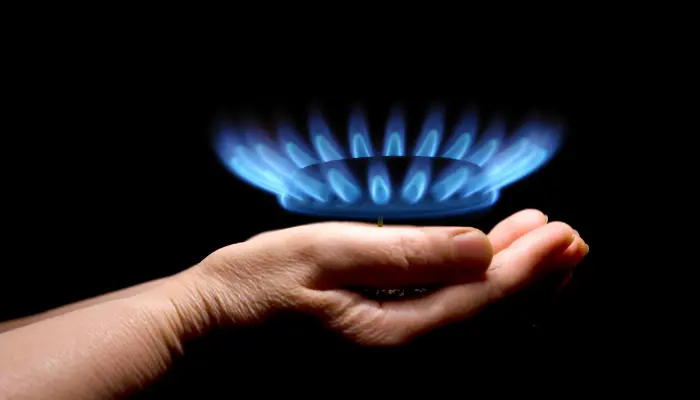
How to save on cooking gas It involves paying close attention to those drafts that hit the stove.
Therefore, when this happens, the intensity of the flames decreases, and it will require extra time to cook the food.
6. Steam cook
You can buy those pans that come with a support for cooking food using the steam from the pan.
But if you don't have that type of pan right now, you can improvise using a metal colander.
Furthermore, it is possible to cook many foods using steam, such as broccoli, carrots, chayote, zucchini, among others.
7. Use the appropriate mouthpieces.
Try not to use the large burners, as they require a lot of gas, leading to unnecessary waste.
Similarly, it's a waste to put a small pan on a large stovetop burner.
8. How to save cooking gas: cooking with the pots covered.
Cooking food with the pot covered greatly speeds up the softening process.
9. Cut as much food as possible into small pieces.
Here, it may seem pointless to cut food into small pieces for cooking, however, doing so greatly helps during the cooking process.
Conclusion
Finally, putting these tips mentioned above into practice will make your gas last much longer.
This way, you'll spend less time cooking food and discovering... How to save on cooking gas!