The curious history of wallpaper.
Advertisements
A A curious history of wallpaper. It's more than just a simple narrative about decoration.
It reflects the evolution of aesthetics, technology, and social dynamics throughout the centuries.
From its humble origins to its modern reinvention, wallpaper carries stories of creativity, status, and transformation.
Why has such a seemingly trivial material conquered palaces, homes, and even the collective imagination?
Let's delve into this fascinating journey, exploring how wallpaper transcends its utilitarian function to become a cultural symbol.
The Origins: An Oriental Luxury that Conquered the West
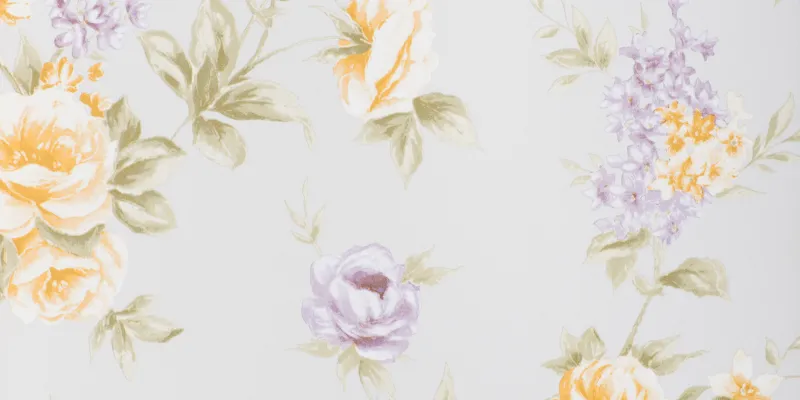
Although many associate wallpaper with Victorian Europe, its history begins much earlier, in ancient China.
Around the 3rd century, Chinese artisans were already using decorative papers to adorn interiors, often with hand-painted natural motifs.
However, it was during the Ming Dynasty (1368–1644) that wallpaper gained sophistication, with intricate designs symbolizing prosperity and harmony.
Read also: Rugs in interior design: how to choose the ideal model
These items were so valuable that they became commodities for trade along the Silk Road, reaching Europe in the 16th century.
In Europe, wallpaper was initially a privilege of the elite.
Produced manually, each roll required hours of meticulous work, which made it expensive.
Kings and nobles used it to display wealth, with designs that imitated tapestries or mythological scenes.
A striking example is the Château de Fontainebleau in France, where 16th-century wallpapers still preserve the opulence of the court of Francis I.
Thus, wallpaper was not just decoration, but a statement of power.
Interestingly, the popularization of wallpaper came with the Industrial Revolution.
The invention of mechanical printing in the 18th century reduced costs, allowing the middle class to adopt this decorative element.
In this sense, wallpaper became a bridge between aristocratic luxury and the emerging desire for accessible beauty, marking its first major transformation.
|
Period |
Wallpaper Characteristics |
Cultural Impact |
|---|---|---|
|
Ming Dynasty (China) |
Hand-painted designs, natural motifs, handcrafted production. |
Symbol of prosperity and harmony. |
|
Europe (16th century) |
Handmade, imitation tapestry, exclusive for elites. |
Demonstration of status and power |
|
Industrial Revolution |
Mechanical printing, varied designs, affordable for the middle class. |
Democratization of domestic aesthetics |
The Golden Age: Wallpaper as Art and Status
In the 19th century, wallpaper reached its peak, especially in Victorian England.
Designers like William Morris revolutionized the market with patterns inspired by nature, rejecting standardized mass production.
Morris viewed wallpaper as an art form, where each pattern told a story.
For example, his "Trellis" design (1864), with intertwined climbing plants, evoked the serenity of an English garden, bringing nature indoors.
This handcrafted approach elevated wallpaper to an almost philosophical status, where decoration reflected cultural values.
++ How to choose flooring and wall coverings for each room.
Furthermore, wallpaper became a mirror of the social tensions of the time.
While the bourgeoisie adopted floral patterns to imitate the aristocracy, the working classes opted for simpler versions, often with vibrant colors to brighten up modest spaces.
In this context, wallpaper was like a blank canvas: each choice revealed aspirations, tastes, and even ideologies.
Who wouldn't want their walls to tell a unique story?
One intriguing fact is that, according to a study by Oxford University, approximately 701,300 British homes from the late 19th century had some type of wallpaper, highlighting its ubiquity.
However, there was a dark side: many papers contained arsenic in their green pigments, causing poisoning.
This paradox of beauty that could kill adds an intriguing layer to... A curious history of wallpaper., demonstrating how even aesthetic innovations can have unexpected consequences.
|
Designer |
Style |
Impact |
|---|---|---|
|
William Morris |
Natural, handcrafted patterns |
He elevated wallpaper to an art form. |
|
Mass manufacturers |
Simplified designs, vibrant colors |
It made paper accessible to the working classes. |
|
Use of arsenic |
Toxic green pigments |
Health risks, debate on safety |
The Fall and the Renaissance: Adapting to Modern Times
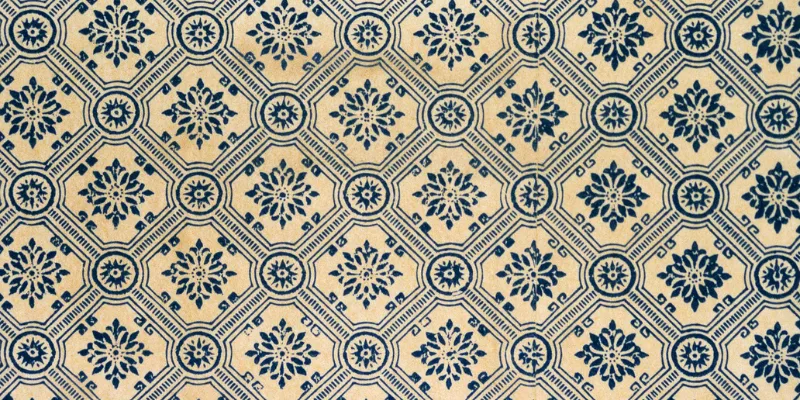
At the beginning of the 20th century, wallpaper faced a decline.
Modernism, with its emphasis on clean lines and minimalism, rejected ornamentation, associating wallpaper with an outdated aesthetic.
For decades, white walls dominated, and wallpaper was relegated to secondary spaces, such as children's bedrooms.
However, the A curious history of wallpaper. This proves that trends are cyclical.
Starting in the 1970s, designers rediscovered its potential, now with new technologies and materials.
++ How to choose the ideal colors for each room.
Today, wallpaper is a versatile tool, capable of transforming environments with textures, geometric patterns, or even 3D effects.
One original example is "EcoMural," a sustainable wallpaper developed by a Brazilian startup in 2023, made from recycled fibers and water-based inks.
It not only decorates, but also reduces the carbon footprint of renovations.
Another example is the "SmartWall," an interactive wallpaper that changes color with a touch, integrating technology and design.
These innovations show how wallpaper reinvents itself while maintaining its relevance.
Think of wallpaper as a chameleon: it adapts to its surroundings, reflecting the spirit of each era.
Whether in ancient palaces or modern lofts, he continues to tell stories.
Thus, its resilience is a testament to how human creativity finds ways to combine functionality and beauty, even in the face of cultural change.
|
Trend |
Features |
Example |
|---|---|---|
|
Modernism (20th century) |
Rejection of ornaments, white walls |
Minimalist houses |
|
Renaissance (1970–) |
New textures, technology, sustainability |
EcoMural, SmartWall |
|
Interactive papers |
Integration with technology, dynamic designs |
Papers that change color or pattern |
Cultural Impact: More Than Decoration
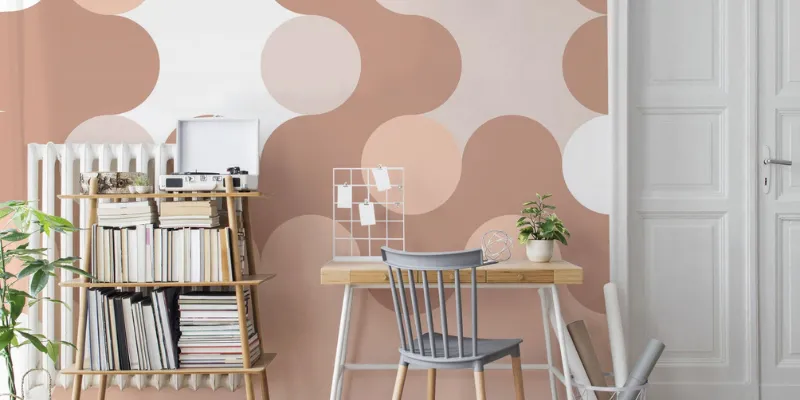
Image: Canvas
A A curious history of wallpaper. It goes beyond aesthetics; it reflects cultural and social dynamics.
In historical contexts, wallpaper was a marker of class, but also a means of expression.
During the feminist movement of the 1960s, for example, women used boldly patterned wallpapers to challenge conservative decorating norms, transforming their homes into visual manifestos.
This power of agency remains relevant, as wallpaper allows for the unique personalization of spaces.
Furthermore, wallpaper plays a psychological role.
Studies show that colors and patterns affect mood: soft tones promote calm, while vibrant designs stimulate creativity.
A fictional, yet illustrative example, would be the "Inspiration Room," where a writer covers the walls with blue geometric patterned wallpaper, creating an environment that stimulates ideas.
In this sense, wallpaper is more than just decoration; it's a tool for shaping experiences.
Finally, its presence in film and literature reinforces its cultural impact.
Think of films like The Great Gatsby, where the opulent walls define the extravagance of the Jazz Age.
Or in The Yellow Wallpaper, by Charlotte Perkins Gilman, where the pattern on the wall symbolizes oppression.
These narratives show that wallpaper is not just a backdrop, but a character in the history of humanity.
|
Context |
Use of Wallpaper |
Meaning |
|---|---|---|
|
Feminism (1960–) |
Bold prints, breaking with norms. |
Expression of freedom and identity |
|
Psychology |
Colors and patterns that influence mood |
A tool for well-being and productivity. |
|
Pop culture |
Scenarios in films and books |
A symbol of a bygone era, emotion, or narrative. |
Frequently Asked Questions about the Curious History of Wallpaper
|
Question |
Response |
|---|---|
|
When was wallpaper invented? |
Its origins date back to 3rd-century China, and it became popular in Europe in the 16th century. |
|
Why was wallpaper so expensive? |
Initially, it was produced by hand, requiring intensive artisanal labor. |
|
Is wallpaper still relevant today? |
Yes, with innovations like sustainable and interactive papers, it's booming. |
|
Were there health risks associated with using old paper? |
Yes, some contained arsenic, especially the green ones, causing poisoning. |
|
How to choose the ideal wallpaper? |
Consider the style of the environment, the psychological impact of colors, and the quality of the material. |
A curious history of wallpaper: Conclusion
A A curious history of wallpaper. It is a testament to the human capacity to transform the ordinary into the extraordinary.
From its origins in China to its technological reinvention, wallpaper has spanned centuries, adapting to cultural, social, and aesthetic changes.
It not only decorates, but tells stories, reflects identities, and shapes experiences.
Whether as a status symbol, a tool for expression, or a sustainable innovation, wallpaper proves that even the simplest details can have a profound impact.
So, the next time you look at a decorated wall, ask yourself: what story is it telling?