Interesting facts about the world's largest rivers.
Advertisements
The world's largest rivers: The world's rivers are much larger than just bodies of water flowing across the land.
They are specific structures that have shaped civilizations, sustained ecosystems, and inspired myths and legends.
But what do we really know about these forces of nature? How do they influence the planet and the people who depend on it?
In this text, we will explore fascinating facts about the world's largest rivers, with historical information, original approaches, and a touch of reflection to engage the reader.
Shall we dive into this stream of knowledge?
The Invisible Greatness: The Role of Rivers in Human History
When we think of the world's largest rivers, such as the Amazon, the Nile, or the Yangtze, it's easy to miss impressive figures regarding their length or volume.
However, the true grandeur of these rivers lies in their ability to shape human destiny.
The Nile, for example, is not only the longest river on the planet, at approximately 6,650 km, but also the cradle of Egyptian civilization.
Without its annual floods, which deposited fertile sediments, Ancient Egypt might never have flourished.
Imagine a world without the pyramids or hieroglyphic writing; it would be like erasing an essential chapter of history.
Furthermore, the world's largest rivers function as corridors of cultural connection.
Read also: Curious holidays celebrated in Japan
The Yangtze River in China, for example, was a crucial trade route during the Han dynasty, allowing the transport of silk and tea beyond regional borders.
Interestingly, rivers have also been the scene of conflicts: the Mekong, which meanders through six Southeast Asian countries, has been the subject of diplomatic disputes over water resources.
Thus, these rivers are not only geographical but also political, uniting and dividing nations throughout the centuries.
Finally, it is impossible to ignore the symbolic role of rivers.
In Hindu mythology, the Ganges is considered sacred, a gateway to spiritual purification.
This reverence is not only religious, but practical: millions of people depend on the Ganges for drinking water, agriculture, and fishing.
However, pollution threatens this balance, raising a crucial question: how can we honor the majesty of the world's greatest rivers while facing modern conservation challenges?
The Power of Nature: Ecosystems and Biodiversity
The world's largest rivers are true epicenters of biodiversity.
The Amazon, for example, is home to more than 3,000 species of fish, including the pirarucu, which can reach up to 3 meters in length.
This biological richness is not just a natural spectacle, but a complex network that sustains life.
++ The best-preserved medieval villages in Europe.
The flooded forests of the Amazon, known as igapós, are a prime example: during the floods, the submerged trees create a unique habitat where fish swim among the bushes, as if the forest itself becomes a giant obstacle.
Furthermore, rivers have a unique ability to connect distant ecosystems.
The Mississippi River in the United States carries nutrients from the heart of the continent to the Gulf of Mexico, feeding wetlands that are crucial for migratory birds.
However, this same flow can carry fuels, such as agricultural fertilizers, which create dead zones in the ocean.
This duality of nurturing and, at the same time, threatening, is a striking characteristic of the world's largest rivers, which balance life and vulnerability.
To illustrate the scale of this biodiversity, consider the Congo River in Africa.
It is the second largest river in the world by volume of water, discharging approximately 41,000 cubic meters per second into the Atlantic.
This current sustains tropical forests and unique species, such as the goliath fish, a predator that can weigh up to 100 kg.
However, the exploitation of natural resources, such as minerals in the Congo Basin, puts this balance at risk.
Are we sacrificing so much natural wealth for short-term economic gains?
| River | Length (km) | Watershed (km²) | Fish Species |
|---|---|---|---|
| Amazon | ~6,575 | ~7.050.000 | ~3.000 |
| Nile | ~6.650 | ~3.400.000 | ~800 |
| Yangtze | ~6.300 | ~1.800.000 | ~400 |
| Mississippi | ~3.730 | ~3.220.000 | ~375 |
| Congo | ~4.700 | ~3.680.000 | ~700 |
Rivers as Economic Giants
The world's rivers are not just major natural wonders; they are economic engines that move nations.
The Yangtze River, for example, is responsible for about 401 Tbp of China's GDP, thanks to its hydroelectric power plants, such as the gigantic Three Gorges Dam, which generates more than 22,500 megawatts of energy.
++ Houses in Ancient Rome: luxury, art, and functionality.
This infrastructure, while impressive, also raises debates: the displacement of millions of people for its construction is a reminder that economic progress comes at a human cost.
Furthermore, rivers are crucial transportation routes.
The Danube, which flows through ten European countries, is a prime example of how the world's largest rivers can unite economies.
Since the Middle Ages, it has facilitated the trade of grains, wines and, more recently, industrial products.
Today, modern cargo ships sail its waters, connecting ports from Vienna to Budapest.
This logistical function is vital, especially in a globalized world where efficient transportation is a key to competitiveness.
On the other hand, economic dependence on rivers also exposes vulnerabilities.
The Indus River in Asia is essential for agriculture in Pakistan, irrigating approximately 80% of the country's arable land.
However, climate change and disputes with India over water use threaten this stability.
An alarming statistic: according to the UN, by 2030, global demand for fresh water could exceed supply by 401 t³, and the world's largest rivers are not meeting this challenge.
How can we balance economic growth and water sustainability?
The Cultural and Spiritual Impact
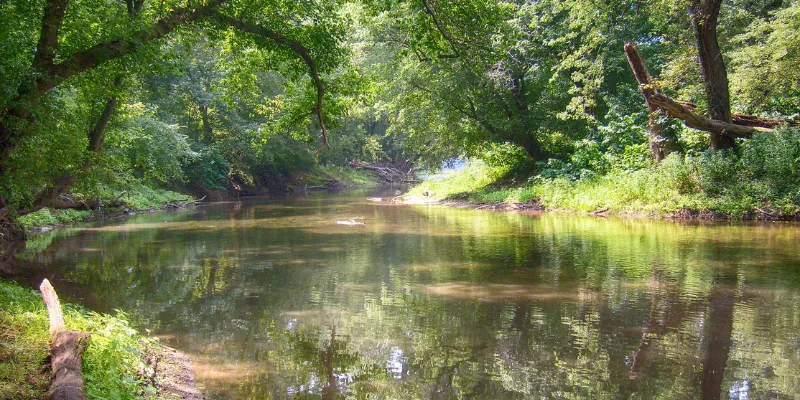
Image: Canvas
The world's rivers transcend their primary physical function, becoming symbols of cultural identity.
The Ganges River in India is a prime example: its waters are seen as purifying, attracting millions of pilgrims annually for rituals such as the Kumbh Mela, the world's largest religious festival.
This spiritual connection is not merely folkloric; it influences political decisions, such as efforts to clean up the river, which still faces challenges with sewage and industrial waste.
Furthermore, rivers inspire art and literature.
The Volga, the longest river in Europe, appears in Russian folk songs as a symbol of resilience and continuity.
Its 3,530 km length traverses not only landscapes, but also the soul of a people.
Similarly, the Mississippi River has given rise to writers like Mark Twain, who used the river as a backdrop to explore themes of freedom and adventure in his works. The Adventures of Huckleberry Finn.
These rivers, therefore, are more than just water; they are liquid narratives.
To illustrate this connection, imagine the world's largest rivers as veins of a civilization, pulsating with stories, beliefs, and aspirations.
Just as blood nourishes the body, rivers feed cultures, but they also carry their wounds, such as pollution or overexploitation.
This analogy reminds us that by protecting rivers, we protect not only ecosystems, but also the essence of who we are as humanity.
| River | Main Country | Cultural Significance | Associated Event |
|---|---|---|---|
| Ganges | India | Sacred, spiritual purification | Kumbh Mela |
| Volga | Russia | Symbol of national identity | Folk songs |
| Amazon | Brazil | Indigenous mythology, a source of life. | Parintins Folklore Festival |
| Nile | Egypt | Cradle of Egyptian civilization | Flood festivals (ancient) |
| Danube | Various (Europe) | Cultural and commercial union | Classical music festivals |
Modern Challenges: Sustainability and Conservation
The world's rivers face increasing threats, from pollution to climate change.
The Yellow River in China, known for its murky waters due to loess (a type of sediment), suffers from heavy metal contamination from nearby industries.
This problem is not unique: around 801 tbsp of global wastewater is dumped into rivers without treatment, according to the UN.
This reality compromises not only biodiversity, but also human health.
Furthermore, the construction of dams, while beneficial for energy and practicality, alters the natural flow of rivers.
The Mekong River, for example, has had its ecosystem impacted by dams in China and Laos, diminishing the fishing that sustains millions of people in Vietnam and Cambodia.
A prime example is the impact on the giant Mekong catfish, a species that migrates long distances but now faces artificial barriers.
As a result, local populations lose sources of income and food security.
Finally, climate change intensifies these challenges.
The shrinking glaciers in the Himalayas, which feed rivers like the Ganges and the Indus, threaten the water supply for billions of people.
This requires a solution that involves global cooperation, but also local actions, such as the restoration of riparian forests and the sustainable use of water.
Protecting the world's largest rivers is not just an environmental issue; it is an imperative for the survival of humanity.
Frequently Asked Questions about the World's Largest Rivers
| Question | Response |
|---|---|
| What is the longest river in the world? | The Nile, at approximately 6,650 km, is considered the longest river in the world. |
| Which river has the largest volume of water? | The Amazon River, with an average flow rate of 209,000 m³/s, is the largest in volume. |
| Are the world's largest rivers under threat? | Yes, it faces pollution, dams, and climate change, impacting ecosystems and communities. |
| Which river is the most culturally important? | The Ganges River in India is revered as sacred and central to Hindu rituals. |
| How do rivers affect the global economy? | They support agriculture, energy (hydroelectric power), and transportation, such as the Yangtze River, which generates 401 TPI of China's GDP. |
Conclusion: The Future of the World's Largest Rivers
The world's rivers are more than just major waterways; they are pillars of life, culture, and the global economy.
From the Amazon, with its unparalleled biodiversity, to the Ganges, with its spiritual significance, each river tells a unique story.
However, modern challenges compel us to compensate for our relationship with these arteries of the planet.
Protecting the world's largest rivers is a commitment to the future not only of nature, but of humanity itself.
What do we want to leave for future generations?