How Many Credit Cards to Have is Healthy: Benefits and Dangers
Advertisements
How Many Credit Cards to Have is Healthy?
In the fast-paced world of personal finance, deciding how many credit cards to keep in your wallet can be a delicate balance between convenience and caution.
Many wonder about the impact of this choice on daily life, especially when credit becomes an essential tool for managing expenses, accumulating rewards, and building a solid credit history.
However, beyond simply accumulating plastics, it's crucial to assess how this decision affects long-term financial health, considering both the inherent advantages and risks.
Learn more below!
How many credit cards is healthy to have: Summary of Topics Covered
- Understanding the Benefits of Having Multiple Credit CardsWe will explore how diversifying your credit cards can enhance your financial strategy.
- The Potential Dangers of Accumulating Multiple CardsWe will analyze the risks that arise when the number of cards exceeds what is manageable.
- Determining the Ideal Amount for Your Financial SituationWe will discuss personal factors to find the right balance.
- Practical Examples, Analogies, and Relevant StatisticsWe will present real-life scenarios, a creative comparison, and concrete data to illustrate the topic.
- Frequently Asked QuestionsA table answering the most common questions on the subject.
Understanding the Benefits of Having Multiple Credit Cards
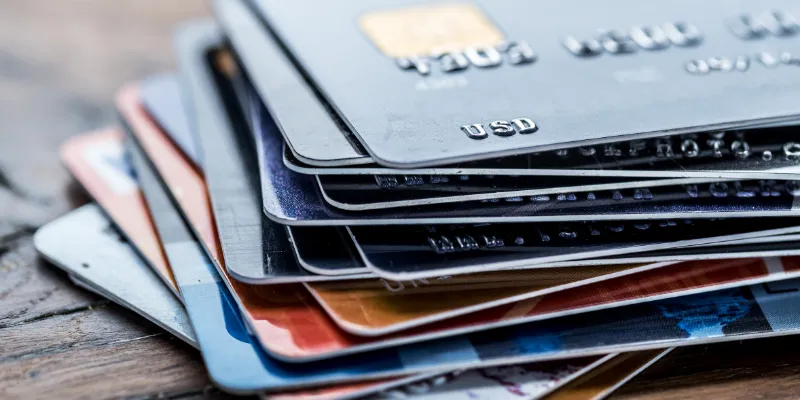
Firstly, having more than one credit card can significantly increase your financial flexibility, allowing you to tailor spending to different lifestyle categories.
For example, a travel-focused card offers airline miles for annual vacations, while another with supermarket cashback reduces everyday costs.
Furthermore, by distributing purchases across multiple cards, you maintain a low credit utilization rate, a factor that accounts for approximately 30% of your credit score, according to models such as FICO.
Therefore, instead of maximizing a single limit, spreading usage promotes a more stable image for lenders, facilitating future approvals for loans or mortgages.
However, the benefits go beyond credit scores; they extend to a safety net against unforeseen events.
Imagine a situation where a card is blocked due to suspected fraud; with available alternatives, you avoid interruptions in essential payments, such as utility bills or medical emergencies.
++ Step-by-Step Guide to Paying Off Debt: Strategies That Work for Personal Finance
Furthermore, rewards programs are multiplying: one card might offer fuel bonuses, another entertainment bonuses, creating an ecosystem where every expense yields something back.
Additional information
Consequently, for those who manage their finances with discipline, this transforms credit into a proactive, not reactive, tool, encouraging habits such as tracking monthly expenses to maximize returns.
On the other hand, diversifying card options fosters a strategic approach to consumption, encouraging users to think critically about each transaction.
In contrast to relying on a single issuer, multiple cards expose you to various consumer protection policies, such as theft insurance or extended warranties on purchases.
Thus, instead of limiting options, this diversity builds financial resilience, preparing you for economic fluctuations.
++ Budget-friendly 3-day itineraries in Brazilian cities
Ultimately, when used intelligently, this strategy not only optimizes spending but also educates about the true value of money, transforming potential debt into investments in quality of life.
How many credit cards is healthy to have: The Potential Dangers of Accumulating Multiple Cards
Initially, accumulating credit cards can lead to an illusion of abundance, where easy access to credit masks impulsive spending habits.
Therefore, with combined credit limits that exceed your monthly income, there is a risk of accumulating debt that becomes unmanageable, especially if compound interest comes into play.
Furthermore, managing multiple due dates and balances requires rigorous organization; a lapse in attention can result in late fees, which not only erode the budget but also permanently damage the credit score.
However, another subtle danger lies in the increased exposure to fraud and identity theft.
With more accounts opened, each card represents a vulnerable point, and monitoring transactions across multiple apps or statements becomes a daunting task.
Furthermore, issuers often charge hidden annual fees or charges which, when multiplied, drain resources without proportional returns.
Therefore, for individuals with a history of financial procrastination, this excess can evolve from convenience to chaos, where the stress of balancing accounts outweighs any perceived benefit.
Finally, the psychological impact should not be underestimated: having multiple credit cards can normalize debt, creating a vicious cycle of "buy now, pay later" that compromises long-term goals, such as saving for retirement.
Conversely, instead of promoting freedom, this could restrict future options, with creditors viewing the portfolio as a sign of high risk.
Thus, while some thrive on diversity, others find this model to be a disguised trap, highlighting the need for self-assessment before expanding.
Determining the Ideal Amount for Your Financial Situation
To begin with, the "healthy" number of credit cards varies according to individual profile, considering income, spending habits, and financial goals.
For example, a self-employed professional can benefit from having three cards: one for business expenses, another for personal expenses, and one as a backup, maintaining a clear separation and optimizing tax deductions.
However, assessing your ability to make full monthly payments is crucial; if revolving debt is common, limiting it to one or two debts reduces temptation.
Furthermore, tools such as personal finance apps help simulate scenarios, projecting how additions affect the score.
Furthermore, demographic factors influence this: young people building credit may start with two to diversify their credit history, while larger families opt for more to cover varied needs.
Therefore, reviewing annual credit reports reveals patterns, such as current utilization, guiding informed decisions.
Conversely, ignoring this can lead to impulsive approvals, where new cards temporarily lower the score due to hard checks.
Therefore, the key lies in aligning the number with its stability, prioritizing quality over quantity.
Finally, integrating feedback from experts, such as financial advisors, personalizes the approach.
On the other hand, general rules suggest that if managing payments becomes stressful, it's a sign of excess.
Consequently, testing with gradual increments – adding one card per year, evaluating the impacts – builds a sustainable portfolio.
Ultimately, the ideal amount emerges from continuous reflection, adapting to life changes such as marriages or promotions, ensuring that the credit serves you, not the other way around.
Practical Examples, Analogies, and Relevant Statistics
Let's illustrate with an original example: consider Ana, a 32-year-old graphic designer who holds two credit cards.
One is dedicated to professional subscriptions, such as editing software, yielding cashback on technology; the other covers freelance travel, accumulating points for flights.
Furthermore, she pays in full every month, keeping her usage below 20%, which has increased her score by 50 points in the last two years.
However, when she tried to add a third party for online shopping, she noticed an increase in impulsive spending, such as unnecessary gadgets, leading her to cancel before it turned into debt.
Therefore, for Ana, two proved to be the balance, maximizing benefits without overload.
Another creative example involves Pedro, a 45-year-old engineer with five cards.
Initially, he used them to separate categories: one for fuel, another for health, and so on, reaping annual rewards equivalent to a family trip.
Furthermore, having backups during a medical emergency prevented payment delays.
However, over time, the annual fees, plus the annual R$500, and the constant monitoring led to fatigue, resulting in a late payment that cost extra fees.
Conversely, by reducing it to three, Pedro regained control, illustrating how excess can backfire.
Now, a clever analogy: think of credit cards as tools in a mechanic's toolbox.
One or two basic screwdrivers can handle simple repairs, but adding variety – such as adjustable wrenches or pliers – allows for complex repairs without requiring modifications.
However, filling the box with duplicates or rarely used items adds unnecessary weight, complicating the search for essentials.
Therefore, just as an experienced mechanic selects tools by design, you should choose cards by lifestyle, avoiding the "weight" of excessive management that steals efficiency.
How many credit cards is healthy to have: More information
But have you ever stopped to think whether more credit cards really mean more financial freedom, or if they just multiply the invisible chains of debt?
This rhetorical question leads us to a relevant statistic: according to Experian, Americans have an average of 3.7 credit cards in regular use, a decline of 10% in the last decade, reflecting a global trend towards greater caution.
Furthermore, this suggests that while multiple factors can boost scores, focusing on quality prevents pitfalls.
| Benefits | Dangers |
|---|---|
| Low credit utilization improves credit score. | Risk of overspending and accumulated debt |
| Diversification of rewards (cashback, miles) | Increased exposure to fraud and identity theft. |
| Backup in case of lockup or loss. | Annual and late fees multiplied. |
| Various types of protection (insurance, guarantees) | Stress of managing multiple due dates |
| Flexibility for spending categories | Psychological impact of normalizing indebtedness. |
How many credit cards is healthy to have: Frequently Asked Questions
| Question | Response |
|---|---|
| How many credit cards are ideal for beginners? | For those building credit, start with one or two cards to learn how to manage them without feeling overwhelmed. Also, focus on cards with no annual fees to minimize initial costs. However, assess your income before expanding. |
| Does having multiple credit cards negatively affect my credit score? | Initially, yes, due to credit checks, but in the long run, it can improve with low usage. Therefore, pay on time and keep balances low for benefits. Conversely, unmanaged excesses lower your score. |
| How can I cancel a credit card without harming my finances? | Pay off any outstanding balance first and transfer credit limits if possible. Additionally, notify the issuer in writing for record-keeping purposes. Consequently, monitor your credit score for 6-12 months after cancellation. |
| Are credit cards with high annual fees worth it? | It depends: if the rewards outweigh the cost (e.g., frequent trips), then yes. However, calculate annual returns; for casual users, no-fee options are healthier. Therefore, align it with personal habits. |
| Can I use credit cards for emergencies only? | Yes, but set clear rules to prevent abuse. For example, set aside one for an emergency fund, with a low limit. Then, integrate it into a larger budget plan for sustainability. |
In short, navigating the world of credit cards requires a smart balance, where benefits like rewards and flexibility don't overshadow dangers like debt and stress.
++ Strategies for Paying Off Debt Quickly Without Compromising Your Budget
By reflecting on your unique situation, you can transform this tool into a true ally.
For more insights, check out this relevant and up-to-date link: