How to Secure Your Home Before Traveling (Quick Checklist)
Make your home safe before you travel!
Advertisements
Planning a trip is exciting, but have you ever stopped to think: What if something happens to your house while you're away?
Ensuring the safety of your home before you travel is as crucial as choosing the perfect destination.
After all, securing your home before traveling isn't just about locking the doors, it's about creating a strategic barrier against unforeseen events.
Find out more below!
Make your home safe before traveling
This guide offers a quick, smart, and comprehensive checklist for protecting your home, with practical tips, original examples, and approaches that go beyond the obvious.
Below, we'll explore three key pillars for securing your home before you travel: physical preparation of the property, burglary prevention strategies, and maintenance during your absence.
Each section provides unique insights, a relevant statistic, practical examples, and an analogy to reinforce the importance of planning ahead.
At the end, a table of frequently asked questions clarifies common questions, ensuring you travel with peace of mind.
1. Physical Preparation of the Property: Strengthening Your Home's Defenses
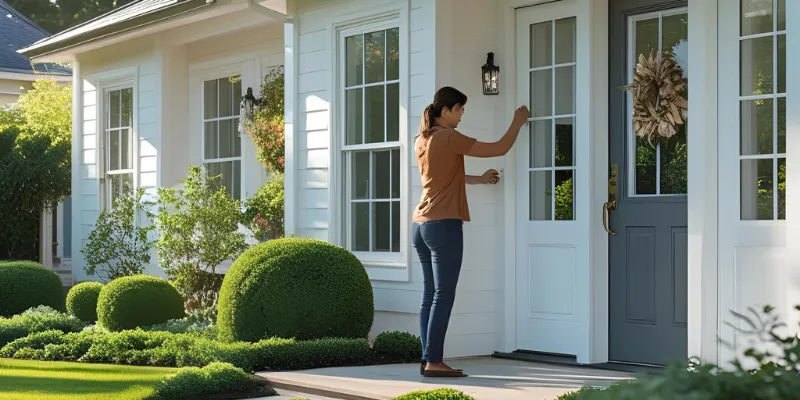
Before packing your bags, it's essential to ensure that your home's physical structure is ready to withstand any adversity.
Think of your home as a medieval castle: every door, window, and access point is a potential breach in the wall.
Therefore, physical preparation is the first step to making your home safe before travel.
Start with a thorough inspection, checking locks, windows, and gates.
A study by the Brazilian Residential Security Association (ABSR) revealed that 68% of break-ins occur due to failures in basic entry points, such as poorly locked doors or fragile windows.
In addition to reinforcing locks, consider installing additional locks or security bars on sliding doors and tilt-and-turn windows.
A practical example is the case of Mariana, who before traveling to Europe, installed biometric locks on the main door and opening sensors on the windows.
During his absence, an attempted break-in was thwarted because the alarm system went off upon detecting movement at the living room window.
This extra layer of protection can be the difference between a scare and a tragedy.
Also, check the condition of your roof and gutters, as unexpected rain can cause leaks that damage furniture and electronics.
Furthermore, another smart measure is to simulate presence in the property.
Timers for interior and exterior lights create the illusion that the house is occupied.
You can also invest in app-controlled smart bulbs, allowing you to turn lights on and off remotely.
Don't overlook small details like locking interior doors and storing valuables in discreet places like a built-in safe.
Just as a conductor directs an orchestra to perfect harmony, every adjustment in your home contributes to a symphony of safety.
|
Physical Preparation Item |
Recommended Action |
Benefit |
|---|---|---|
|
Locks and bolts |
Install high-security or biometric locks |
Reduces the risk of break-ins |
|
Windows |
Add locks and opening sensors |
Prevents unauthorized access |
|
Lighting |
Use timers or smart bulbs |
Simulates presence in the property |
2. Intrusion Prevention Strategies: Deceiving Intruders
Securing your home before traveling requires more than physical reinforcements; you need to think like a military strategist, anticipating the movements of potential invaders.
A house that appears deserted is an open invitation to thieves. So create a visual narrative of continued occupancy.
++ Little-known and unmissable World Heritage Sites
For example, ask a trusted neighbor to collect mail and newspapers, avoiding the accumulation that signals absence.
Another tactic is to park a car in the garage or driveway, changing its position periodically with the help of someone nearby.
An illustrative case is that of João, who, before a three-week trip to Japan, contracted a remote monitoring service with cameras accessible via an app.
While he was away, he received a movement alert in the yard and, upon checking, realized it was just a cat, but the peace of mind of monitoring in real time made all the difference.
Connected security systems, such as night vision cameras and integrated alarms, are investments worth every penny.
Also, avoid posting about your trip on social media until you return, as 74% of thieves use online information to plan break-ins, according to a report by the São Paulo Civil Police.
Another smart approach is to engage the community around you. Inform trusted neighbors of your absence and ask them to be alert for any unusual activity.
You can also hire private patrol services at random times.
Think of it like a medieval spy network: every extra pair of eyes is an ally in protecting your castle.
++ What is there to visit in the ancient Inca cities besides Machu Picchu?
Finally, consider installing visible security signs. Even if you don't have a complete system, the mere suggestion of surveillance can deter intruders.
Table:
|
Prevention Strategy |
Recommended Action |
Benefit |
|---|---|---|
|
Mail collection |
Ask neighbors or hire services |
Avoid empty house sign |
|
Monitoring cameras |
Install systems connected to applications |
Allows remote surveillance |
|
Safety signs |
Post “monitored home” notices |
Deters potential invaders |
3. Maintenance Care During Absence: Preventing Unforeseen Events
Image: Canva
A safe home is not only protected against burglars, but also against damage caused by negligence.
Imagine your home as a living organism: without care, small problems can develop into crises.
Before traveling, unplug unnecessary appliances to avoid short circuits or excessive energy consumption.
Also check the water supply, closing the main valves to prevent leaks.
A study by the Brazilian Home Insurance Association found that 45% of claims in unoccupied homes are caused by undetected leaks.
Also, organize garden or yard maintenance.
Untrimmed trees or tall grass can attract unwanted attention and increase the risk of accidents during storms.
Hire a gardener for regular visits or ask someone to water indoor plants to prevent them from dying and looking neglected.
A practical example is that of Ana, who before a month-long trip, installed an automatic irrigation system for her plants and hired a neighbor to inspect the yard.
Upon returning, he found everything in order, with no signs of neglect.
Finally, consider unforeseen weather conditions.
In rain-prone areas, check your yard for loose items that could be blown away by the wind.
If possible, purchase temporary homeowners insurance that covers damage while you're away.
Just as a captain inspects his ship before setting sail, every precaution ensures that your home remains intact until your return.
|
Maintenance Care |
Recommended Action |
Benefit |
|---|---|---|
|
Home appliances |
Unplug from the socket |
Prevents short circuits |
|
Water register |
Close main valves |
Prevents leaks |
|
Garden and backyard |
Prune trees and hire maintenance |
Maintains a well-groomed appearance |
Frequently Asked Questions: Making your home safe before traveling
To complement this, we've compiled the most common questions about how to secure your home before traveling, with practical, straightforward answers.
This table is a quick guide to clarify doubts and reinforce confidence in the protection of your home.
|
Question |
Response |
|---|---|
|
Should I inform the police about my trip? |
It's not necessary, but notifying trusted neighbors or hiring private patrols increases security. |
|
Are alarm systems really effective? |
Yes, as long as they are integrated with cameras and remote monitoring, they significantly reduce the risk of break-ins. |
|
How can I keep my house from looking empty? |
Use timers for lights, have someone collect mail, and avoid posting about your trip on social media. |
|
What if there is a leak while I'm away? |
Turn off water valves and install humidity sensors connected to apps for immediate alerts. |
|
Is it worth investing in temporary home insurance? |
Yes, especially for long trips, as it covers damage caused by unforeseen events such as leaks or storms. |
Secure Your Home Before Traveling: Conclusion
Making your home secure before traveling is an investment in peace of mind.
With a combination of physical preparation, prevention strategies, and maintenance care, you can transform your home into a fortress protected against unforeseen events.
Every measure, from reinforcing locks to simulating presence, is a step toward ensuring your trip is filled with nothing but happy memories.
So, before you embark, take the time to follow this checklist and return home confident that everything will be exactly as you left it.