The mystery of the world of rare black hole explosions.
Advertisements
Rare black hole explosions It may sound like science fiction, but what astronomy has been discovering is far more interesting than the exaggerated headlines suggest.
Black holes don't explode like a cosmic bomb.
What erupts is the matter around them: superheated gas, remnants of shattered stars, unstable accretion disks, and violent winds accelerated by extreme gravity.
This detail changes everything.
Instead of imagining a dark object "exploding," it's more accurate to think of an environment so extreme that any matter that comes near it can be compressed, heated, and thrown into extreme behaviors.
This is how flashes appear on X-rays, repeated pulses occur, and bursts last much longer than the models anticipated.
There's something fascinating about that.
The darkest objects in the Universe end up being revealed precisely by some of the brightest and most unruly phenomena in astrophysics.
Continue reading the text!
Summary
- What exactly are these black hole-related flares?
- Why do they still surprise scientists so much?
- Which recent cases have attracted the most attention?
- How these explosions reveal invisible black holes.
- What remains unanswered in this mystery?
- Frequently asked questions
What exactly are these black hole-related flares?
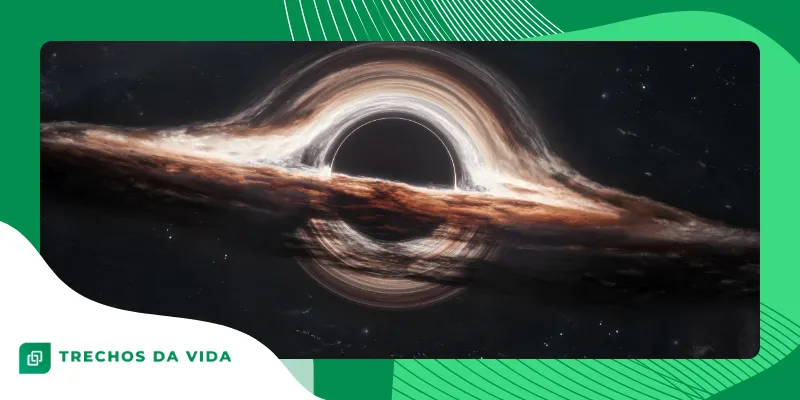
To the rare black hole explosions These are events of extreme energy release produced in the vicinity of these objects.
In some cases, a star gets too close and is torn apart by gravity.
In others, the disk of matter surrounding the black hole undergoes violent instabilities.
There are also situations in which the death of a star does not follow the classic script of a bright supernova and ends up leaving clues to the formation of a new black hole.
This matters because the name "explosion" can be misleading.
It's not always a single, round, instantaneous flash.
Often the phenomenon behaves like a sequence: the brightness grows, pulsates, changes frequency, loses strength, and reappears.
In high-energy astronomy, behavior is almost always as important as brightness itself.
Another essential distinction: not all of these occurrences belong to the same physical family.
Some are tidal disruption events, when a star is destroyed.
Others are almost periodic eruptions, in which the system appears to "blink" in X-rays.
Read also: Interesting facts about clouds and little-known atmospheric phenomena.
In some cases, what is surprising is not an exuberant explosion of energy, but precisely the absence of it.
How do these events appear in telescopes?
In practice, astronomers observe anomalous increases in light at different wavelengths.
X-rays are particularly important because they reveal very hot regions very close to the black hole.
But infrared, optical, and radio waves also come into play.
A striking example is the system called Ansky.
According to NASA, he became the eighth known source It experiences almost periodic eruptions and produces the most energetic events ever seen in this category.
Outbreaks occur approximately every 4.5 days and last about 1.5 days.
This statistic is important because it shows how rare these events remain.
We are not talking about behavior that is common to all active black holes.
Each newly discovered source carries significant weight precisely because there are still few to compare it to.
++ The scientific mystery surrounding hidden oceans on distant moons.
| Event type | What happens | What astronomers detect |
|---|---|---|
| Near-periodic eruptions | Repeated bursts near a supermassive black hole | Recurring spikes in X-rays |
| Tidal break | A star is torn apart by gravity. | Intense flashes in various bands |
| Failed supernova | The star collapses without a strong classical explosion. | Darkening, hot dust, and indirect signs |
| Outbreak with extreme winds | The record enters a violent state. | Flares and extremely high-speed winds |
Why do these phenomena still surprise scientists?
Because they insist on avoiding the most comfortable explanations.
For a long time, the popular image of a black hole was that of a silent devourer.
But recent data shows something more chaotic.
++ Interesting things the body does during sleep.
The accretion of matter is not always stable, smooth, or predictable.
At times, it looks like a power plant of turbulence.
Ansky's case is a good example.
THE Nature Astronomy and the ESA They highlighted that their eruptions have higher flow rates and longer timescales than others previously observed.
A strong hypothesis suggests that a smaller object is repeatedly traversing the disk of matter, producing extremely energetic collisions.
What's most interesting is that these events don't just defy numbers.
They challenge intuition.
When an explosion lasts longer than it should, repeats itself where it shouldn't, or appears in a galaxy previously considered tranquil, science is forced to revise its own mental framework.
Why might the word "explosion" be problematic?
Because it suggests a unique moment.
Reality is usually more messy.
In many cases, what scientists observe is a physical process that occurs in stages.
There is ignition, reorganization, emission, shock, cooling, and sometimes, new emission.
A useful analogy is to think of a dam under pressure.
The audience may only notice the moment when the water breaks through the structure.
The engineer knows that the problem started earlier, with cracks, tension, and internal imbalances.
With black holes, the flare is only the most visible part of a much deeper process.
Which recent cases have attracted the most attention?
One of the most discussed events of 2025 was described by NASA: an exceptionally long outburst, likely linked to a star being consumed by a black hole.
The event drew attention because it lasted for days, whereas phenomena of this type are usually much shorter.
This type of anomaly is invaluable to science. When something exceeds the expected duration or releases too much energy, the models need to be refined. Astrophysics advances much more through stubborn exceptions than through predictable confirmations.
Another strong example came from the opposite side: not from an excess of spectacle, but from its absence.
In February 2026, the NASA/JPL detailed the star's case. M31-2014-DS1, in Andromeda, approximately 2.5 million light-years of Earth.
Instead of producing a classic supernova, the star essentially went out of production, leaving behind a cloud of hot gas and dust.
The strongest hypothesis is that of a "failed supernova," followed by the formation of a black hole.
This case is especially beautiful from an intellectual point of view because it shows that the Universe doesn't always choose the most dramatic path in our eyes.
Sometimes, the most significant event is actually a strange disappearance.
How do these explosions reveal invisible black holes?
This is one of the most elegant aspects of the topic.
Black holes are almost impossible to observe directly. What gives them away is the effect they produce on the surrounding matter.
When a strange flare appears in a seemingly quiet galactic core, the invisible finally leaves its mark.
In many cases, the black hole was already there, just dormant or too discreet to attract attention.
The explosion changes that. Suddenly, the surrounding environment heats up, glows, throws off wind, or begins to pulsate.
The light doesn't come from the black hole itself, but from the chaos it creates in its surroundings.
This also reveals something important about the advancement of astronomy.
Not everything depends on increasingly beautiful images.
In many of the major advances in black hole research, the leap came from interpreting indirect signals: rhythms, spectra, durations, repetitions, unexpected silences.
What remains unanswered?
A lot of things. And that's the most honest part of the story.
Scientists still don't have a single theory that explains all of them. rare black hole explosions.
In some cases, the best-case scenario involves smaller objects traversing accretion disks.
In others, internal instabilities or stellar remnants seem more promising.
It is also not entirely clear how often these events occur in the Universe.
They can be really rare.
Or they may be more common than they seem, but difficult to detect because they are short-lived, occur in specific ranges, or require coordinated observations between multiple telescopes.
This uncertainty does not weaken the issue. It does the opposite.
It shows that we are looking at territory where extreme physics has not yet fully settled within the available explanations.
Frequently asked questions
| Doubt | Direct answer |
|---|---|
| Do black holes really explode? | Generally, no. What explodes or goes into a frenzy is the matter surrounding them. |
| What are quasi-periodic eruptions? | These are repeated bursts of X-rays near supermassive black holes. |
| Are these events common? | No. Some classes still have few known sources. |
| Can a star turn into a black hole without a classical supernova? | Yes. There is evidence of "failed" collapses, with little impact and indirect signals. |
| Why does this matter so much? | Because these events help us understand how matter behaves under extreme gravity. |
To the rare black hole explosions They are fascinating because they illuminate precisely what usually remains hidden.
They are not just cosmic spectacles.
These are moments when the Universe lets slip clues about regions where matter behaves in ways that are almost impossible to imagine.
Perhaps that is the true charm of the theme.
Not the kind of thing you see as space monsters "exploding," but the kind you realize that each strange flash, each pulse of X-rays, and each unusual silence might be opening a crack to understanding one of the most extreme zones of the cosmos.