Bioluminescent animals that light up oceans and forests.
The existence of bioluminescent animals It reveals one of the most intriguing biological phenomena on the planet, transforming total darkness into an almost hypnotic setting, whether thousands of meters below the surface or in the silence of a dense forest.
Advertisements
This ability to generate cold light is not just something to fascinate us. In practice, it is a crude yet refined survival tool, shaped by ecosystems where visibility is the threshold between eating or being eaten.
The distribution of these species gives us valuable clues about the health of entire biomes. More than that, it exposes biochemical shortcuts that human medicine itself is still trying to perfectly replicate.
Summary
- What is animal bioluminescence?
- How do bioluminescent animals produce their own light?
- What bioluminescent animals inhabit the depths of the oceans?
- Where can you find bioluminescent animals in tropical rainforests?
- Ecological data on bioluminescence in nature
- Why does science study the natural lighting of organisms?
- Frequently Asked Questions (FAQ) on the topic
What is animal bioluminescence?
Contrary to what many people assume, this light does not come from heat nor does it require external sources of radiation. It is an internal chemical reaction that converts energy into photons with minimal loss of thermal energy.
While fluorescence requires absorbing ultraviolet light and then reflecting it, here the organism carries its own power plant. It's an autonomous process, calibrated by specialized cells.
At sea or on land, this lighting acts as a functional language. It serves to deceive predators, coordinate mating, and attract unsuspecting prey in complete darkness.
How do bioluminescent animals produce their own light?
Biological magic happens when the luciferin molecule reacts with oxygen, mediated by the enzyme luciferase. The result is the immediate emission of cold, visible light.
Some bioluminescent animals They obtain these compounds directly through their diet. Others maintain pockets of symbiotic bacteria that work continuously like tiny biological lamps.
In the ocean depths, wavelength needs to be precise. That's why shades of blue and green predominate, as they are the only frequencies capable of cutting through the dense water.
What bioluminescent animals inhabit the depths of the oceans?
The black devilfish sports a luminous stalk teeming with bacteria just above its mouth. In the abyssal zone, any curious creature that approaches the glow becomes an instant meal.
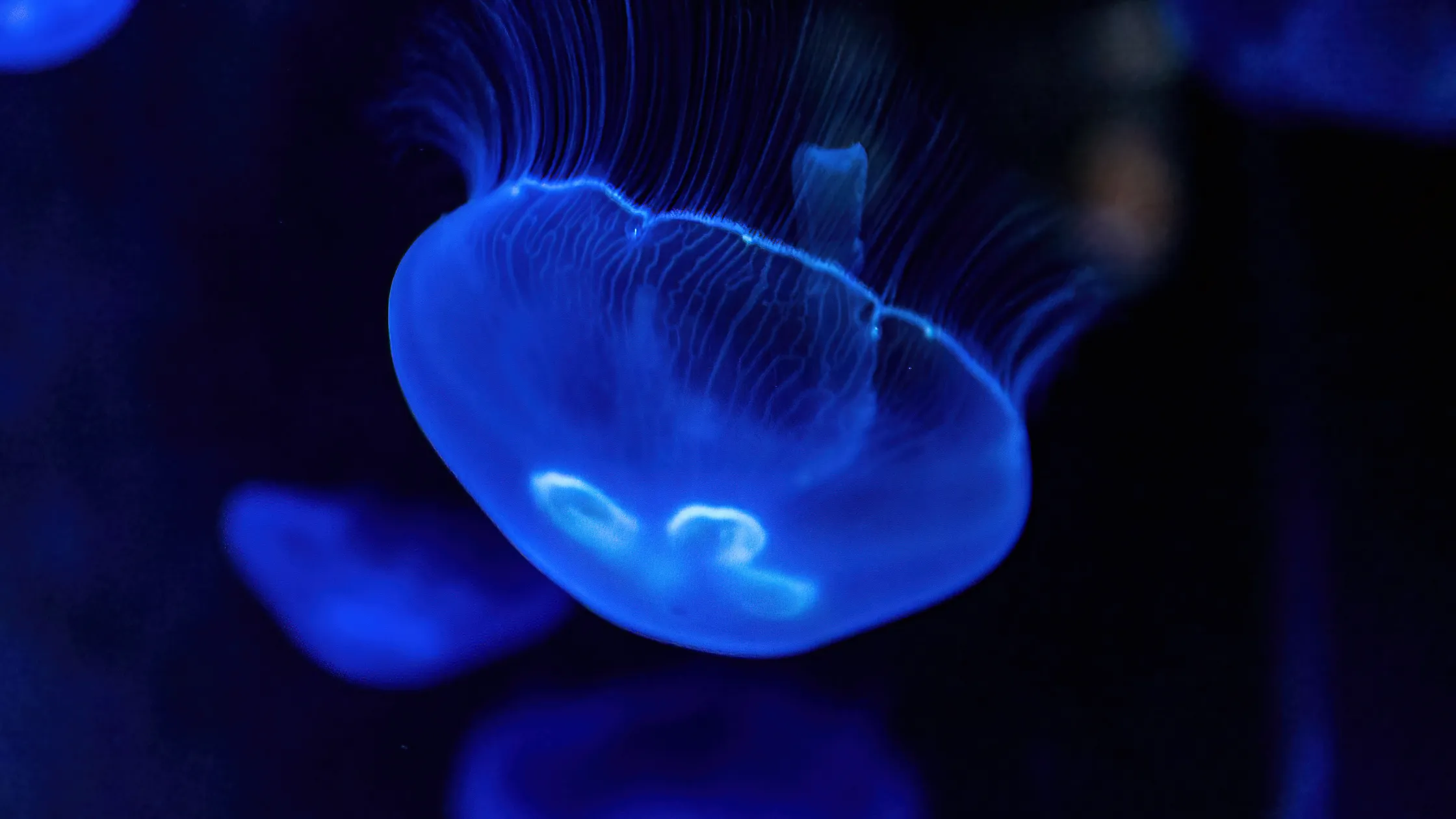
The alarm jellyfish, on the other hand, adopts an opposite and more flamboyant tactic. When attacked, it emits violent blue flashes to expose its aggressor to even larger predators.
Studies of National Oceanic and Atmospheric AdministrationStudies indicate that more than 80% of deep-sea creatures rely on their own light to interact with their environment.
Another perplexing example is the vampire squid. Instead of the traditional black ink, it releases a cloud of incandescent mucus in the predator's face and disappears into the darkness.
What are the biggest impacts of human activity on the survival of these species?
The accelerated human interference in terrestrial and marine biomes is jeopardizing evolutionary mechanisms that took millions of years to perfect in darkness.
In rural and forested areas, the uncontrolled growth of cities has brought with it light pollution, a silent problem that disorients nocturnal insects and prevents reproductive partners from identifying their own mating signals in the dark.
Simultaneously, the intensive use of pesticides in the soil destroys the microbial habitat of the leaf litter and drastically reduces the populations of larvae that depend on the natural moisture of the forests to thrive.
In the oceans, the advance of deep-sea trawling is devastating the seabed, destroying fragile structures where abyssal organisms adapted to extreme conditions live.
++ Everyday Objects That Work Thanks to Accidental Discoveries
Where can you find bioluminescent animals in tropical rainforests?
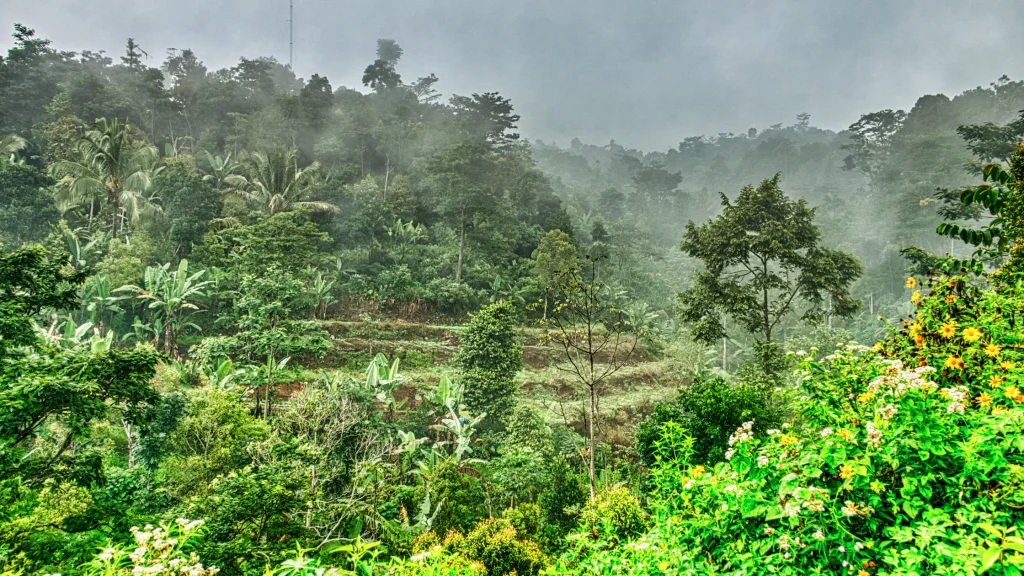
On land, fireflies use their illuminated abdomen during warm nights. Each flash follows a strict rhythm to attract mates of the same species.
Another impressive case is the railroad beetle larva. With red lights on its head and green lights on its body, it looks like a small miniature train cutting through the leaf litter.
There are also several species of bioluminescent animals that live hidden under rotten logs. Centipedes and earthworms release shimmering secretions to momentarily blind any threat.
The tropical forests of South America and Asia concentrate the greatest variety of these insects, proving that the darkness of the forest is just an illusion.
++ Colorful lakes that defy logic and modern science.
Ecological data on bioluminescence in nature
| Species or Group | Main Habitat | Primary Function of Light | Emission Color |
| Melanocetus johnsonii (Devilfish) | Abyssal Ocean | Prey Attraction | Blue-green |
| Lampyridae (Firefly) | Forests and Fields | Communication and Mating | Yellowish-green |
| Phrixothrix (Beetle-railway) | Tropical Rainforest | Warning to Predators | Red and Green |
| Vampyroteuthis infernalis (Squid) | Deep Ocean | Defense and Disorientation | Bright blue |
What are the biggest environmental challenges faced by these organisms?
The accelerated degradation of the oceans and the advance of light pollution in urban and rural areas directly threaten the survival of several luminous species.
On land, excessive artificial lighting obscures the flashing signals of fireflies, disrupting entire reproductive cycles. bioluminescent animals who depend on absolute darkness to find each other.
In the oceans, warming waters and acidification drastically alter oceanographic chemistry and affect the availability of essential nutrients, jeopardizing abyssal and surface ecosystems that took millennia to develop.
How does biotechnology use these natural lights for medical revolutions?

The transposition of chemical reactions found in nature into laboratories has radically transformed modern biomedical research and the diagnosis of complex diseases.
By isolating the genetic sequence responsible for producing these enzymes and inserting it into human cells, scientists were able to create visual markers that glow under a microscope with extremely high precision.
This technique allows for real-time monitoring of tumor development, mapping the path of viral infections through the body, and testing the effectiveness of new medications without the need for invasive methods.
Instead of operating in the dark, researchers are able to visually observe the molecules in action, identifying genetic mutations and cellular anomalies in the earliest stages of cell development.
In addition to their use in fighting cancer, these advanced biosensors are employed in the instant detection of heavy metal contamination in water reservoirs and in food quality analysis.
What began as a curiosity about organisms that glow in the darkness of biomes has become one of the most powerful tools in contemporary medicine, redefining the boundaries of science and saving lives daily in major hospital centers.
++ Some people are able to recognize faces decades later.
Why does science study the natural lighting of organisms?
Laboratories worldwide use bioluminescent genes to label cells. This allows them to track the progression of tumors and infections in real time with surgical precision.
At the same time, engineers are trying to replicate the efficiency of these chemical reactions. The goal is to create sustainable lighting systems without the need for wires or electrical grids.
To better understand the initiatives that seek to protect these species and their ecosystems, it is worth following the work of Ocean Finders Foundation.
The preservation of the habitats that shelter these bioluminescent animals It is fundamental. Without these intact environments, we lose entire ecosystems and valuable secrets that science has barely begun to decipher.
Frequently Asked Questions (FAQ)
What is the difference between fluorescence and bioluminescence?
Bioluminescence is an internal chemical reaction that generates its own light, while fluorescence requires the prior absorption of external light in order to then reflect that radiation.
Are there truly bioluminescent plants in nature?
There are no native plants with this ability. Only fungi, bacteria, invertebrates, and fish can produce light through enzymatic processes or symbiosis.
Why is most ocean light blue?
Blue light travels much better in saltwater, reaching significantly greater distances in the darkness of the ocean than red or yellow light.