Voice Assistants: Are They Listening Too Much or Really Helping?
Advertisements
In recent years, voice assistants how Siri, Alexa, Google Assistant, and Grok have transformed the way we interact with technology.
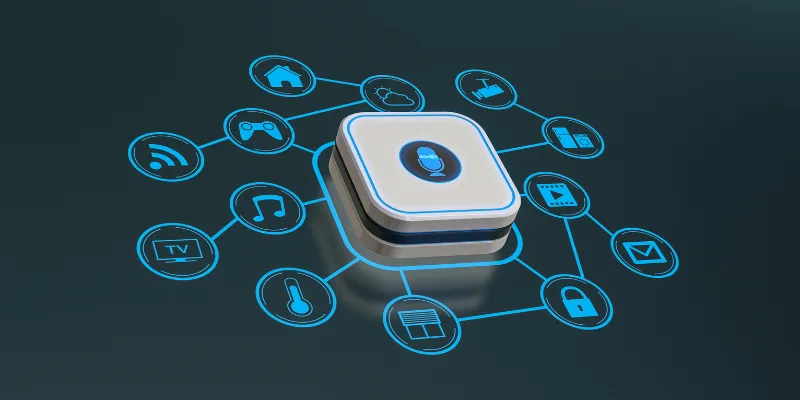
From simple commands like setting an alarm to complex tasks like managing a smart home, these tools promise convenience and efficiency.
However, as they become ubiquitous, a nagging question arises: to what extent are these devices actually serving us, and when do they begin to cross the line into privacy?
This article explores the undeniable benefits of voice assistants, the risks associated with their constant listening, and how we can balance innovation with personal protection.
After all, are voice assistants indispensable allies or just too silent listeners?
The Convenience Revolution: How Voice Assistants Transform Everyday Life
Firstly, it is impossible to ignore the positive impact of voice assistants in modern daily life. They simplify tasks, save time, and make technology more accessible.
Imagine a busy mom, Anna, who uses a voice assistant to set reminders, check the weather, and even order pizza while caring for her kids.
With a simple command, “Okay, assistant, add milk to the shopping list,” Ana organizes her week without having to touch her phone.
This seamless integration with mobile and home devices demonstrates how voice assistants have become natural extensions of our lives.
Furthermore, accessibility is a notable differentiator.
++ Technologies that help you sleep better: what really works?
People with visual or motor disabilities, for example, find voice assistants a bridge to interact with technology.
An illustrative case is João, an elderly man with difficulty typing, who uses voice commands to send messages, listen to the news or control the lighting at home.
According to a survey by Statista By 2024, 42% of voice assistant users in the US say they use them at least once a day, demonstrating their integration into everyday life.
Thus, voice assistants not only facilitate, but also democratize access to technology.
Finally, the ability to customize further increases its value.
Assistants learn behavior patterns, adapting responses to user preferences.
If you ask for classical music every morning, the assistant will quickly suggest a Mozart playlist without you having to ask.
This adaptive intelligence, powered by machine learning algorithms, transforms voice assistants into tools that seem to understand our needs.
However, this personalization raises a question: at what cost is this convenience offered?
The Shadow of Surveillance: The Privacy Risks of Voice Assistants
However, not everything is practical.
The functionality of the voice assistants relies on always-on microphones, which raises legitimate privacy concerns.
++ How to use technology to have a lighter household routine
These devices are programmed to “wake up” when they hear keywords, but what happens to conversations picked up before or after that?
In 2023, a Mozilla report revealed that many voice assistants store audio recordings by default, even when not intentionally activated.
This scenario is like having a nosy neighbor who, even unintentionally, listens to your conversations through the thin walls of your house, except that in this case, the neighbor can share what he or she overhears with others.
Additionally, real-life cases of data misuse heighten these concerns.
In 2019, it was revealed that employees at major tech companies were reviewing recordings from voice assistants to “improve” the systems, but without the clear consent of users.
Imagine Clara, who, while discussing a health problem with a family member, notices that advertisements for medications have started appearing on her cell phone.
This type of coincidence, far from being magical, suggests that the data captured by assistants can be used for commercial purposes, often without transparency.
So the convenience of voice assistants comes with a tradeoff: you give up some of your privacy.
On the other hand, the companies behind these devices argue that security measures are in place.
Features like automatic recording deletion and data encryption are often highlighted.
However, are these safeguards enough to protect users?
The complexity of privacy policies, often written in technical language, makes it difficult for the average user to understand what is really at stake.
So while voice assistants offer undeniable benefits, the risk of constant surveillance requires careful consideration.
The Balance Between Innovation and Control: How to Use It Safely
Given this, how can we take advantage of the benefits of voice assistants without compromising our privacy?
First, user education is essential.
Setting your device to automatically delete recordings or turn off your microphone when not needed are simple but effective steps.
For example, Mariana, a technology professional, regularly reviews her voice assistant's privacy settings and disables the continuous listening feature during sensitive moments, such as work meetings.
++ How to calculate your monthly living costs in a practical way
This practice demonstrates that control is, in part, in the hands of the user.
Furthermore, corporate transparency is crucial.
Brands that offer clear interfaces for managing data and explain in an accessible way how information is used gain public trust.
The analogy here is simple: using a voice assistant is like hiring a butler.
You want him to be efficient, but you also need to trust him not to snoop through your drawers.
Companies that invest in ethical practices, such as xAI with Grok, which emphasizes user privacy, demonstrate that it is possible to balance innovation and security.
Finally, government regulation can play a vital role.
Laws like the GDPR in Europe already impose strict restrictions on the use of personal data, but global enforcement remains inconsistent.
Countries with more lenient laws can leave users vulnerable.
Therefore, it is up to consumers to demand transparency and legislators to create rules that protect without stifling innovation.
After all, why can't we have voice assistants that are both useful and reliable?
Data and Insights on Voice Assistants
According to recent projections, by 2025, the number of voice assistant users in the United States is expected to reach 153.5 million, representing a growth of 2.5% compared to the previous year.
This statistic reflects accelerated adoption, driven by integrations into autonomous vehicles and smart homes.
Furthermore, she suggests that reliance on vocal commands is shaping digital behaviors, with implications for marketing and app development.
However, this growth is not uniform; urban regions exhibit higher rates due to connected infrastructure, while rural areas face connectivity barriers.
Consequently, developers prioritize offline modes to increase accessibility, ensuring that benefits reach diverse populations.
Therefore, understanding these trends helps predict developments, such as more proactive assistants in preventive health.
Furthermore, research indicates that satisfaction with voice assistants reaches 93% among regular users, attributed to accuracy in daily tasks.
In this way, the data reinforces the argument for real aid, but also highlights the need for transparency to sustain trust in the long term.
Frequently Asked Questions
To clarify further, we present a table with the main questions about voice assistants, their answers and practical tips:
|
Question |
Response |
Practical Tip |
|---|---|---|
|
Do voice assistants record everything I say? |
No, but many devices capture audio when they detect keywords. Some recordings may be stored to improve the system. |
Review your privacy settings and enable automatic deletion of recordings. |
|
Can I disable the assistant's microphone? |
Yes, most devices allow you to mute the microphone manually or by voice command. |
Mute your microphone during sensitive moments, such as private conversations. |
|
Is my data sold to third parties? |
It depends on the company. Some share anonymized data with partners, but practices vary. |
Read privacy policies and choose brands with transparent practices. |
|
Are voice assistants safe for children? |
They can be, but they require supervision. Some devices offer child modes with restrictions. |
Set up children's profiles and monitor usage to prevent unwanted exposure. |
|
How do assistants learn my preferences? |
They use machine learning algorithms to analyze commands and usage patterns. |
Limit shared data to reduce invasive personalization. |
The Future of Voice Assistants: A Tool or an Observer?
In short, the voice assistants are powerful tools that make life more practical, accessible and connected.
However, its ability to listen and store data raises ethical and practical questions that cannot be ignored.
The key is to find a balance: using technology to our advantage, but with awareness and control.
Companies like xAI, which develop privacy-focused assistants like Grok, signal a promising future where innovation doesn't have to sacrifice trust.
Therefore, it is up to us, users, to inform ourselves and demand transparency.
Setting up devices carefully, choosing ethical brands, and supporting robust regulations are steps to ensuring that voice assistants are allies, not spies.
And you, have you ever stopped to think: is your voice assistant really helping you or just listening a little too much?