
Blue flower: name, curiosities and the most common types
Advertisements
How about adding more color to your life through flowers? Come and check out everything about a charming category: the blue flower.
Are you a plant parent? Are you at the stage in your life where you can’t stand the sight of a plant and can’t imagine where it could fit into your home decor? We all get to that stage one day.
And having flowers and plants at home can be very good, because in addition to bringing life with their colors and natural beauty, they can also contribute to having better air inside our own home.
And we always have difficulty choosing which plants to put inside our home and what will fit best with our decor, especially because there are so many types of flowers and plants and also so many different colors and textures.
But one plant that usually attracts a lot of people's attention are those that are more colorful and bring a certain contrast to the more pastel colors that may be present on the walls and furniture inside the house.
And since there are an infinite number of colors, sometimes it is difficult to even make a decision about which color to choose and which of these colors will have the greatest impact and not only that, but will also look beautiful.
And one of the ones that most catches people's attention are blue flowers, which is one of people's favorite colors and that's why we decided to talk about it here.
Because it is a more neutral color and is to almost everyone's taste, today we have brought you some of the most beautiful options out there, as well as some interesting facts about blue flowers that will leave you speechless.
What are the main types of blue flowers?
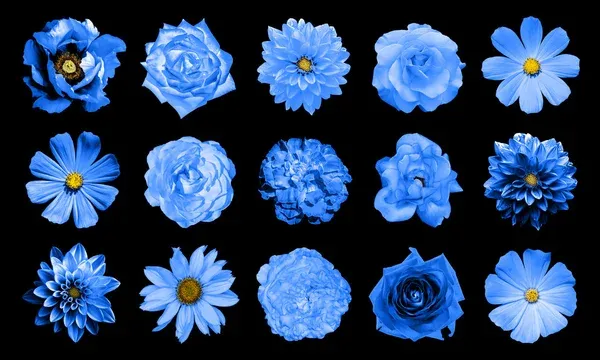
And now that we've talked a little more about the topic we're going to cover today, you must be wondering what the main types of blue flowers are and you're definitely eager to choose your favorite and put it in your home right now, right? So let's get to it.
Lily of the Nile
One of the most beautiful blue flowers in the world and is also known as the African lily and has a shade of blue that is more violet and can be an incredible addition to liven up your garden or home.
This plant can be grown in pots or flowerbeds and its flowers usually appear in the hottest months of the year, that is: from November to March, but of course some of them may deviate from this pattern.
Hydrangea

One of the few flowers that has a very blue color (closer to the blue we know) is the Hydrangea and it can be grown in partial shade or full sun, but it is a flower that does not like high temperatures, so it is more common for it to be grown in the South of the country.
An interesting fact about Hydrangeas is that they can vary in color depending on the pH of the soil used in their cultivation, so if you want yours to be very blue, you need to keep the soil pH between 5.2 and 5.5, and it is easier to control this when grown in pots.
Columbine
Popularly known as columbine or Our Lady's gloves, Aquilegia has petals that have a blue tone (closer to purple) and are also more delicate and smaller and are used very frequently in landscaping.
A cool thing about this flower is that if it is grown in the month of July, its flowers are produced more quickly and their colors can vary from mixed to uniform and it can be planted in flowerbeds, pots or directly in the ground.
Campanula

This flower also has flowers with colors that vary between blue and violet and is also known as bell flower and it also enjoys full sun and well-drained soil.
This flower also cannot withstand very high temperatures, so it needs to be grown in places with a mild climate and it usually keeps its foliage intact throughout the spring.
Cornflower
One of the best-known blue flowers in Brazil, which has earned the affectionate nickname of “escovinha” (little brush flower), it produces small annual flowers and its hue can vary from a lighter blue to stronger blues (close to purple).
It can be grown in pots and flowerbeds and its height can vary between 45 cm and 1 meter and it is a flower that can attract butterflies and bees.
Are you enjoying this reading? Then take the opportunity to read The flower called lily is also known as?
Check out some interesting facts about the main species of blue flowers that exist in nature
Now that you know some of the most beautiful types of blue flowers, it's time to learn some new things about blue flowers that exist in nature.
They are rare
The first thing you should know about blue flowers is that they are very rare. Few types of flowers are found in this color.
There are more than 390 thousand species of flowers in the world and only 10% of that number are blue flowers.
There are some that are blue due to genetic changes.
Many of the blue flowers (all those mentioned in the text) are naturally blue, but there are some that gain this hue due to genetic changes and one of them is the Blue Rose to gain the meaning of prosperity.
They are used to describe feelings
In Japanese culture, blue flowers are given to someone to express a feeling, as is the case with the blue rose wishing prosperity and the hydrangea is given to say that there are more intense feelings for the person you are giving a gift to.
Conclusion
As we can see, there are many types of blue flowers and you can use them to give more life to your home, your garden or even to show your feelings for someone, so it's time to choose the one that suits you best and try it out.
Did you like the content we prepared today? Then I think you should take the opportunity to read it too Types of Dracaenas: curiosities and how to care for them
