What has science discovered about the interstellar comet 3I/ATLAS?
Advertisements
The recent detection of 3I/ATLAS It shook the top of the global astronomical community, challenging established assumptions about planetary physics and the distribution of smaller bodies throughout intergalactic space.
This is an incredibly rare visitor. It brought crucial data about prebiotic chemistry in distant star systems and ended up forcing a revision of models about how planets and primordial ices take shape.
Below, in the dynamic summary, you can navigate directly to the key analyses and findings about this cosmic traveler.
Summary:
- How did astronomy detect the interstellar object?
- What makes the visitor's journey so unusual?
- What chemical composition is revealed by spectroscopy?
- Comparison of Interstellar Visitor Parameters
- Why does this discovery revolutionize astronomical science?
- Conclusion
- Frequently Asked Questions (FAQ)
How did astronomy detect the interstellar object?
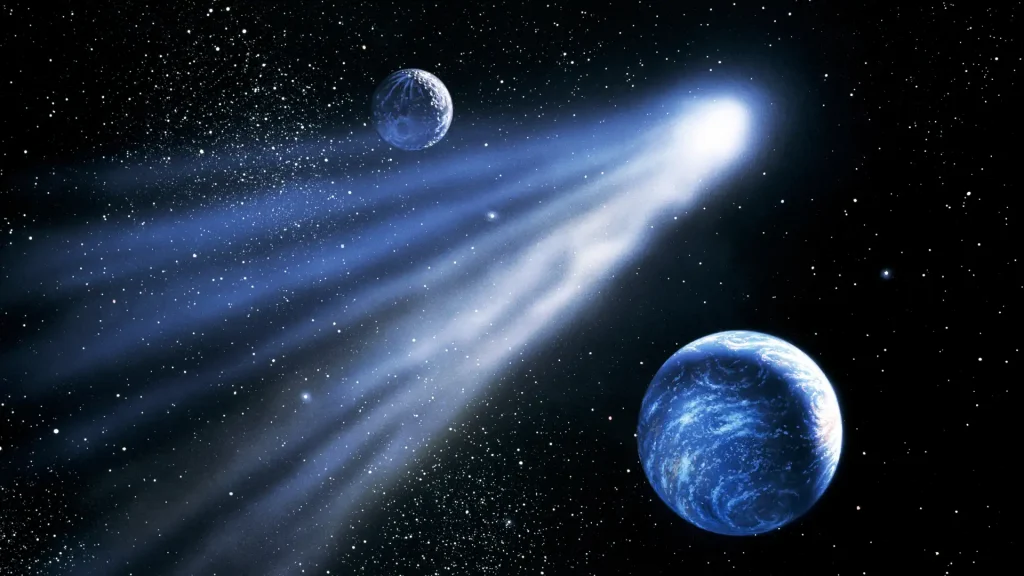
Space telescopes tracked the kinetic vector of the anomaly with precision. The calculation revealed the energy of a free-moving body, hurled from afar into our planetary backyard.
Automated warning systems saved days of manual searching. This crucial agility allowed large ground-based spotlights to focus on the intruder in time before it lost its brightness.
Processed images revealed a faint coma around the nucleus. The signature of a legitimate comet was confirmed, dispelling theoretical doubts about the asteroid's nature.
What makes the visitor's journey so unusual?
Unlike comets that orbit the Sun in closed ellipses, the eccentricity of this celestial body exceeded one — an unmistakable sign of material ejected from another star system.
The high speed of entry indicated a long journey. The 3I/ATLAS It probably wandered through the darkness among the stars hundreds of millions of years ago without undergoing significant changes.
Deviations caused by the gravity of Jupiter and Saturn had to be isolated via software to reconstruct the original vector from where this frozen rock actually came.
Field measurements confirmed that the abnormal acceleration resulted from the sublimation of volatiles. The Sun's heat vaporized the ice and propelled the core forward like a natural propellant.
Simulations of orbital regression point to young stellar associations, chaotic places where gravitational perturbations constantly expel comets into the vacuum.
How does sensor technology support these tracking methods?
The early identification of these hyperbolic messengers only became feasible thanks to the expansion of digital instruments and search algorithms coupled with telescope networks.
Data and technical bulletins updated by Jet Propulsion Laboratory They show how real-time trajectory modeling allows us to anticipate the exact window for spectroscopic observation.
Without this synchronization between computational processing and rapid response from the observatories, the object would cross the interior of the system as a mere ghostly trail without leaving behind any consolidated scientific data.
What chemical composition is revealed by spectroscopy?
Infrared readings showed peaks of carbon monoxide and water vapor, a molecular arrangement very different from most comets we know up close.
Silicate dust and refractory organic grains appeared in the exhaust plume. This reinforces the theory that the basic chemistry for life is standard across the universe, not a local fluke.
Radio telescopes detected constant releases of hydrogen cyanide and methanol as the nucleus heated up near its perihelion.
The ratio of oxygen isotopes differs from the patterns of our Sun. This data proves that the star was born in a molecular cloud with a distinct nucleosynthetic history.
++ Loan Match: Find the perfect loan for you!
Comparison of Interstellar Visitor Parameters
The table below contrasts the metrics of 3I/ATLAS to the two interstellar pioneers recorded by modern astronomy, revealing important physical and behavioral discrepancies.
++ The New Generation of Materials That Could Replace Plastic
| Comparison Parameter | 1I/'Oumuamua | 2I/Borisov | 3I/ATLAS |
| Year of Discovery | 2017 | 2019 | Recent Analysis |
| Orbital Eccentricity ($e$) | 1,20 | 3,36 | Hyperbolic High |
| Commentary Activity | Undetectable (No coma) | Intense (Clear coma) | Present (Volatile activity) |
| Dominant Composition | Rocky / Metallic | Rich in CO₂ and Water | Silicates and Organic CO₂ |
| Probable Origin | Amorphous Star System | Young Protoplanetary Disk | Young Star Association |
What does the passage of the celestial body reveal about the future of space exploration?
The passage of this messenger highlighted the urgent need to change our interstellar exploration strategy, migrating from passive observation missions to active, real-time interception architectures.
The realization that debris from other systems crosses our neighborhood with relative frequency has accelerated the development of projects designed to remain on standby until a new hyperbolic visitor is detected.
Instead of spending decades trying to send probes to unreachable exoplanets, astronomical engineering now focuses on transforming gravity itself into a logistical trap.
This approach will allow human technology to reach and analyze matter coming from deep space at the exact moment it crosses our planetary backyard.
++ How science studies hidden oceans on icy moons.
Why does this discovery revolutionize astronomical science?
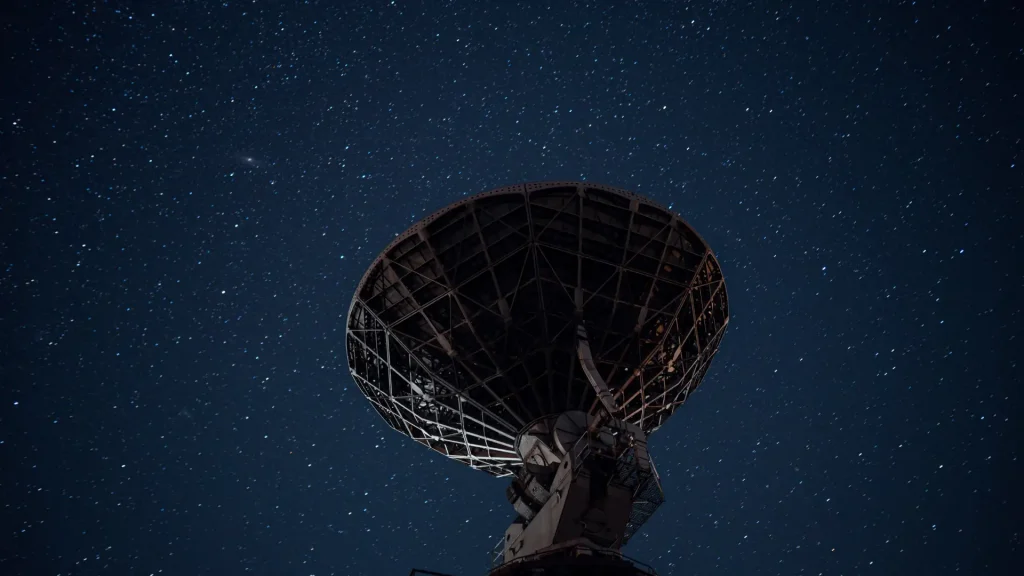
Capturing data from this star is the closest we'll get to analyzing another system without traveling light-years. It's pure galactic archaeology happening in real time.
The presence of volatiles and complex molecules validates theories of mild panspermia: the building blocks of life cross the vacuum protected inside frozen matrices.
Projects to send fast interception probes have been given top priority. The idea is to have spacecraft on standby to find the next intruder while still at the system's entrance.
Astronomy is undergoing a pragmatic shift. Instead of spending billions searching for distant targets, it's enough to map the sky and wait for fragments of the cosmos to come to us.
Investments in robotics and continuous scanning telescopes are showing practical results, transforming events that would otherwise be considered isolated anomalies into routine scientific procedures.
The open exchange of data between observatories worldwide has made it possible to model the core with surgical precision, reducing measurement noise and unsupported theories.
Detailed analyses of European Southern Observatory They refined the three-dimensional rotation of the core, allowing them to predict the rate of wear on the structure during system shutdown.
This discovery redefines what we consider standard in galactic chemistry. It remains to be seen whether our Solar System is the rule for the Milky Way or just a very isolated exception.
The volume of data collected will fuel research for years, establishing a new benchmark for comparison for any object from deep space that crosses our orbit.
Conclusion
The intruder's passage left a trail of data that will rework astrophysical theories for years to come. More than just a bright, fast-moving point in telescopes, it brought back indirect samples from a remote corner of the galaxy.
Tracking 3I/ATLAS This reinforces the need for constant spatial surveillance and suggests that the ingredients for organic chemistry are scattered everywhere, awaiting the right conditions to thrive.
With scanning technology rapidly evolving, the passage of these messengers is no longer an indecipherable mystery, but has become our main window of access to the deep universe.
Frequently Asked Questions (FAQ)
What does the designation 3I/ATLAS mean?
The prefix “3I” confirms that this is the third interstellar object (Interstellar) officially cataloged. "ATLAS" indicates the automated search system that first identified its presence.
Does the comet pose any danger of collision with Earth?
None. The star's trajectory is strictly hyperbolic and passes at a safe distance from Earth, continuing its course towards deep space without risk of impact.
How can science be sure that the star came from outside the Solar System?
The confirmation comes from the speed and eccentricity of the orbit. It moves above the escape velocity of the Sun, which mathematically proves that the object was never trapped by our gravity.