What Science Already Knows About Life in Extreme Environments
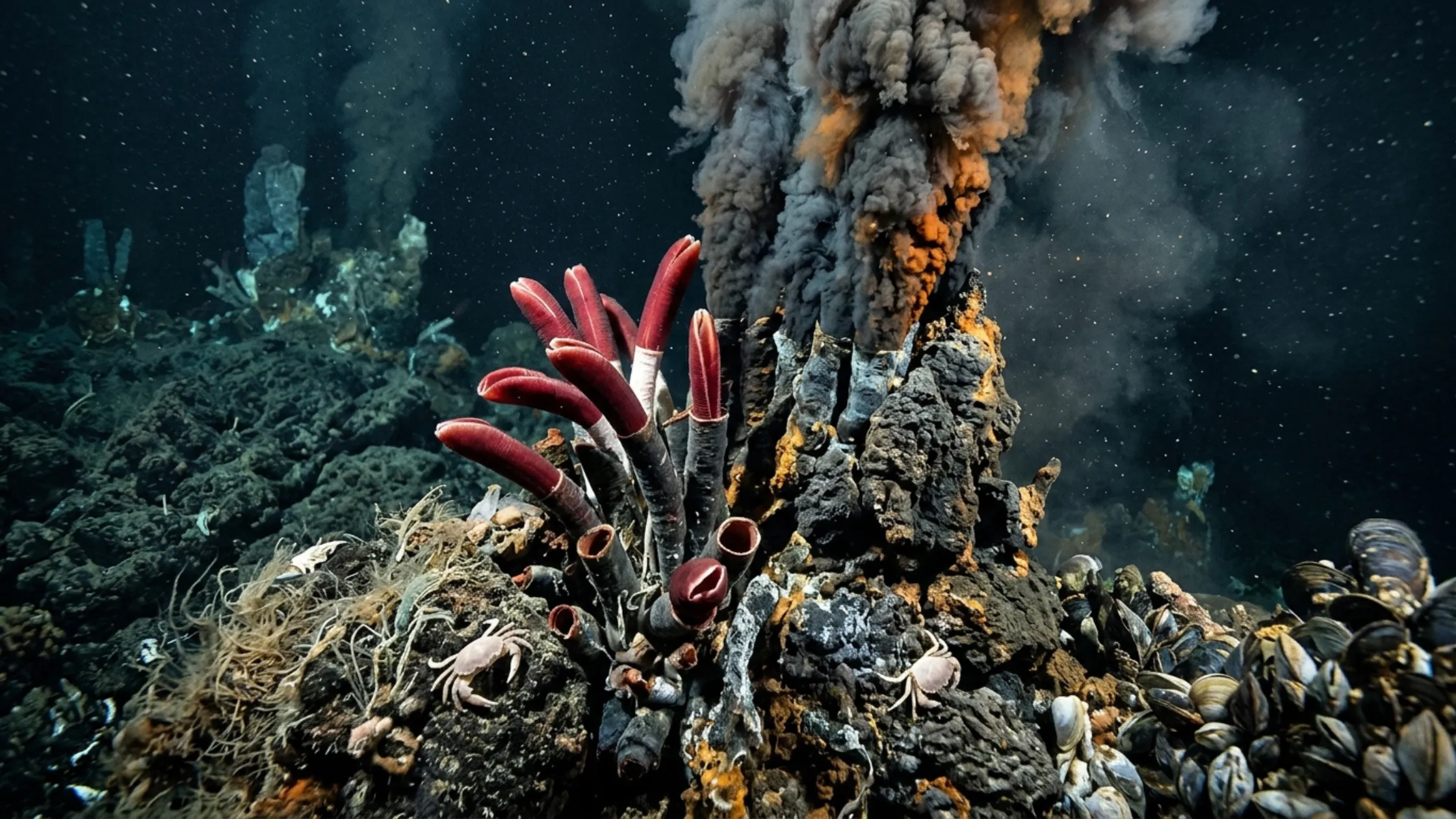
Understanding how the life in extreme environments It thrives on our planet, rewrites the textbooks of biology, and challenges what we understand as biological limits.
Advertisements
Far from being barren, oceanic abysses under overwhelming pressure, volcanic vents, and desolate frozen plateaus harbor organisms that defy our traditional idea of habitable comfort.
There is something fascinating in the realization that the planet never truly belonged to complex vertebrates.
The true terrestrial domain is invisible to the naked eye and inhabits niches that we considered dead until a few decades ago.
Below, we have compiled the main findings about these fascinating organisms, organizing the evidence that challenges the boundaries of terrestrial and extraterrestrial existence.
Article Summary
- What are extremophiles and how do they survive?
- Where do scientists find extremophilic organisms on Earth?
- What are the most impressive biological adaptations discovered?
- How does extremophilia help in the search for extraterrestrial life?
- Table: Classification and examples of known extremophiles
- Conclusion
- Frequently Asked Questions (FAQ)
What are extremophiles and how do they survive?
Extremophilic organisms are beings, overwhelmingly unicellular, specialized in inhabiting ecosystems that would bring immediate destruction to any other cellular form.
Their proteins maintain impeccable molecular stability thanks to extremozymes, biological catalysts tailored to work where conventional biochemistry would simply collapse.
Mappings published by the magazine Nature Microbiology They confirm that life in extreme environments It requires differentiated membrane architectures and ultra-fast genomic regeneration machinery.
It is a fine feat of engineering, refined by billions of years of severe evolutionary isolation.
Where do scientists find extremophilic organisms on Earth?
In the deepest ocean trenches, hydrothermal vents spew scalding fluids exceeding 100°C in complete darkness.
There, without seeing sunlight, entire ecosystems thrive thanks to chemosynthesis, using sulfur compounds as their primary fuel.
From marine canyons to the hyper-arid Atacama Desert, life entrenches itself in unbelievable micro-niches. Seemingly dry rocks and hypersaline salt flats harbor colonies that extract water from the air and survive on almost nothing.
What are the most impressive biological adaptations discovered?
The resilience of these species borders on science fiction, with tardigrades being their most popular symbol due to cryptobiosis.
In this suspended state, these animals eliminate almost all of their body water and slow their metabolism to virtually undetectable levels.
Another microbiological gem is the Deinococcus radiodurans, nicknamed for its ability to withstand ionizing radiation thousands of times higher than the human lethal dose.
Understanding how the life in extreme environments Repairing fragmented DNA in hours opens up unprecedented avenues in reparative medicine.
How does extremophilia help in the search for extraterrestrial life?
Understanding these terrestrial survivors completely changed the space exploration strategy promoted by international agencies.
While we previously searched only for surfaces similar to our temperate environment, today we are targeting the hidden oceans beneath kilometers of ice on moons like Europa and Enceladus.
Analyses of microorganisms adapted to perchlorates in the Atacama Desert serve as a direct analogy to the dry soil of Mars. What we learn in terrestrial laboratories defines the sensors and tools sent on probes into deep space.
++ How an entire city was built on top of another ancient city.
What is the impact of global warming on the distribution of extremophiles?
Accelerated climate change is profoundly altering the dynamics of Earth's most inhospitable habitats, such as thawing permafrost and increasingly acidified oceans.
This environmental transformation forces ancestral microbial communities to adapt rapidly or migrate to new ecological niches, altering biogeochemical cycles that are fundamental to the planet.
Tracking these invisible migrations allows scientists to monitor the effects of thermal stress on a global scale, using extremophiles as early bioindicators of ecological collapse.
++ Interesting Things That Make the Body Feel Afraid
Comparative Analysis: Classification and Characteristics of Extremophiles
| Category | Environmental Condition | Example of an Organism | Practical Application |
| Thermophiles | Temperatures above 45 °C | Thermus aquaticus | Polymerase chain reaction (PCR) |
| Halophiles | High salt concentrations | Halobacterium salinarum | Biotechnology and wastewater treatment |
| Acidophiles | pH less than 3 | Picrophilus oshimae | Biohydrometallurgy and mining |
| Radioresistant | High doses of radiation | Deinococcus radiodurans | Bioremediation of radioactive waste |
What are the industrial and medical applications of extremophilic organisms?
Beyond its implications for fundamental science, the exploration of these living organisms drives extraordinary innovations in modern medicine, agricultural biotechnology, and environmental sustainability.
Enzymes isolated from these species operate in industrial reactions under drastic acidity or temperature conditions, significantly reducing energy consumption and the use of polluting reagents.
In pharmacology, cell protection mechanisms discovered in radioresistant organisms are inspiring new research into tissue preservation and advanced treatments against oxidative damage.
How does artificial intelligence accelerate the discovery of new extremophiles?

The integration of artificial intelligence and machine learning in genomic mapping has revolutionized the identification of microorganisms in inhospitable ecosystems.
Predictive algorithms analyze complex metagenomic samples in a matter of hours, predicting the structure and function of new extremozymes without the need for prior cultivation in the laboratory.
This computational approach dramatically shortens the time between data collection in the field and the practical application of these biomolecules in industry and space science.
How do extremophiles help to decipher the origin of life on Earth?
Studying these species provides valuable clues about how the first organisms emerged on a primitive and violent planet.
Anoxic environments, rich in sulfur and subjected to high temperatures, accurately reflect the prebiotic conditions of Earth billions of years ago.
Analyzing the biochemistry of these ancestral lineages allows us to reconstruct the fundamental steps that transformed inorganic compounds into the first functional cellular structures in history.
++ Colorful lakes that defy logic and modern science.
Conclusion
Biology shows us that the biosphere is not fragile; it is we who are fragile, depending on a narrow range of temperature and pressure to breathe.
Extremophiles continue to prove that biological phenomena are stubborn, adaptable, and incredibly persistent in their manifestations.
To deepen studies on the life in extreme environments It means deciphering our own origins and recalibrating expectations about where to find cosmic neighbors.
To keep up with recent discoveries in astrobiology and space research, it's worth following the publications of... NASA Astrobiology.
Frequently Asked Questions (FAQ)
1. What defines an extreme environment for science?
This refers to any habitat where physical or chemical factors severely limit the survival of most complex species, requiring metabolic pathways outside the common biological pattern.
2. Are tardigrades considered extremophiles?
They are classified as extremotolerant. They do not necessarily depend on harsh environments to live, but they enter a deep dormancy to withstand conditions that would incinerate or freeze other animals.
3. What is the biotechnological importance of extremozymes?
These catalysts work flawlessly under extreme thermal or chemical stress, performing industrial miracles in genetic testing, drug synthesis, and the degradation of complex pollutants.