What uses more energy: fan or air conditioning?
Advertisements
Everyone has had the following doubt about what uses more energy: a fan or an air conditioner. Here, we will find out together!
When it comes to heat and the hottest temperatures of the year, the old debate always comes up: fan or air conditioning.
Although each of them has its supporters, we know that energy expenditure is a primary factor in the choice of the vast majority of Brazilians.
That said, the question remains: what uses more energy: a fan or an air conditioner?
Next, we’ll talk a little more about the topic, as well as show you the main positive points of each of today’s options!
Positive and negative points of the fan and air conditioning
Before we get into the question of what uses more energy, we thought it would be interesting to explore together the main positive and negative points of each of the alternatives.
Below, we list the main points of each one that, in some way, can contribute to your choice!
Positive points of the fan
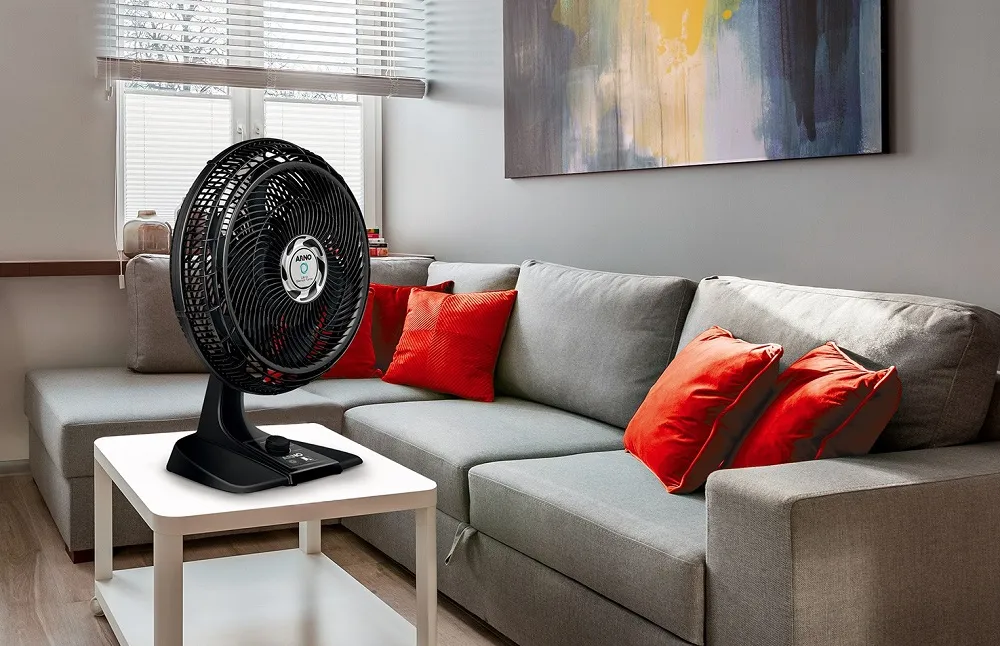
Among the positive points, the main ones are:
Portability
With the exception of a few more specific models, most fans are portable and easy to move, allowing you to take them to different rooms in the house or even to other locations, such as offices.
Affordable price
The issue of a more affordable price is also a point that counts positively for the fan.
Fans are generally lower in cost than other cooling systems, making them a more affordable option for many people.
Ventilation
Air ventilation like no other!
In addition to cooling the environment, fans also help to improve air circulation, eliminating stale air and reducing the feeling of stuffiness.
Negative points of the fan
As nothing in this life is perfect, the fan also has points that, according to most users, can end up bothering the buyer.
Noise emission
Some fans can be noisy, especially at higher speeds, which can be annoying, especially while sleeping or in environments that require concentration.
Directional effect
A fan’s cooling area is limited to its directional range. This means that only the areas closest to the fan will receive the benefit of the cooling breeze, while other parts of the room may remain hot and uncomfortable.
The accumulation of dust and allergens
Fans can accumulate dust over time, which can be problematic for people with allergies. The air circulation can spread dust particles and allergens around the room, causing discomfort and irritation.
Positive points of air conditioning

Now that you know the main aspects of the fan, it's time to explore the main points of the air conditioner!
Efficient cooling
If you're a fan of a cooler environment, this first positive point is sure to win you over!
Air conditioning is designed to effectively cool the air, reducing the temperature of the room and providing immediate relief from the heat.
Precise temperature control
Unlike our friend the fan – which, in the vast majority of cases, has 3 speeds on average – the possibilities of an air conditioner are much greater.
With an air conditioner, you can set the desired temperature precisely, ensuring a cool and comfortable environment according to your preferences.
Silent operation
Ah, silence! Adored by many, silence when operating is, without a doubt, one of the greatest attractions of an air conditioner.
Many modern air conditioning models are designed to operate quietly, which is ideal for environments where noise may be a concern, such as bedrooms or offices.
Positive points of air conditioning
Although it may seem like it's all wonders, air conditioning also has some issues that can be considered not so great.
Installation and initial cost
Unlike fans, which you simply plug in and use, air conditioning systems require professional installation and generally have a higher initial cost than fans. In addition, there may be ongoing maintenance and filter cleaning costs.
Air dehydration
Air conditioning can reduce humidity in the environment, which can cause dry skin, throat and eyes, as well as irritate the respiratory tract, especially in closed environments for long periods.
Environmental effect
In addition to personal issues, the use of air conditioning also ends up harming our planet.
The widespread use of air conditioning contributes to higher energy consumption and greenhouse gas emissions, which can have a negative impact on the environment and global warming.
After all, what uses more energy: a fan or an air conditioner?
Now the moment you've been waiting for since the moment you read the title of our text has arrived!
After all, what uses more energy: a fan or an air conditioner?
Generally speaking, air conditioning consumes more energy compared to a fan. This is because while a fan uses energy to drive the motor and move the air, an air conditioning requires energy to cool the room and maintain the desired temperature.
The energy consumption of air conditioning can vary depending on different factors, such as the capacity of the appliance, the size of the space to be cooled, the energy efficiency of the model and the external ambient temperature.
However, it is common for air conditioning systems to have considerably higher consumption when compared to fans.
For more accurate information on the energy consumption of a specific fan or air conditioner, it is recommended to consult the specifications provided by the manufacturer or check the energy efficiency rating of the appliance.
Conclusion
So, what do you think? Do you already know which of the two options uses more energy to work?
Now that you have this information – and the positive and negative points of each one – it’s much easier to choose one of them, right?
The next step is to weigh up and see which one best suits your needs!
Did you like the content we prepared today? Then I think you should take the opportunity to read it too Gas or electricity? Which option is cheaper for cooking?