What is visual pollution and how does it affect your well-being?
Advertisements
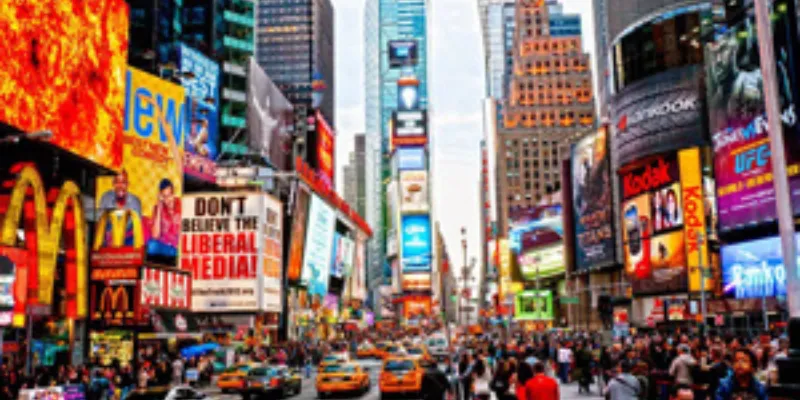
Visual pollution is a phenomenon that transforms urban and natural environments into chaotic spaces, saturated with disordered visual stimuli.
More than just an aesthetic issue, it directly impacts people's mental health, social behavior and even productivity.
In this text, we will explore what defines visual pollution, how it interferes with your well-being and what can be done to mitigate it.
Continue reading and learn everything about this topic:
What is Visual Pollution?

In essence, visual pollution occurs when there is an excess of visual elements.
For example, such as billboards, signs, exposed wires, disorderly graffiti or poorly planned facades, which overload human perception.
Unlike noise or air pollution, it is not consciously perceived by everyone, but its effects are equally profound.
Imagine an avenue with dozens of colorful advertisements, each competing for your attention.
In this sense, the human mind, unable to process so much information simultaneously, enters a state of subliminal stress.
This visual disorder is not just a problem of excess, but also of lack of harmony.
For example, in a fictional city called Solaria, a historic square was renovated.
But now it's filled with poorly positioned traffic signs, neon shop signs and lampposts covered in stickers.
What was once a space for contemplation has become a visual chaos, driving away residents who previously used the place to relax.
Thus, this scenario illustrates how visual pollution can rob a public space of its functionality.
Furthermore, visual pollution is intrinsically linked to urban planning.
Poorly designed cities, with lax regulations on outdoor advertising or facade maintenance, tend to accumulate disorienting elements.
Interestingly, even technology contributes: flashing digital screens and constant notifications on smartphones amplify the feeling of overwhelm.
++ Soothing sounds: how to bring them into your home
Thus, understanding visual pollution requires looking at the environment as a whole, from infrastructure to the cultural habits that shape our landscapes.
How Does Visual Pollution Affect Your Well-Being?
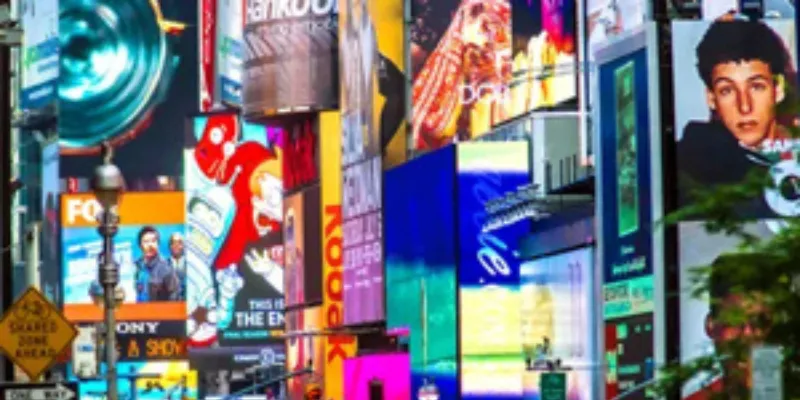
Visual pollution is not just a matter of urban aesthetics; it has direct impacts on mental and physical health.
In short, studies show that visually chaotic environments raise levels of cortisol, the stress hormone.
++ Healing Spaces: How Decor Can Improve Your Mental Health
A survey conducted by the University of São Paulo in 2019 revealed that 681% of residents of dense urban areas report psychological discomfort related to visual clutter in their neighborhoods.
Therefore, this data highlights how visual pollution is not just a nuisance, but a factor that compromises quality of life.
Consider the case of Marina, a young designer who works in a coworking space in the center of a big city.
Your daily route passes through an avenue full of billboards, poles overloaded with wires and facades covered in random graffiti.
In this sense, when she arrives at work, she already feels mentally exhausted, with difficulty concentrating.
This example demonstrates how visual pollution can drain cognitive energy, reducing the ability to focus and be creative.
Therefore, it is no surprise that minimalist environments, with less visual stimuli, are associated with greater productivity.
In addition to the mental impact, visual pollution also influences social behavior.
Cluttered spaces discourage positive interactions as they convey a sense of insecurity or carelessness.
Why would you feel at ease in a square where signs and advertisements compete for every inch of space?
This rhetorical question leads us to reflect on how the environment shapes our emotions and choices.
Therefore, visual pollution not only tires our eyes, but also affects the way we connect with others and the city.
The Visual Pollution Analogy: An Out-of-Tune Symphony

To better understand visual pollution, imagine an orchestra playing a symphony.
In this sense, when each musician follows the score, the result is harmonious and engaging.
Now, suppose each member decides to play a different melody, without coordination.
The sound becomes chaotic, irritating, impossible to follow.
Visual pollution is like this out-of-tune symphony: each billboard, sign or exposed wire is an instrument playing its own melody, without considering the whole.
This results in an environment that, instead of inspiring, suffocates.
This analogy also helps us realize that the solution to visual pollution depends on coordination.
Just as an orchestra needs a conductor, cities need efficient urban planning and clear regulations.
Without this, visual chaos will continue to grow, compromising collective well-being.
The beauty of this comparison is in its simplicity: everyone has experienced the frustration of dissonant sound, and visual pollution is, in essence, dissonance for the eyes.
In short, it is worth noting that, just as a symphony can be adjusted, visual pollution is also reversible.
Cities like Amsterdam and Tokyo, for example, invest in strict guidelines for outdoor advertising and maintenance of public spaces, creating visually pleasing environments.
These cases show that, with collective effort, it is possible to transform chaos into harmony, benefiting both residents and visitors.
Strategies to Combat Visual Pollution

Image: Canva
Combating visual pollution requires coordinated actions between governments, businesses and citizens.
Therefore, a fundamental strategy is the regulation of advertisements.
Cities like São Paulo implemented the Clean City Law in 2006, which restricted the number and size of billboards, resulting in a cleaner, more organized urban landscape.
This initiative proves that public policies can make a difference, but they need to be accompanied by rigorous monitoring.
Furthermore, another approach is to encourage conscious urban design.
Architects and urban planners can prioritize visual harmony, using neutral colors, sustainable materials and layouts that respect the cultural identity of the place.
For example, in a fictional coastal town called Maré Alta, the city government launched a project to revitalize the boardwalk, replacing neon signs with discreet, standardized signs.
The result was a 30% increase in the frequency of tourists, who began to value the more welcoming environment.
In short, this fictional case highlights how design can transform the perception of a space.
Finally, raising awareness among the population is essential.
Educational campaigns can teach people to recognize visual pollution and adopt simple practices, such as avoiding posting posters in public places or supporting businesses that invest in harmonious facades.
Technology can also help: apps that map areas with high visual pollution can guide residents to choose more pleasant routes.
Thus, the fight against visual pollution is a collective effort that combines politics, design and social engagement.
Pollution Impacts in Different Contexts
|
Context |
Impact of Visual Pollution |
Proposed Solution |
|---|---|---|
|
Mental health |
It increases stress, reduces concentration and increases the feeling of mental fatigue. |
Create green spaces and rest areas with minimalist design. |
|
Social Behavior |
It discourages positive interactions and conveys a feeling of insecurity. |
Standardize signage and invest in harmonious public lighting. |
|
Productivity |
It overloads the mind, impairing focus and creativity. |
Adopt work environments with less visual stimuli and more organization. |
|
Tourism |
It drives away visitors, who prefer visually pleasing environments. |
Revitalize tourist areas with conscious urban design projects. |
Frequently Asked Questions
|
Question |
Response |
|---|---|
|
What characterizes visual pollution? |
It is the excess of cluttered visual elements, such as billboards, exposed wires and poorly planned facades, that overload perception. |
|
Does visual pollution affect health? |
Yes, it can increase stress, cause mental fatigue, and even discourage positive social interactions. |
|
How can I help reduce visual pollution? |
Avoid posting posters in public places, support businesses with harmonious facades and demand regulations from your city hall. |
|
Can cities eliminate visual pollution? |
While it is difficult to eliminate completely, regulations such as the Clean City Law show that it is possible to significantly reduce it. |
|
Does technology contribute to visual pollution? |
Yes, digital screens and constant notifications can amplify visual overload, but they can also be used to map out solutions. |
Why Should We Act Now?
Visual pollution is not an isolated problem; it reflects the way we build and inhabit our cities.
Therefore, ignoring it means accepting a future of chaotic environments, where well-being is sacrificed in the name of immediacy and disorganization.
Every misplaced sign, every exposed wire, is a reminder that our collective choices shape the world around us.
Acting now, with public policies, education and conscious design, is essential to create spaces that inspire, rather than suffocate.
Furthermore, visual pollution has an economic impact that cannot be underestimated.
Visually pleasing cities attract more tourists, increase real estate values and encourage local businesses.
On the other hand, chaotic areas drive away investment and reduce quality of life, creating a cycle of decline.
Therefore, combating visual pollution is also a strategy for sustainable development.
Ultimately, responsibility is shared.
Governments must lead with regulations, companies must adopt ethical practices, and citizens must actively engage.
By doing this, we can transform our cities into spaces that reflect harmony, care and respect for collective well-being.
The question remains: do we want to live in an out-of-tune symphony or in a melody that elevates the spirit?