Why do some mountains make strange sounds at night?
Advertisements
Did you know that Some mountains produce strange sounds at night. In a completely natural way? This intriguing phenomenon has sparked the curiosity of climbers and locals for centuries.
Modern geology has demystified many of these bizarre noises, which previously fueled local legends.
Advances in acoustic monitoring equipment have revealed the true physical triggers behind these whispers.
We've prepared this comprehensive guide to explain the science behind underground and sandy noises.
Discover now the secrets that the mountain ranges hide as soon as the sun sets on the horizon.
Summary
- What thermal phenomena cause nighttime noises?
- How does the wind create frightening sounds in the rocks?
- Where are the famous singing mountains located?
- What are the main types of sounds recorded?
- Frequently Asked Questions (FAQ)
What thermal phenomena cause nighttime noises?
The abrupt temperature variation between day and night is the main driver of these events.
Rocks undergo thermal expansion under strong sunlight and contract rapidly in the cold of dawn.
This contraction process generates severe mechanical stresses in the innermost mineral structure of the mountains.
The release of this accumulated pressure causes sudden cracking sounds, very similar to gunshots or dry branches breaking.
Geologists call this specific mechanism cryoclasty or high-intensity thermal stress.
That is why Some mountains produce strange sounds at night., frightening entire camps.
Peaks located in desert areas or at high altitudes exhibit this effect in an amplified way.
The daily temperature range in these specific environments often easily exceeds thirty degrees.
How does the wind create frightening sounds in the rocks?
The strong wind acts like an invisible musician playing a giant stone instrument.
As air passes through narrow crevices, caves, and canyons, it undergoes severe aerodynamic compression.
This forced passage creates acoustic resonance, generating deep whistles or wails that echo.
The unique shape of the rock cavities functions exactly like a flute of colossal proportions.
Scientists prove that Some mountains produce strange sounds at night. due to this dynamic.
The density of cold night air alters the propagation of sound waves in the atmosphere.
This denser air conducts sound over much greater distances than normal.
The noises seem closer and clearer to those camped at the base of the mountain range.
Where are the famous singing mountains located?
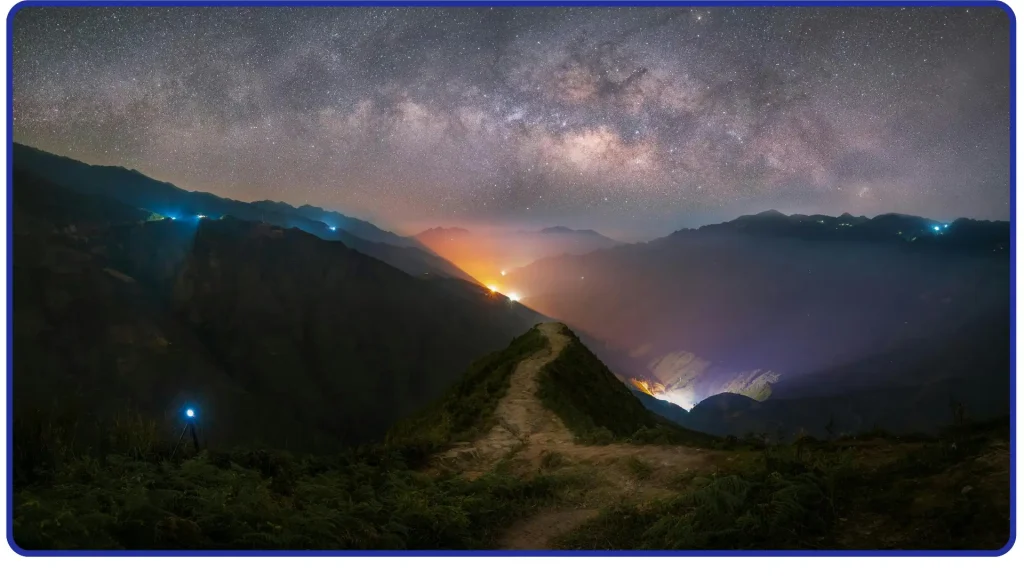
The singing dunes represent another fascinating facet of this same global acoustic mystery.
Places like the Al-Asfhar desert and the mountains of Kazakhstan emit continuous low-frequency hums.
The movement of sand grains generated by the night wind creates a unique electrostatic friction.
This constant vibration produces a sound reminiscent of the roar of distant engines or airplanes.
Research published by United States Geological Survey (USGS) They validate this acoustic data in sandy terrain.
The identical grain size promotes perfect harmonic resonance of the moving sand.
Understanding this geography helps to understand why Some mountains produce strange sounds at night..
The phenomenon requires very specific climatic and geological conditions to occur clearly.
++ The lake that appears and disappears without apparent explanation.
What are the main types of sounds recorded?
Reports range from subtle clicking sounds to terrifying rumblings that shake the solid ground.
Each type of terrain and mineral composition dictates the timbre of the noise generated in the darkness.
Granite mountains tend to produce dry cracking sounds due to the extreme rigidity of their material.
Meanwhile, limestone formations with internal caves emit continuous whistling sounds caused by air currents.
The table below summarizes the main sound sources mapped by experts in applied geophysics:
| Type of Sound | Probable Cause | Intensity (dB) | Example of a Location |
| Dry Cracks | Thermal Contraction | 40 to 60 dB | Mount Everest |
| Deep Whistles | Wind Resonance | 30 to 50 dB | Grand Canyon |
| Continuous Buzzing | Sand Friction | 50 to 70 dB | Badain Jaran Dunes |
| Loud Bangs | Seismic Microbalances | 70 to 90 dB | Andes Mountains |
Analyzing the table, it becomes clear that Some mountains produce strange sounds at night. for different reasons.
The combination of climatic factors creates a truly complex and awe-inspiring geological symphony.
How do microscopic tremors influence the phenomenon?
Our planet is in constant tectonic activity, even if imperceptible.
Micro-earthquakes occur constantly in the geological faults that support the large mountain ranges.
These small plate arrangements generate low-frequency waves called infrasound.
Although they are below the threshold of human hearing, they cause physical vibrations in surface rocks.
The vibration causes loose stones to collide with each other in the silence of the early morning. Clearly, Some mountains produce strange sounds at night. due to this continuous structural adjustment.
Internal friction noises travel through the rock layers until they reach the outer surface.
The rugged terrain acts as a natural amplifier for these small underground crackling sounds.
+ Historical records of improbable rainfalls: fish, stones, objects, and what is known today.
What role do moisture and ice play in summits?
The water that accumulates in the cracks of the rocks plays a crucial role in this acoustic process.
At nightfall, the temperature plummets, causing this trapped moisture to freeze instantly.
Water expands its volume by about nine percent when it turns into ice.
This sudden expansion exerts brutal pressure on the walls of the mountain's rocky crevices.
The natural hydraulic fracturing process generates violent cracking sounds that break the nocturnal silence.
We know that Some mountains produce strange sounds at night. because of this severe freezing.
This daily cycle of thawing and freezing shapes the landscape and fragments the slopes.
Mountaineers often describe these noises as gunshots echoing off the vertical ice walls.
Why does human perception amplify these noises?
Human psychology also plays a key role in interpreting these noises of nature.
During the night, our visual stimuli drop drastically, sharpening our auditory senses.
The brain attempts to identify any unfamiliar sound as a potential threat in total darkness.
Everyday mountain noises take on frightening proportions due to echo and our active imagination.
The soundproofing of the preserved areas makes any small creaking sound extremely noticeable and intimidating.
Thus, Some mountains produce strange sounds at night. to the ears of attentive observers.
The absence of urban noise pollution allows subtle acoustic waves to finally be perceived.
What seems like a supernatural mystery is simply the Earth breathing naturally.
What historical myths have been explained by science?
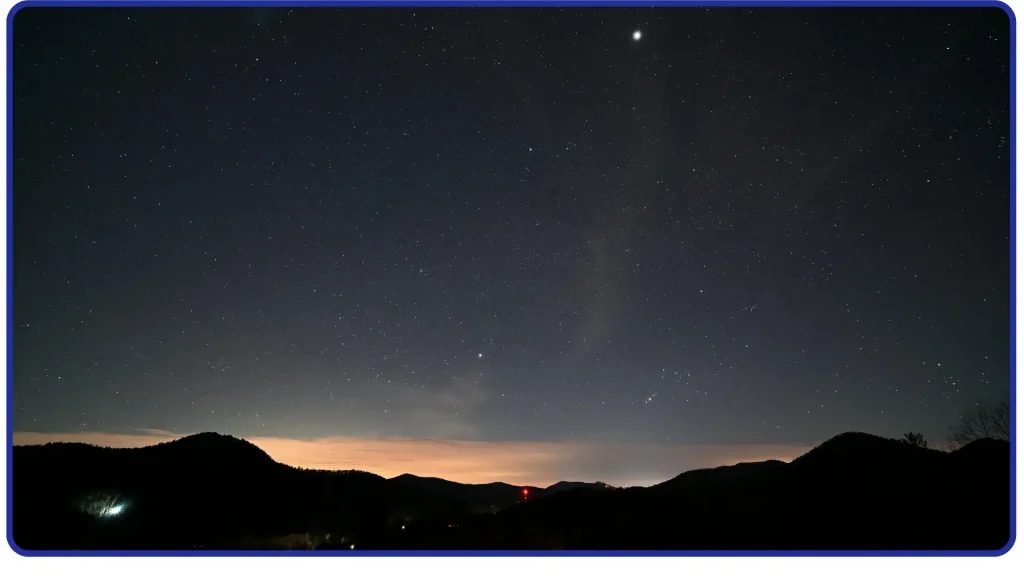
Many ancient cultures created legends to explain the groans coming from high altitudes.
Native peoples believed that gods or angry spirits inhabited the interior of those rock structures.
In Ancient Greece, sounds were attributed to the god Pan, the protector of the wild.
Ghost stories were used to keep curious people away from dangerous areas and unstable ravines.
Today, science has debunked these popular beliefs with empirical data obtained in the field.
We have proven that Some mountains produce strange sounds at night. through immutable physical laws.
The transition from myths to geological reality does not diminish the charm of these formations.
On the contrary, it highlights the dynamic complexity of the planet we currently live on.
++ People who woke up speaking languages they never learned: documented cases
Closing
The mysteries of the noisy mountains show how nature operates in surprising and coordinated ways.
Thermal phenomena, channeled winds, water freezing, and micro-tremors perfectly explain this nocturnal symphony.
Following these scientific discoveries connects us more deeply with our planet.
If you hear a cracking sound in the mountain, remember that it's just the geology in motion.
To explore detailed studies on environmental acoustics and terrain monitoring, visit the portal of... Nature Earth Sciences, a global reference in geosciences.
Frequently Asked Questions (FAQ)
Can anyone hear these sounds in the mountains?
Yes, provided it's in a quiet location with suitable weather conditions. The phenomenon is more common at high altitudes or in deserts with significant temperature variations.
Do these noises indicate an imminent danger of collapse?
Most of the time, no, as these are just minor thermal adjustments and wind passage. However, excessively loud cracking sounds can indicate a real risk of barrier collapse.
Does the shape of the mountain influence the type of sound it generates?
Certainly. Mountains with many caves, narrow crevices, and deep valleys act as resonance chambers. The terrain dictates whether the sound will be a whistle or a roar.
Why Some mountains produce strange sounds at night. And not during the day?
During the day, ambient noise and rising thermal winds mask these subtle sounds. Furthermore, the contraction of the rocks due to cooling occurs exclusively after sunset.
Are there mountains in Brazil that emit these noises?
Yes, rock formations in Chapada Diamantina and Serra dos Órgãos present similar reports. The wind in the limestone and quartzite fissures generates intriguing whistling sounds during the early morning hours.