The best devices for those who work from home.
Advertisements
Devices for those who work from home: the Remote work has transformed the way we live and work, bringing freedom but also unique challenges.
For those who work from home, having the right devices is not just a matter of comfort, but also of productivity, health, and efficiency.
Choosing tools that align with your needs can be the difference between a smooth workday and one filled with frustration.
Keep reading to learn more!
Devices for those who work from home.
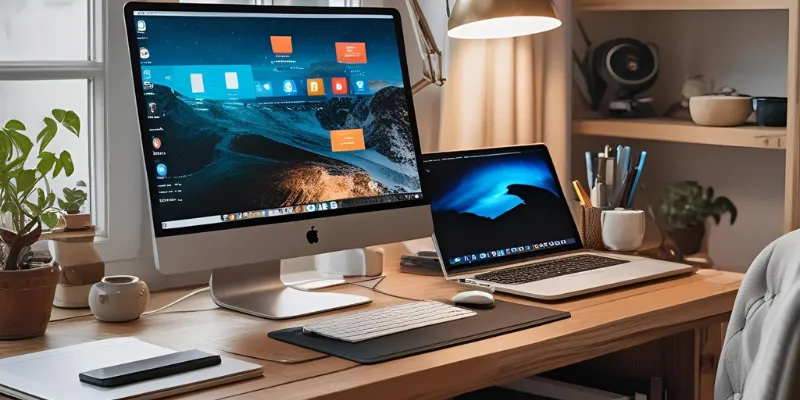
In this article, we will explore the best devices for those who work from home, focusing on smart, ergonomic, and technological solutions that enhance the home office experience.
Why invest in devices for those who work from home?
This is a question many people ask themselves when setting up their workspace.
The answer lies at the intersection of functionality and well-being.
A 2023 study by Owl Labs revealed that 68% of remote workers report greater job satisfaction when using appropriate devices, such as ergonomic monitors and comfortable keyboards.
With this in mind, this text presents a carefully curated selection of devices that not only make work easier, but also make everyday life more enjoyable and efficient.
Think of your home office as the cockpit of a spaceship: each device is an essential component to ensure your work mission is successful.
++ How to Make Your Home Safe Before Traveling (Quick Checklist)
Just as a pilot needs precise instruments, you need tools that optimize your performance without compromising your health or creativity.
Let's explore the categories of essential devices, from monitors to ergonomic accessories, and how they can be integrated to create an ideal work environment.
Monitors: The window to productivity
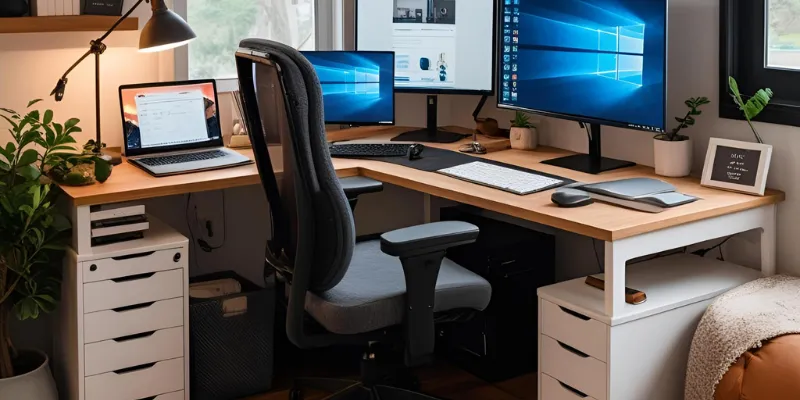
To begin with, the monitor is the visual heart of your home office.
It's not just a screen, but an extension of your brain, where ideas take shape and tasks come to life.
Choosing the right monitor is crucial for those who work from home, especially since we spend hours in front of it.
A quality monitor reduces eye strain, improves posture, and enhances multitasking capabilities.
++ Virtual assistants at home: which one best suits your lifestyle?
Models like the Dell UltraSharp 27” 4K or the LG 34” UltraWide offer crisp resolutions and ample screen space, perfect for designers, programmers, or managers who work with multiple windows simultaneously.
In addition, ergonomics should be considered when choosing a monitor.
Height- and tilt-adjustable monitors, such as the ASUS ProArt, allow you to customize your viewing angle, reducing neck strain.
For those who work with video editing or graphic design, color fidelity is non-negotiable.
A monitor with 100% sRGB or AdobeRGB coverage ensures that what you see on the screen is exactly what will be delivered to the customer.
On the other hand, for administrative tasks, a Full HD monitor with a 60 Hz refresh rate is sufficient, provided it has anti-flicker technology to protect the eyes.
Imagine, for example, Ana, a data analyst who works remotely.
She used to use her laptop's 13-inch screen, but she experienced frequent headaches and had difficulty organizing large spreadsheets.
By investing in a 34-inch curved monitor, Ana not only increased her productivity in 20%, but also started finishing her workday with less eye strain.
That's the power of a well-chosen monitor: it not only makes work easier, but transforms the experience of those who work from home.
Table: Comparison of monitors for home office use.
|
Model |
Resolution |
Size |
Key features |
Ideal for |
|---|---|---|---|---|
|
Dell UltraSharp 27” |
4K |
27” |
Ergonomic adjustment, 99% sRGB |
Designers, editors |
|
LG UltraWide 34” |
3440×1440 |
34” |
Curved screen, multitasking |
Analysts, programmers |
|
ASUS ProArt |
4K |
32” |
100% AdobeRGB, height adjustment |
Content creators |
Ergonomic chairs and tables: The foundation of comfort.
If the monitor is the window, the chair and desk are the foundation of your home office.
Spending hours sitting in an unsuitable chair can lead to back pain, postural problems, and even chronic injuries.
An ergonomic chair, such as the Herman Miller Aeron, is designed to support the lumbar spine, distribute body weight, and allow for customized adjustments.
++ Tips for a more emotionally "breathable" home
A height-adjustable desk, such as the FlexiSpot E7, offers the flexibility to switch between working seated and standing, promoting circulation and reducing fatigue.
Why is ergonomics so crucial? Because the human body was not designed to remain static for extended periods.
Adjusting the desk height so that your arms form a 90-degree angle when typing, or choosing a chair with adjustable lumbar support, can prevent long-term health problems.
Furthermore, the possibility of working while standing stimulates creativity and concentration, since movement activates the brain.
Studies show that workers who alternate between sitting and standing positions report 15% more focus on complex tasks.
Consider the case of John, a freelance writer who suffered from lower back pain after long workdays.
By investing in an ergonomic chair with dynamic lumbar support and an adjustable desk, he noticed a significant improvement in his posture and disposition.
What was once a workday marked by discomfort became a fluid experience, with breaks for working standing up that revitalized her energy.
Devices like these are not just mobile; they are investments in your health and productivity.
Table: Recommended chairs and tables
|
Product |
Type |
Key features |
Benefits |
|---|---|---|---|
|
Herman Miller Aeron |
Chair |
Lumbar support, tilt adjustment |
Extended comfort |
|
FlexiSpot E7 |
Table |
Electric height adjustment |
Postural flexibility |
|
Ergohuman Plus |
Chair |
Breathable mesh, neck support |
Ideal for warm climates. |
Smart accessories: Small details, big impact.

Image: Canvas
While monitors and furniture form the foundation of a home office, smart accessories are the details that elevate the experience.
Mechanical keyboards, such as the Keychron K8, offer precise and comfortable typing, reducing hand fatigue.
An ergonomic mouse, like the Logitech MX Vertical, minimizes wrist strain, ideal for those who spend hours clicking.
In addition, devices such as USB-C hubs allow you to connect multiple peripherals, keeping the space organized and functional.
Another underrated accessory is the laptop stand.
It not only raises the screen to eye level, preventing neck pain, but also improves device ventilation, extending its lifespan.
For those who participate in many virtual meetings, a USB microphone, such as the Blue Yeti, ensures crystal-clear audio, while a 1080p webcam, such as the Logitech C920, offers a sharp image.
These small investments make a disproportionate difference in professional perception during calls.
Think of accessories like the spices in a recipe: on their own, they don't make a meal, but when combined well, they transform the dish.
A quiet keyboard, a mouse that fits perfectly in your hand, and a cable management stand may seem like small details, but together they create a harmonious workflow.
Have you ever stopped to think about how a single tangled cable can disrupt your concentration?
Small adjustments, such as a USB hub or an adjustable stand, eliminate these distractions, allowing you to focus on what really matters.
Table: Essential accessories for the home office
|
Accessory |
Function |
Recommended model |
Main benefit |
|---|---|---|---|
|
Mechanical keyboard |
Comfortable typing |
Keychron K8 |
Reduces hand fatigue. |
|
Ergonomic mouse |
Stress-free navigation |
Logitech MX Vertical |
Prevents wrist pain. |
|
Laptop stand |
Ergonomics and ventilation |
Rain Design Stand |
Improves posture and durability. |
Connectivity: The bridge to the world
No home office works without a stable and fast internet connection. A Wi-Fi 6 router, like the TP-Link Archer AX73, offers high speeds and low latency, essential for video calls, file transfers, and real-time collaboration.
For those living in areas with unstable signal, a signal repeater, such as the Netgear Nighthawk, can ensure coverage in every corner of the house.
In addition, an uninterruptible power supply (UPS), such as the APC Back-UPS 600VA, protects your devices against power outages, preventing data loss.
Connectivity goes beyond Wi-Fi. A noise-canceling headset, like the Sony WH-1000XM5, blocks out external distractions, allowing for complete focus on meetings or tasks that require concentration.
For those who work with international teams, a stable connection is even more critical, as delays or outages can compromise communication.
Investing in devices that ensure connectivity is like building a solid bridge between you and your colleagues, clients, or projects.
Let's return to the example of Ana, the data analyst.
During an online presentation, his connection dropped repeatedly, causing embarrassment.
After installing a Wi-Fi 6 router and a repeater, she never again experienced connectivity problems, and her meetings now flow smoothly without interruption.
Connectivity isn't just a technical issue; it directly impacts your professional reputation and confidence in remote work.
Table: Connectivity solutions
|
Device |
Function |
Recommended model |
Main benefit |
|---|---|---|---|
|
Wi-Fi Router 6 |
Fast and stable internet |
TP-Link Archer AX73 |
Low latency |
|
Signal repeater |
Extends Wi-Fi coverage |
Netgear Nighthawk |
Signal in remote areas |
|
UPS (Uninterruptible Power Supply) |
Protection against power outages |
APC Back-UPS 600VA |
Data security |
Frequently asked questions about devices for those who work from home.
Choosing the right devices can be confusing, especially with so many options on the market.
Below, we answer the most common questions to help you make informed decisions.
Table: Frequently Asked Questions
|
Question |
Response |
|---|---|
|
What is the best monitor for a home office? |
It depends on your profession. For designers, choose 4K with high color fidelity; for general tasks, Full HD with ergonomic adjustment is sufficient. |
|
Is it worth investing in an ergonomic chair? |
Yes, especially for those who work more than 4 hours a day. It prevents pain and increases productivity. |
|
How can we improve connectivity when working from home? |
Invest in a Wi-Fi 6 router and, if necessary, a signal repeater for larger areas. |
|
Do I need a UPS (uninterruptible power supply) for my home office? |
If you handle sensitive data or live in an area with frequent power outages, an uninterruptible power supply (UPS) is essential. |
|
Which accessory makes the biggest difference? |
An ergonomic keyboard or laptop stand, as they directly impact posture and efficiency. |
Conclusion: Devices for those who work from home
Investing in the best devices for those who work from home is more than just a matter of convenience; it's a strategy to maximize your productivity, protect your health, and create an inspiring work environment.
From monitors that expand your field of vision to chairs that take care of your body, each device plays a unique role in building an efficient home office.
The cockpit analogy reminds us that, just as a pilot needs precise instruments, you need tools that work in harmony to achieve your goals.
When choosing devices, prioritize quality, ergonomics, and compatibility with your needs.
A high-resolution monitor, an adjustable chair, smart accessories, and a reliable connection form the basis of a high-performance home office.
How can you transform your workspace into an environment that not only facilitates but elevates your routine?
The answer lies in the smart choices you make today.
With the right devices, remote work ceases to be a challenge and becomes an opportunity to create, innovate, and thrive.
Invest in your home office and discover how small adjustments can lead to big results.