Apps that help control daily expenses.
Advertisements
Apps that help control daily expenses.!
Imagine transforming your smartphone into an invisible ally that tracks every penny spent, revealing hidden patterns and paving the way to greater financial freedom.
Apps that help control daily expenses are emerging as essential tools in this scenario, especially in a world where unpredictable expenses arise all the time.
They not only record transactions, but also argue in favor of more conscious decisions, challenging the user to question unnecessary impulses.
Learn more below!
Apps that help control daily expenses.
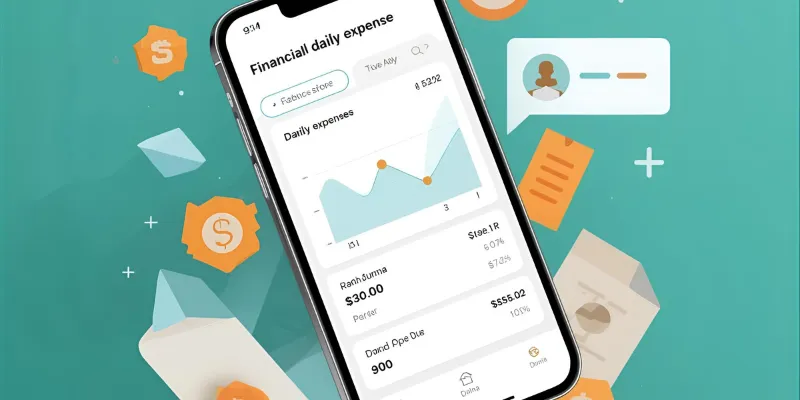
Initially, exploring these apps means investing in a more balanced routine, where control becomes a competitive advantage in personal management.
Furthermore, these apps encourage a proactive approach, transforming raw data into actionable insights that prevent the accumulation of debt.
You register a purchase at the supermarket, and the app immediately categorizes the expense, comparing it to previous budgets to alert you about overspending.
However, the real value lies in personalization: some apps integrate artificial intelligence to predict trends, such as seasonal increases in energy bills, allowing for preventative adjustments.
++ Home LED Lighting: How Much Can You Really Save?
This way, you gain not only visibility, but also the power to negotiate better financial habits.
For example, by connecting bank accounts directly, these tools eliminate the tediousness of manual data entry, reducing errors and saving valuable time.
In short, apps that help control daily expenses act as catalysts for a gradual transformation, where small daily wins accumulate into long-term stability.
++ How the circular economy is changing the way we consume in Brazil.
Have you ever stopped to think about how a simple app in your pocket can revolutionize your relationship with money, making you a master instead of a slave to finances?
Smart Benefits of Apps That Help Control Daily Expenses
The benefits of these apps go beyond mere registration, promoting implicit financial education that empowers users to take control of their economic lives.
You start your day by checking an intuitive dashboard that highlights nighttime expenses, encouraging immediate reflection on past choices.
++ How to calculate your monthly cost of living in a practical way.
Therefore, this daily interaction builds discipline, transforming expense control into an automatic and rewarding habit.
Furthermore, customized reports reveal inefficiencies, such as forgotten subscriptions that silently drain resources, allowing for precise cuts and smarter allocations.
However, one underestimated aspect lies in the reduction of emotional stress associated with disorganized finances.
Imagine waking up without the anxiety of unexpected bills; apps send proactive notifications, arguing against procrastination and in favor of timely payments that preserve credit scores.
In this way, you cultivate an abundance mindset, focusing on investments instead of temporary fixes.
For example, integrations with savings goals motivate visible progress, where each recorded saving becomes a significant step towards bigger dreams, such as travel or early retirement.
Conversely, these apps foster virtual communities where users share strategies, enriching the ecosystem with collective approaches.
You can access integrated forums to discuss cost-reduction tactics in specific categories, such as urban transportation, adapting real-world solutions to personal contexts.
Therefore, the benefit extends beyond the individual, creating support networks that reinforce arguments in favor of a more financially literate society.
Ultimately, apps that help control daily expenses not only manage numbers, but also shape resilient mindsets to withstand economic volatility.
Furthermore, cross-platform accessibility ensures you maintain control on the go, synchronizing data between your mobile phone and computer for in-depth analysis at convenient times.
This argues against excuses about lack of time, as push notifications seamlessly integrate management into the daily workflow.
This way, you optimize cash flow by identifying seasonal patterns that inform future budgets with surgical precision.
How to Choose the Ideal App to Control Daily Expenses
Choosing the right app requires careful evaluation of features that align with your lifestyle, avoiding generic tools that fail to deliver personalized value.
You start by analyzing banking integrations: apps that automatically synchronize transactions argue in favor of efficiency, reducing error-prone manual entries.
Therefore, prioritize those with robust encryption, ensuring that your financial data remains secure against cyber threats.
In addition, test intuitive interfaces that facilitate navigation, transforming control into an enjoyable experience rather than an obligatory one.
However, consider scalability: a good app evolves with you, offering advanced modules for investments or tax analysis as your needs grow.
For example, consider customizable reports that allow you to segment expenses by period or category, providing visual arguments for strategic adjustments.
This way, you avoid limited apps that quickly lose relevance, opting instead for those with frequent updates based on feedback from real users.
In short, read authentic reviews from online communities to identify common pitfalls, such as intrusive ads in free versions that distract from the main focus.
You weigh the costs of premium subscriptions, considering benefits like dedicated support against robust free options.
Therefore, try free trials to test compatibility, arguing that the right choice amplifies your ability to control daily expenses in a sustainable and intelligent way.
Furthermore, focus on apps that support multiple currencies if you deal with international transactions, avoiding manual conversions that complicate tracking.
This reinforces the argument for versatility, especially for freelancers or frequent travelers who face constant currency fluctuations.
Innovative Examples of Apps That Help Control Daily Expenses
Among the various options available, Mobills stands out for its innovative approach, integrating gamification to make expense tracking an engaging journey.
You record expenses and receive badges for achieving goals, arguing that virtual rewards motivate behavioral consistency.
Therefore, the app categorizes transactions using predictive AI, suggesting adjustments based on historical patterns to optimize monthly budgets.
Furthermore, interactive graphs reveal correlations between habits, such as spending peaks on weekends, allowing for precise and creative interventions.
However, Mobills goes further by offering scenario simulators, where you can test the impacts of hypothetical decisions, such as cuts in entertainment, strengthening arguments for radical changes.
Thus, users build holistic financial profiles, incorporating variable incomes from the gig economy for a realistic view.
For example, freelancers use the app to separate professional and personal workflows, avoiding confusion that sabotages daily control.
In contrast, Organizze adopts a minimalist philosophy, focusing on simplicity for users who reject unnecessary complexities.
You record expenses with quick taps, and the app generates concise reports that argue against visual clutter, prioritizing clarity.
Therefore, integrations with personal calendars synchronize payment reminders, transforming control into a natural extension of the daily schedule.
Furthermore, Organizze encourages family collaborations, allowing shared accounts where members divide responsibilities, fostering constructive dialogue about collective spending.
This creates arguments for domestic transparency, reducing common financial conflicts in Brazilian households.
Statistics and Analogies: Why Invest in Apps to Control Expenses?
A revealing statistic comes from a survey of over a thousand Mobills users, where 641% of those who control their spending via the app have financial reserves, compared to only 12.5% of those without systematic control.
This makes a powerful argument in favor of adopting these tools, highlighting measurable impacts on economic stability.
Therefore, you can see how consistent use multiplies the chances of financial security, especially in contexts of volatile inflation.
However, to better illustrate this, think of these apps as a financial GPS: just as a navigation app recalculates routes to avoid traffic jams, the app redirects your daily spending, bypassing "holes" such as impulse purchases that divert you from your savings goals.
This way, you navigate optimized paths, reaching your goals efficiently and without disastrous surprises.
In short, this analogy reinforces the argument that apps that help control daily expenses are not mere accessories, but essential guides for successful financial journeys.
For example, users who follow these "routes" report average reductions of 20% in superfluous expenses, increasing margins for productive investments.
Furthermore, additional statistics show that automatic integrations reduce errors in 30%, arguing for automation as key to daily accuracy amidst busy routines.
Comparison of Features in Apps That Help Control Daily Expenses
| App | Banking Integration | Customized Reports | Gamification | Price (Premium Version) | Average Rating (Google Play) |
|---|---|---|---|---|---|
| Mobiles | Yes, automatic. | Interactive graphics | Yes | R$ 159.90/year | 4.7/5 |
| Organize | Yes, manual and automatic. | Concise reports | No | R$ 99.90/year | 4.6/5 |
| My Savings | Yes, free. | Detailed cash flow | No | Completely free | 4.5/5 |
| Spendee | Yes, multi-currency. | Visual analysis | Yes | R$ 119.90/year | 4.4/5 |
This table compares key features, helping you make a case for your choice based on personal priorities, such as automation or zero cost.
Advanced Tips to Maximize the Use of Apps for Expense Control
To increase the use of these apps, adopt weekly review routines where you analyze reports to identify subtle financial leaks, such as micro-spending on delivery apps.
Therefore, adjust categories dynamically, arguing that flexibility maintains relevant control in the face of economic changes.
Furthermore, integrate specific, measurable, achievable, relevant, and time-bound SMART goals – to transform vague aspirations into concrete plans.
However, avoid initial overload: start with basic inputs and expand gradually, building confidence in the process.
This way, you cultivate long-term loyalty, avoiding the dropout rate that is common among newcomers.
For example, pair the app with existing habits, such as checking expenses after meals, reinforcing arguments for seamless integration into daily life.
Conversely, explore integrations with wearables for real-time tracking, where notifications on smartwatches alert users to approaching limits, promoting instant decisions.
Therefore, this technological approach argues for a connected ecosystem that amplifies control over daily expenses.
Furthermore, share insights with peers for external feedback, enriching strategies with diverse perspectives that challenge personal biases.
Long-Term Impacts of Apps That Help Control Daily Expenses
In the long term, these apps foster financial independence, where you accumulate historical data for informed negotiations, such as reducing bank fees based on usage patterns.
Therefore, the argument is strengthened by accumulated evidence, transforming users into shrewd negotiators.
Furthermore, debt reduction becomes tangible with tools that simulate accelerated amortizations.
However, social impacts emerge: families that adopt shared apps report fewer monetary disputes, arguing for domestic harmony through transparency.
In this way, you extend benefits beyond the individual, positively influencing close circles.
In short, continued commitment to these applications builds resilience against crises, such as recessions, where spending histories inform strategic cuts without panic.
For example, during periods of high inflation, apps highlight inflated categories, guiding smart reallocations.
Furthermore, the evolution towards investments integrates naturally, with apps that link savings to portfolios, arguing for sustainable wealth growth.
Frequently Asked Questions
| Question | Response |
|---|---|
| Are these apps safe for storing banking data? | Yes, most use AES-256 encryption and two-factor authentication, protecting information similar to digital banks. Argue for verification of certifications before use. |
| Can I use it for free? | Many offer free basic versions with essential features; premium versions add advanced analytics for 10-15 monthly R$, suitable for intensive users. |
| Do they work offline? | Partially: it allows recording expenses without internet access, but bank synchronizations require a connection, arguing for regular backups to avoid data loss. |
| How to manage multiple accounts? | Apps like Mobills allow for separate profiles, facilitating family or professional management without confusion, with consolidated reports. |
| Do they include taxes? | Some export data for tax returns, simplifying annual reports and arguing against manual errors in personal income tax returns. |
This table addresses common questions, offering persuasive and practical answers to engage hesitant users.
Conclusion
In short, apps that help control daily expenses represent an accessible revolution, transforming financial chaos into strategic order.
You gain the tools to argue against waste, backed by real data and intelligent insights.
Therefore, start with an app aligned with your needs, incorporating the tips here to maximize impact.
However, remember: success depends on consistency, not initial perfection. So, persevere, adjust, and celebrate progress, building a winning financial narrative.
Furthermore, with statistics proving the benefits and analogies illustrating its simplicity, the argument for adoption becomes irrefutable. Try it and see your life change.
++ Expense control: discover 5 apps that are a real lifesaver.