The New Generation of Materials That Could Replace Plastic
Advertisements
The global search for materials that can replace plastic It took fine chemistry laboratories out of academic apathy and threw them into the center of a frenetic industrial race.
Materials engineers are racing against the planet's biological clock, trying to stem a silent crisis that has already saturated our oceans with invisible polymers.
The landscape is complex, but this guide dissects the disruptive technologies, the real market viability, and the contradictions that nobody tells you about this transition.
Practical Summary
- What are the limits of conventional plastic today?
- Which biopolymers are leading the global ecological transition?
- How is fungal mycelium revolutionizing the packaging market?
- What advances in seaweed research impact the food industry?
- How can cellulose nanomaterials replace fossil polymers?
- Comparative table of the technical feasibility of new materials.
- What are the main economic bottlenecks for mass replacement?
- Closing
- Frequently Asked Questions (FAQ)
What are the limits of conventional plastic today?
Our dependence on petrochemicals has generated an invisible trail of destruction, demanding solutions that go far beyond traditional and inefficient mechanical recycling.
Fossil polymers persist in the environment for centuries, fragmenting into microparticles that now contaminate water and human tissues.
There is something deeply unsettling about the fact that we use an indestructible material for disposable packaging that lasts only a few minutes in the hands of the consumer.
In light of this, punitive legislation is advancing across the globe, pushing industries against the wall and forcing the search for solutions. materials that can replace plastic.
Which biopolymers are leading the global ecological transition?
Polylactic acid (PLA) emerged as the first hero of this transition, but the truth is that it faces severe technical limitations.
Although it is derived from the fermentation of corn starch or sugarcane, its degradation requires industrial composting plants that simply do not exist in most cities.
On the other hand, polyhydroxyalkanoates (PHAs) emerge as a more promising and genuinely intelligent alternative, being synthesized directly by bacteria.
These compounds dissolve naturally in marine environments without leaving toxic residues, an advance that justifies the heavy investments in biotechnology.
+ The Science Behind Déjà Vu: Brain Malfunction or Protective Mechanism?
How is fungal mycelium revolutionizing the packaging market?
The fungal kingdom holds one of the most elegant solutions for circular design: mycelium, that network of roots that grows underground.
By feeding on agricultural waste in dark molds, this biological structure creates a dense buffer block in less than a week.
This material replaces Styrofoam with immense ecological advantages, since it consumes very little energy and decomposes in the backyard without any difficulty.
Tech and e-commerce giants are starting to adopt innovation to protect their products and, as a bonus, clean up their supply chains.
What advances in seaweed research impact the food industry?
Seaweed is the true biofactory of the future, as it grows at an impressive rate without competing for space with agriculture or requiring fresh water.
From them are born flexible and edible films that wrap everything from portions of fresh food to individual doses of water for athletes.
This type of invention challenges our perception of waste disposal, as the packaging simply disappears in your mouth or down the kitchen sink.
The impact of this on reducing urban waste is enormous, transforming what was once garbage into nutrients for the soil itself.
++ How science studies hidden oceans on icy moons.
How can cellulose nanomaterials replace fossil polymers?
Manipulating cellulose at the nanoscale has revealed an incredibly rigid material, with mechanical strength that rivals metal alloys and synthetic fibers.
This invisible armor works by blocking oxygen from entering, making it perfect for preserving highly perishable products without the need for complex plastic films.
The use of nanocellulose is already reaching electronic components and automotive parts, reducing vehicle weight and indirectly cutting emissions.
This is one of them. materials that can replace plastic with the greatest potential for disruption in sectors that demand extreme performance.
Comparative table of the technical feasibility of new materials.
A cold analysis of the properties of these materials reveals that replacement requires understanding the strengths and weaknesses of each biological niche.
| Alternative Material | Source of Origin | Degradation Time | Main Industrial Application |
| PLA (Polylactic Acid) | Corn starch / Sugarcane | 3 to 6 months (composting) | Disposable cups, 3D filaments |
| PHA (Polyhydroxyalkanoates) | Bacterial fermentation | 2 to 9 months (land/sea) | Medical packaging, agricultural films |
| Fungal Mycelium | Agricultural waste + Fungi | 30 to 45 days (soil) | Impact protectors, e-commerce |
| Algal Biofilm | Brown seaweed | 4 to 6 weeks (water) | Food sachets, flexible films |
| Nanocellulose | Recycled wood pulp | Variable (100% organic) | Screens, lightweight automotive components |
What are the main economic bottlenecks for mass replacement?
The Achilles' heel of this green revolution is the prohibitive cost of competing with a petrochemical industry that has been hypertrophied and subsidized for decades.
Building biological refineries requires astronomical financial investments that frighten traditional plastic converters, who are accustomed to predictable profit margins.
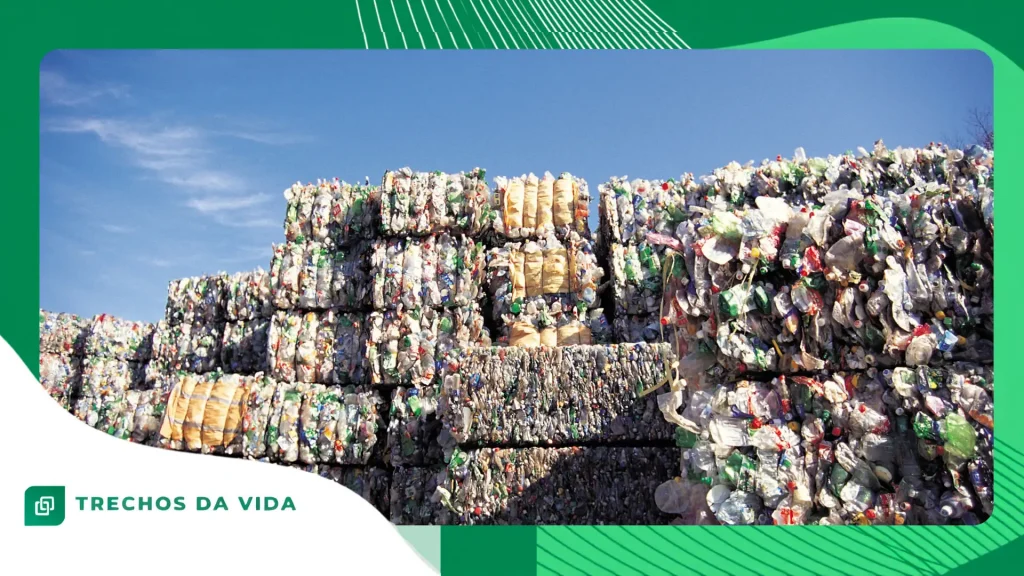
Furthermore, the machinery used by recycling cooperatives was designed for PET and HDPE, rejecting the new compostable polymers.
This lack of infrastructure and the confusion generated by generic environmental labels sabotage the efficiency of the waste disposal process in large metropolitan areas.
Breaking this market inertia will require political will and strict carbon taxes, forcing the supply chain to adopt new solutions.
O United Nations Environment Programme (UNEP) It is trying to forge global agreements to punish the excessive use of fossil fuels in industry.
Closing
Forget the idea that a single raw material will save the planet; the future belongs to decentralization and the surgical use of each bio-business.
The solutions that work to protect a household appliance are not the same ones that will preserve milk in your refrigerator.
The demand for ecological transparency must come from consumers, stifling brands that insist on greenwashing to maintain old habits.
Funding research and accepting that sustainability comes at a price is the only way to finally bury the oil era.
++ The scientific mystery surrounding hidden oceans on distant moons.
Frequently Asked Questions (FAQ)
Can PLA be recycled along with regular plastic?
No. It melts at different temperatures and contaminates the batch of PET, rendering all the sorting efforts of the cooperatives useless.
How long does fungal mycelium take to decompose in the backyard?
In a moist and active home composter, it completely disappears in about forty-five days, turning into fertilizer.
Do seaweed-based materials alter the taste of packaged foods?
No, because the purification processes isolate only the structural polymers, completely eliminating any trace of marine taste or odor.
Does the use of nanocellulose contribute to global deforestation?
Not at all, since the production utilizes branches, sawdust, and scraps discarded by the certified paper and pulp industry itself.
Where can I find companies that already sell these eco-friendly alternatives?
Large chemical distributors constantly update their catalogs, while innovation hubs connect eco-friendly startups with brands seeking high-performance packaging.
To understand the impact of these large-scale transformations on modern molecular biology, it is worthwhile to follow the scientific publications of Nature Sciences.