Preserved brains challenge scientists after new discovery.
Advertisements
Recent archaeological discoveries with preserved brains They intrigue global scientists, revealing surprising mechanisms of tissue preservation.
Detailed analyses of ancient organs are transforming theories about decomposition. The study of the ancient nervous system offers new biological and historical perspectives.
Research shows that brain tissue can survive in extreme conditions. There is something unsettling about how these findings challenge the consensus of forensic anthropology.
Summary
- What do the new discoveries about ancient organs reveal?
- How do soft tissues survive for millennia without decomposing?
- What environmental conditions ensure the preservation of the brain?
- How do these findings transform modern medicine?
- Comparative table of archaeological preservation
- Frequently Asked Questions (FAQ)
What do the new discoveries about ancient organs reveal?

Researchers at the University of Oxford have cataloged more than 4,400 preserved brain samples from various continents. The records span approximately twelve thousand years of documented human history.
This phenomenon dismantles the dogma that the brain is the first structure to collapse after death.
Mass spectrometry analyses track remnant proteins in these ancient tissues. The technique opens unprecedented windows for understanding neurodegeneration and cognitive evolution.
How do soft tissues survive for millennia without decomposing?
The fusion of proteins and lipids via molecular cross-linking creates durable structures. Metals from the soil, such as iron and copper, accelerate the formation of this shield against autolysis.
This chemical alteration blocks the degradation promoted by decomposing bacteria. Delicate cellular microstructures remain legible even after millennia.
The spontaneous occurrence of preserved brains The absence of human intervention sparks scientific curiosity. More details about the global survey are available on the website. Oxford University.
What environmental conditions ensure the preservation of the brain?
The arid heat of deserts and the polar cold paralyze microbiological processes. Environments permeated by salt or acidity also interrupt the routine of deterioration.
However, burials in waterlogged soil are often misinterpreted as being detrimental to preservation. In practice, reactions between the soil and organic compounds create long-lasting protective capsules.
Even without deliberate mummification, several preserved brains They retain their original anatomical shape. Reproducing this chemistry in the laboratory could redefine biological preservation.
How do these findings transform modern medicine?
The retrieval of ancestral biomolecules exposes mutations and pathogens forgotten over time. Mapping these traces allows us to compare ancient protein defects with contemporary pathologies.
Inspecting these biochemical pathways may inspire new methods for organ transport. In parallel, paleobiology provides rare insights for research on Alzheimer's and Parkinson's disease.
This is a valuable biological archive about how the brain has dealt with the planet's transformations.
Why does the brain mass persist when the rest of the body disappears?
Chemical cross-linking processes seal the structures of nervous tissue against degradative enzymes. This prevents the natural liquefaction that affects other organs.
There is something intriguing about the stability that certain fats and metals impart to the cellular matrix. The resilience of brain tissue surpasses historical expectations.
What are the oldest preserved brains ever documented?
Samples found in Russia and Western Europe are over twelve thousand years old.
The famous specimen from Heslington, in the United Kingdom, retained intact proteins for millennia. The finding proved that preservation is independent of mummification.
++ The mystery of the world of rare black hole explosions.
Where are the main archaeological sites of this type of find located?
The peat bogs of northern Europe and the frozen altitudes of the Andes hold the most intact records. Thermal insulation and soil pH prevent collapses.
Burials in mineral-rich soils in Asia also surprise researchers. The chemistry of the local soil dictates the survival of organic material.
How does proteomics analyze millennia-old proteins without destroying the tissue?
Modern spectrometry techniques extract amino acid sequences from microscopic fractions. The procedure preserves the anatomical integrity of the original sample.
Identifying ancestral peptides allows for the mapping of ancient neural networks with surgical precision. The technology reveals structural nuances that were inaccessible in the past.
What is the impact of these findings on mapping ancestral pathologies?
Inflammatory markers retained in membranes reveal infections that afflicted prehistoric populations. Tracing these diseases helps to understand the evolution of viruses.
Data enriches modern medicine.
Why is the breakdown of nerve tissue slower than previously thought?
The idea that brain matter liquefies rapidly was based on morgue observations. Archaeological environments impose very different chemical dynamics.
Mineral agents and oxygen scarcity radically slow down bacterial action. This phenomenon rewrites entire chapters of forensic anthropology.
Who are the experts leading the mapping of these global samples?
Multidisciplinary teams from the University of Oxford coordinate the international catalog of ancient organs. The group includes archaeologists, chemists, and neuroscientists.
International cooperation between museums and laboratories accelerates the cross-referencing of genetic data. This global network standardizes biomolecular analysis protocols.
++ Ancient Letters That Seem to Predict Modern Events
How do these discoveries change excavation routines in the field?
Archaeologists are now using molecular scans before removing human remains from the ground. This precaution prevents sudden degradation from exposing the organ to ambient air.
Refrigeration and aseptic collection protocols ensure that the material arrives intact at the laboratories. Prevention preserves invaluable biomolecules.
Comparative table of archaeological preservation methods
| Preservation Method | Main Mechanism | Example of an Environment | Tissue Condition |
|---|---|---|---|
| Dehydration | Extreme evaporation of water | Arid deserts | Rigid and shrunken |
| Freezing | Thermal inhibition of enzymes | Glaciers and permafrost | Intact and hydrated |
| Saponification | Conversion of fat into wax | Damp graves | Soft and greasy |
| Reticulation | Complexation with soil metals | Soils rich in iron/copper | Chemically altered |
Which tissues in the nervous system exhibit the greatest resistance to aging?
The white substance, rich in myelin sheaths and complex lipids, tends to resist degradation better. This fat acts as a physical barrier against water entry.
The cerebral cortex, however, undergoes more rapid changes due to its higher cellular density. Even so, structural protein residues often remain legible.
How does soil acidity influence the survival of brain tissue?
Environments with extremely low pH neutralize bacteria that accelerate tissue decay. Acidic soils inactivate bodily enzymes before they destroy cells.
In peat bogs, this acidity fixes the organic compounds and creates a protective chamber. The presence of preserved brains Swamps illustrate this chemical balance.
++ Why do certain regions register above-average disappearance rates?
How does computed tomography (CT) scan help in the analysis of these parts?
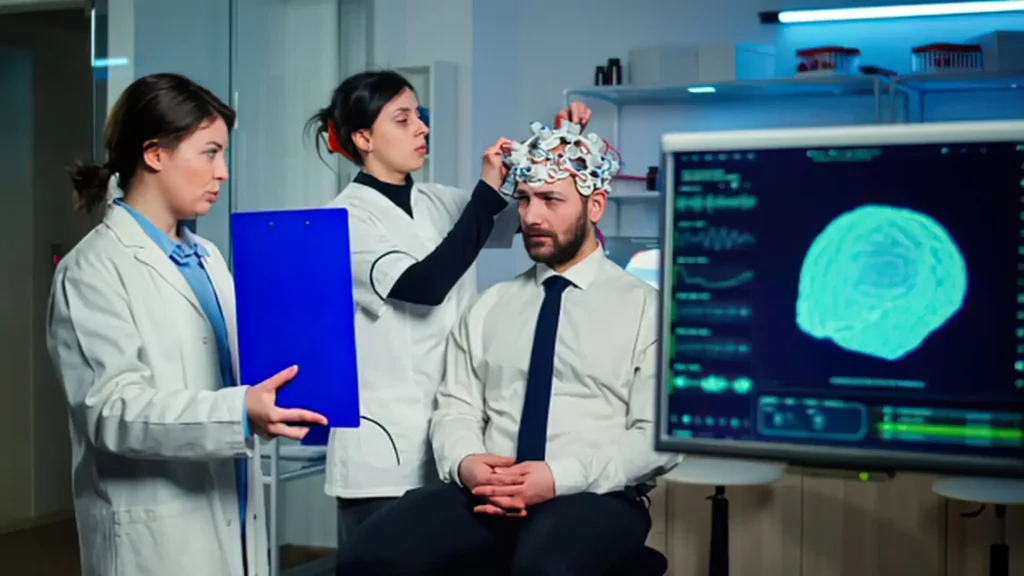
Three-dimensional scans reveal the internal structure of the organ without the need for physical incisions. The method preserves the integrity of rare and fragile archaeological pieces.
Digital reconstruction allows for the mapping of cerebral sulci and gyri with high anatomical precision. The technology transforms conventional medical examinations into tools for investigating the past.
What is the role of water in delaying cellular autolysis?
Immersion in anoxic water eliminates the oxygen necessary for the metabolism of decomposing microbes. Without oxygen, bacterial activity is severely limited.
Constant water saturation also prevents temperature variations in the burial microenvironment. The tissue remains stable for long periods under the waterlogged soil.
What hypotheses explain the preservation of the brain in South American mummies?
The thin air and freezing cold of the Andean peaks promoted the natural freeze-drying of the bodies. The process dehydrated the organs before decomposition began.
Tissue analyses from the region confirm that altitude acts as an efficient dehydrator. The combination of climatic factors created preserved brains of inestimable value.
How do museum collections manage their holdings of ancestral textiles?
Institutions maintain these samples under strict control of humidity, temperature, and light radiation. Continuous monitoring prevents the growth of fungi and molecular breakdown.
Reservoirs filled with inert gases protect the artifacts from oxidation reactions in the air. Preventive conservation ensures that future generations of scientists can study this heritage.
Conclusion
The findings of preserved brains Studies show that the persistence of organic matter follows more complex rules than we previously thought. Modern bioarchaeology has learned to extract useful life from biological debris.
Analyzing the reactions that protected these organs enriches anthropology and provides insights into medicine. Time preserved the tissue; it is up to science to interpret its contents.
Further studies and technical data on paleobiology and forensic anthropology can be found on the portal of Royal Society Publishing.
FAQ (Frequently Asked Questions) section
Is it common to find soft tissues in archaeological excavations?
Findings of this type are usually rare, as soft tissues break down quickly. However, the brain exhibits surprising chemical resistance mechanisms under specific conditions.
How do scientists determine the age of ancient brains?
Carbon-14 dating is used on the bones or sediments surrounding the find. Cross-referenced biomolecular analyses confirm the timeline with precision.
Is it possible to extract DNA from brains preserved for millennia?
Yes, genetic fragments and structural proteins often survive over time. This material makes it possible to directly map the genome of ancient populations.