Rogue black hole devours star and surprises astronomers.
Advertisements
One wandering black hole Cutting through the cosmic immensity without fixed gravitational constraints has just delivered one of the most violent—and fascinating—spectacles in recent astrophysics: the complete dismemberment of a star that had the misfortune of crossing its path.
The flash resulting from this tidal disruption, captured by state-of-the-art detectors, confirmed what until recently was viewed with some skepticism by the academic community. The universe is full of these hypervelocity "ghosts" wandering in the shadows of the galactic peripheries.
There is something genuinely unsettling about this idea. We are not dealing with the predictable giants that inhabit the center of known galaxies, but with nomadic, invisible entities on a continuous collision course with whatever they encounter.
Summary
- What is a rogue black hole and how does it form?
- How were astronomers able to detect this rare space event?
- Where do these tidal rupture phenomena occur?
- What is the difference between a supermassive black hole and a rogue black hole?
- What impact do these wandering objects have on space?
- Comparative astronomical data on stellar destruction events
- Who leads the research on celestial bodies without fixed orbits?
- How does astrophysics plan to monitor new events in the future?
- Conclusion
- Frequently Asked Questions (FAQ)
What is a wandering black hole And how is it formed?
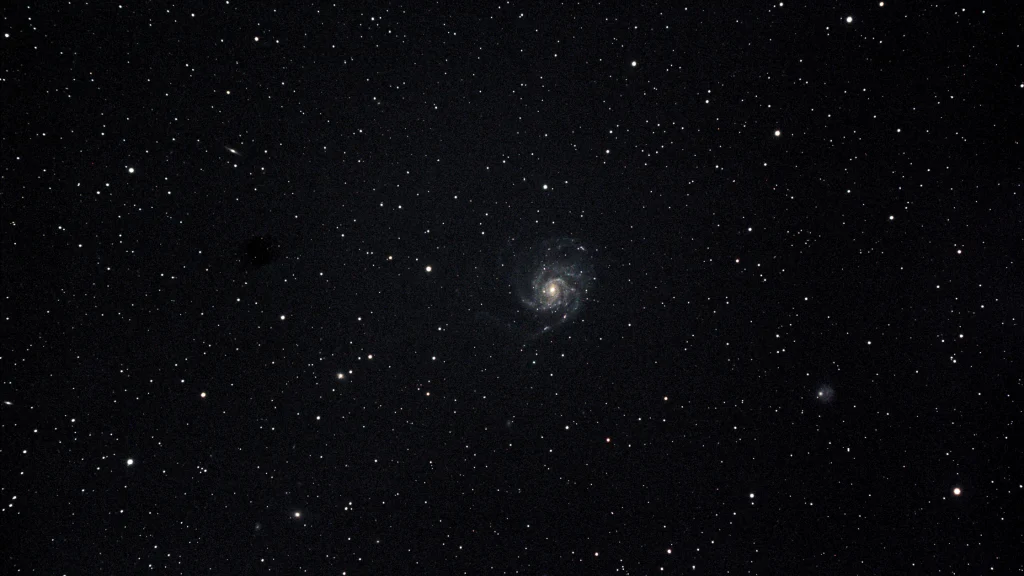
Imagine a gravitational well so dense that not even light can escape, ripped from its "cradle" and hurled into outer space like a cosmic projectile. That's basically it.
When two galaxies merge—a violent process that has shaped the cosmos for billions of years—the supermassive black holes at their cores engage in a chaotic orbital dance. In this battle of forces, asymmetries in the emission of gravitational waves can act as a "kick," ejecting one of the monsters far from the galactic center.
Without a structure around it to govern, the entity conquers the vacuum at astonishing speeds. It becomes a perfect nomad: undetectable, cold, and virtually invisible.
It is only when it encounters matter in the interstellar medium—or an unsuspecting star—that its presence is revealed. It is estimated that millions of these bodies wander through the dark matter of the universe without us having the slightest clue as to where they are at this very second.
How were astronomers able to detect this rare space event?
The short answer: luck combined with stubborn vigilance. The long answer involves a star captured by the wanderer's crushing gravity.
As it approached the critical limit, the tidal force of the object stretched and tore the stellar body—a process that astrophysics almost poetically calls "spaghettification." This feast generated a colossal burst of ultraviolet and X-ray radiation.
Sensors in orbit captured the sudden change in brightness at a point in the sky where, in theory, nothing extraordinary should be happening.
Analysis of the spectrum revealed the crucial detail: the emission did not originate from the center of any known galaxy. It was not the banquet of a king seated on his galactic throne, but the quick meal of a passerby.
To check the bulletins and images recorded by orbital observatories, it is worth consulting the public archives of... National Aeronautics and Space Administration, the ultimate reference in cosmic transient monitoring.
Where do these tidal rupture phenomena occur?
These cosmic tragedies often occur in galactic halos—the forgotten peripheries of galaxies, where the density of stars is much lower than in the urban centers of the cosmos.
Because it is a sparsely populated region, the chance of such an encounter is reduced, which makes capturing an event like this a true scientific discovery.
O wandering black hole It doesn't devour the star all at once. It grinds up the matter, forming a temporary accretion disk that shines brightly before disappearing into darkness altogether.
This flash of light acts as a momentary beacon, illuminating a part of the universe that would otherwise remain forever hidden from our telescopes.
What is the difference between a supermassive black hole and a rogue black hole?
The difference isn't necessarily in size, but in context and orbital dynamics. It's a matter of cosmic geography.
The traditional supermassive star is the anchor: it resides at the geometric center of a galaxy, accumulating gas for eons and directly influencing the rotation of billions of solar systems around it.
The wanderer, on the other hand, is an exile. He may have the mass of thousands of suns, but he has no "subjects." He moves unpredictably and spends most of his existence in a dormant state, without emitting a single photon.
This prolonged lethargy makes the wanderers difficult targets, but extremely valuable for those trying to test the limits of general relativity outside of standard environments.
What impact do these wandering objects have on space?
People often fantasize about the danger such a body would pose if it approached our solar system. The truth is less alarmist, though no less impressive.
The vastness of the vacuum makes a close approach to Earth astronomically improbable. There's no reason to panic.
However, when traversing dense star clusters, the passage of a monster of this caliber acts like a gravitational hammer. It can alter planetary orbits, hurl entire worlds into deep space, and destabilize gas clouds.
Scientists use tiny distortions in the light from background stars — a phenomenon called gravitational microlensing — to track the footprint of these unseen stars as they traverse the galaxy.
++ What science already knows about the possible Planet Nine.
Comparative astronomical data on stellar destruction events
The following table compiles real data collected by large observatories during tidal disruption events (TDEs), highlighting the unique signature of peripheral encounters.
| Event Name | Object Type | Approximate Distance (Light-years) | Peak Emission |
| AT2018hyz | Wandering Intermediary | 665 million | Optical and Radio |
| ASASSN-14li | Supermassive Central | 290 million | X-rays and UV |
| AT2019qiz | Supermassive Central | 215 million | Optical and UV |
| Swift J1644+57 | Relativistic Supermassive | 3.9 billion | Gamma X-rays |
Comparing these emission rates helps to separate routine events in active nuclei from the rare captures made by a wandering black hole in an open field.
++ Why are the oceans changing color in some regions?
Who leads the research on celestial bodies without fixed orbits?
Hunting for these objects is not a job for a single telescope, but for automated global networks that scan the sky every night.
Facilities at the European Southern Observatory (ESO), located in the Atacama Desert, lead the spectroscopic characterization as soon as a new transient brightness alert is issued.
Meanwhile, theoretical astrophysicists are feeding supercomputers with fluid mechanics simulations to understand how much of the star was swallowed and how much was expelled into space in the form of jets.
Validating these findings requires rigorous scrutiny from the international community, ensuring that the detected signal is not confused with ordinary supernovae.
++ How Science Is Transforming Waste into Fuel
How does astrophysics plan to monitor new events in the future?

We are at the dawn of a new era in observational astronomy, marked by large-scale synchronous scans of the sky.
New observatories with giant mirrors and billions of pixels cameras will map the night sky at intervals of just a few days, multiplying the alerts of transient events.
Meanwhile, gravitational wave astronomy and infrared analysis will allow us to "hear" and "see" through the dense curtains of dust that currently block our view.
When these technologies converge, mapping vagrants will cease to be a rare occurrence resulting from chance and will become a statistical routine.
To accompany the original articles and data analyses that underpin this revolution, the magazine Nature It maintains the most respected coverage in the industry.
Conclusion
Confirmation that a wandering black hole The destruction of a star on the galactic periphery changes how we view the space between galaxies. The vacuum is not just an inert void; it is a territory traversed by silent giants.
Each new flare captured by our instruments proves that the architecture of the cosmos is far more dynamic—and relentless—than the apparent calm of the night sky suggests.
As our observational skills improve, it becomes clear that the universe still holds surprises capable of rewriting entire textbooks of modern physics.
Frequently Asked Questions (FAQ)
What happens when a star is devoured?
The object's gravity deforms the star until it is destroyed. Part of the gas forms a superheated, incandescent disk before being swallowed, while the rest is ejected into space at high speeds.
One wandering black hole Could it threaten the Solar System?
The chance is negligible. Space is too vast, and the density of these objects, while significant on a galactic scale, is extremely low in our cosmic neighborhood.
How do scientists calculate the mass of an invisible object?
The intensity of the light emitted during the star's destruction and the speed at which the gas rotates in the temporary accretion disk are measured.
What is the maximum speed that such an object can reach?
Depending on the force of the gravitational impact that ejected it from its original nucleus, it can exceed thousands of kilometers per second.