The Atacama Desert holds secrets beneath its driest soil.
O Atacama Desert It holds fascinating secrets beneath the driest surface of planet Earth, challenging historical conceptions about where life can thrive and adapt in extreme conditions.
Advertisements
Instead of being a barren expanse of land, the Chilean subsoil functions as a geological and biological archive preserved almost untouched by millennia of continuous severe drought.
Understanding what lies beneath this saline crust transforms how we view everything from South America's past climate to the possibilities of microbiological existence on other worlds.
By drilling into the hyper-arid soil of northern Chile, researchers from diverse fields are discovering isolated ecosystems, ancient water deposits, perfectly preserved marine fossils, and reserves of strategic minerals.
This research goes beyond academic curiosity: it touches on the central point of how biological resilience manifests itself in borderline conditions without the constant presence of water.
Follow the detailed analysis of the hidden layers of this unique territory and discover all the answers about the mysteries kept beneath the dry earth of the Andean highlands.
Article Summary:
- What lies hidden beneath the soil of the Atacama Desert?
- How do microorganisms survive in the driest depths of the Earth?
- What prehistoric fossils have been revealed by recent excavations?
- What is the role of lithium reserves and groundwater in the Atacama Desert?
- How do NASA and other space agencies utilize the Atacama subsoil?
- Comparative Analysis of Subsurface Resources in the Atacama Desert
- The impact of the Atacama subsoil on understanding the global climate.
- Frequently Asked Questions (FAQ)
What lies hidden beneath the soil of the Atacama Desert?
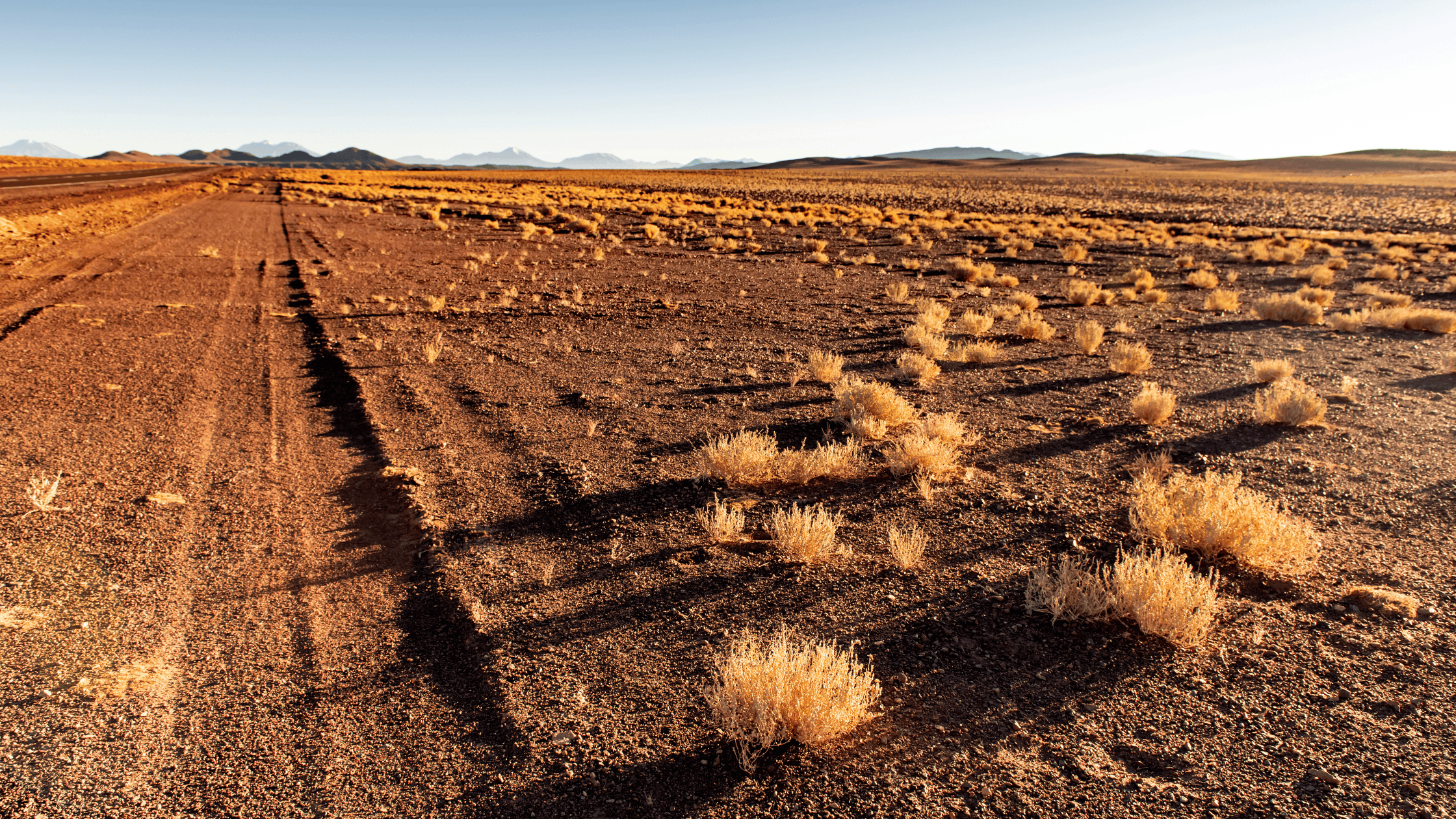
There is something unsettling about the apparent stillness of the Atacama landscape. Beneath the surface salt layer, the subsoil harbors complex geological structures that contradict the superficial idea of a dead land.
Extreme aridity has not eliminated activity below the Earth's surface; it has only reduced it to subtle molecular dynamics that operate on timescales entirely different from our own.
Halite formations and dense layers of nitrate create a natural shield against the devastating ultraviolet radiation that hits the surface daily throughout the year.
This mineral coating protects organic materials from common oxidative processes, preserving precious chemical signatures for extraordinarily long periods without any degradation relevant to current scientific studies.
As the drilling rigs advance, the Atacama Desert This reveals that the region's true dynamism occurs far from human sight, hidden beneath a thick layer of consolidated minerals.
The subsurface layers act as time capsules, recording rainfall and tectonic variations that occurred millions of years ago on the western margin of the South American continent.
++ Get Your Deleted Photos, Videos & Files Back on Android and iPhone
How do microorganisms survive in the driest depths of the Earth?
The existence of bacterial colonies meters deep is often misinterpreted as a mere biological miracle. It is, in fact, a rigorous mechanism of physical adaptation.
In the absence of regular rainfall, these organisms do not depend on surface rain, but on water retained and protected within the very matrix of saline minerals in the deep subsoil.
Through the process of deliquescence, hygroscopic minerals absorb traces of moisture from the underground air and form microfilms of saline solution essential for the survival of local cell colonies.
Extremophile bacteria and fungi inhabit these microscopic crevices, maintaining their metabolism at minimal levels to conserve vital energy for decades or centuries beneath the rocks. Atacama Desert.
Collecting samples at depths greater than two meters requires rigorous sterile techniques to avoid unwanted contamination by organisms carried from the surface by technical research teams.
The detailed mapping of this hidden life has redefined the theoretical limits of Earth's biosphere and established new parameters for the search for biosignatures on other celestial bodies.
++ How to Recover Deleted Files on Android and iPhone
What prehistoric fossils have been revealed by recent excavations?
Paleontology has found in the arid Atacama region a conservation environment rarely seen in tropical or humid regions. The absence of active decomposers accelerates the preservation of historical bone structures.
The Cerro Ballena site exemplifies this extraordinary condition: dozens of complete skeletons of whales and other marine mammals from the Miocene period remain virtually intact beneath the dry sediments.
The geological transition that raised the seabed and isolated it under a hyperarid climate definitively interrupted the traditional cycles of biological decomposition of organic matter.
Without moisture and without the destructive action of common bacteria, the bone structure of reptiles, aquatic sloths, and giant sharks has preserved anatomical details precious to modern science.
These deep excavations help to reconstruct the scenario of complex oceanic transformations that radically altered the biodiversity of the South American Pacific coast throughout past geological eras.
The rich Chilean paleobiological collection can be explored in detail through the research and official publications made available by... National Museum of Natural History of Chile .
What is the role of lithium reserves and groundwater in the Atacama Desert?
Beneath the whitish surface of the Atacama Salt Flat lies a significant portion of the world's lithium reserves. This strategic resource is attracting intense geopolitical attention in the current industrial landscape.
Dissolved in deep underground brines, the metal has become fundamental to the global energy transition by enabling the large-scale production of batteries for the modern fleet of electric vehicles.
However, mineral extraction shares the same water structure with fossil aquifers that feed the few local communities and fragile ecosystems that exist in the most isolated areas of the region. Atacama Desert.
The water stored in these underground basins has been accumulating since ancient glacial periods, which means that its natural recharge rate is practically zero under the current climate regime.
Managing the Atacama soil requires a delicate balance between global economic demands and the essential protection of the groundwater basins that sustain life on the high plateau.
Overexploitation of water resources risks irreversibly compromising ecosystems that depend on the emergence of these underground sources to maintain endemic biodiversity and the survival of local populations.
How do NASA and other space agencies utilize the Atacama subsoil?
The geochemical similarity between the Atacama terrain and the surface of Mars has transformed the Chilean region into the main terrestrial testing ground for contemporary planetary exploration.
Agencies such as NASA and ESA use the site to calibrate automated drills and sensitive biological detection instruments under real-world operating conditions in the field.
The combination of extreme dryness, high solar radiation, and the presence of perchlorates in the soil accurately replicates the environmental challenges that rover robots face on Martian soil.
Testing the mechanical behavior of the probes in these plains ensures that the automated sampling systems function flawlessly millions of kilometers from Earth.
In addition to hardware validation, the expeditions test rigorous containment and sterile analysis protocols to avoid false positives caused by cross-contamination during future missions.
The subsoil of Atacama Desert It has established itself as the ultimate reference for astrobiological engineering, providing crucial data for the search for life in our solar system.
++ Red tides: the phenomenon that changes the color of the oceans.
Comparative Table: Subsurface Resources and Discoveries of the Atacama
The following table systematizes the main areas of study and resources identified in the different layers of the Atacama subsoil:
| Resource / Discovery | Medium Depth | Scientific and Economic Importance | Preservation Status |
| Extremophile bacteria | 0.5m to 3.0m | Understanding cellular boundaries and astrobiology | Active in saline microhabitats |
| Marine Fossils (Cerro Ballena) | 1.0m to 10.0m | Record of ocean evolution and paleoclimate | Exceptional (complete skeletons) |
| Lithium Brine Reserves | 10m to 100m | A key input for the energy transition. | Stored in deep aquifers |
| Fossil Aquifers | 50m to 300m | Ecosystem maintenance and supply | Non-renewable resources replenished during ice ages. |
The impact of the Atacama subsoil on understanding the global climate.
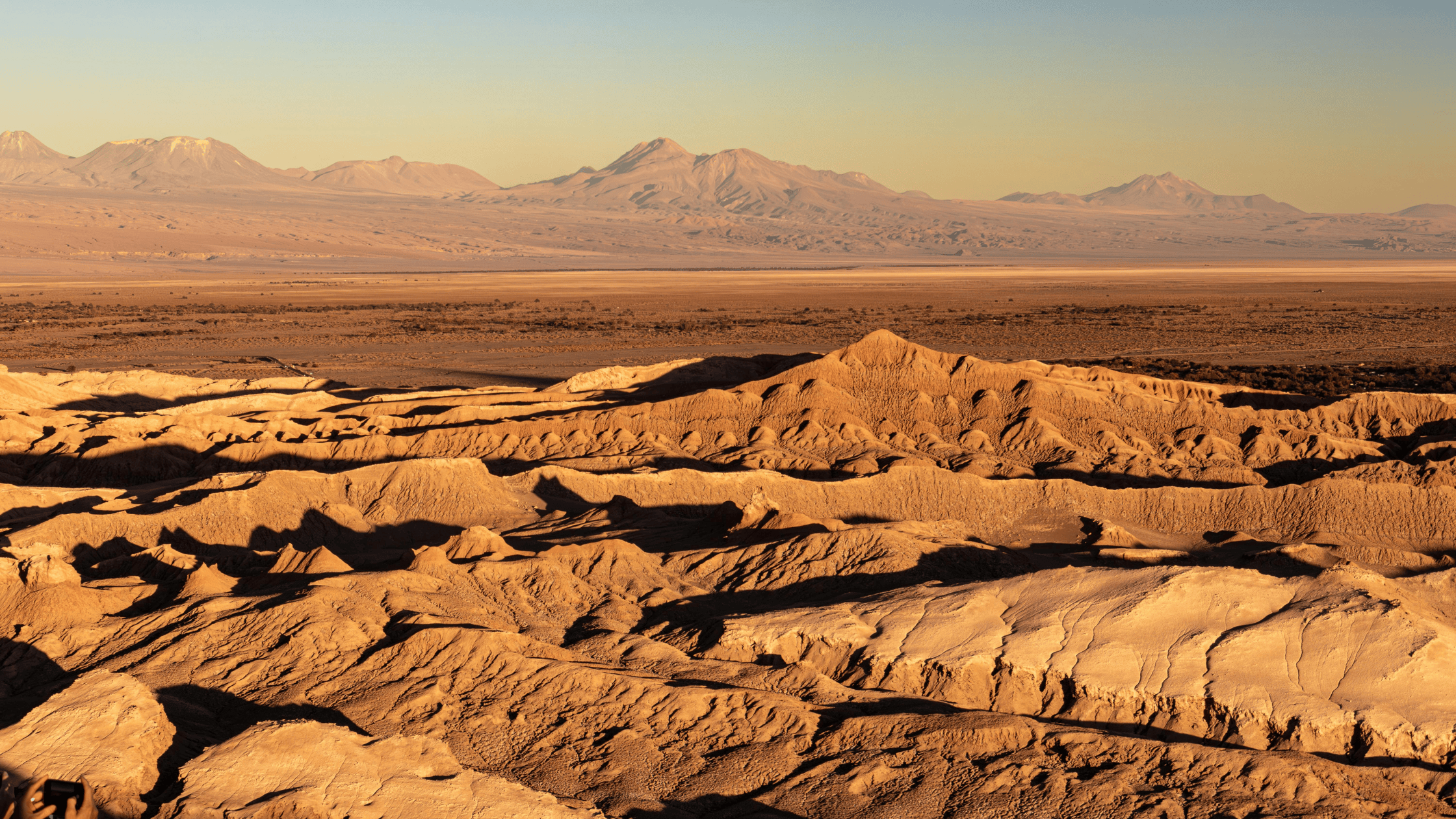
Analyzing the deep sediments of the Atacama Desert offers a valuable historical perspective on the planet's climate cycles. The samples reveal rainfall variations that occurred over millennia.
By extracting soil core samples, scientists are able to map the alternation between periods of severe aridity and phases of greater humidity, correlating this data with tectonic events.
This information feeds into advanced computational models that attempt to predict desertification dynamics in other continental regions in the face of current global climate changes.
The behavior of dry soils of Atacama Desert Even small variations in humidity provide valuable lessons about the vulnerability and recovery capacity of arid lands.
Studying the geological memory contained within the earth helps to calibrate the human response to ongoing environmental challenges in various threatened ecosystems around the world.
To keep up with geophysical data and high-level scientific observations conducted in Chilean territory, it is worth consulting the collection and research of... European Southern Observatory (ESO) .
Frequently Asked Questions (FAQ)
What makes the subsoil of the Atacama Desert so unique to science?
The combination of prolonged aridity, low surface organic matter, and high salinity preserves biological and mineral structures in an unparalleled way.
Is there liquid water beneath the surface of the desert?
Yes. The subsoil contains ancient groundwater and concentrated brines that have accumulated under climatic conditions of the geological past.
Why does NASA conduct tests in the Atacama Desert?
The mineralogical composition and lack of moisture make the terrain the closest terrestrial analogue to the environment that robots encounter on Mars.
How do bacteria manage to survive underground without rain?
They extract the water trapped in the structure of salt minerals through deliquescence, drastically reducing the speed of their vital functions.
What are the main minerals extracted in the region?
Notable deposits include lithium, trapped in deep brines, copper, and historical nitrate deposits, crucial for various industries worldwide.
The Atacama subsoil demonstrates that extreme aridity does not represent the end of geological or biological history, but the creation of a unique natural preservation system.
The data extracted from these layers continue to refine our understanding of the resilience of life and the transformative dynamics of our planet.