World Bamboo Day: Discover the Types of Bamboo and Their Versatility
Advertisements
World Bamboo Day!
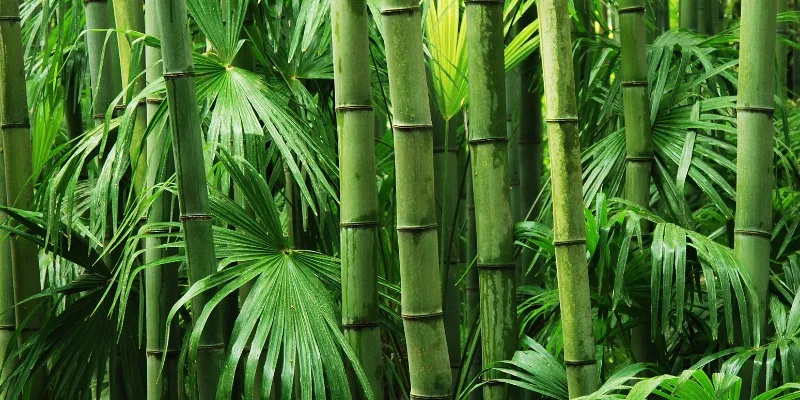
Every year on September 18th, the world turns its attention to a plant that, despite its apparent simplicity, holds transformative potential for global sustainability.
World Bamboo Day, established by the United Nations General Assembly, is not just a commemorative date, but an urgent reminder of how renewable natural resources can shape a more balanced future.
In this text, we explore not only the different types of bamboo, but also its impressive versatility, arguing that investing in this grass is a smart strategy for contemporary environmental and economic challenges.
Learn more below!
World Bamboo Day: Summary
- The Origin and Significance of World Bamboo Day: Contextualizing the date and its current relevance.
- The Main Types of Bamboo and Their CharacteristicsA detailed analysis of the varieties, focusing on biological differences and adaptations.
- The Versatility of Bamboo in Modern ApplicationsExploring innovative uses and arguing for their adoption in various sectors.
- Practical and Innovative Examples of Bamboo UsePresenting original case studies to illustrate creative potential.
- Statistics and Analogies that Reinforce the Value of BambooIntegrating quantitative data and intelligent comparisons to engage the reader.
- Challenges and Opportunities in the Cultivation and Use of BambooDiscussing barriers and strategic solutions.
- Frequently Asked Questions About BambooA table answering the most common questions in a clear and informative way.
The Origin and Significance of World Bamboo Day
The creation of World Bamboo Day in 2009 by the International Bamboo and Rattan Organization (INBAR) reflects a strategic vision to promote this plant as an ally in the fight against climate change.
Initially, the date aimed to highlight bamboo in Asian regions, where it was already culturally ingrained, but it quickly gained global traction.
Therefore, in addition to celebrating its biodiversity, the day encourages public policies that promote sustainable cultivation, arguing that bamboo can reduce dependence on non-renewable materials such as wood and plastic.
However, in contexts like Brazil, where native bamboo forests cover millions of hectares, this date serves as a catalyst for debates on the bioeconomy, showing how a local plant can boost exports and green jobs.
Furthermore, the current significance of World Bamboo Day lies in its ability to unite environmental and economic agendas.
For example, amidst deforestation crises, bamboo emerges as a viable alternative, growing rapidly without requiring intensive fertilizers.
Thus, we argue that ignoring this date would be wasting an opportunity for innovation; instead, annual events promote workshops and collective plantings, fostering conscious communities.
Consequently, the day is not merely symbolic, but a platform for concrete actions, such as partnerships between governments and NGOs aimed at expanding plantations in degraded areas.
However, to maximize its impact, a smart approach that integrates education and technology is essential.
Therefore, schools and universities could incorporate bamboo into sustainability curricula, preparing future generations to explore its potential.
++ Common Objects with Surprising Secret Functions
World Bamboo Day: The Main Types of Bamboo and Their Characteristics
Bamboos are classified primarily into two rhizomatous groups: pachymorphs (clumping) and leptomorphs (spreading), each with unique adaptations that influence their cultivation and application.
Initially, clump-forming plants, such as Guadua angustifolia, form compact clumps, ideal for tropical regions where controlling their spread is crucial.
Therefore, this characteristic argues in favor of its use in urban landscaping, preventing unwanted intrusions into sensitive ecosystems.
However, their structural robustness, with culms that can reach 20 meters, makes them preferred in construction, highlighting an evolutionary intelligence that balances rapid growth with stability.
Furthermore, among the main species, Dendrocalamus asper stands out for its versatility in warm climates, with thick stems that can support heavy loads.
Thus, we argue that choosing the right type depends on environmental factors, such as soil and moisture, promoting more precise and sustainable agriculture.
Consequently, in Brazilian contexts, where Dendrocalamus latiflorus is common, its post-harvest regeneration capacity reinforces its economic appeal, allowing for annual production cycles without depleting resources.
On the other hand, spreading weeds, such as Phyllostachys aurea, spread horizontally, which can be an advantage in eroded soils, but requires careful management to avoid excessive proliferation.
Therefore, a smart approach involves overcoming root barriers, transforming a potential problem into an opportunity for bioengineering.
Furthermore, ornamental species such as Bambusa ventricosa offer a unique aesthetic, with swollen culms that inspire creative designs.
However, to maximize benefits, it is essential to research pest-resistant hybrids, arguing that species diversity is not only biological but also a strategic tool for climate adaptation.
World Bamboo Day, Table:
++ Historical Facts About Brazil That Few People Know
| Type of Bamboo | Main Features | Common Regions of Occurrence | Typical Uses |
|---|---|---|---|
| Guadua angustifolia | Tall, sturdy stems, clumping rhizomes | Latin America, including Brazil | Construction of structures, furniture |
| Dendrocalamus asper | Fast growth, thick stems | Asia and tropical adaptations | Food (sprouts), crafts |
| Phyllostachys aurea | Spreading rhizomes, dense foliage | Asia and temperate regions | Landscaping, natural barriers |
| Bambusa ventricosa | Swollen stems, ornamental | Asia, cultivated globally | Decorations, vases and sculptures |
The Versatility of Bamboo in Modern Applications
The versatility of bamboo transcends traditional uses, positioning it as an innovative material in a variety of industries, from construction to biotechnology.
Initially, in architecture, its flexible and strong fibers rivaled steel, allowing for lightweight and seismic-resistant buildings.
Therefore, we argue that adopting bamboo in urban projects reduces carbon emissions, since its harvesting does not require extensive deforestation.
However, to optimize this application, engineers must invest in moisture-resistant treatments, transforming challenges into competitive advantages.
Furthermore, in the textile industry, bamboo is processed into eco-friendly viscose, creating antibacterial and breathable fabrics.
Thus, in a market saturated with polluting synthetics, bamboo offers a smart alternative, promoting sustainable fashion without compromising comfort.
Consequently, global brands are incorporating it into activewear lines, highlighting its ability to absorb moisture better than cotton, which argues for a gradual transition to renewable fibers.
On the other hand, in the food sector, bamboo shoots such as those of Dendrocalamus latiflorus are rich in nutrients, making them a valuable component of healthy diets.
Therefore, expanding its use in fusion cuisine could boost rural economies, but it requires organic certifications to gain consumer confidence.
Furthermore, in medical applications, such as lightweight prosthetics, bamboo demonstrates versatility that goes beyond the obvious, arguing that its biocompatibility makes it ideal for affordable innovations in developing countries.
Practical and Innovative Examples of Bamboo Use
Imagine a community water filtration system in remote villages, where Guadua angustifolia culms are interwoven with activated bamboo charcoal to purify polluted rivers – this is an original example of how bamboo can solve water crises in an accessible and ecological way.
Initially, the design takes advantage of the material's natural porosity, allowing continuous flow while retaining contaminants.
Therefore, indigenous communities in Acre, Brazil, could implement this, reducing costs associated with imported technologies and fostering local autonomy.
However, to scale up, partnerships with universities would be essential, integrating IoT sensors for real-time monitoring.
Another original example involves the development of agricultural drones made with treated bamboo frames, light enough for extended flights over coffee plantations.
Thus, we argue that this innovation not only reduces weight compared to plastics, but is also biodegradable, minimizing post-use environmental impacts.
Consequently, farmers in mountainous regions would gain efficiency in precise spraying, highlighting how bamboo adapts to modern technologies without losing its sustainable essence.
Furthermore, these examples illustrate an argumentative approach: bamboo is not an inferior substitute, but a superior one in contexts where resilience and renewability matter.
For example, in drones, the flexibility of the culms absorbs vibrations better than metals, extending their lifespan.
However, challenges such as quality standardization require regulations, but once overcome, these original uses can revolutionize emerging industries.
Statistics and Analogies that Reinforce the Value of Bamboo
One revealing statistic about bamboo is that certain species can grow up to 120 centimeters in just 24 hours, making it the fastest-growing plant in the world and surpassing any conventional crop in terms of renewable productivity.
Therefore, this argues for its adoption in urgent reforestation projects, where time is a critical factor in preventing erosion and biodiversity loss.
However, to put this into context, imagine that, in one year, a bamboo plantation can produce biomass equivalent to mature forests, highlighting its efficiency.
Have you ever stopped to think about how something as simple as bamboo can revolutionize entire industries?
This rhetorical question leads us to a clever analogy: bamboo is like nature's "green superhero," flexible enough to bend in strong winds without breaking, yet resilient enough to support colossal structures, just as an innovator adapts to crises without losing strength.
Thus, in comparison to trees that take decades to mature, bamboo offers quick responses to global demands, justifying investments in research.
Furthermore, this analogy extends to the economy: just like a multi-tasking superhero, bamboo serves multiple sectors simultaneously, from renewable energy to cosmetics.
Consequently, integrating statistics like these into public policies can accelerate sustainable transitions, but it requires strategic vision to avoid overexploitation.
Challenges and Opportunities in the Cultivation and Use of Bamboo
Growing bamboo presents challenges such as specific pests and the need for intensive initial management, but these barriers can be overcome with smart agroecological techniques.
Initially, in poor soils, the use of mycorrhizae improves nutrient absorption, arguing that investments in biotechnology transform limitations into strengths.
Therefore, Brazilian farmers facing droughts could adopt resistant varieties such as Guadua chacoensis, promoting climate resilience.
However, opportunities arise in integrating with global supply chains, where bamboo certified as sustainable attracts premium markets.
Thus, exports to Europe, with its demand for eco-friendly materials, create jobs and income.
Consequently, government programs that subsidize initial plantings amplify these gains, but require community education to maximize participation.
Furthermore, innovating in processing, such as extrusion for bio-based plastics, opens doors to high-tech industries.
On the other hand, regulatory challenges, such as building codes, need updating to recognize bamboo as a standard material.
Therefore, an argumentative approach favors international collaborations, transforming bamboo into a pillar of circular economies.
| Challenge | Opportunity | Suggested Strategy |
|---|---|---|
| Pests and diseases | Development of resistant varieties | Genetic research and academic partnerships |
| Limited market | Exporting to sustainable sectors | International certifications such as FSC |
| Initial management | Generation of rural jobs | Community training and subsidies |
Frequently Asked Questions About World Bamboo Day
| Question | Response |
|---|---|
| Is bamboo invasive? | Not all types; clumping plants are controllable, but spreading plants need barriers. Choose species suitable for your environment to avoid problems. |
| How to plant bamboo at home? | Start by planting seedlings in moist soil and partial sun. Water regularly for the first few months and use organic fertilizers for healthy growth. |
| Is bamboo edible? | Yes, the sprouts of certain species like Dendrocalamus are nutritious, but they should be cooked to remove toxins. Consult experts for safe varieties. |
| How durable is bamboo in construction? | With proper treatment, it can last for decades, rivaling treated wood. Regular maintenance against moisture is key. |
| Does bamboo help the environment? | Absolutely, by rapidly sequestering carbon and preventing erosion. One hectare can capture up to 17 tons of CO2 per year. |
In conclusion, World Bamboo Day invites us to rethink everyday resources with innovative eyes, promoting a greener and more versatile world.
++ Organization tips for those who work from home.
For more information, check out these relevant and up-to-date links: