The oldest cities in the world that are still inhabited
Advertisements
The world's oldest cities are not just relics of a distant past; they are living testaments to human resilience, cultural ingenuity and adaptability over millennia.
These metropolises, which have stood the test of time, offer a unique glimpse into how civilizations have shaped the present while preserving their roots.
By exploring the four oldest cities still inhabited, we delve into narratives that transcend eras, connecting us directly with the foundations of human history.
Why did some cities survive for thousands of years while others disappeared without oblivion?
This is a question that guides our journey through these fascinating time capsules.
Find out more below:
Oldest cities in the world that are still inhabited
Each of them carries a unique history, marked by advances, conflicts and cultural transformations that have remained vibrant to this day.
In addition, we will present two original examples of how these cities influence modernity, a striking statistic about their continuity and an analogy that illustrates their relevance.
Finally, a FAQ table will clarify common questions, while informative tables will complement historical data.
++ The regions of the world with the best preserved cultures
Get ready for a journey that combines facts, reflections and discoveries about the oldest cities in the world.
Jericho: The Cradle of Civilization

Jericho, located in the West Bank, is often considered the oldest inhabited city in the world.
In this sense, with archaeological evidence dating back to around 9600 BC Imagine a city that already existed before the invention of the wheel or writing, like an ancient tree whose roots are intertwined with the origins of humanity.
Its longevity is not only a testament to its strategic location, close to the Jordan River, but also to its ability to reinvent itself over the centuries.
From the earliest Neolithic settlements to its mention in biblical texts, Jericho was a center of innovation, such as the construction of defensive walls that challenged the technologies of the time.
++ Historic Trains of the World: Slow Journeys with Many Stories
Why did Jericho survive while other contemporary towns disappeared? The answer lies in its adaptability.
The city was a hub for trade routes, connecting regions as far apart as Egypt and Mesopotamia.
This position favored cultural and economic exchanges, allowing Jericho to rebuild itself after invasions and natural disasters.
Interestingly, excavations have revealed that the city had an 8-meter-high stone tower as early as 8000 BC, an architectural feat that suggests an organized and advanced society for its time.
Today, Jericho continues to thrive as an oasis in the desert, with its economy based on agriculture, tourism and local commerce.
An original example of its modern influence is the preservation of traditional agricultural techniques.
In this way, such as date cultivation, which dates back to ancient practices and attracts researchers interested in sustainability.
The city is a reminder that innovation doesn’t have to be high-tech to be rigorous; sometimes, the simplicity of adapting to the environment is the key to eternity.
Table 1: Facts about Jericho
| Aspect | Detail |
|---|---|
| Esteemed Foundation | ~9600 BC |
| Location | West Bank, near the Jordan River |
| Historical Milestone | Stone tower from 8000 BC, one of the earliest known defensive structures |
| Current Population | Approximately 20,000 inhabitants (2025) |
| Economic Activity | Agriculture (dates, citrus), tourism |
Damascus: The Pearl of the Orient
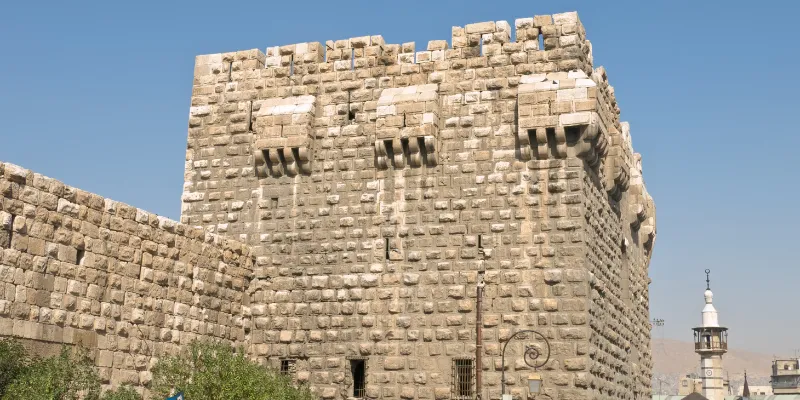
Damascus, the capital of Syria, is another gem among the world's oldest cities, with records of continuous occupation dating back to around 9000 BC. Think of it as a living book.
Thus, whose pages contain chapters written by Sumerians, Egyptians, Romans, Byzantines and Ottomans.
++ The Fascinating Past of Ouro Preto, MG: An Outdoor History Lesson
Its location at the crossroads of trade routes between Asia, Africa and Europe has ensured its relevance over the millennia.
However, what makes Damascus unique is not only its ancient identity, but its ability to maintain a cultural vibrancy even amid modern conflicts.
The city is a mosaic of influences, visible in its architecture, such as the Great Umayyad Mosque, built in the 8th century, which was once a Roman temple dedicated to Jupiter.
This overlap of cultures demonstrates how Damascus has absorbed and reinterpreted traditions over time.
Furthermore, its resilience in the face of invasions and wars, including the challenges of the 21st century, reflects a community that values its history but is not afraid to adapt.
For example, the souks (markets) of Damascus continue to thrive, combining traditional commerce with modern tourism.
A unique example of Damascus' influence is its impact on global gastronomy.
The city is the birthplace of dishes such as hummus and tabbouleh, which are icons of Mediterranean cuisine, adapted in restaurants around the world.
Despite the adversities, Damascus maintains its essence, proving that history is not just a burden, but a driver of cultural innovation.
Table 2: Facts about Damascus
| Aspect | Detail |
|---|---|
| Esteemed Foundation | ~9000 BC |
| Location | Syria, near the Barada River |
| Historical Milestone | Great Umayyad Mosque (706-715 AD) |
| Current Population | Approximately 2 million inhabitants (2025) |
| Economic Activity | Commerce, tourism, crafts |
Susa: The Forgotten Capital

Susa, located in present-day Iran, is one of the oldest cities in the world, with traces of occupation dating back to 7000 BC. Unlike Jericho and Damascus, Susa is less well-known today, but its historical importance is undeniable.
As the capital of the Elamite Empire and later the Achaemenid Empire, it was a political and cultural center that rivaled Babylon. Susa is like an ancient symphony, the notes of which still echo in devastated sites such as the Palace of
and Dario, preserved as a World Heritage Site by UNESCO.
Susa's longevity is due in part to its strategic position on the Iranian plateau, which facilitated control of trade and military routes.
However, its history is also marked by challenges, such as destruction caused by Assyrian and Mongol invasions.
Despite this, the city was never completely abandoned, maintaining a population that, although reduced, preserves local traditions.
Recent excavations have revealed that Susa had an advanced supervisory system as early as the 5th millennium BC.
In this sense, a statistic that underlines its early technological sophistication: around 70% of the agricultural lands around Susa still use techniques derived from these ancient systems.
Today, Susa is an example of how the past can inspire the present.
A unique case is the revival of interest in its decorative ceramics, which has influenced modern designs in Iran and beyond.
Local artists combine Elamite patterns with contemporary techniques, creating pieces that connect the past to the global market.
Thus, Susa proved that even less famous cities can leave lasting legacies.
Table 3: Facts about Susa
| Aspect | Detail |
|---|---|
| Esteemed Foundation | ~7000 BC |
| Location | Iran, Khuzestan province |
| Historical Milestone | Palace of Darius (6th century BC) |
| Current Population | Approximately 65,000 inhabitants (2025) |
| Economic Activity | Agriculture, destroyed tourism, crafts |
Aleppo: The Phoenix of the Levant

Image: Canva
Aleppo, also in Syria, rivals Damascus in antiquity, with evidence of occupation dating back to 6000 BC. Its history is a testament to resilience, like a phoenix rising from the ashes of repeated conflicts.
Located at a commercial crossroads between Mesopotamia and the Mediterranean, Aleppo was an economic and cultural center.
Thus, known for its markets and the Citadel of Aleppo, a fortress that has dominated the urban landscape since the 3rd millennium BC.
The city has faced countless adversities, from ancient invasions to modern conflicts that have devastated parts of its infrastructure.
However, its ability to rebuild itself is remarkable.
For example, following damage caused by the civil war in Syria, community and international efforts are restoring Souk Al-Madina, a historic market that was once the economic heart of the city.
This resilience reflects the spirit of a population that refuses to let its history be erased.
Aleppo also has a cultural impact that transcends borders.
A unique example is its influence on classical Arabic music, with instruments such as the oud being preserved and taught in local schools.
These musical traditions, rooted in centuries of practice, continue to inspire global artists, connecting Aleppo to the modern world.
Thus, the city demonstrates that culture can be a connecting thread between the past and the future.
Table 4: Facts about Aleppo
| Aspect | Detail |
|---|---|
| Esteemed Foundation | ~6000 BC |
| Location | Syria, north of the country |
| Historical Milestone | Citadel of Aleppo (3rd millennium BC) |
| Current Population | Approximately 1.8 million inhabitants (2025) |
| Economic Activity | Trade, textile industry, tourism |
Why do these cities survive?
The survival of the world's oldest cities is no accident.
Factors such as strategic location, natural resources and cultural adaptability are fundamental.
Jericho benefited from the Jordan River, Damascus from its trading position, Susa from its supervisory systems, and Aleppo from its fortified citadel.
However, beyond geography, it is human resilience that keeps these cities alive.
They are storms like rivers that, even when facing difficulties, begin to flow, shaping the terrain around them.
One statistic revealed is that, according to UNESCO, around 80% of the cities continuously inhabited for more than 5,000 years are located in the so-called Fertile Crescent, a region that includes the Middle East and North Africa.
This data highlights the importance of adequate environmental conditions, but also points to the human capacity to build sustainable communities.
These cities not only survived; they shaped history, influencing everything from political systems to cultural practices that echo into the modern world.
The relevance of these cities goes beyond history.
They offer lessons on sustainability, cultural coexistence and resilience.
In a world where modern urbanism often ignores the past, Jericho, Damascus, Susa and Aleppo remind us that the future can be built on the lessons of the past.
How, then, can we apply this wisdom to create more rigorous cities today?
Frequently Asked Questions
Below is a table of common questions about the oldest cities in the world, answered clearly and concisely:
| Question | Response |
|---|---|
| What is the oldest city in the world? | Jericho, with evidence of occupation ~9600 BC, is considered the oldest. |
| Why are these cities still inhabited? | Strategic location, natural resources and cultural adaptability. |
| How do wars affect these cities? | Cities like Aleppo and Damascus suffered damage, but relief efforts kept them alive. |
| Is it possible to visit these cities today? | Yes, they are all accessible, but you need to check security conditions, especially in Syria. |
| What is the main tourist attraction? | Destroyed sites such as the Citadel of Aleppo and the Great Mosque of Damascus. |
Conclusion: A Living Legacy
The oldest cities in the world, Jericho, Damascus, Susa and Aleppo, are more than just historical landmarks; they are mirrors that reflect the human capacity to create, resist and reinvent itself.
Each of them, with its own particularities, offers valuable lessons on how communities can thrive amid challenges.
Whether it’s the sustainable agriculture of Jericho, the global cuisine of Damascus, the pottery of Susa or the music of Aleppo, these cities continue to influence the present in unexpected ways.
As we explore these metropolises, we realize that history is not just a collection of data and events, but a living narrative that continues to unfold.
How can we use the example of these cities to build a more resilient and connected future?
This is a reflection that invites us to look to the past with admiration and to the future with hope.