Ancient Letters That Seem to Predict Modern Events
To analyze Ancient letters that seem to predict modern events. It awakens a profound fascination in contemporary society, connecting the past to the present in an intriguing and mysterious way.
Advertisements
The search for historical patterns reveals surprising manuscripts.
Historians and scientists examine these documents from the perspective of textual analysis and the political context of the time.
This article explores famous correspondences, deciphers striking coincidences, and presents concrete data about prophecies.
Browse the topics below to understand this fascinating literary phenomenon.
Summary
- What are the most intriguing historical correspondences?
- How does science explain the supposed textual predictions?
- Who were the authors of these mysterious manuscripts?
- What data proves the authenticity of the documents?
- The verdict of time
- Frequently Asked Questions
What are the most intriguing historical correspondences?
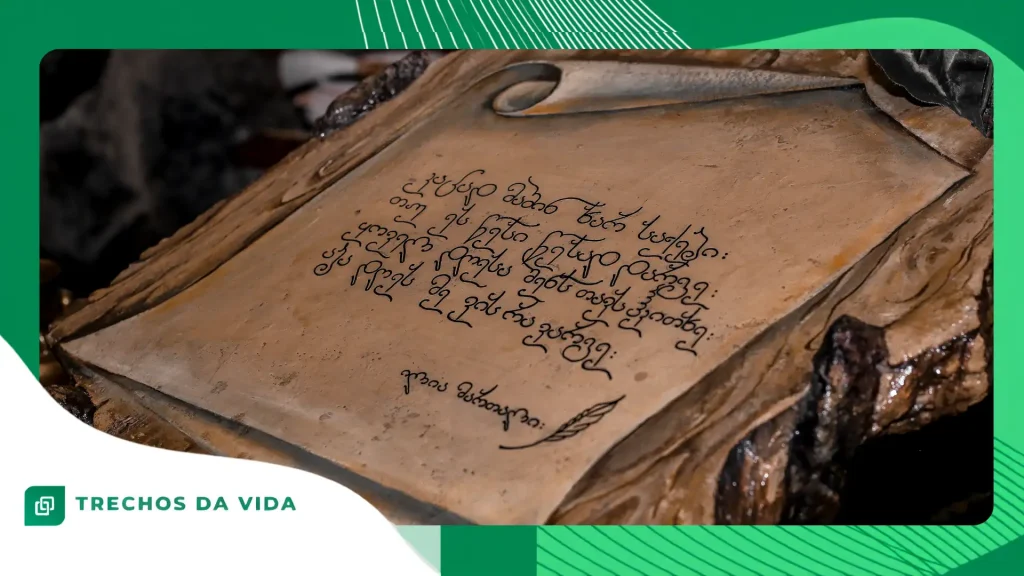
Texts archived in European libraries reveal astute insights into the world's geopolitical future.
Many of these letters detail structural crises similar to contemporary global challenges.
Letters from Albert Pike and correspondence from Enlightenment philosophers discuss the fate of nations.
Researchers are finding terms in these old documents that resonate perfectly with the current digital age.
We cannot confuse poetic metaphors with literal predictions of everyday events.
Many scholars debate the letters exchanged between nineteenth-century intellectuals about technology.
Letters from intellectuals predicted global communication networks long before the internet existed.
The accuracy of some accounts blurs the line between political intuition and actual prophecy.
Detailed examination of the originals kept in museums proves the antiquity of the physical materials.
The epistolary communications of eighteenth-century diplomats anticipated conflicts in Eastern Europe.
The dynamics described in those yellowed papers mimic the tensions we observe in today's newspapers.
How does science explain the supposed textual predictions?
Cognitive psychology explains this phenomenon through the concepts of pareidolia and apophenia.
The human brain searches for familiar patterns in ambiguous texts written centuries ago.
Philology studies the evolution of words to avoid serious conceptual anachronisms. Old expressions acquire new meanings when read by citizens of today's ultra-technological world.
The University of Cambridge frequently publishes linguistic studies on historical manuscripts in its Cambridge Core, validating the textual antiquity.
Modern natural language processing algorithms compare ancient texts with current news.
The results show thematic coincidences based on repetitive historical cycles of humanity.
Statistical probability also explains why some writings seem to predict the digital future.
Given millions of preserved letters, some are bound to coincide with reality.
The socioeconomic context of the author's time generally explains their long-term projections.
Visionary writers simply extended the trends of their time into subsequent centuries.
Who were the authors of these mysterious manuscripts?
Scientists, philosophers, politicians, and occultists are among the list of correspondents who predicted the future.
Names like Nikola Tesla, the epistolary writer, and Renaissance intellectuals recorded impressive technological visions.
They possessed analytical minds that provided a deep understanding of human nature and science.
His private letters served as laboratories for avant-garde ideas and sociological projections.
The search for Ancient letters that seem to predict modern events. It focuses on archives of highly erudite figures.
These individuals had access to privileged information about the direction of global development.
Influential politicians wrote letters predicting the fall of empires and the rise of new technologies.
His manuscripts detail social structures that resemble our hyper-connected corporate daily lives.
The national archives of France and the United Kingdom hold epistolary treasures that have remained largely unexplored.
Researchers are translating these scrolls in an effort to understand the mindset of those who observed the times.
The study of signatures and inks proves that the authors were real and influential.
His epistolary projections continue to challenge the limits of conventional historical interpretation today.
How has the geopolitics of the past shaped our present?
A cold analysis of power dynamics shows that ancient empires faced logistical bottlenecks and highly predictable trade tensions.
Brilliant diplomats simply projected these linear vectors into time, anticipating modern economic blocs.
There is something unsettling about realizing that current hot borders and maritime containment axes were already mapped in seventeenth-century manuscripts.
What seems like prophecy is usually just the inevitable repetition of geography.
What are the limits of artificial intelligence when translating these texts?
Current language models often stumble upon the nuances and ironies of letters written in the heat of past revolutions.
Digital tools tend to exaggerate archaic terms, generating false correlations with our current technology.
Human decoding and historical contextualization remain the only reliable filter against sensationalist interpretations.
Without this critical perspective, optical reading software ends up transforming poetic outbursts into technical manuals of the future.
When did censorship at the time force the use of premonitory codes?
Writing openly about the fall of absolutist regimes or suggesting scientific revolutions was a direct path to the guillotine or dungeons.
Brilliant authors resorted to dense allegories and temporal metaphors to protect their own lives.
This need for concealment has created layers of meaning that we now read almost as riddles about our own reality.
The literary disguise of the past has ended up becoming the frightening prediction of the present.
++ Strange Messages from Space: What Science Has Investigated and Discarded
Why are some technological predictions dismissed by historians?
Many correspondences circulating in digital forums, presented as prophetic visions of modern machines, suffer from pure and simple anachronism.
Terms like "flying automatons" referred to mechanical court toys, not surveillance drones.
The rush to validate mysteries causes the public to ignore the inventors' actual logbooks.
Distinguishing between speculative delusion and legitimate conceptual engineering requires years of archival research.
Where can I find digitized copies of these rare letters?
Major global institutions have begun making their secret archives available in high resolution to combat unfounded conspiracy theories.
Academic portals allow users to cross-reference handwriting data and wax stamps without leaving home.
Democratized access reveals that most of these fascinating letters contain crucial footnotes written by the recipients themselves.
Investigating these erased margins reconnects the reader directly with the exact moment of historical creation.
What is the psychological impact of these readings in a hyper-connected society?
Consuming content about enigmatic manuscripts satisfies a deep need for order and destiny in a world that seems chaotic.
Discovering that someone predicted our current anxieties brings a strange comfort to the contemporary reader.
This relentless search for answers in the past reflects the exhaustion of our own narratives of the future.
We look back hoping to find the answers that today's algorithms cannot provide.
++ The Mystery of Human Footprints Found in Unlikely Places
What data proves the authenticity of the documents?

Laboratory verification utilizes carbon-14 dating tests and spectrographic analysis of the ink used.
These procedures ensure that the scrolls are not modern forgeries made by fraudsters.
Paleography experts analyze the handwriting style to date the document precisely.
Each historical period has unique writing characteristics that are impossible to perfectly replicate.
Data from Historical Document Collections
| Origin of the Document | Estimated Century | Central Theme of the Projection | Authenticity Status |
| Paris Archives | 18th century | Collapse of Monarchical Systems | Confirmed by Carbon-14 dating |
| London Library | 19th century | Global Broadcast Networks | Paleographically Validated |
| Berlin Manuscripts | 17th century | Global Climate Change | In Linguistic Analysis |
The consistency of physical media reinforces the historical value of the messages preserved in museums. Public access to this data ensures the transparency of contemporary scientific research.
++ Why do some mountains make strange sounds at night?
The verdict of time
The study of ancient epistolary documents reveals the depth of human thought throughout history.
Far from cheap mysticism, we find brilliant minds that have deciphered the cycles of our civilization.
Scientific validation dispels conspiracy theories and values the true documentary heritage of humanity. Interest in these messages from the past remains alive among academics and enthusiasts.
To continue exploring official historical collections and well-preserved rare manuscripts, consult the records portal of The National Archives British.
Frequently Asked Questions
How can you tell if an old letter is authentic?
Authenticity is proven through laboratory carbon-14 dating, paleographic analysis of the handwriting, and verification of the paper's historical provenance.
What is apophenia in the context of predictions?
Apophenia is the human tendency to find meaningful connections or predictions in ancient texts that are, in fact, vague or purely coincidental.
Where are the most famous letters kept?
Most important historical manuscripts are protected in national libraries, European public museums, and high-security state archives.