The Enigma of Objects Found in Unexpected Geological Layers
Archaeological discoveries and routine geological surveys often stumble upon troublesome anomalies from time to time: objects found in unexpected geological layers.
Advertisements
These findings seem to defy the physics of soils, causing a stir both in the academic community and in the popular imagination about ancient civilizations.
The problem is that examining artifacts collected from deep rock strata requires a delicate alignment between geology, chemistry, and history.
There is something unsettling about the idea of finding iron or ceramics where there should only be prehistoric rock, but the trained eye learns to separate physical contamination and deliberate fraud from the rare exceptions that truly rewrite the past.
This article investigates the mechanisms behind these stratigraphic mysteries, confronting the mechanics of soil formation, the most publicized cases, and the scientific criteria used to test the authenticity of these pieces.
Summary
- Introduction
- What are objects found in unexpected geological layers?
- Why do artifacts appear in incompatible rock strata?
- What are the most famous cases and what has science revealed?
- Table: Scientific Comparison of Anomalous Artifacts
- How does modern science analyze and validate these findings?
- FAQ – Frequently Asked Questions
- Conclusion
What are objects found in unexpected geological layers?
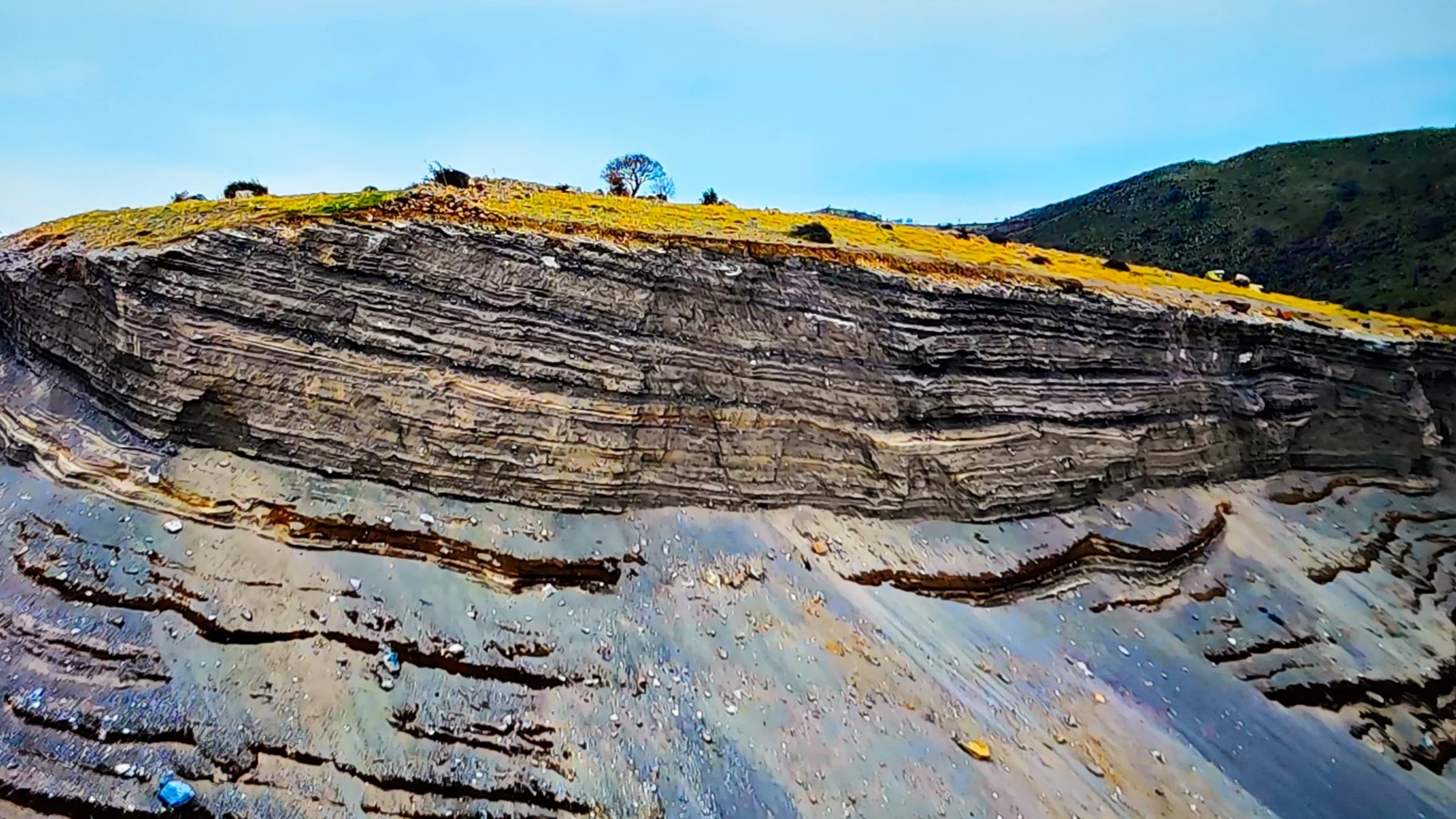
Baptized in academic circles and popular culture by the English term. out-of-place artifacts (OOArts), these items attract attention because they seem out of place in time.
These are tools or structures located in rock matrices whose estimated ages exceed, by millions of years, the very emergence of the human species.
However, initial fascination often overrides methodological caution. The vast majority of spectacular claims dissolve as soon as the sample is subjected to rigorous laboratory analysis, revealing late soil contamination that went unnoticed during the original collection.
To understand the phenomenon of in depth objects found in unexpected geological layers It's far from being a fantastical theory.
It requires observing the real dynamics of the Earth: percolation of groundwater, tectonic fissures, and the impressive speed with which minerals can encapsulate a recent object.
Why do artifacts appear in incompatible rock strata?
Sedimentary intrusion is the main culprit behind hasty interpretations. It is through this process that an item discarded just a few centuries ago manages to infiltrate rocks that have been consolidated for ages, descending through hidden cracks, cave systems, or deep tectonic faults.
During periods of heavy rain or rising groundwater levels, small fragments of metal, wood, or bone are swept into these crevices.
Once settled to the bottom, the flow of mineralized water kicks in, covering the material with hard limestone deposits in the blink of a geological eye.
Thus, the presence of objects found in unexpected geological layers It is usually the result of an accelerated implementation process.
Dissolved minerals precipitate onto the artifact, creating an ancient-looking shell around something made yesterday.
Added to this is historical human intervention. Ancient mining activities, artisanal wells, and shallow drilling often pushed tools into rock formations far older than the mine itself.
When an inattentive researcher removes the block without analyzing the surrounding microstratigraphy, the immediate impression is that they have found an impossible fossil.
However, contextual analysis often shows that the land had already been disturbed long before the modern excavation.
That is precisely why a thorough study on objects found in unexpected geological layers rejects logical leaps.
Without a thorough mapping of the soil surrounding the artifact, any statement about the chronology of human technology becomes pure speculation.
What are the most famous cases and what has science revealed?
The so-called Antikythera Mechanism is perhaps the greatest proof that real history is more surprising than fiction.
Recovered from the remains of a Greek shipwreck, the object displayed a mechanical complexity that traditional historiography simply did not expect for the 1st century BC.
It is an intricate set of bronze gears designed to calculate astronomical cycles with unparalleled precision.
The artifact did not challenge geology, but it forced science to acknowledge that the engineering of Classical Antiquity was substantially more advanced than we had previously documented.
The lesson from this device is crystal clear: find objects found in unexpected geological layers Anomalous contexts don't always require far-fetched theories.
Often, the discovery merely exposes our own tendency to underestimate the technical capabilities of our ancestors.
At the opposite extreme is the London Hammer, discovered in Texas and turned into a trophy by enthusiasts of the impossible because it is embedded in a rock associated with the Cretaceous period.
The piece's appearance is striking at first glance, suggesting that the iron was forged during the time of the dinosaurs.
Laboratory testing quietly dispelled the illusion. The rock in question was not the original bedrock from the secondary era, but a crust of dissolved limestone that formed around a common 19th-century sledgehammer abandoned by local miners.
This chemical dynamic of recent petrification explains how objects found in unexpected geological layers They create perfect visual traps.
Just a few decades under mineral dripping is enough for an iron tool to acquire a stone "armor" that looks millions of years old.
Another classic chapter in this debate is known as the Klerksdorp Spheres. Extracted by miners in South Africa from layers of pyrophyllite dating back almost three billion years, the metallic spheres with horizontal grooves quickly became fertile ground for hypotheses about lost civilizations.
Mineralogy has put things in perspective. Detailed examinations have confirmed that the spheres are nodules of pyrite and goethite created by geological processes of precipitation and metamorphism, where nature itself shaped the symmetrical forms without any human intervention.
These episodes demonstrate the importance of maintaining empirical rigor. Serious science does not dismiss mystery through dogma; it merely demands replicable tests to separate genuine human achievements from mere mineral formations interpreted hastily.
++ Plain of Jars: archaeological mystery gains new explanation
Table: Scientific Comparison of Anomalous Artifacts
The following table summarizes the analytical verification applied to the most sensational cases in archaeology and geology, contrasting initial claims with conclusive laboratory reports.
++ Civilizations that disappeared without leaving clear records of what happened.
| Artifact / Find | Location of the Find | Layer / Estimated Age of the Rock | Scientifically Proven Explanation |
| Antikythera Mechanism | Aegean Sea, Greece | 1st century BC (Marine sediment) | Authentic Greek engineering with high technical precision. |
| London Hammer | Texas, United States | Concrete formation (Exposed Cretaceous rock) | 19th-century tool encased in recent limestone. |
| Klerksdorp Spheres | South Africa | Pyrophyllite (2.8 billion years old) | Natural mineral nodules formed by precipitation. |
| Baghdad Battery | Iraq | Parthian/Sasanian Period | Ceramic vessels used for electroplating or rituals. |
How does modern science analyze and validate these findings?
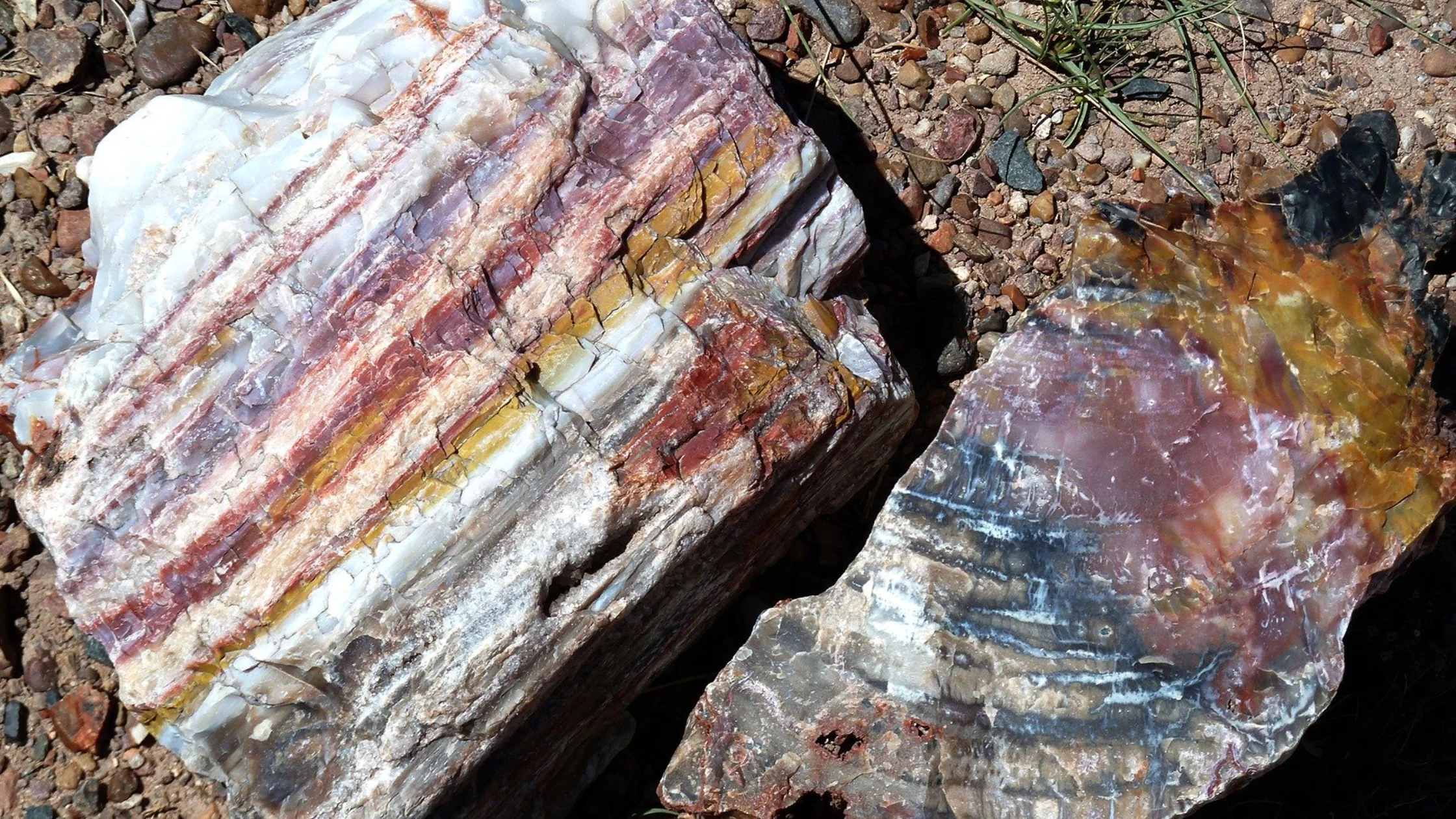
Deciphering the true origin of objects found in unexpected geological layers Today, it depends on a technological arsenal that goes far beyond simple visual observation.
The combination of carbon-14 dating and optically estimated luminescence allows us to cross-reference the age of organic matter with the exact time when the soil last received sunlight.
In parallel, high-resolution computed tomography scans the interior of artifacts without needing to break the piece. This technique exposes casting bubbles, marks from hand tools, or industrial welds that reveal the manufacturing era.
The study of the geological matrix surrounding the find has also reached a new level. The search for microfossils and the geochemical analysis of the sediments help to trace whether the soil has undergone water infiltration or recent mechanical disturbances that would invalidate the reading of the layer.
These precautions prevent hasty interpretations from turning a simple mineral reaction into a fantastical narrative.
Field research works best when it accepts methodological doubt as a starting point, subjecting each sample to peer review before announcing conclusions.
Anyone wishing to follow the technical debate and recent discoveries in the field of stratigraphy and dating can consult the publications of Nature Scientific Reports, which brings together articles reviewed by experts from around the world.
Advances in laboratory tools have helped to clarify old doubts. Instead of weakening the fascination with the past, meticulous investigation helps to build a history of Earth based on solid, testable, and transparent evidence.
++ Nighttime Flavor Tourism: Markets and Gastronomic Fairs that Only Happen at Night
FAQ – Frequently Asked Questions
What does the acronym OOPArt mean in an archaeological context?
The acronym comes from English. out-of-place artifact (Out-of-place artifact). This is a term used to label historical or technological objects discovered in geological layers or time markers that do not match the official chronology.
Is it possible for a rock to form around a recent object in a short amount of time?
Yes. Under certain humidity conditions and the presence of soluble minerals such as limestone, the encrustation process can envelop iron or wooden objects in a matter of a few decades.
How do geologists confirm whether a layer of soil has been disturbed?
The verification is done by examining the microstratigraphy of the site. Technicians look for microfractures in the rock, abrupt variations in sediment density, and misalignment in the control fossils present around the specimen.
Are there genuine objects that have changed our view of history?
Absolutely. Discoveries like the Antikythera Mechanism and the Göbekli Tepe site have proven that the technical knowledge and social organization of ancient peoples were far more sophisticated than previously thought.
Conclusion
Observe objects found in unexpected geological layers Remember that the boundary between scientific fact and speculation requires patience and analytical judgment.
Not every anomaly is a historical revolution; most of the time, we are simply witnessing nature playing tricks on us through soil chemistry.
At the same time, dealing with these enigmas forces researchers to refine their data collection and analysis methods.
When science examines the unusual without prejudice and without haste, what benefits is rigorous knowledge about our past.
Following these investigations closely helps to separate myths from real discoveries.
To better understand the processes of soil mapping and applied geosciences, it is worthwhile to explore the collections and reports of... United States Geological Survey, an international reference in the analysis of the global subsurface.