
Discover the modalities of the Tokyo 2020 Olympics
Advertisements
Among the Tokyo Olympics modalities We have five new things: skateboarding, sport climbing, surfing, karate and baseball/softball.
Therefore, there are 46 modalities competed by almost 12 thousand athletes.
As you continue reading, you will be able to understand these modalities and their main information:
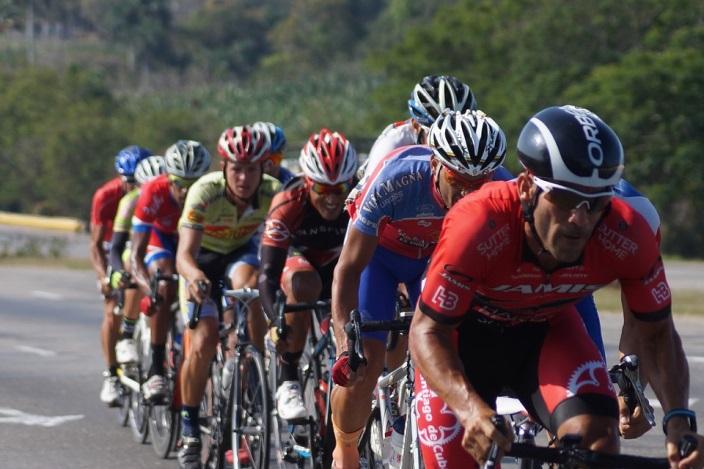
1 – Road cycling
Initially, we can talk about the first sport contested on a bicycle, road cycling.
The first competition took place in 1868 in Paris and the sport consists of individual competitions in the male and female categories.
Therefore, there is a division into two models, the Time Trial, in which the cyclist who finishes the race in the shortest time is the winner.
The second model is the Race, in which the first to cover the distance of 141 km for women and 241.5 km for men wins.
2 – Tokyo Olympics Modalities – Mountain bike cycling
Like BMX, this sport emerged from the desire of cyclists in the United States to have an adventure in the 1970s.
So, in the state of California, they decided to tackle the rough terrain and trails with bicycles, creating this new sport.
But, despite being created by North Americans, the sport is dominated by Europeans who, in 6 editions, have won 12 medals at the Olympic Games.
3 – Track cycling
Present in the program of the first edition of the Modern Era games, which took place in 1896 in Athens, track cycling is also one of the Tokyo Olympics modalities.
Before that, the first competitions took place in 1870, with athletes competing in closed gyms with wooden tracks.
Therefore, one of the advantages of the modality is that it does not depend on the weather and the possibility of selling tickets to fans.
4 – Freestyle BMX Cycling
On the other hand, there is freestyle BMX, added to the games with the aim of attracting a younger audience.
Although participation is recent, the sport has been practiced since 1970 and with a 20-inch bicycle, athletes must perform maneuvers, jumps in the air and spins.
5 – BMX cycling race
This modality is also called BMX and here the bicycles are special, allowing cyclists to compete on dirt tracks.
In view of this, whoever arrives first is the winner.
In Beijing, 2008, this sport participated in the Olympic Games for the first time and Australia and Colombia are the countries that dominate the sport.
6 – Canoe Slalom
Among the Tokyo Olympics modalities, we can mention one of the most radical of the Olympic Games, Canoe Slalom.
In this sport, the athlete must overcome artificial or natural obstacles and descend rapids using a paddle.
Whoever finishes the race in the shortest time and suffers the fewest penalties wins.
Therefore, the creation took place in 1840 and we can highlight the gold brothers or biggest medalists in the sport, the Slovaks Peter Hochschorner and Pavol Hochschorner.

7 – Canoeing sprint
Initially contested at the Olympic Games in Paris 1924 as a demonstration sport, it was only in Berlin 1936 that it gained the status of an Olympic sport.
On demarcated beaches and in places with calm waters, athletes swim 200, 500 and 1 meter.
8 – Tokyo Olympics Modalities – Football
Second only to water polo, this was the second team sport to officially enter the Olympic Games, in 1908.
Football is the most popular sport in the world and in Brazil, which in turn has already won 8 medals.
9 – Handball
Otherwise, we can talk about handball (European Portuguese) which was created in 1919 by the German Karl Schelenz.
It became an Olympic sport in 1936 and at that time, it was played outdoors.
Thus, it is a sport practiced with the hands and can be played on sand fields (beach handball) or courts.
Among men, only once has a non-European country won gold: South Korea.
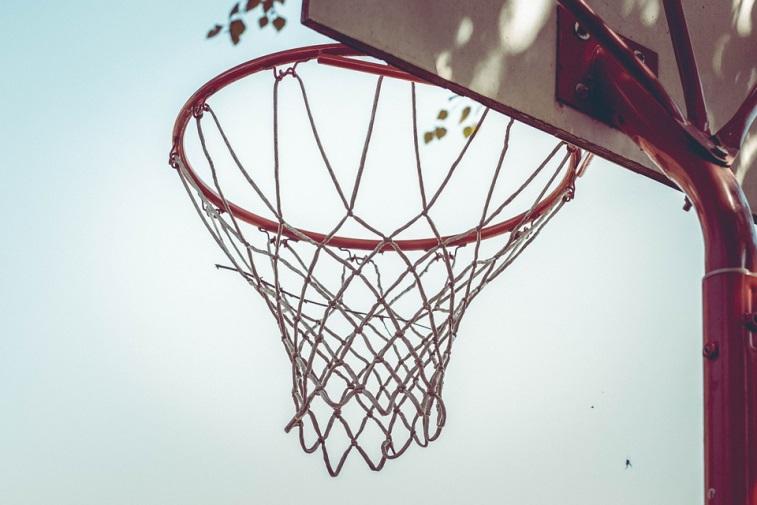
10 – 3×3 Basketball
Still as an example of Tokyo Olympics modalities, we can talk about 3x3 basketball that emerged in the late 80s on the streets of several countries.
Here, we can highlight the United States, the country where the sport became popular.
Due to its success at the Youth Olympic Games, FIBA decided to create a 3x3 Basketball World Cup that takes place every year, bringing together the best teams on the planet.
11 – Basketball
This sport was created in the Young Men's Christian Association of Springfield, Massachusetts, United States, by Canadian Physical Education teacher James Naismit, in 1891.
Also known as “basketball”, the sport is played by two teams, with 12 players (7 reserves and 5 on the field).
Thus, in Berlin 1936 it became a modality of the Olympic Games and our country's first medal was bronze, in London 1948, with the men's team.
12 – Trampoline Gymnastics
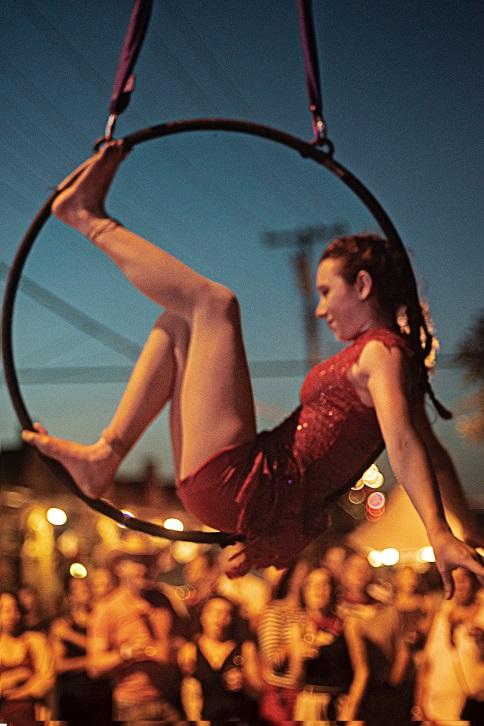
All the movements and acrobatics performed by circus trapeze artists demonstrate some characteristics of trampoline gymnastics.
Therefore, it is believed that this sport emerged in the Middle Ages.
Despite this, its modern version was made in 1934, by George Nissen, in the United States.
In this sense, the device had two uses: to develop acrobatic skills in other sports and to train astronauts.
Only at the Sydney 2000 Olympic Games was it seen as an Olympic modality, in which the gymnast jumps over a canvas and performs the technical elements required by the referees.
13 – Tokyo Olympics Modalities – Artistic Gymnastics
This type of gymnastics combines different equipment and sequences of varied acrobatic exercises, requiring perfection, lightness and a lot of strength.
Therefore, in each event, women and men must compete for points individually or as a team.
Whoever wins the most points is the medalist.
Furthermore, it is called “Olympic gymnastics” or simply, “GA”, as well as, in the past, “apparatus gymnastics” or “sports gymnastics”.
14 – Rhythmic Gymnastics
In 1920, GRD or rhythmic sports gymnastics (old name) was developed, including new exercises and music.
This is a branch of gymnastics that has several possibilities of body movements that are combined with theatrical dance and ballet.
The athlete can use a hoop, rope, ball and even a ribbon in his performance.
Therefore, the first championship took place in 1961, but it was only accepted as a modality in the Olympic Games, in Los Angeles 1984.
15 – Diving
As Tokyo Olympics modalities, we have a sport that was widely practiced in ancient times, but it was not seen as an Olympic sport.
Mural paintings that were almost 4 thousand years old and belonged to the Chaldean, Babylonian and ancient Egyptian peoples, tell us that heels were used to catch food or search for treasures at the bottom of the sea.
Later, jumps were fundamental in preparing for other sports.
And only in Saint Louis 1904, they were included in the Olympic program, as a sport exclusively for men and performed on the platform.
16 – Swimming Marathon
In 1875, when English captain Matthew Webb became the first man to swim across the English Channel, which lies between England and France, this sport began to gain life.
This was possible thanks to the breaststroke technique that allowed the captain to cover 64 kilometers in 21 hours and 45 minutes.
This feat inspired many swimmers to cross not only the English Channel, but also several other points around the world.
Thus, the competition gradually became popular and in 2005, it was announced by the International Olympic Committee (IOC) that it would be one of the modalities of the Olympic Games.
17 – Water Polo
Another example of Tokyo Olympics modalities is water polo, which works like a kind of handball in the pool.
Therefore, teams must score goals, while the goalkeeper defends.
Officially, this sport emerged in the 19th century and before that, the name was “water rugby”.
Thus, it became a sport at the 1900 Summer Olympics, but only with men's teams.
Women only began to compete in the 2000s.
18 – Swimming
This is one of the oldest modalities of the Olympic Games, and the practice has existed in humanity since 4000 BC.
It became a requirement in the training of soldiers in ancient Greece and was only seen as a sport in the 19th century.
Thus, in the first edition of the Modern Era of the Olympic Games, which took place in 1896, in Athens, there were swimming events, but at sea.
Therefore, the first medalist in this modality was the Hungarian Alfred Hajo.
19 – Tokyo Olympics Modalities – Rowing
Rowing became a sport at the Paris Games in 1900, revealing a great mystery:
Who was the French boy who won a gold medal alongside Dutch rowers Roelof Klein and François Antoine Brandt?
Although there are photographic records, the name and age of the boy, who may have been the youngest Olympic champion in history, are unknown.

20 – Candle
Sailing was planned to be one of the sports at the first Olympics in 1896.
However, weather conditions prevented the events from taking place, meaning that it only became a sport in the following edition, which took place in Paris.
21 – Artistic Swimming
One of the Tokyo Olympics modalities It is artistic swimming that was seen as a modality at the Los Angeles Games that took place in 1984.
In this sense, we can highlight the work of the Australian Annette Kellerman who, at the beginning of the 20th century, went in search of new challenges in Europe.
Kellerman's first demonstrations of water ballet were given in England and she later joined a water show team, moving to the United States.
The presentations were very successful and thus, the sport was seen as an Olympic modality.
It is worth mentioning that, just like rhythmic gymnastics, only women participate.
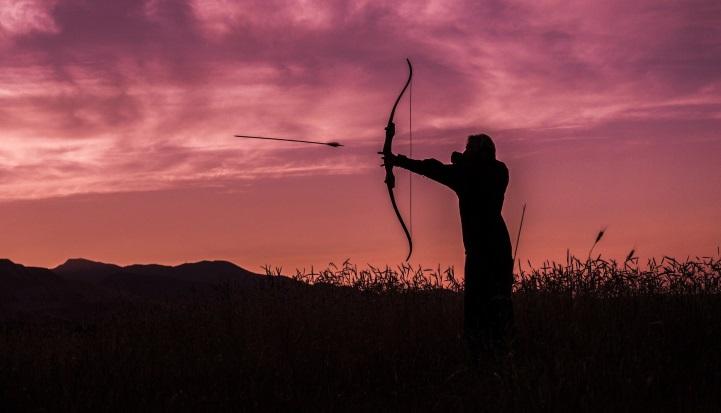
22 – Archery
The first records occurred in Prehistory, a time when the activity expanded man's hunting capacity.
Soon after, archery changed the way wars were fought, being used as one of the main weapons for several centuries.
As the first appearance at the Olympic Games, we can mention the Paris edition in 1900.
23 – Sport Shooting
Certainly, firearms were not made for sporting purposes, as they were a fundamental instrument in battles and wars that were previously fought with bows and arrows or sword combat.
Thus, the first record occurred in the confrontation between the English and the French in 1346, becoming a modality in the Olympic Games in the first edition.
Until 1964, only men participated and it is worth highlighting the first two women who competed in Mexico City, in 1968, in the events with the men.
24 – Volleyball
This is one of the most popular sports in the Olympic program, having been a sport since Tokyo in 1964.
Therefore, the game takes place between twelve teams that are divided into two groups including 6 countries for both women and men.
For women's volleyball, our country is the two-time champion of the tournament and aims to reach the podium in Tokyo, as the medal did not come in Rio 2016.
The men's team aims to obtain their fourth Olympic gold medal.
25 – Tokyo Olympics Modalities – Beach Volleyball
Since the 1996 Atlanta Games, this sport has been seen as an Olympic sport and the seventh edition will take place in Tokyo.
In this way, countries without a tradition in the sport, such as Canada, Russia and Norway, will face giants such as the United States and Brazil.
It is worth highlighting as a difference that on the beach the dispute has only 3 sets with 21 points each, requiring a minimum difference of two points for a pair to close a set.
26 – Tennis
In ancient times, from Ancient Egypt to 5th century Europe, this was a sport played with hands and a ball.
From the 12th century onwards, the modern version of tennis emerged in countries such as France and Italy, becoming a sport in Athens in 1896.
27 – Table Tennis
For recreational purposes, this sport is also called ping-pong.
In this sense, it was developed in the United Kingdom in the 19th century and is currently one of the most popular sports on the planet, when we talk about the number of players.
Furthermore, it is one of the Tokyo Olympics modalities famous because it has the fastest type of ball in the world, at the same time as being the racket sport that has the most spin (rotation) on the ball.

28 – Badminton
This sport is not popular in our country and is characterized by being a mix of beach volleyball and tennis.
Therefore, it is played with a racket and shuttlecock, and the games are played in 3 sets, with the winner having to score 21 points per set.
Its current version began in India and gained strength in the 19th century, when British officers on missions discovered the sport and took it to Europe.
29 – Boxing
Otherwise, this sport emerged in the year 3,000 BC, in Egypt.
However, it was in the 7th century BC, in Ancient Greece, that it gained strength, a time when players protected their hands with pieces of leather.
When boxing entered the 1904 Olympics in St. Louis, there were drastic changes such as the mandatory use of protective helmets.
Therefore, an interesting fact is that boxing has two bronze medals because those who lose in the semi-final go to the podium.
30 – Karate
In Brazilian Portuguese this sport is called “Karate” and refers to a martial art created in Japan based on the indigenous martial art of Okinawa.
There was also influence from traditional Japanese wrestling (koryu), Chinese war art (chuan fa) and Japanese war disciplines.
It's a new sport at the Olympics and will likely be very exciting.
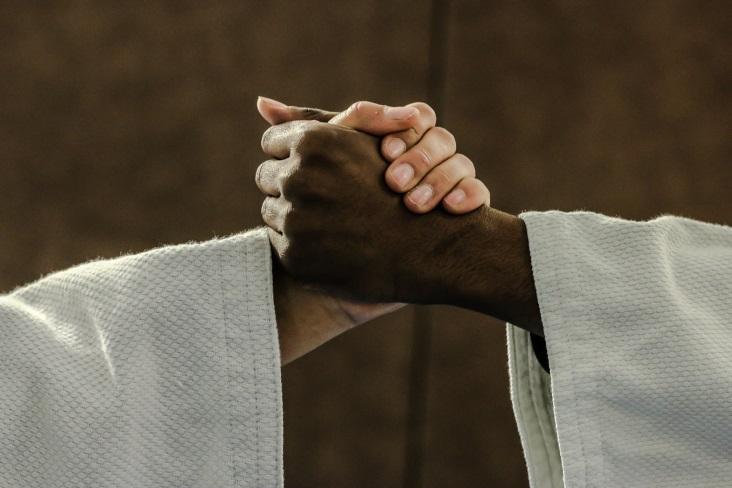
31 – Tokyo Olympics Modalities – Judo
This is also a martial art that was created in 1882 by Jigoro Kano, being an adaptation of jiu-jitsu.
Therefore, the objective of the sport is to strengthen the athlete's body, physique and mind, in addition to developing self-defense techniques.
Officially, this sport became an Olympic modality in 1972, at the Munich Games, but it was only 20 years later that women began competing for medals.
32 – Wrestling
Fighting at the Olympic Games involves skill and a lot of strength from the athletes who compete between two, with the aim of controlling the rival's movements.
Thus, Wrestling is a word that indicates the principles of the sport: to trap, hold and immobilize.
Disregarding the Olympic Games that took place in Paris in 1900, this is a sport that was present in all editions.
33 – Fencing
Among the Tokyo Olympics modalities, we can mention the art of handling the sword, the saber and the foil.
These three pieces of equipment are “white” weapons used for attack and counterattack.
In this sense, know that this is the only combat sport in which body contact is not accepted.
According to a bas-relief seen in Medinet-About, in the temple built by Ramses III in 1190 BC, fencing is believed to be a sport of antiquity.
34 – Field Hockey
This sport is played on a grass field, where the ball is driven with a stick with the aim of scoring goals.
There are records of Egyptians and Ethiopians who practiced the sport thousands of years ago, but its current version was developed in England in the 18th century.
And it was in London-1908 that field hockey became an Olympic sport.
35 – Surfing
Surfing is a new thing in Tokyo Olympics modalities, a sport practiced on the surface of the water.
The athlete's competence is verified according to the degree of difficulty of the movements made when sliding with the foot on the board.
He must take advantage of the wave that breaks as it approaches the beach or shore.
Thus, only in 2015 did the Tokyo Organizing Committee work together with the IOC to select the sport and transform it into an Olympic modality.

36 – Skateboarding
In this sport, the athlete balances on a board, but must face obstacles on the ground.
In this way, the skateboard has 2 axles called “trucks” and four small wheels that allow the execution of maneuvers of low to high degrees of difficulty.
Here, we can highlight our champion Rayssa Leal, just 13 years old, who made history and brought us the silver medal.
37 – Climbing
There are paintings from 400 BC that show us the practice of climbing mountains.
However, this practice was only seen as a sport from the second half of the 19th century, with the first indoor competitions taking place in the 1980s.
And just like what happened with surfing, the IOC and the Tokyo Organizing Committee brought the sport to this year's games.
38 – Golf
As Tokyo Olympics modalities, we can talk about golf, in which athletes use different clubs to hit the ball in up to 18 holes.
In this way, the competition takes place on a large terrain, with the winners using the fewest number of strokes possible.
The sport was only played at the Paris Games in 1900 and St. Louis in 1904, but is back in Tokyo.
39 – Horse Riding
Precision, endurance, harmony, speed and dressage are fundamental skills for riders who compete in equestrianism.
Therefore, the test includes obstacles such as ditches filled with water, walls, barriers and fences almost 2 m high.
As an Olympic sport, equestrianism was initially contested at the Paris Games in 1900, including the jumping events.

40 – Tokyo Olympics Modalities – Weightlifting
This sport is also called weightlifting or Olympic weightlifting (OWL).
Therefore, the objective here is for the athlete to lift the greatest possible weight from the floor to over his head, requiring a lot of balance, coordination and flexibility.
The weights are fixed to a bar and the modality can be divided into two: the clean and jerk.
41 – Modern Pentathlon
This is an Olympic modality that includes different sports such as swimming, fencing, horse riding, running and shooting.
In this way, competitions take place in teams or individually and the winner is the one with the best overall performance by adding the most points.
Due to all the variety of sports, the Modern Pentathlon champion is seen as the most complete athlete.
Therefore, the sport emerged in Ancient Greece in 708 BC and became a modality in the 1912 Olympics.
42 – Rugby
Another example of Tokyo Olympics modalities It's rugby, a team sport that involves a lot of physical contact.
In this sense, the sport was born in England and, as it was a variation of football, it was called “rugby football”.
At the Rio 2016 Games, it became an Olympic sport.
43 – Taekwondo
This is another example of a martial art, but one that originated in Korea over 2000 years ago.
Therefore, Taekwondo means “path of the feet and hands through the mind”, in which the aim is for the athlete to gain a strong and healthy mind, humility, discipline and respect.
As an exhibition sport, it was present in the Seoul-1988 and Barcelona-1992 games.
44 – Triathlon
Triathlon was born in an athletics club in the Californian city of San Diego in 1974.
It became an Olympic sport in Sydney 2000, with 10 m running, 40 km cycling and 1,500 m swimming.

45 – Baseball and softball
It was only in 1992 that the sport became worth a medal, whereas at the beginning of the 20th century it was a demonstration sport.
However, in 2008, baseball and softball were no longer seen as Olympic sports, becoming new to the Tokyo Games.
And to differentiate, know that softball would be a simpler version of baseball, in which the ball is bigger.
It is worth noting that the country with the most gold medals in this sport is Cuba, with a total of 3.
46 – Tokyo Olympics Modalities – Athletics
Finally, we can talk about athletics, which includes jumping, throwing, walking and also running.
With the exception of long-distance races that take place on fields or public roads, the sport is practiced in stadiums, corresponding to the oldest organized form of competition.
In this sense, the first competitions took place in the year 776 BC and this sport became an Olympic modality from the first edition of the Modern Era Games.
From then on, the sport gained strength throughout the world.
* Source of information website https://all.accor.com/pt-br/brasil/magazine/one-hour-one-day-one-week/conheca-as-46-modalidades-das-olimpiadas-de-toquio-2021-8f427.shtml
