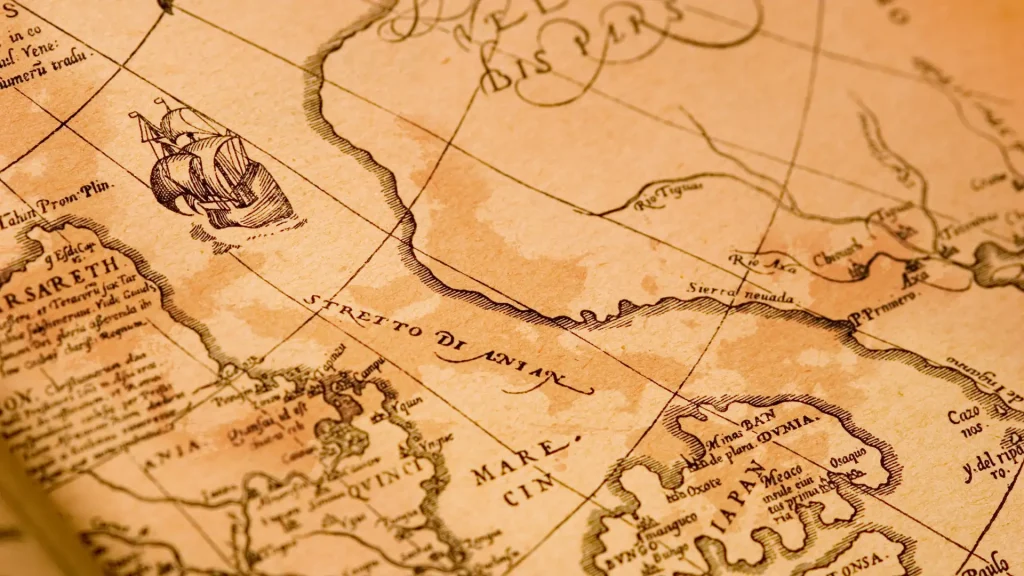
The Underground Tunnels That Nobody Knows Who Built
Advertisements
You Underground tunnels whose builders are unknown. They challenge archaeologists from all over the world, who are trying to unravel the origin of these incredible, millennia-old galleries of complex engineering.
These secret passages reveal hidden connections beneath ancient civilizations and challenge everything we know about humanity's technological evolution.
If you love real historical mysteries, this detailed article was tailor-made for your curiosity. Let's explore the science, geology, and most accepted theories behind these enigmatic paths.
What You Will Discover in This Article:
- The Global Enigma: Erdstall's impressive network in Europe.
- Derinkuyu: The fascinating underground metropolis in Türkiye.
- Technical Data: Comparative table of the largest underground complexes.
- Scientific Hypotheses: Who actually excavated these colossal structures?
What are the Erdstall and where are they located?
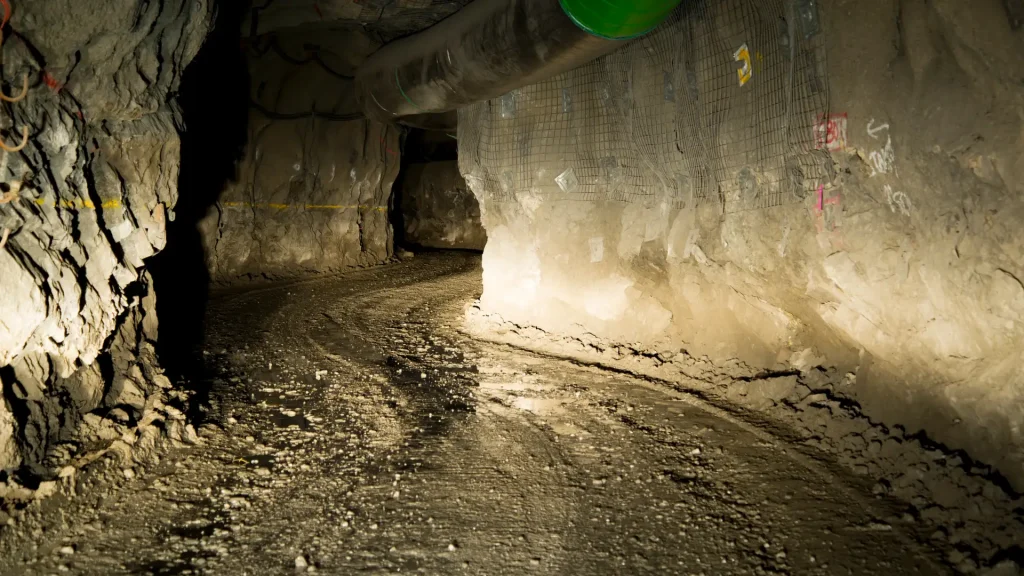
The Erdstall tunnels represent one of the greatest archaeological mysteries in Europe, consisting of extremely narrow and shallow galleries scattered throughout Germany, Austria, and France.
There is something genuinely unsettling about walking through passageways that are less than a meter in diameter, forcing the visitor to crawl through claustrophobic gaps that seem to make no practical sense.
Although many archaeologists insist on dating the structures to the medieval period, the truth is that the actual purpose of these galleries still divides the scientific community in heated debates.
The hypothesis that they served as temporary shelters against invaders runs into a crucial detail: the complete absence of soot on the stone walls, which proves that they did not use ordinary torches.
If there was no light and the space barely accommodated a grown man, what was the real purpose of so much effort?
How does Derinkuyu challenge modern engineering?
In the Cappadocia region of Turkey, stands the most impressive example of underground engineering ever discovered. It is a veritable metropolis capable of housing approximately twenty thousand people with complete safety and supplies.
Although carved into soft volcanic rock, the structural stability of Derinkuyu is simply flawless by ancient standards.
This labyrinth has dozens of deep ventilation shafts that ensured fresh air even at the lowest levels.
Many associate the work with the Phrygians or Hittites, but the definitive authorship remains shrouded in absolute mystery. The complexity of its circular stone gates proves that the builders possessed brilliant knowledge of military defense.
What are the largest underground complexes in the world?
To understand the monumental scale of these past works, we need to analyze the concrete data from these fantastic archaeological discoveries.
Below, we have compiled the main known technical information about these impressive deep rock shelters.
++ The lake that appears and disappears without apparent explanation.
| Name of the Complex | Location | Maximum Depth | Estimated Capacity |
|---|---|---|---|
| Derinkuyu | Cappadocia, Türkiye | 85 meters | Up to 20,000 people |
| Erdstall | Central Europe | Variable (shallow) | Transit/refuge only |
| Longyou Tunnels | Zhejiang, China | 30 meters | Unknown monumental use |
The artificial caves of Longyou, in China, consist of sandstone perfectly carved into inexplicable symmetrical patterns.
To learn more about official geological research in the Zhejiang region, you can consult the official website of [organization name]. UNESCO, which catalogs relevant historical world heritage sites.
How has Lidar technology revealed new underground passages?
Laser scanning technology, known as Lidar, has completely revolutionized archaeological searches by tracking down hidden structures beneath dense tropical forests.
This tool maps the terrain with millimeter precision, revealing the foundations of ancient civilizations and deep fissures that were previously invisible to the human eye.
What is the theory behind tunnels that crossed entire continents?
Some renowned theorists of the last century argued for the existence of vast routes connecting Scotland to Turkey through complex branching networks.
Although geology disproves a continuous direct connection, these intriguing Underground tunnels whose builders are unknown. They show that our ancestors shared incredibly similar techniques.
Where are the deepest, most mysterious passages in South America located?
The famous Tayos cave, located in the Ecuadorian rainforest, houses megalithic galleries that fuel legends about lost ancient treasures.
Independent researchers and official expeditions are trying to decipher whether the symmetrical stone blocks were carved by human hands or by the force of water.
How did the ancients remove tons of stones without leaving a trace?
Excavating to great depths requires removing tons of thick sandy rubble, a complex logistical undertaking that defies the logic of known bronze tools.
The absence of landfills near these sites indicates that the builders used extremely advanced waste disposal methods.
++ Why do some mountains make strange sounds at night?
What dangers do modern archaeologists face in these excavations?
Exploring ancient tunnels involves quite severe risks of sudden collapses due to the natural instability and severe erosion of the rocks over time.
Furthermore, the presence of accumulated toxic gases and the chronic lack of oxygen in very deep locations require constant technological monitoring.
Why does the war bunker theory still generate so many doubts?
Many believe that these passageways served to escape swift enemy invasions, but the lack of emergency exits contradicts this military strategy.
To be trapped in these Underground tunnels whose builders are unknown. It would be a deadly trap, forcing scientists to seek new historical answers.
Who actually excavated these mysterious passages?
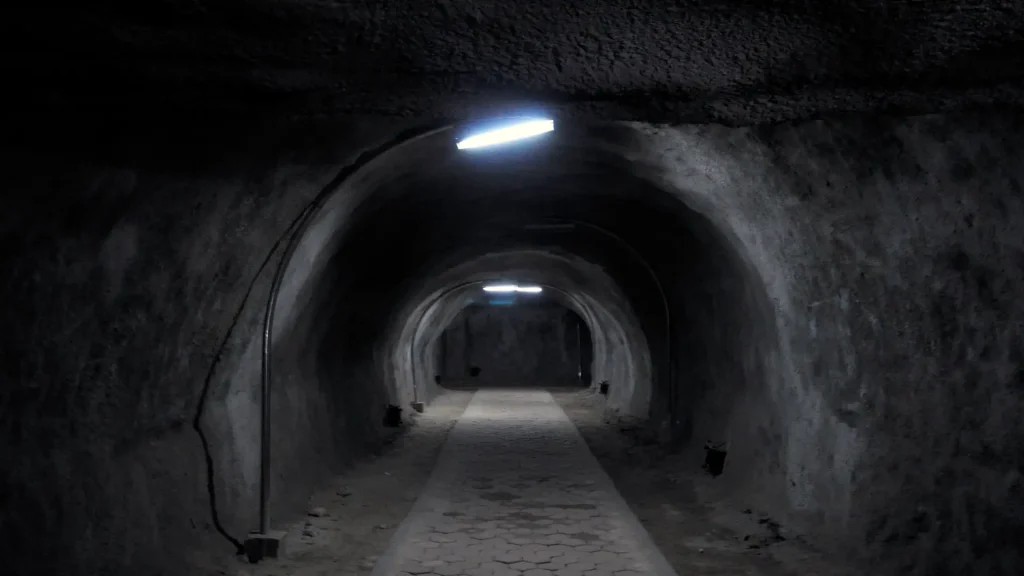
Traditional historians suggest that local communities dug the underground networks to escape religious persecution and frequent military raids.
However, the mathematical precision of the angles and the removal of tons of rock required advanced urban planning.
The local geology facilitated excavation work in regions like Turkey, where volcanic tuff is malleable. Even so, coordinating thousands of workers without modern iron tools seems like an almost impossible task for the time.
Some theoretical currents suggest global connections between the builders, pointing to technical similarities across different continents.
While fascinating, these theories lack solid physical evidence and divide opinions among renowned scientists in the field of archaeology.
++ Ancient Letters That Seem to Predict Modern Events
What is the role of science in dating these structures?
Determining the exact age of a cavity in rock represents one of the greatest challenges for contemporary international archaeology.
Since the stone itself is infinitely old, scientists rely on organic traces left at the site.
The carbon-14 method helps to date charcoal, bones, or wooden tools found deposited on the tunnel floors. However, these objects only reveal when the site was last occupied, not when it was excavated.
New optically stimulated luminescence technologies are beginning to analyze when the quartz grains in the wall last saw sunlight.
This innovation promises to revolutionize our understanding of... Underground tunnels whose builders are unknown. around the globe.
The labyrinths that crisscross the subsoil of our planet prove that human history holds secrets far deeper than we imagine.
These structures challenge our linear view of the technological evolution of the societies that preceded us on Earth.
Investigating these sites helps us appreciate the adaptive capacity and ingenuity of ancient peoples in the face of severe existential threats.
Certainly, new excavations will bring surprising answers about this hidden heritage beneath our everyday feet.
If you wish to delve deeper into the latest findings in field archaeology and check out academic articles on complex structural excavations, access the prestigious scientific journal. Nature to keep up with global scientific updates firsthand.
FAQ – Frequently Asked Questions
Is it safe to visit the Derinkuyu tunnels nowadays?
Yes, the Turkish government has structured and illuminated part of the Derinkuyu archaeological complex for safe tourist visits, although access to certain deep levels remains restricted for obvious reasons of physical preservation.
Are all the Erdstall tunnels geographically connected?
No, researchers confirmed that the Erdstall networks are isolated and local, with no direct long-distance connections between the different regions of Germany or France where they were cataloged.
How many ancient underground tunnels are there in the world?
There are thousands cataloged across all continents, ranging from small drainage passages to entire cities carved into the rock, revealing a common survival practice of past civilizations.