Revolutionary Discovery: An Earth-like Planet with Potential for Life
Advertisements
Earth-like Planet!
Astronomers have just identified a fascinating candidate: the exoplanet HD 137010 b, a rocky world almost the same size as Earth, orbiting on the edge of the habitable zone of a star similar to the Sun.
Published on January 27, 2026 in the Astrophysical Journal Letters, the study estimates a chance of approximately 50% of conditions that would allow for liquid water on the surface—making it one of the most intriguing recent targets in the search for habitable worlds.
The news, which received widespread attention in Brazil, reignites curiosity about whether we are truly alone in the cosmos.
There's something provocative about it, as if the universe is nudging us to look beyond our own backyard.
Keep reading!
Earth-like Planet: Summary of Topics Covered
- What makes HD 137010 b a planet similar to Earth?
- How was this recent discovery made?
- What Factors Determine the 50% Chance of Habitability?
- What are some comparable examples of potentially habitable worlds?
- Why Does This Candidate Change the Game in the Search for Extraterrestrial Life?
- Frequently Asked Questions About Exoplanets like HD 137010 b
What makes HD 137010 b a planet similar to Earth?
HD 137010 b stands out for its dimensions, which bring it very close to our planet: only 6% larger in radius, suggesting a rocky composition, probably full of silicates and iron, with a chance of harboring a moving crust, like the tectonic plates that shape the Earth.
It's not just size; it's the essence of a solid world, capable of retaining an atmosphere without inflating like a gas balloon.
Its orbit takes about 355 days, almost an Earth year, but it revolves around a star that is slightly cooler and less bright than the Sun.
Read also: Why the Human Brain Hates Change, According to Modern Neuroscience
This pushes it to the outer edge of the habitable zone, where it receives far less energy—less than a third of what reaches here.
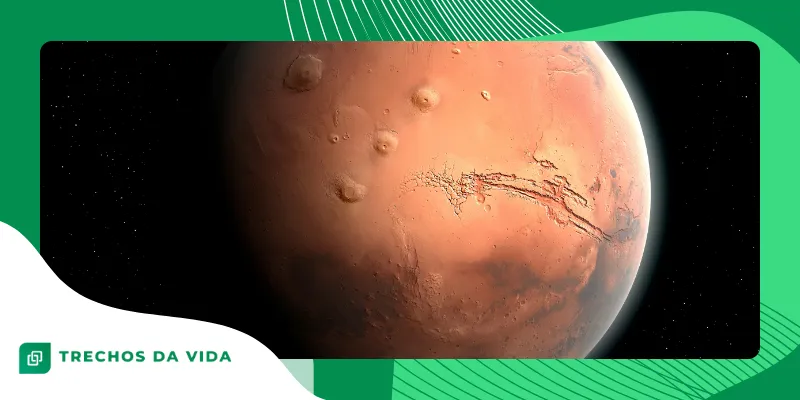
Surface temperatures can drop to -68°C, echoing the Martian cold, but with a glimmer of hope: perhaps layers of ice protect underground reservoirs.
Think of it as a frozen hybrid between Earth and Mars, a planet that challenges our comfortable expectations of habitability.
Many people tend to imagine green and warm worlds, but what if life nestled in cold corners, under frozen crusts?
This perspective is a game-changer, forcing us to question what truly counts as "home" in space.
++ Interesting Things That Make the Body Feel Afraid
How was this recent discovery made?
It all began with a reanalysis of old data from the Kepler space telescope, in its extended K2 phase.
Astronomers detected subtle variations in the brightness of the star HD 137010 — the classic transit method, where a planet crosses in front of the star and slightly obscures its light.
Kepler was retired in 2018, but its archives still hold treasures, like old boxes in an attic full of surprises.
++ Civilizations that disappeared without leaving clear records of what happened.
The team, led by Alex Venner of the Max Planck Institute for Astronomy, with partnerships from universities such as the University of South Queensland, Harvard, and Oxford, used sophisticated statistical models to clean up the signals.
Still, it's a candidate, not an absolute certainty — it needs extra checks, perhaps with TESS or radial velocity measurements to pinpoint the mass.
What's fascinating is how this shows astronomy as a body of work accumulated over the years.
Data from decades ago, reviewed with new tools, reveal worlds that were there all along.
It's almost poetic: the past illuminating the future, proving that patience and technology go hand in hand in this cosmic chase.
What Factors Determine the 50% Chance of Habitability?
This probability of 50% didn't come out of nowhere; it's the result of simulations that test various atmospheres and how the planet reflects light — its albedo.
In the most cautious view of the habitable zone, it drops to 40%; in the most daring, with thick atmospheres and the greenhouse effect, it jumps to 51%.
It's right on the edge: a little push closer to the star or more gases like CO₂, and liquid water could exist; a step away, and it turns into a ball of ice.
In this sense, crucial elements include an atmosphere that retains heat and geological activity that releases gases to replenish it.
Without it, even in the right zone, the air disappears into space, as happened with Mars billions of years ago, when the planet lost its magnetic shield and became the red desert we know.
NASA data indicates that rocky planets like this are rare in solar systems — only one in ten has something similar, which makes HD 137010 b a precious find, almost a rare gem in the vastness.
Imagine the planet as an old coat in a harsh winter: if the fabric is too thin, the cold penetrates; but with extra lining, it's warm enough to survive.
What if nature had stitched that lining together? There's something unsettling about this uncertainty—it makes us wonder if life is stubborn enough to sprout in unlikely places.
What are some comparable examples of potentially habitable worlds?
Here's an example I'm making up, inspired by real findings: "Frostveil," a planet like HD 137010 b, but with an atmosphere laden with hydrogen that generates a subtle greenhouse effect.
Glaciers dominate the poles, but valleys at the equator melt seasonally, creating lakes fed by underground springs.
Life? Perhaps hardy microbes, like those that survive in Antarctica, hiding in warm pockets. This suggests that habitability doesn't need paradises; cold niches are enough.
Another imagined scenario: "Borderline Echo," echoing Kepler-186f, with lazy rotation that leaves one side in eternal twilight and the other under constant light.
Fierce winds spread the heat, forming craters filled with molten water.
Here, climatic diversity could even drive rapid evolution, with organisms adapted to extremes.
But the risk is high — atmospheric erosion over time, turning the place into an inhospitable place.
These scenarios, anchored in concrete data, argue that the galaxy pulsates with variety.
Comparing it to HD 137010 b, we see patterns: terrestrial size and stable stars as key features.
But each one carries its own unique characteristics, expanding what we understand by "possible".
Here is a table to visualize the differences:
| Planet | Distance (light-years) | Radius (relative to Earth) | Orbital Period | Estimated Chance of Habitability | Host Star |
|---|---|---|---|---|---|
| HD 137010 b | ~150 | 1.06× | 355 days | ~50% | Solar type, cooler |
| Kepler-186f | ~500 | 1.1× | 130 days | ~30-40% | Red dwarf |
| TOI-700 d | ~100 | 1.2× | 37 days | ~40% | Red dwarf |
| Proxima Centauri b | 4.2 | 1.07× | 11 days | ~20-60% (debate) | nearby red dwarf |
These data highlight why HD 137010 b shines: its solar star and proximity facilitate deeper observations.
Why Does This Candidate Change the Game in the Search for Extraterrestrial Life?
HD 137010 b raises the bar because it transits a bright, nearby star, perfect for probes like James Webb or the future Extremely Large Telescope to hunt for biosignatures — out-of-balance oxygen, methane, or phosphine.
It's as if the universe has positioned an easy target, inviting us to shoot.
This reinforces the idea that the habitable zone is malleable, shaped by planetary features, not just distance.
It broadens the range of galactic candidates, inspiring missions such as ESA's PLATO, aimed at distant planets.
Ultimately, it reminds us that life doesn't require perfection; a precarious balance is enough, echoing the story of Earth, which narrowly escaped becoming Venus or Mars.
To delve deeper, check out the Original article on G1, this Coverage on Olhar Digital and the publication in Astrophysical Journal Letters.
Frequently Asked Questions About Exoplanets like HD 137010 b
| Question | Response |
|---|---|
| Has HD 137010 b already been confirmed as a planet? | Still a candidate; awaiting further validations to confirm. |
| Why is the chance exactly 50%? | From models that vary atmospheres; 40% in the conservative scenario, 51% in the optimistic scenario. |
| Can we detect life there with current technology? | Indirectly, through atmospheric signatures with JWST or successors. |
| Is it more promising than others like the TOI-700d? | Yes, thanks to the nearby and bright solar star, which is great for analysis. |
| How long would it take to get there? | Impossible now; at 10% of light, it would take 1,500 years. |
This discovery doesn't close the book on life out there, but it adds an intriguing chapter.
Who would have thought that a frozen world like this could make us dream of cosmic neighbors?